

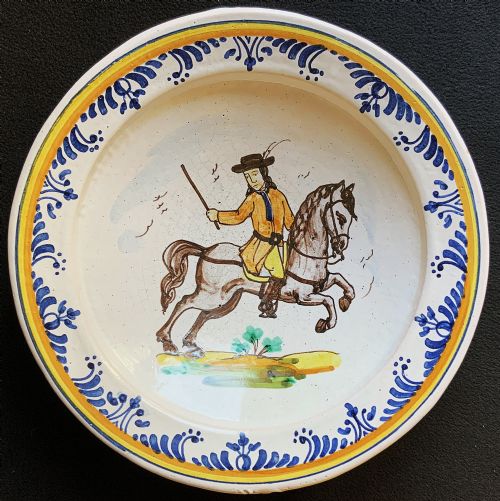


Large Equestrian Painting
A large equestrian painting brings the raw energy and historical scale of horses and riders directly onto a spacious wall.
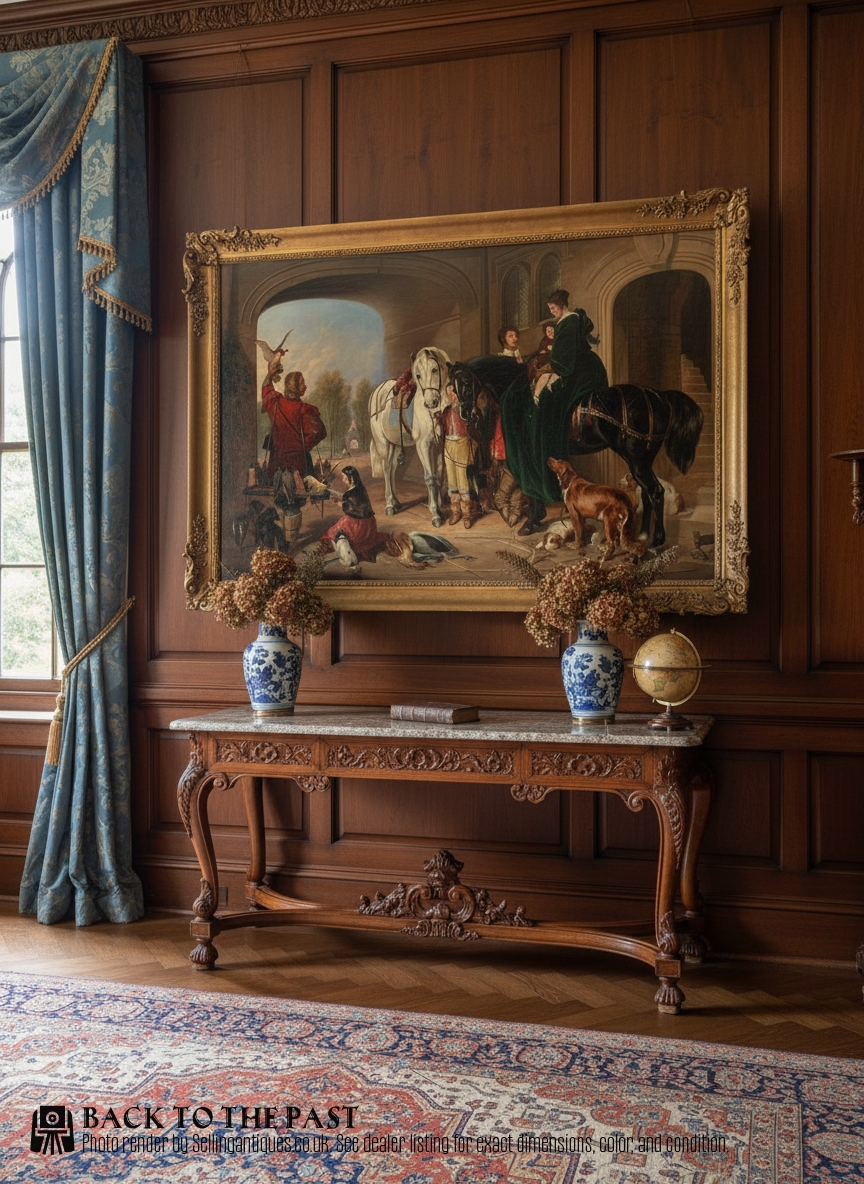
Large Equestrian Painting
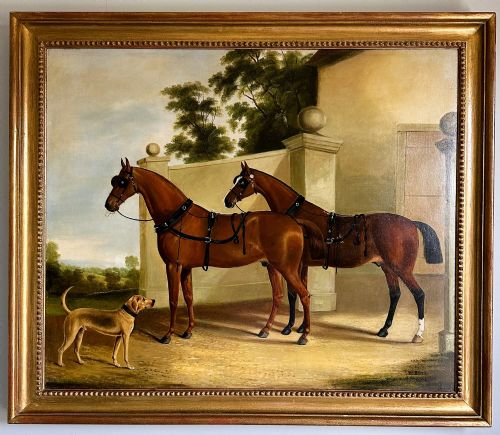
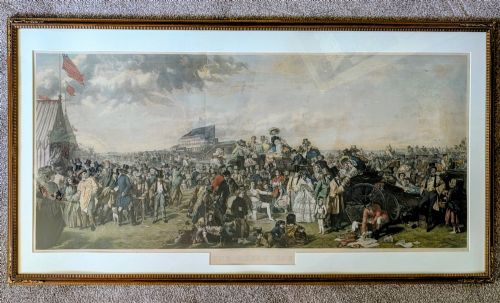
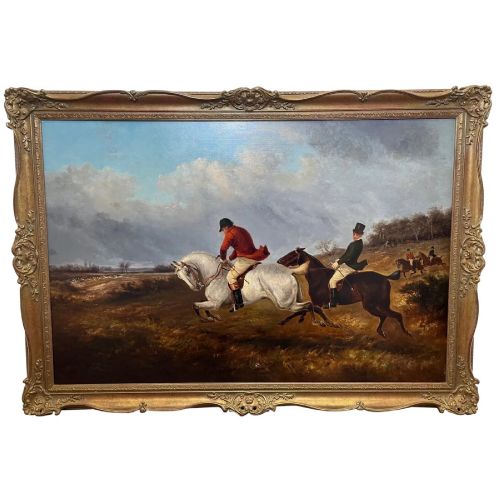
A large equestrian painting focuses on horses, riders, hunting scenes, and cavalry subjects executed on a generous scale. When you search for this phrase, you encounter oil on canvas works, pastels on paper, and framed prints dating from the seventeenth century through to the mid-twentieth century. English school traditions and Victorian sporting subjects dominate the selection available on this page.
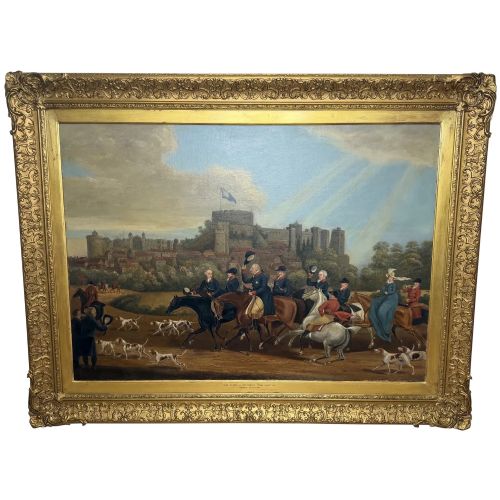
The subjects range from fox hunting scenes with grey and chestnut horses to dramatic seventeenth-century cavalry skirmishes and rural landscapes featuring sportsmen. Artists render these animals in various settings, from sweeping countryside vistas to formal royal returns from Windsor Castle.
Materials and construction
These works rely primarily on oil paint applied to stretched canvas, capturing rich depth and detail across large surfaces. Some pieces utilise pastel on paper mounted in frames, while others incorporate watercolours or mixed media.
Frames play a crucial role in the presentation of these artworks, frequently constructed from wood with gilt or gilded finishes. Swept gilt frames enhance the visual weight of the paintings and complement the traditional subjects.
Large Equestrian Painting Retail Price Guide 2026
Typical asking prices for large equestrian painting among the pieces listed under this phrase on Sellingantiques today, from the lower quarter to the upper quarter. They describe what is for sale here now, not the wider market.
Listings feature works spanning the seventeenth, eighteenth, nineteenth, and twentieth centuries, executed in oil, pastel, and watercolour.
Indicators of quality
The fidelity of anatomical drawing in the horses and the handling of motion separate accomplished works from simpler decorative pieces. Master painters manage complex groupings of animals and riders with clear spatial perspective and anatomical precision.
The preservation of the original canvas and the integrity of the gilt wooden frame contribute significantly to the standing of a piece. Finer works display confident brushwork and well-maintained paint layers without excessive modern intervention.
Thomas Smythe·Franz Bergman·Henri Schouten·Philips Wouwerman·B J Burrows
The Large Equestrian Painting Glossary
- Oil on Canvas
- A traditional painting technique where pigments bound in oil are applied to a woven fabric stretched across a wooden frame. This method allows for subtle blending and rich texture.
- Swept Gilt Frame
- An ornate wooden picture frame featuring moulded plaster or gesso details finished with a gold-coloured leaf or paint. These frames often curve and sweep towards the corners.
- Pastel on Paper
- A dry medium consisting of powdered pigment and a binder, applied directly to a paper support. It produces a soft, velvety surface texture.
- Cavalry Skirmish
- A specific genre of military art depicting a mounted battle or engagement between opposing forces. These compositions emphasise movement, horses, and riders in conflict.
- Gilt Wood
- Carved timber that has been covered with a thin layer of gold leaf or metallic powder. It provides a reflective, decorative border for traditional artworks.
Large Equestrian Painting: Frequently Asked Questions
How do I hang a heavy framed painting safely?
Large works require robust wall anchors fixed directly into studwork or masonry to support the substantial combined weight of canvas and wooden framing.
Professional picture hangers often use two separate fixing points to distribute the load evenly and prevent the painting from shifting over time.
Where should I place a large horse painting?
These commanding artworks suit principal reception rooms, hallways, or dining spaces where a large uninterrupted wall allows the composition to breathe.
Position the painting away from direct sunlight and heat sources to protect the canvas, paint layers, and gilded wooden frame from drying out.
How do I identify a Victorian sporting painting?
Victorian sporting works frequently feature distinct canine and equine subjects, such as foxhounds, hunters, and domestic stables rendered with naturalistic detail.
The palette often relies on deep earth tones, contrasting chestnut and grey coats against winter landscapes or open countryside.
What is the difference between a study and a finished painting?
An equestrian study often captures rapid gesture work, poses, or specific anatomical details like horses in mid-gallop without a fully developed background.
A finished painting presents a complete narrative scene with detailed landscapes, multiple figures, and refined lighting.