


Victorian Historical Narrative Art
Victorian historical narrative art captures dramatic moments from past centuries on canvas, offering buyers a window into theatrical storytelling and domestic drama.
Victorian Historical Narrative Art
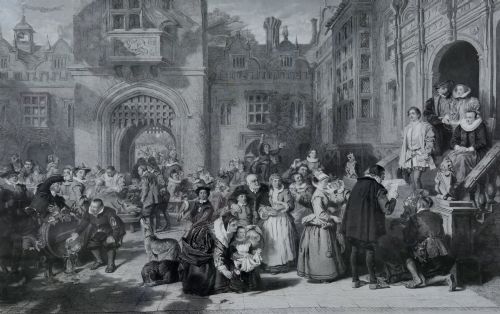
Victorian historical narrative art encompasses oil paintings, watercolours, and engravings that depict dramatic moments from history, literature, and social life. When you search for victorian historical narrative art, you encounter framed works that range from intimate interior genre scenes to large military and royal subjects.
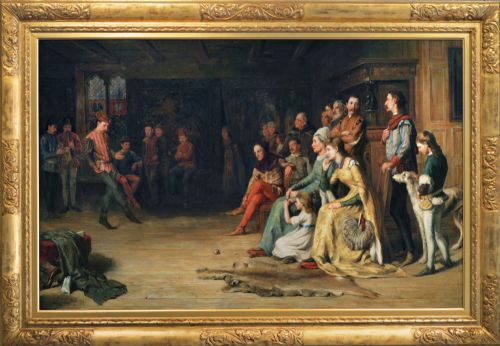
The pieces on this page heavily feature Victorian social realism, historical genre, and romanticism. Subjects span from medieval processions and civil war pursuits to quiet tea scenes and children at fairs.
Originating largely from the nineteenth century, these works reflect a period deeply fascinated by storytelling through visual art. Artists used intricate interior court scenes, tavern gatherings, and outdoor encounters to build compelling visual plots.
Judging Quality
Quality rests upon the artist's ability to render anatomical proportion, facial expression, and dynamic composition within a narrative setting. Superior examples demonstrate confident brushwork and a sophisticated handling of light that heightens the dramatic tension of the scene.
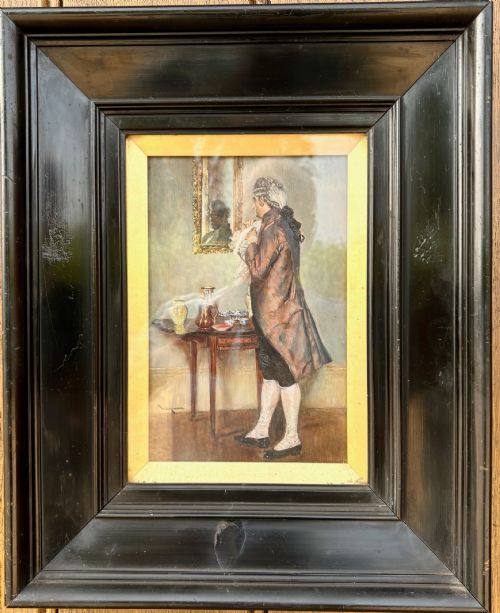
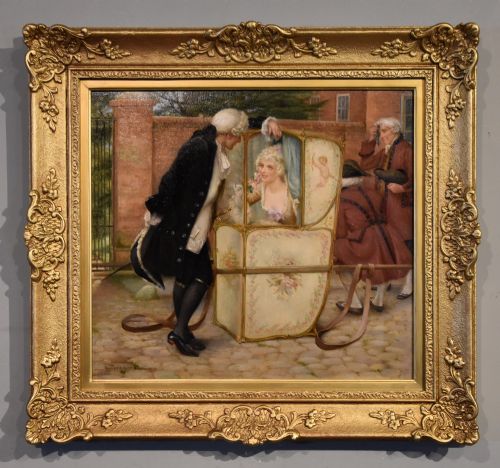
The fidelity of period costume, interior architecture, and atmospheric depth distinguishes accomplished works from simpler illustrative efforts. Furthermore, the presence of an original frame, such as a well-preserved giltwood or Hogarth moulding, enhances the integrity of the piece.
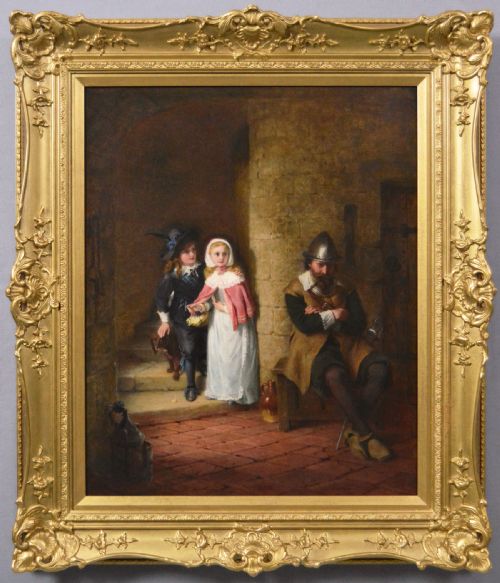
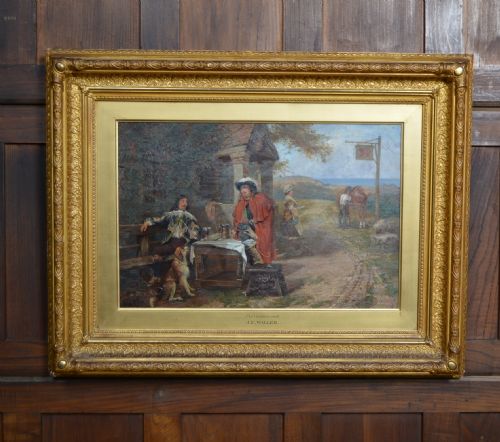
Among the historical scenes are delicate portrayals of cavaliers resting, maids pouring tea, and children causing mischief at village fairs.
Felix Stone Moscheles·James Hamilton·George Bernard O'Neill·Robert Alexander Hillingford·Edwin Hughes·Alfred Holst Tourrier·John A Houston·Sir John Gilbert·Frank Dadd·Christoffel Bisschop·Henry Charles Bryant·Walter Dendy Sadler·George Cattermole·Jules Girardet·Abraham Cooper·David Wilkie
The Victorian Historical Narrative Art Glossary
- Genre painting
- A style depicting scenes from everyday life, ordinary people, and domestic interiors. These works often carry subtle moral or narrative messages.
- Social realism
- An artistic movement highlighting the realities of contemporary working-class life and social conditions. It aims to draw attention to everyday struggles and societal structures.
- Giltwood
- Wood that has been coated with gold leaf or gold paint for decorative effect. It is commonly found on traditional picture frames.
- Hogarth frame
- A specific style of narrow, dark wooden picture frame featuring an inward-sloping profile. It gained popularity during the eighteenth century and remained favoured for prints and paintings.
- Needlepoint
- A form of counted thread embroidery stitched onto a stiff open-weave canvas. It was frequently utilised for wall hangings and decorative tapestries.
Victorian Historical Narrative Art: Frequently Asked Questions
What is victorian historical narrative art?
These works are nineteenth-century paintings and prints that tell stories from history, literature, and everyday life. They focus on human drama, costume, and theatrical staging.
Subjects range from royal historical events to quiet domestic moments, all designed to engage the viewer's imagination and emotion.
How were these artworks displayed?
Victorian households typically displayed these framed pieces in reception rooms, libraries, and parlours to showcase cultural literacy and taste.
They served as conversational centrepieces, often mounted in ornate giltwood or simple Hogarth frames to match interior decor.
How do I identify the period?
Period identification relies on examining the painting style, costume details, framing materials, and artist signatures where available. Nineteenth-century works often feature specific narrative conventions and romantic styling.
Substrates like canvas, board, and paper, alongside framing techniques, help narrow down the exact decade of production.
Are these works always oil paintings?
While oil on canvas is common, the category also includes watercolours, etchings, engravings, and textile art such as tapestry needlepoint.
Each medium offers a different texture and level of detail, from fluid watercolour washes to precise engraved lines.