




Victorian Historical Genre Painting
Victorian historical genre painting captures narrative moments from domestic interiors and bygone eras, offering buyers a window into nineteenth-century storytelling.
Victorian Historical Genre Painting
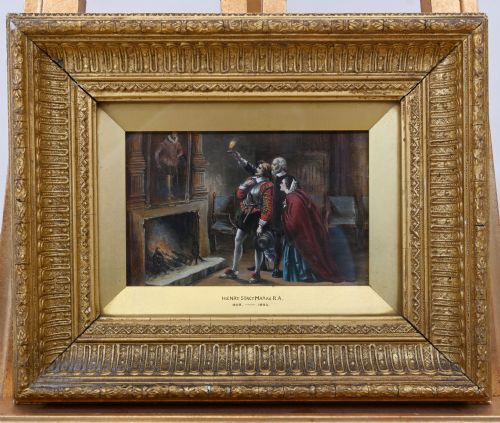
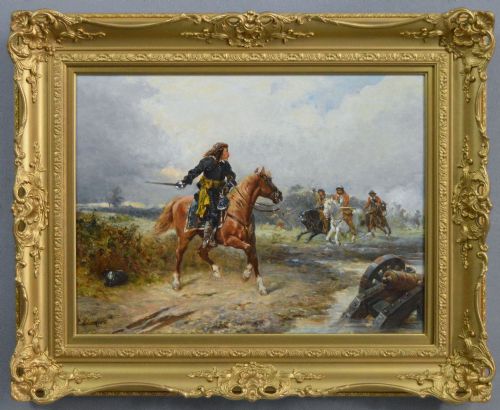
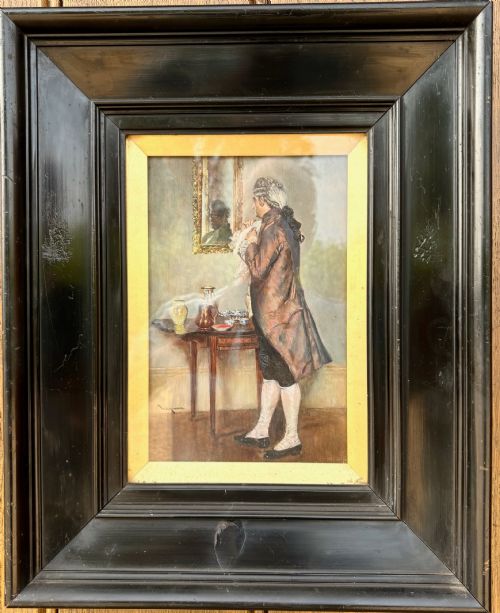
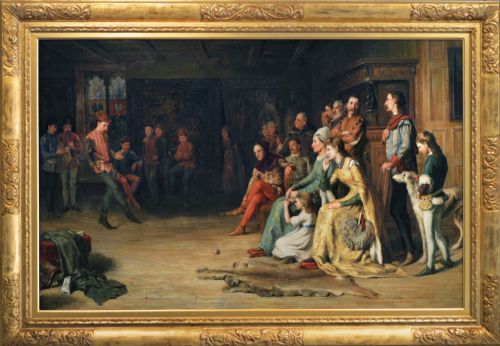
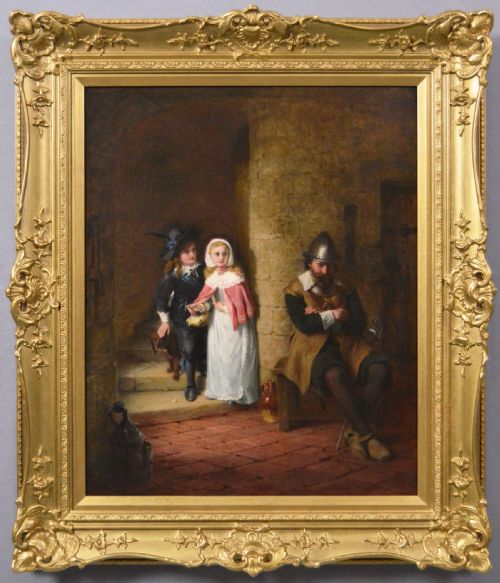
Victorian historical genre painting depicts domestic scenes, social history, and dramatic narratives set in past centuries, typically rendered on canvas or paper. These works capture specific interactions, such as musicians in stately homes, couples eloping, or children at fairs, framed within nineteenth-century artistic traditions.
Most examples originate from the Victorian era and extend into the early twentieth century, spanning dates from the eighteen-fifties through the nineteen-thirties. The subjects range from intimate tea table scenes to large scale royal academy compositions.
Artists working in this genre record historical costumes, interior furnishings, and architectural details with precise brushwork. The physical formats include oil paintings on canvas and board, alongside detailed watercolour paintings and occasional painted wall plaques.
Elements of Quality
The sophistication of the narrative composition and the handling of figures separate standard works from superior examples. Master painters demonstrate control over facial expression, drapery, and interior perspective, drawing the viewer directly into the historical scene.
Scale and ambition also define the hierarchy, with monumental canvases and detailed multi-figure group portraits representing the peak of the maker's output compared to smaller cabinet pieces.
Victorian Historical Genre Painting Retail Price Guide 2026
Typical asking prices for victorian historical genre painting among the pieces listed under this phrase on Sellingantiques today, from the lower quarter to the upper quarter. They describe what is for sale here now, not the wider market.
Cavaliers pop up constantly to stare out from long galleries.
Felix Stone Moscheles·James Hamilton·George Bernard O'Neill·Robert Alexander Hillingford·Walter Dendy Sadler
The Victorian Historical Genre Painting Glossary
- Genre painting
- Depiction of aspects of everyday life by depicting ordinary people engaged in common activities. These works focus on narrative storytelling rather than formal portraiture or landscape.
- Oil on canvas
- Pigment suspended in drying oil applied to a stretched woven fabric support. This medium permits rich blending and depth of colour.
- Watercolour
- Pigments suspended in a water-soluble vehicle, applied to paper. It produces transparent washes that capture light effectively.
- Giltwood
- Wood carved and coated with gold leaf or gold paint. Frames of this material provide traditional borders for nineteenth-century artworks.
- Social realism
- Art movement highlighting the everyday conditions of the working classes and contemporary social issues. Works in this vein document real life rather than idealised historical events.
Victorian Historical Genre Painting: Frequently Asked Questions
What subjects appear in these paintings?
The subjects encompass historical episodes, domestic interiors, literary scenes, and social gatherings from past centuries. Figures range from cavaliers and royalty to everyday people at tea or work.
Artists draw inspiration from British and European history, literature, and domestic life to create engaging narrative tableaus.
How do I display these works at home?
These paintings suit traditional reception rooms, libraries, or studies where their narrative depth complements period interiors. Proper placement avoids direct sunlight to protect the pigments on canvas or paper.
Matching the giltwood frame to surrounding woodwork enhances the visual impact of the composition on the wall.
What is the difference between oil and watercolour?
Oil paintings utilise viscous pigmented oil on canvas or board, allowing for heavy impasto and deep tonal layering. Watercolours employ water-soluble pigments on paper, yielding lighter, more translucent effects.
Both mediums were widely practiced by nineteenth-century artists depending on the desired scale and atmosphere.
How are these paintings dated?
Dating relies on artist signatures, exhibition records, stylistic markers of costume and architecture, and inscribed dates on the canvas or reverse. Catalogues and Royal Academy records often confirm the exact year of creation.
Frame construction and backing materials also provide secondary clues to the period of manufacture.