
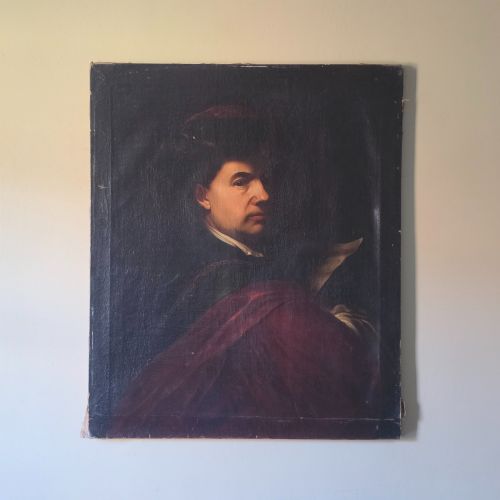


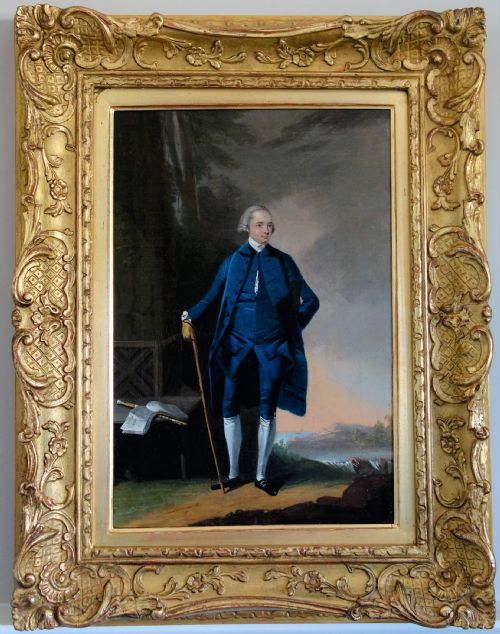


Classical Musician Oil Painting
These classical musician oil painting works capture performers at their instruments across centuries of European portraiture and genre scenes.
Classical Musician Oil Painting
A classical musician oil painting portrays instrumentalists engaged in performance or repose, often holding violins, lutes, flutes, or cellos. Buyers searching this phrase encounter fine art ranging from the seventeenth century through to the early twentieth century.
The selections on this page span several distinct periods, including the eighteenth century and the nineteenth century. Works take the form of individual portraits of notable players, genre scenes in domestic interiors, and historical compositions.
Many pieces show artists and performers in specific historical attire, reflecting the Georgian, Victorian, and Baroque styles of their subjects or painters. Canvas remains the primary support for these detailed oil compositions.
Materials and methods
Artists built these works using oil paint applied to stretched canvas or wooden panel supports. The medium allowed painters to render complex textures in velvet, lace, and the polished wood of musical instruments.
Surviving works are frequently housed within period frames constructed from wood and giltwood, sometimes featuring burr veneer details. These frames complete the presentation of the canvas and protect the edges of the structure.
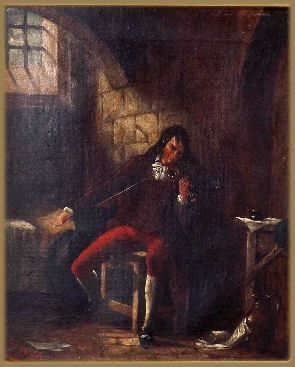
Nicolo Paganini is captured playing his violin from the confines of a prison cell.
Judging the work
Quality in a classical musician oil painting rests on the precision of hand and the artist's command of light across the subject's face and instrument. Stronger examples demonstrate deft brushwork in the rendering of facial expressions and musical scores.
The handling of interior light and shadow distinguishes accomplished portraiture from standard workshop production. Better preserved surfaces retain their original varnish layers and pigment saturation without heavy overpainting.
Hermann Armin Kern·Alfred John Bouchette·William Joseph Carroll·Joaquín Luque y Roselló·Balthasar Denner·Edward Alcock·Robert Alexander Hillingford·Ferdinand Barth·Francesco Renaldi
The Classical Musician Oil Painting Glossary
- Genre scene
- A painting that depicts aspects of everyday life by portraying ordinary people engaged in common activities. Musicians performing in domestic interiors are a frequent subject within this category.
- Giltwood
- Wood that has been coated with a thin layer of gold leaf or gold paint. This material is commonly found on traditional frames enclosing antique canvases.
- Burr veneer
- A thin slice of figured wood taken from a tree growth, showing intricate swirling grain patterns. It is often applied to decorative framing or furniture associated with period interiors.
- Attributed to
- A term used when a work is considered by experts to be by a given artist, but without absolute certainty. It denotes strong stylistic links to a named painter.
Classical Musician Oil Painting: Frequently Asked Questions
What periods do these paintings cover?
The listings span from the seventeenth century through the eighteenth and nineteenth centuries up to nineteen hundred.
This broad chronological range includes seventeenth century works, eighteenth century portraits, and nineteenth century academic genre pieces.
Which instruments appear most often?
Violins, cellos, flutes, and lutes are the instruments most frequently depicted in these musical compositions.
Painters placed particular emphasis on stringed instruments like the violin and cello due to their sculptural forms and expressive potential.
Are these works painted on canvas?
Most works utilise oil paint on canvas as the primary medium, though panel supports also appear.
Canvas provides the durable textured surface required for layering rich oil pigments in historical portraiture.