



Victorian Historical Figurine
A victorian historical figurine captures monarchs, military commanders and patriots in ceramic, bronze and wood, bringing nineteenth-century narrative straight to the mantelpiece.
Victorian Historical Figurine
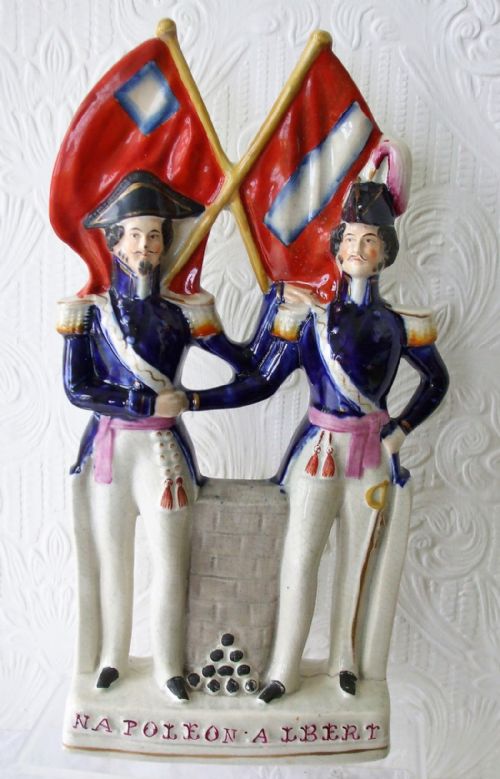
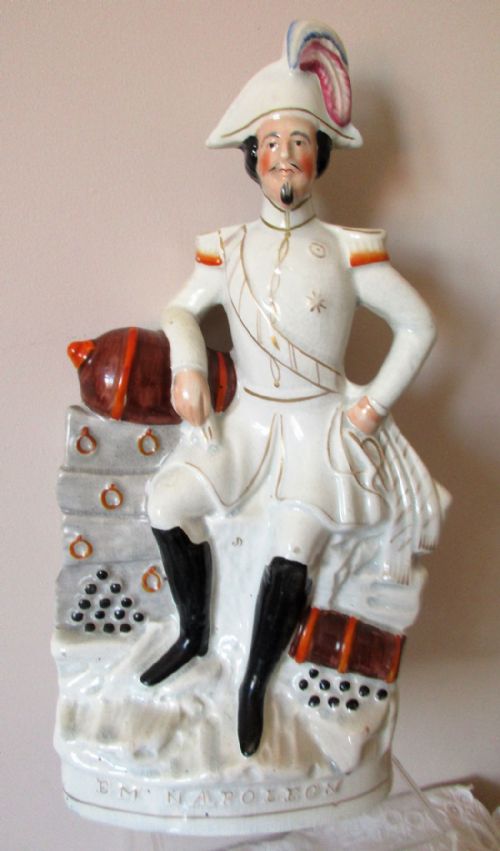
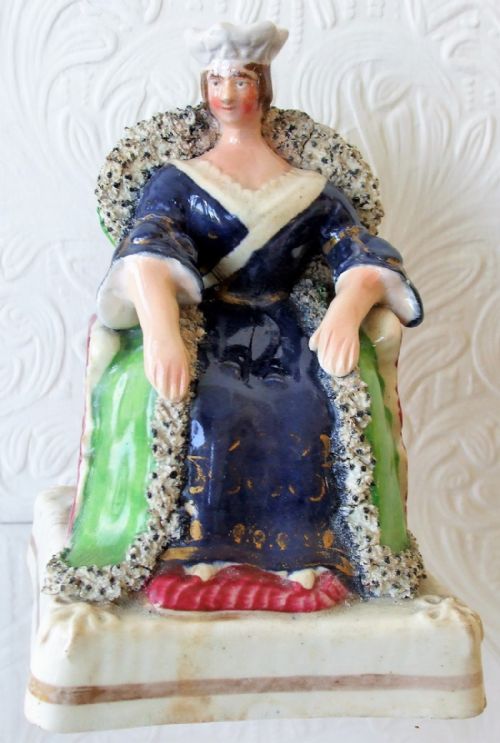
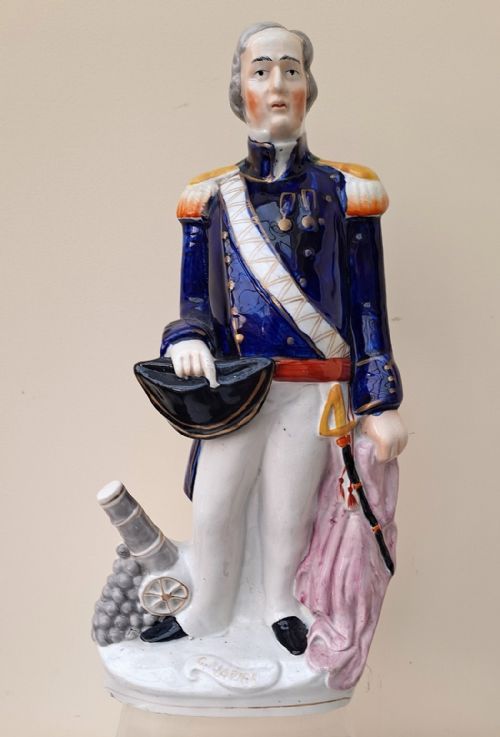
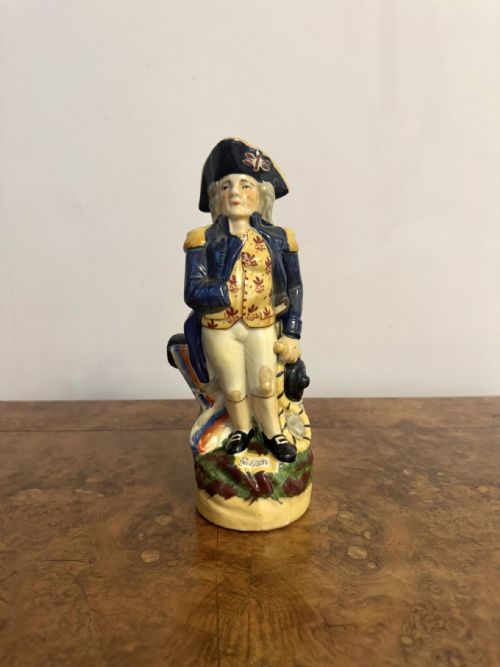
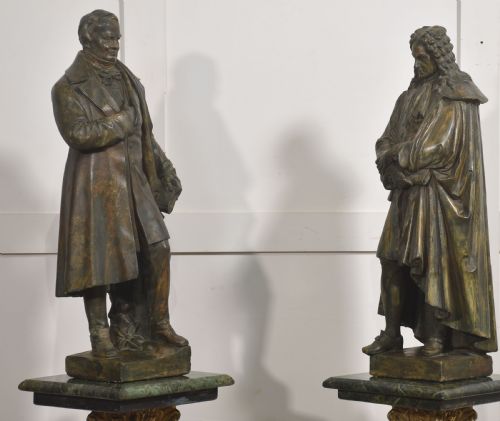
A victorian historical figurine represents prominent political figures, military leaders, and cultural icons from royalty to patriots. The selection ranges from Staffordshire pottery portrait figures of Napoleon and Queen Victoria to bronze sculptures of historical commanders and literary subjects.
Makers produced these objects to commemorate contemporary events and historical legacies alike. Buyers will encounter earthenware flatbacks alongside patinated bronze studies and carved wood portraits spanning the nineteenth century.
Materials and methods
Staffordshire pieces rely on earthenware clay shaped in moulds, finished with lead glaze and hand-painted details. Many feature characteristic colouring and gilt highlights applied to the fired ceramic body.
Metal sculptures utilise bronze, electrotype bronze, and patinated chalk cast from detailed models. Wood carvings demonstrate direct carving techniques on chunky timber to achieve three-dimensional depth.
Victorian Historical Figurine Retail Price Guide 2026
Typical asking prices for victorian historical figurine among the pieces listed under this phrase on Sellingantiques today, from the lower quarter to the upper quarter. They describe what is for sale here now, not the wider market.
Benjamin Franklin occasionally slips into Victorian lineups disguised rather generously under the name of George Washington.
Judging quality
Quality rests upon the crispness of the modelling and the precision of the hand-finishing. Finer pottery examples show careful facial detailing and clean glaze application without excessive pooling.
C Dopmeyer·Jean Jules Salmson·C.Anfrie
The Victorian Historical Figurine Glossary
- Staffordshire flatback
- A ceramic figure modelled fully in the round at the front while left largely unpainted and flat at the back. These pieces were designed specifically for display against a wall on a mantelpiece.
- Patinated bronze
- Metal sculpture treated with chemicals or heat to produce a rich surface colour. This process enhances the definition of the cast and protects the metal.
- Electrotype
- A metal-duplicating process using an electrical current to deposit a thin layer of copper or bronze over a prepared mould. It creates hollow metal figures with intricate surface detail.
- Lead glaze
- A shiny coating applied to earthenware before firing that vitrifies into a smooth, glassy finish. It gives early ceramics their characteristic glossy sheen.
Victorian Historical Figurine: Frequently Asked Questions
What is a Staffordshire flatback?
A Staffordshire flatback is an earthenware figure designed to sit flush against a wall on a shelf or mantelpiece. The maker decorated the front with bright glazes while leaving the reverse plain.
These pottery pieces commemorated royalty, military heroes, and contemporary events for middle-class Victorian households. They offer an accessible entry point into nineteenth-century ceramic collecting.
How are bronze figures dated?
Dating bronze sculptures involves examining the casting technique, the depth and tone of the patination, and any foundry marks or signatures on the base. Stylistic cues in the clothing and hair also point to the period.
Many nineteenth-century bronzes bear the signature of the sculptor or castmaker directly in the metal. Comparing these signatures to historical records confirms the era of production.
Where were these figures displayed?
Victorian households placed historical figures on mantelpieces, sideboards, and dedicated display cabinets in the parlour. They served as conversation pieces that signalled the owner's education and political sympathies.
Ceramic flatbacks sat easily on narrow mantel ledges, while heavier bronze and wood sculptures anchored heavier furniture pieces. Their subjects reflected public interest in national history and current affairs.
Are all portrait figures British?
While Staffordshire potteries produced a vast quantity of British historical subjects, the selection also includes continental European founders and subjects. French and German artists created bronze and chalk sculptures of global historical figures.
Collectors find British royalty alongside classical Assyrian monarchs and French military leaders. The material often reveals the origin, with earthenware pointing to English kilns and patinated bronze suggesting continental workshops.