

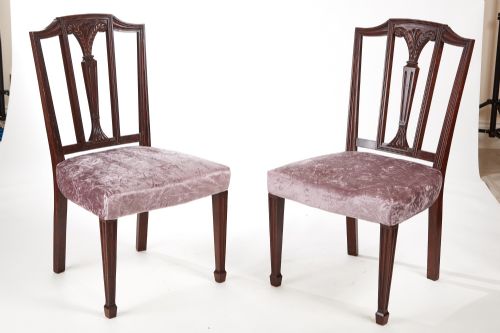


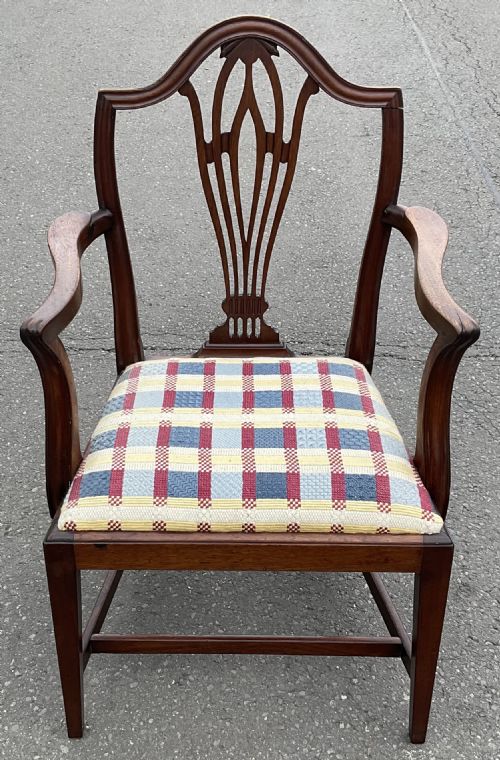

Victorian Hepplewhite Chair
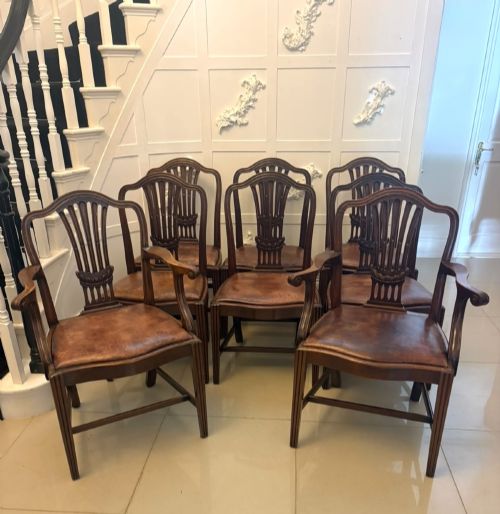
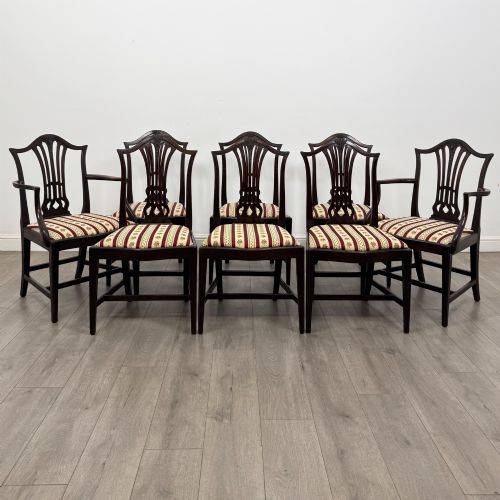
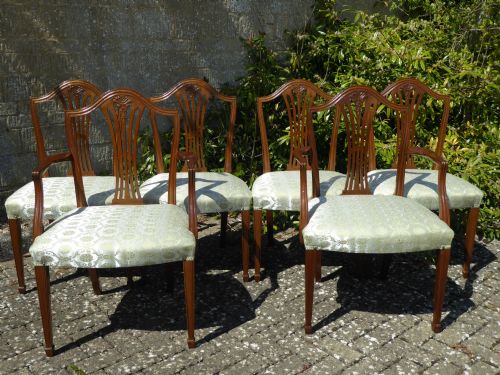
A victorian hepplewhite chair brings the refined shield back of the eighteenth century into nineteenth-century dining rooms with enduring style.
Victorian Hepplewhite Chair
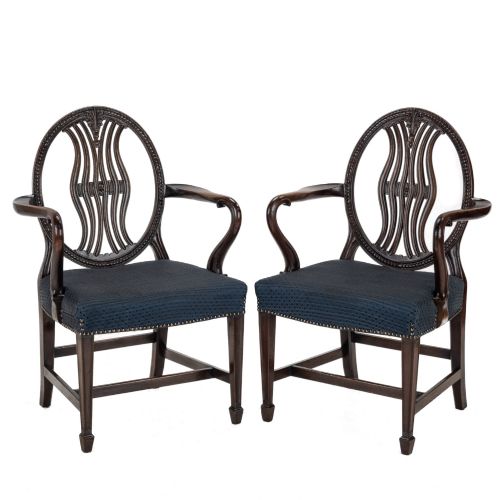
Buyers encounter sets suited for a dining table alongside pairs and single armchairs designed for studies or parlours. The defining characteristic remains the shield-shaped back, often paired with upholstered seats finished in leather, fabric, or tapestry.
Materials and construction
Makers relied primarily on mahogany to provide the structural integrity and rich grain required for slender carved components. Workshops utilised traditional joinery alongside brass accents and diverse upholstery materials including velvet and leather.
Carved details and inlaid elements appear across the shield backs and frame rails, demonstrating the skilled handwork typical of nineteenth-century cabinet makers.
Victorian Hepplewhite Chair Retail Price Guide 2026
Typical asking prices for victorian hepplewhite chair among the pieces listed under this phrase on Sellingantiques today, from the lower quarter to the upper quarter. They describe what is for sale here now, not the wider market.
Listings feature mahogany, leather, and fabric across nineteenth-century dining chairs, side chairs, and armchairs.
Assessing the pieces
The distinction between standard examples and superior pieces rests upon the crispness of the carved mahogany and the integrity of the frame construction. Sets that retain their original leather or textile upholstery alongside matching carvers command greater interest.
Proportion and balance dictate the visual success of the revival designs, separating ordinary workshop output from finer cabinet work.
Gillows
The Victorian Hepplewhite Chair Glossary
- Shield back
- A chair back shaped in the outline of a heraldic shield, characteristic of Hepplewhite designs. This geometry creates an open and graceful silhouette.
- Carver
- An armchair, traditionally placed at the head of a dining table or used as a standalone seat. These pieces feature open arms attached to the main frame.
- Hepplewhite revival
- A later nineteenth-century aesthetic movement that reinterprets the lighter neoclassical forms of George Hepplewhite. Makers adapted these eighteenth-century motifs to Victorian proportions.
- Ebonised
- Wood finished with a dark coating to resemble ebony. This treatment creates a formal, high-contrast appearance on select nineteenth-century frames.
- Side chair
- An upright chair without arms designed for dining or occasional use. These form the core of larger antique seating sets.
Victorian Hepplewhite Chair: Frequently Asked Questions
How do I date a Victorian Hepplewhite chair?
Dating relies on examining the timber, construction methods, and secondary woods used in the frame. Nineteenth-century pieces often combine revival styling with Victorian joinery techniques.
Comparison with documented examples from the archive helps narrow down the decade of manufacture, particularly when matching sets retain their original finish.
Are these chairs comfortable for daily dining?
These seating pieces were built for formal dining and feature supportive upright backs alongside padded seats. The generous proportions of nineteenth-century carvers offer additional support.
Upholstery materials range from firm leather to softer textiles, allowing for comfortable daily use around a modern or antique table.
What is the difference between a side chair and a carver?
Side chairs lack armrests and function primarily as space-efficient seating around the sides of a dining table. Carvers feature open arms and generally sit at the head of the table or serve as occasional armchairs.
Sets often combine multiple side chairs with a matched pair of carvers to complete a formal dining suite.
How do I care for antique mahogany frames?
Mahogany requires minimal maintenance beyond gentle dusting with a dry cloth and occasional application of appropriate furniture wax. Keeping the timber away from direct heat sources prevents the wood from drying out.
Upholstery should be maintained according to the specific fabric or leather type used on the seat.