





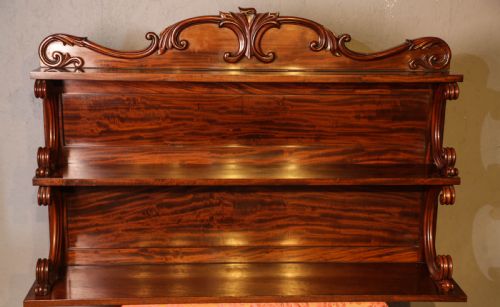


Victorian Hanging Bookshelf
These Victorian hanging bookshelf examples offer clever wall-mounted storage for modest libraries, combining utility with distinct period character.
Victorian Hanging Bookshelf
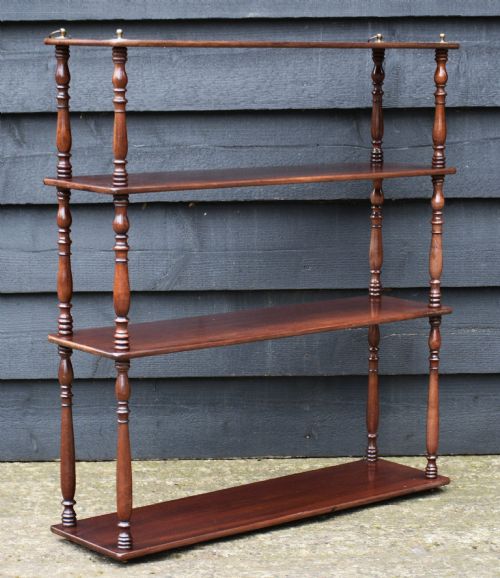
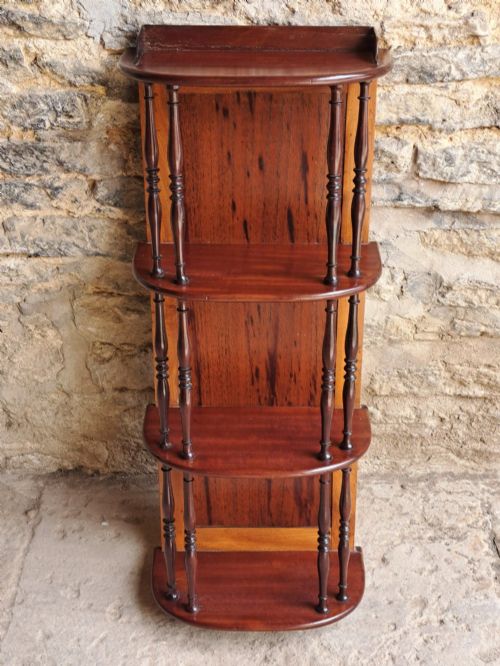
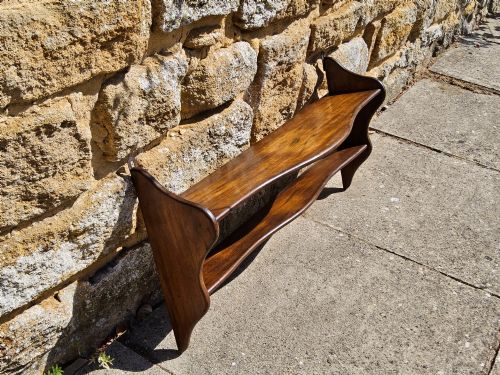
A victorian hanging bookshelf provides wall-mounted book storage using tiers of open wooden shelves suspended or bracketed for attachment to a wall. The pieces appearing here range from compact portable iterations to larger multi-tier display cabinets with cupboards.
Most examples date across the nineteenth century, including pieces reflecting Regency, William IV, Gothic Revival, and Aesthetic Movement tastes. Materials vary widely, with mahogany and walnut appearing alongside satin birch, oak, ebonised wood, and cherry wood.
Makers and designers working in these styles occasionally produced wall shelves with architectural detailing or turned bobbin supports. Buyers frequently encounter simple open wall shelves alongside glazed or cabinet-backed variations intended to showcase smaller volumes and collectibles.
Materials and construction methods
Cabinetmakers constructed these shelves using dense hardwoods like mahogany and walnut, frequently selecting satin birch or oak for lighter grain patterns and distinct colour. Structural elements often involved pegged or dovetailed joints to support the weight of books against wall fixings.
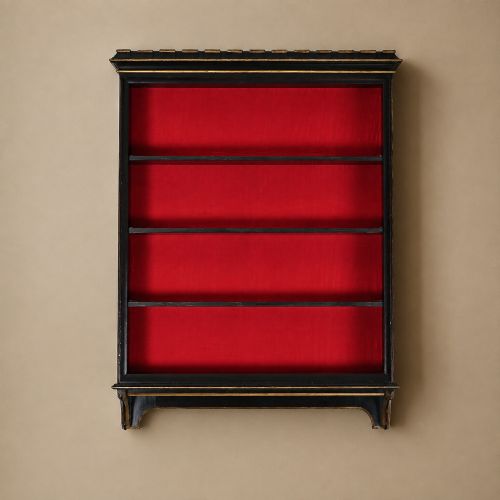
Decorative embellishments include ebonised finishes, applied brass hardware, and turned wooden components such as bobbin mouldings. Gothic Revival and Aesthetic Movement pieces integrate carved architectural tracery and contrasting timber accents directly into the frame.
Victorian Hanging Bookshelf Retail Price Guide 2026
Typical asking prices for victorian hanging bookshelf among the pieces listed under this phrase on Sellingantiques today, from the lower quarter to the upper quarter. They describe what is for sale here now, not the wider market.
Listings feature eighteenth-century through to twentieth-century wall shelves, with the nineteenth century and the Victorian era providing the vast majority of walnut and mahogany pieces.
Assessing quality in hanging shelving
Quality rests primarily on the selection of timber and the crispness of any carved or turned detailing. Dense, well-figured mahogany or walnut with undisturbed original patination distinguishes superior examples from plainer utility items.
Construction robustness dictates longevity, particularly at the joints where hanging brackets or suspension plates meet the vertical uprights. Finer pieces demonstrate careful attention to internal dividers, backboards, and proportion rather than mere decoration.
George Edmund Street·John Moyr Smith
The Victorian Hanging Bookshelf Glossary
- Aesthetic Movement
- A late nineteenth-century design style emphasising visual beauty and artistic reform over heavy historicism. It often utilised ebonised timber and stylized ornamentation.
- Gothic Revival
- An architectural and decorative style drawing inspiration from medieval forms. Pieces display pointed arches, tracery, and robust oak construction.
- Bobbin
- A turned wooden furniture ornament resembling thread spools stacked end-to-end. It provides texture along uprights and shelf supports.
- Satin Birch
- A pale, lustrous hardwood utilised extensively in nineteenth-century cabinetmaking for its distinctive grain pattern. It brought a bright finish to wall furniture.
- Whatnot
- A multi-tiered open piece of furniture designed for displaying ornaments or books. Mounted versions hang directly from walls to save floor space.
Victorian Hanging Bookshelf: Frequently Asked Questions
Were these shelves meant for small books?
Depth and height clearances vary significantly across nineteenth-century wall furniture, with many designed for pocket editions, novels, or collected poetry. Portable variations and compact tiers accommodated volumes commonly read in sitting rooms and parlours.
Larger configurations occasionally incorporated small cabinets or lower display surfaces for decorative objects alongside standard book storage. Measuring shelf depth remains essential for modern hardbacks.
How do I identify a Gothic Revival shelf?
Gothic Revival examples typically feature pointed arches, quatrefoil cutouts, and robust oak or ebonised timber construction. These details mirror ecclesiastical architecture adapted for domestic nineteenth-century interiors.
Such pieces often display heavier mouldings and architectural pediments compared to simpler Regency or Aesthetic Movement equivalents.
Can walnut and mahogany shelves mix with modern decor?
Dark hardwoods like walnut and mahogany introduce rich tones and varied grain patterns that anchor contemporary interior spaces. Wall-mounted shelving adds vertical warmth without occupying valuable floor area in smaller rooms.
Period pieces contrast effectively against neutral walls, bridging traditional craftsmanship with minimalist modern living environments.