

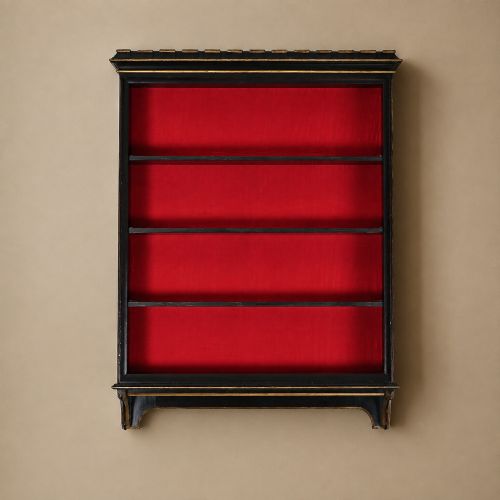


Victorian Hanging Bookcase
A victorian hanging bookcase saves floor space while keeping volumes at eye level, combining practical wall storage with period character.
Victorian Hanging Bookcase
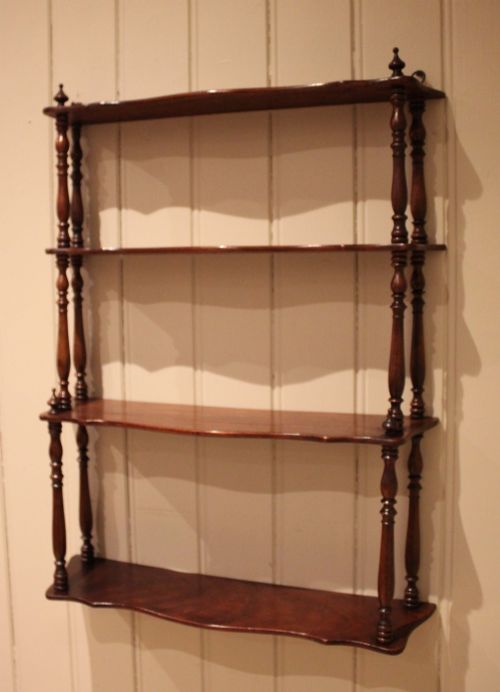
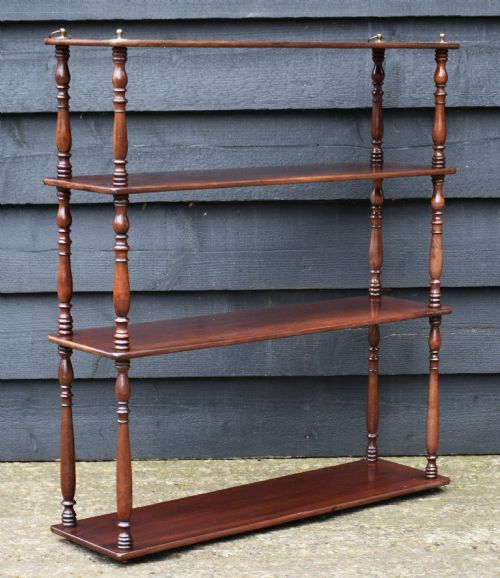
A victorian hanging bookcase comprises wall-mounted shelving units and cabinets designed to hold books and display objects off the floor. These pieces range from simple open mahogany wall shelves to glazed cupboards and cabinets.
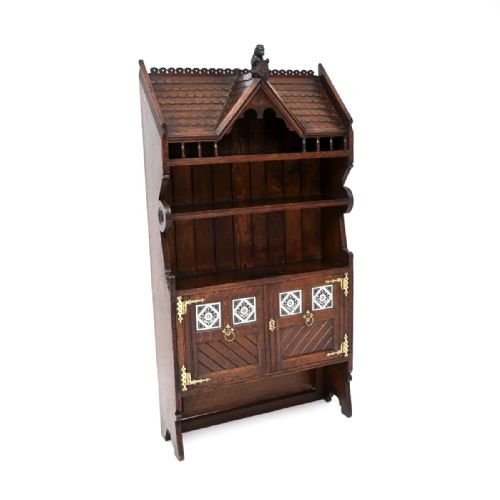
The selections on this page span the nineteenth century, including Regency, William IV, Gothic Revival, and Aesthetic Movement variations. Mahogany and oak dominate the forms, alongside walnut, satin birch, cherry wood, and ebonised timber.
Makers such as George Edmund Street and John Moyr Smith appear in the material, alongside French country and chateau influences. Buyers encounter portable bookshelves alongside tall wall hanging shelves and mirrored display cabinets.
How They Were Made
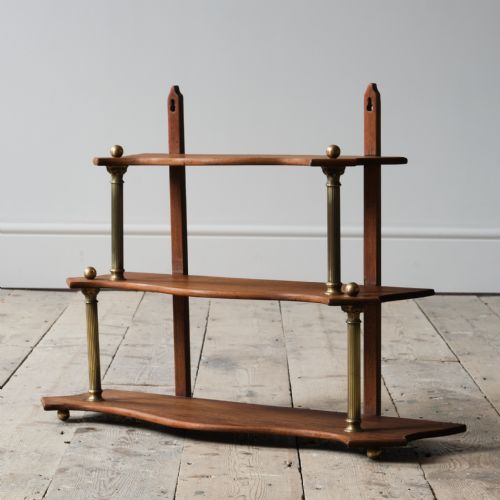
Craftsmen built these hanging pieces primarily in solid timbers such as mahogany, oak, walnut, and rosewood, often pairing them with brass brackets and fittings. Painted wood and ebonised finishes also appear across the nineteenth-century examples.
Construction techniques include open shelving fastened with sturdy wall mounts, as well as enclosed glazed wall cupboards designed to protect fragile volumes and curiosities. Glass panels and fabric backings add decorative detail to the display cabinets.
Victorian Hanging Bookcase Retail Price Guide 2026
Typical asking prices for victorian hanging bookcase among the pieces listed under this phrase on Sellingantiques today, from the lower quarter to the upper quarter. They describe what is for sale here now, not the wider market.
Listings feature nineteen-century wall furniture executed in mahogany, oak, walnut, satin birch, and cherry wood.
What Varies in Quality
Quality shows in the choice of cabinet timbers and the crispness of carved details, such as the architectural tracery on Gothic Revival pieces or the aesthetic movement motifs. Higher-grade examples utilise dense mahogany or figured walnut with precise joinery.
Hardware selection differentiates the standard shelves from finer commissions, with heavy brass fittings and functioning glazed doors marking superior workshop production. The balance between structural integrity for wall mounting and refined proportion dictates the overall standing of each piece.
George Edmund Street·John Moyr Smith
The Victorian Hanging Bookcase Glossary
- Victorian
- The period spanning the reign of Queen Victoria, characterised by revivals of earlier styles alongside the innovations of the Industrial Revolution. This era produced diverse furniture forms incorporating Gothic and classical motifs.
- Gothic Revival
- An architectural and decorative style drawing inspiration from medieval forms. Pieces often feature pointed arches, cusping, and dark ebonised timber finishes.
- Aesthetic Movement
- A late nineteenth-century design current emphasising visual beauty over narrative subject matter. Cabinets from this style frequently showcase artistic craftsmanship and stylized ornamentation.
- Regency
- The period preceding official Victorian rule, known for classical restraint and clean architectural lines. Furniture from this era often utilises fine mahogany with understated brass mounts.
- Ebonised Timber
- Wood treated with a chemical stain or finish to imitate expensive ebony. This dark, polished surface gained popularity during the nineteenth century for dramatic cabinetwork.
Victorian Hanging Bookcase: Frequently Asked Questions
How do I hang a heavy antique bookcase?
These wall-mounted units require secure fixing directly into masonry or robust wall studs to bear the considerable weight of timber and books.
Professional installation ensures the brass mounting points distribute the load safely without damaging the antique structure.
Were these bookcases meant for kitchens or parlours?
Hanging shelves and wall cabinets served primarily in studies, libraries, and parlours to keep reference volumes close at hand.
Enclosed glazed versions also functioned as display spaces for ceramics and decorative small objects.
How do I distinguish Gothic Revival from standard Victorian?
Gothic Revival pieces display medieval architectural elements such as pointed arches and heavily ebonised surfaces.
Standard Victorian pieces often adhere to simpler rectangular forms or draw upon French chateau and Regency influences.
Can these shelves hold heavy modern hardbacks?
Nineteenth-century shelves were built for the slimmer volumes and smaller editions common to the period.
Checking the depth of the shelves and the strength of the wall fixings ensures modern books fit securely.