



Victorian Hand Coloured Prints
Victorian hand coloured prints bring nineteenth century natural history, sporting scenes and portraiture to life through delicate washes applied over ink lines.
Victorian Hand Coloured Prints
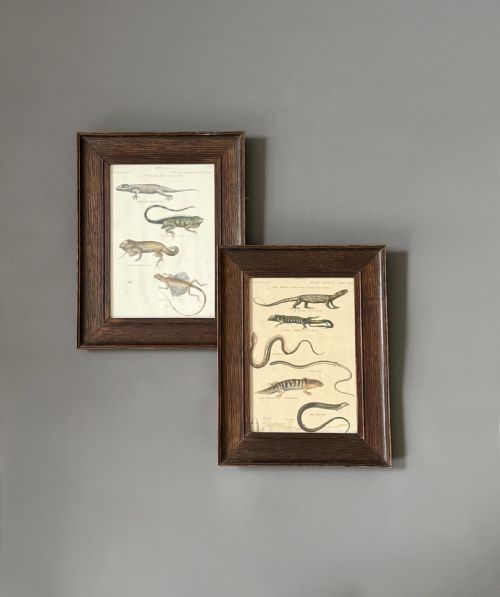
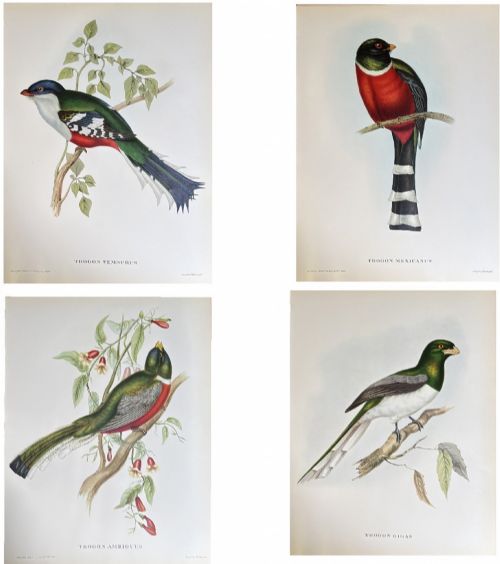
When you examine victorian hand coloured prints, you encounter a diverse array of nineteenth century imagery ranging from natural history plates to sporting subjects and historical scenes. The selection encompasses botanical studies featuring insects and plants, ornithological works depicting tropical birds and waterfowl, and detailed engravings of reptiles and sea shells.
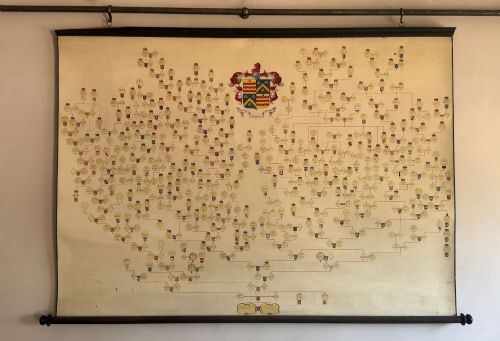
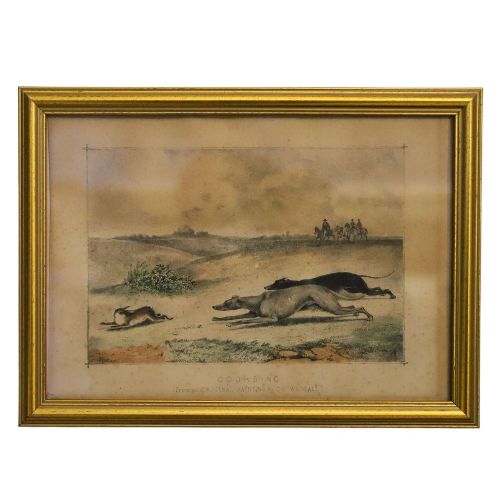
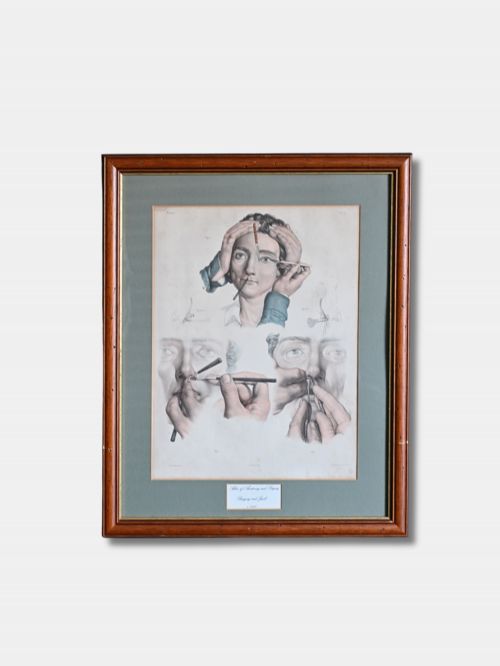
You are most likely to meet framed prints and wall art executed on paper, often housed behind glass within wooden, giltwood or gesso frames. The subjects extend across British field sports, medical procedures, heraldry, cartography and theatrical melodrama.
The visual character of these works relies on the combination of a printed base, typically an engraving, lithograph or etching, finished by hand with watercolour or ink. These pieces served both scientific documentation and domestic decoration during the nineteenth century.
How they were made
The creation of these works began with a printed foundation on paper, utilising techniques such as engraving, lithography, etching, aquatint or mezzotint to establish the primary image lines. Artisans then applied watercolour by hand to specific areas, adding vibrant hues to natural history subjects, military formations and costume portraits.
Finished plates were frequently mounted behind glass and secured within wooden frames enhanced with gilt or gesso moulding. In the case of crystoleum pictures, reverse glass painting techniques were employed to colour mezzotint prints mounted concave and clarified with oil.
Listings feature paper works supported by materials including glass, wood, ink, gilt wood, watercolour, gesso and giltwood.
What varies in quality
The distinction between standard examples and superior pieces rests upon the precision of the initial printing and the finesse of the subsequent hand colouring. Fine brushwork that respects the delicate boundaries of an engraving or lithograph elevates the artistic merit of botanical and ornithological plates.
The integrity of the framing materials also marks the tier of a piece, with original gilt wood and gesso surrounds contributing to the overall historical coherence. Complete sets of matching plates display a uniformity of tone and preservation that elevates them above scattered individual prints.
William Bird MD FLS·Oliver Goldsmith·Jonathan Couch·John Curtis·Thomas Worth
The Victorian Hand Coloured Prints Glossary
- Lithograph
- A print produced by a printing method based on the repulsion of oil and water on a stone or metal plate. This technique allowed for smooth tonal gradations and precise linework in nineteenth century illustrations.
- Engraving
- An intaglio printing process where an image is cut into a metal plate with a burin. The resulting lines hold ink to transfer fine, crisp details onto paper.
- Crystoleum
- A method of applying hand colouring to the reverse of a translucent print mounted on glass. The original paper backing was rubbed away before additional layers of paint were applied.
- Mezzotint
- A printmaking process where the copper plate is roughened to achieve rich dark tones and subtle graduations of light. It was frequently utilised for portraits and narrative scenes.
- Aquatint
- An intaglio printmaking technique that produces tonal areas resembling watercolour washes. It was often combined with line engraving for sporting and topographical prints.
Victorian Hand Coloured Prints: Frequently Asked Questions
How should I display antique prints safely?
Keep framed pieces away from direct sunlight to prevent the watercolour pigments and paper support from fading over time. Maintaining stable indoor humidity levels also protects the paper and wooden frames from deterioration.
Ensure that the glass does not press directly against the surface of the print when mounting or reframing. Using acid-free backing materials preserves the integrity of nineteenth century paper.
Were all these prints coloured at the same time?
Most period plates received their watercolour washes shortly after printing during the nineteenth century, executed by workshops employing skilled colourists. These artists followed strict botanical or sporting templates to ensure accuracy.
Some examples were coloured later or retouched by subsequent owners. Examining the pigment absorption into the paper fibres helps determine the chronology of the colouring.
What is the difference between an engraving and a lithograph?
An engraving is created by cutting lines directly into a metal plate with a sharp tool, resulting in crisp, precise details. Lithography relies on chemical processes on a flat stone or metal surface to retain ink.
Lithographs generally exhibit softer tonal transitions compared to the sharper linear definition of an engraving. Both methods served as the foundation for hand applied watercolours.