
Victorian Hallway Umbrella Stand
A victorian hallway umbrella stand organises wet weather gear with metal and timber structure.
Victorian Hallway Umbrella Stand
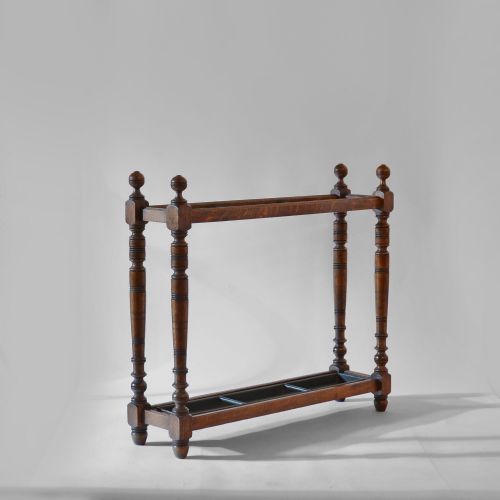
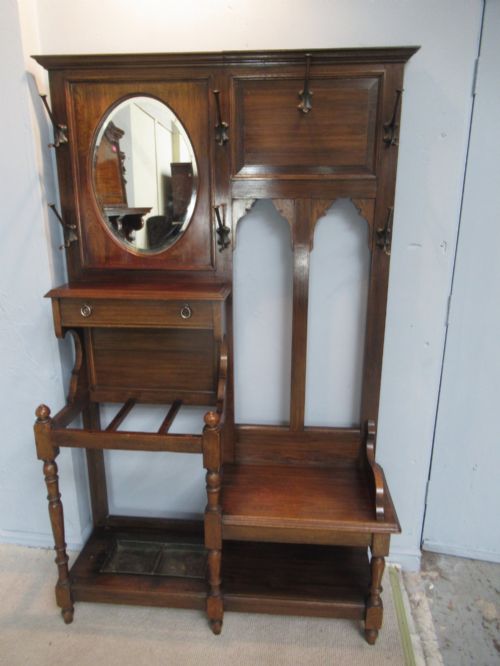
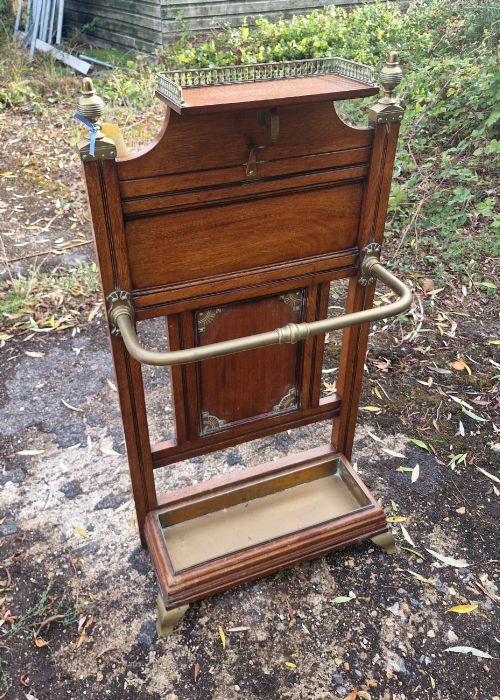
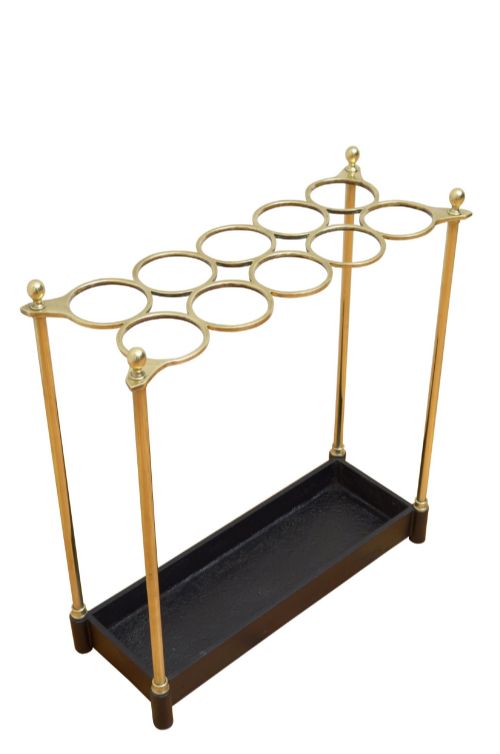
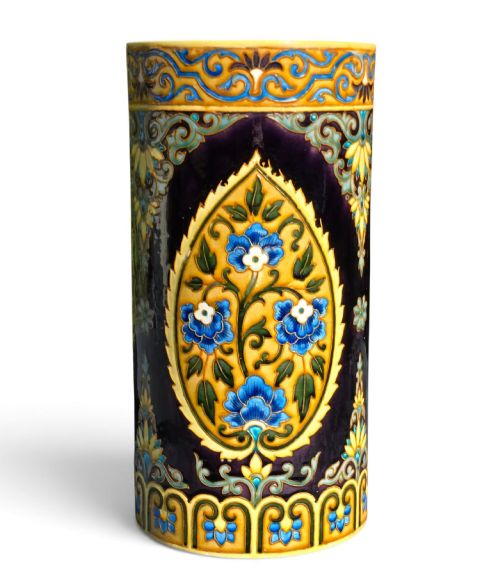
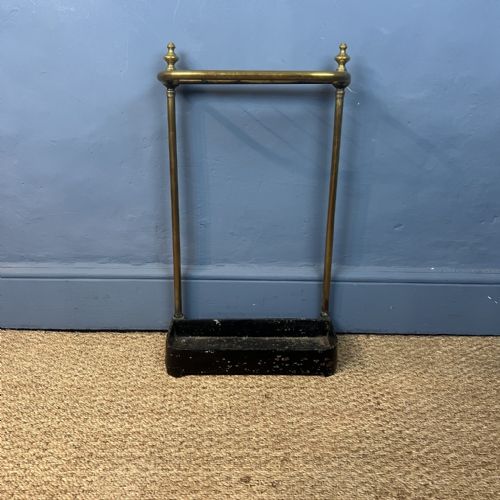
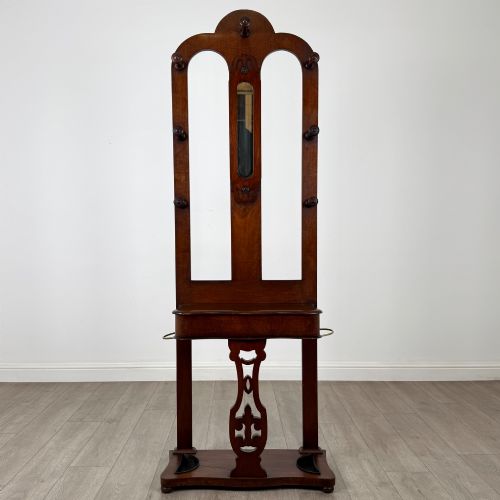
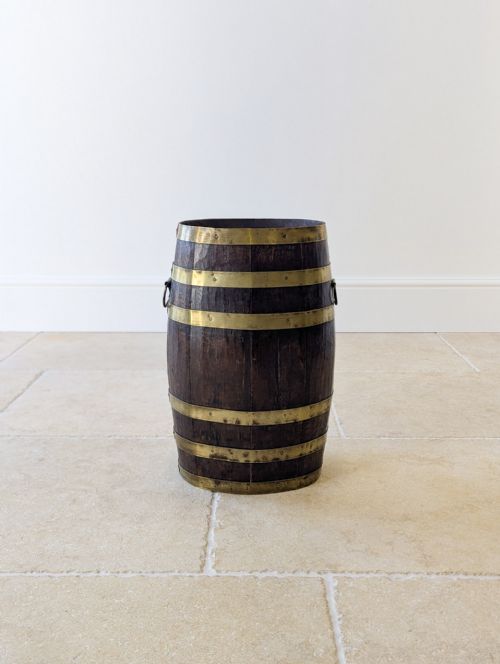
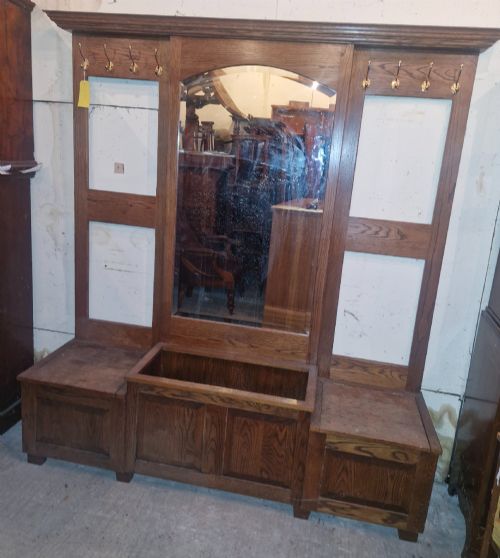
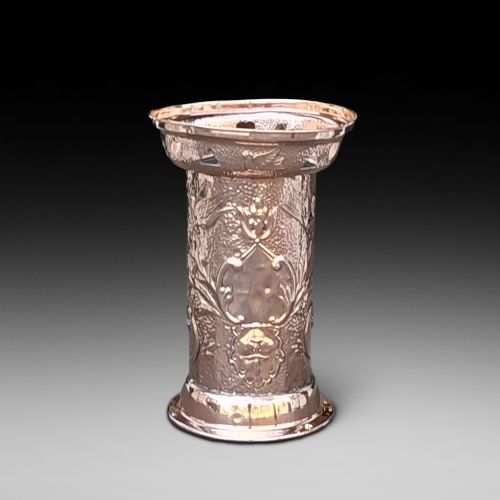
A victorian hallway umbrella stand brings functional utility to an entrance hall, designed to hold walking sticks and wet umbrellas safely off the floor. The examples seen here range from compact half-round brass frames to larger timber hall seats combining coat hooks, mirrors and umbrella compartments.
Most pieces date from the nineteenth and early twentieth centuries, spanning Victorian, Edwardian and Art Nouveau periods. Oak, mahogany, cast iron and brass dominate the forms, reflecting the heavy usage expected in a period hallway.
Materials and construction
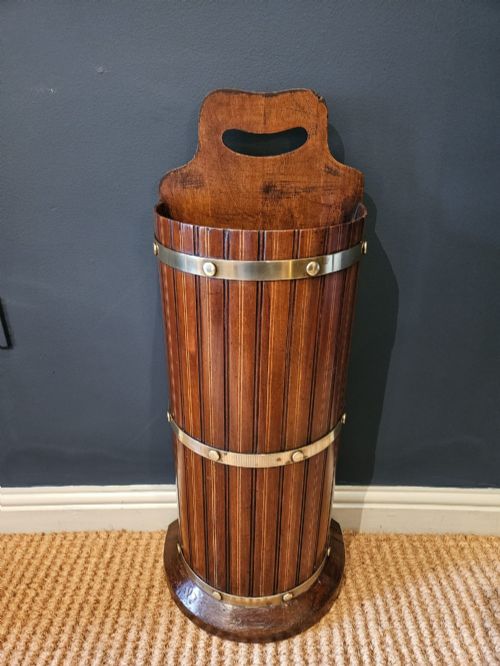
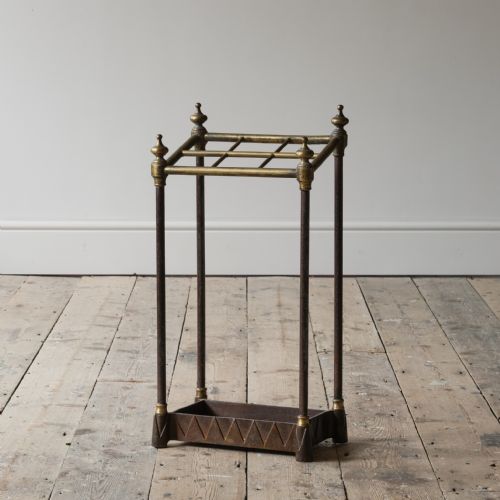
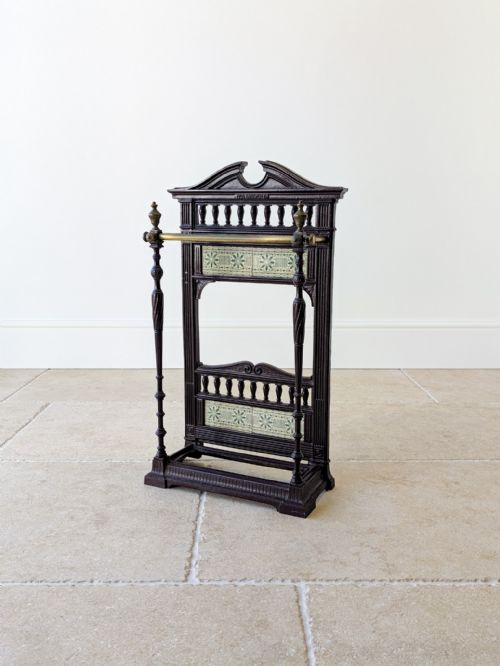
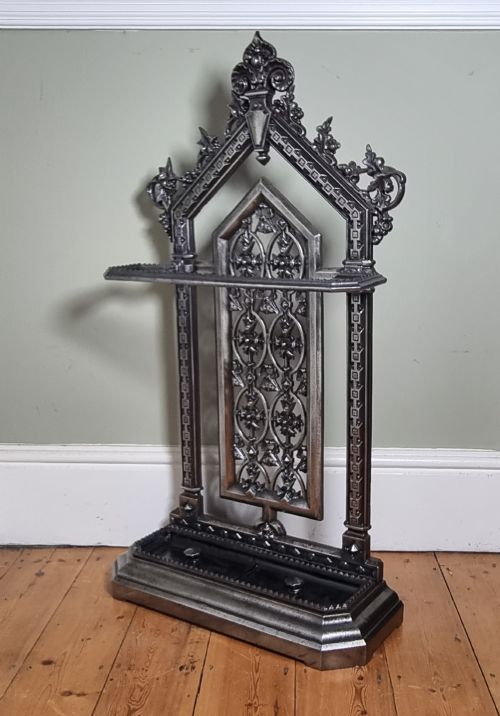
Foundries produced heavy cast iron and brass frames using sand casting and metal turning, often incorporating drip trays at the base to catch rainwater. Coopered timber work utilised staves of oak held together with brass bands, while bentwood items employed steamed beechwood forced into curved structural shapes.
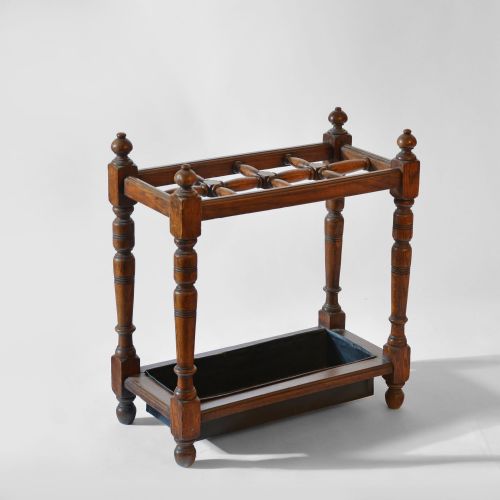
Joinery in the wooden hall stands relied on traditional mortise and tenon joints, complemented by turned spindles and carved panels. Decorative elements such as ball finials, ceramic inserts and stamped foundry marks finished the metalwork.
Footballeur cast iron stands exist to keep muddy sports equipment upright after a damp nineteenth-century afternoon outdoors.
Assessing quality
Quality rests on the integrity of the original construction and the weight of the materials used, particularly in the thickness of the cast iron or the gauge of the brass framework. Heavier metals and dense hardwoods such as oak and mahogany endure wet umbrellas without structural distortion.
The sophistication of the design sets finer examples apart, seen in crisp casting details on foundry pieces or complex coopered barrel work with intact removable drip trays. Maker attribution through stamps or registration numbers also elevates the standing of an individual piece.
Coalbrookdale·Théodore Deck·Thomas Jeckyll·Thonet
The Victorian Hallway Umbrella Stand Glossary
- Demi-lune
- A half-moon shape allowing the stand to sit flush against a hallway wall. This profile suits narrow corridors.
- Coopered
- Built using wooden staves joined edge to edge and bound with metal hoops, resembling a barrel. Oak examples frequently employ this technique.
- Drip tray
- A metal or ceramic base pan placed beneath the umbrellas to collect moisture. These trays are often removable for emptying.
- Finial
- A decorative terminal ornament finishing a post or corner. Brass stands often feature ball finials.
- Bentwood
- Timber shaped by exposure to steam and bent under pressure. Beechwood is commonly used for this process.
Victorian Hallway Umbrella Stand: Frequently Asked Questions
How do I clean a brass umbrella stand?
Use a soft cloth to remove surface dust without abrasive cleaners that strip the aged patina. Gentle washing preserves the original metal finish.
Ensure the interior base remains dry after cleaning to prevent corrosion around the lower rim and tray area.
Where should I place a hallway stand?
Position the piece near the main entrance where wet items arrive from outside. Allow sufficient clearance around coat hooks or adjacent furniture.
Keep wooden and iron stands away from direct heat sources to protect timber joints and metal finishes from stress.
How do I spot a replacement drip tray?
Inspect the fit within the base frame and check for matching wear patterns between the upper structure and the lower pan. Replacements often fit too loosely or show different oxidation levels.
Original trays typically display correct period manufacturing marks and uniform patination consistent with the outer frame.
Can these stands handle modern walking sticks?
Most historic dividers accommodate standard umbrella handles and walking stick shafts without difficulty. The circular rings and grid separations fit standard dimensions.
Very slender modern items might slip through wider nineteenth-century cast iron lattice patterns, so check the aperture spacing.