



Victorian Hallstand Umbrella Rack
These victorian hallstand umbrella rack pieces organise hats, coats and walking sticks in entrance halls with robust metal and timber construction.
Victorian Hallstand Umbrella Rack
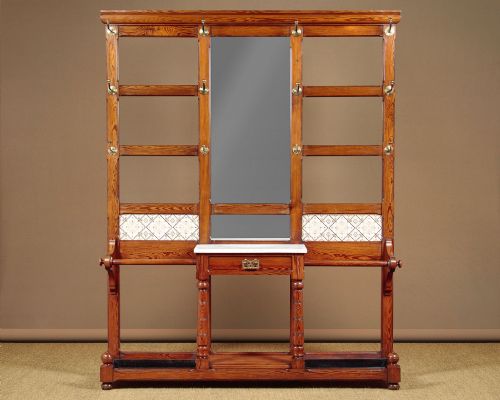
A victorian hallstand umbrella rack serves the entrance of a home by combining coat hooks, umbrella wells and mirror panels into a single tall unit. The pieces found here span the Victorian and Edwardian periods, stretching from the middle of the nineteenth century into the early twentieth century.
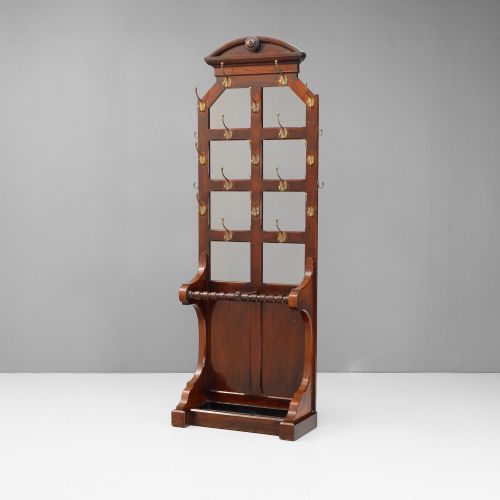
Makers produced these items in various woods such as oak and mahogany alongside heavy metal frames. Common forms include narrow hall stands for compact spaces and large country house examples with carved details or built-in marble surfaces.
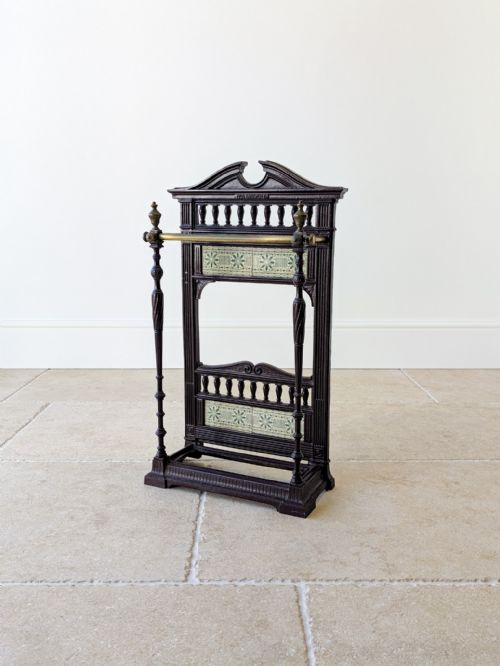
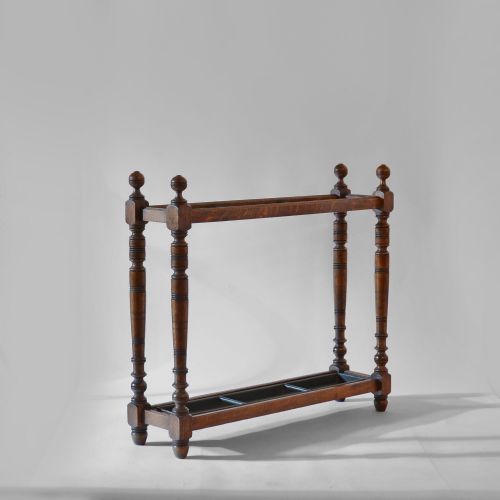
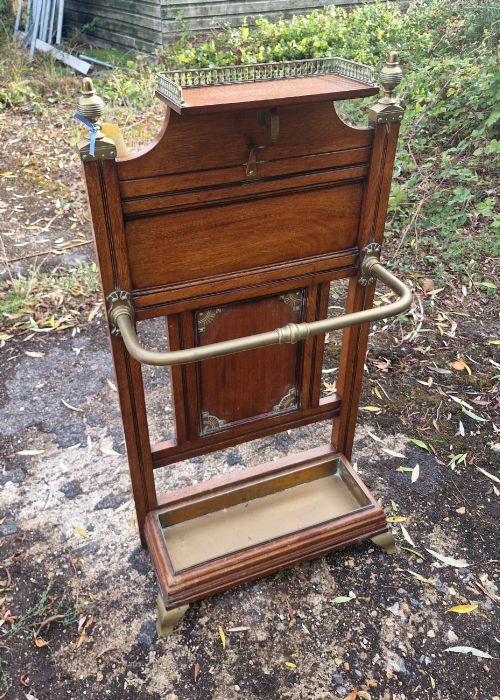
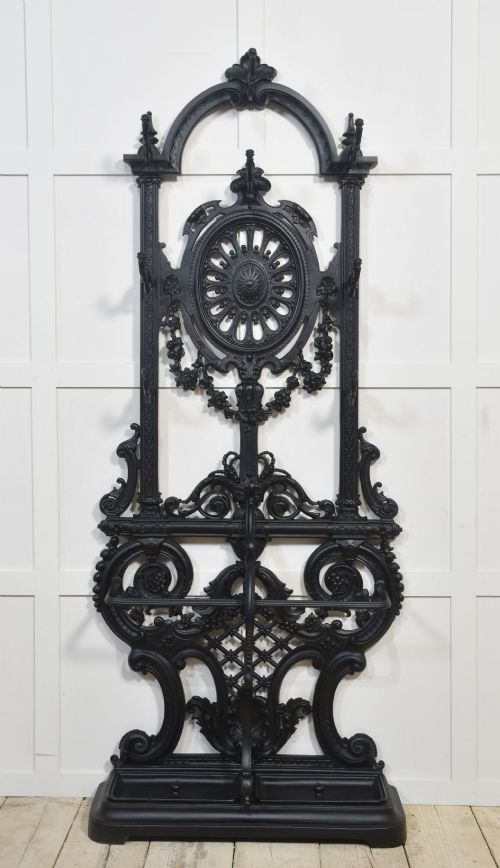
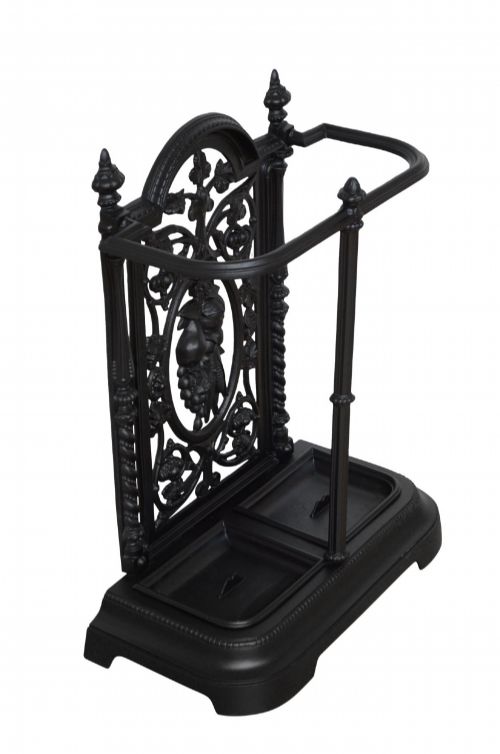
The selection ranges from simple cast iron stick stands to elaborate hallstands incorporating mirrors and ceramic drip pans. Many examples draw on historical design movements including Gothic Revival and the Aesthetic Movement.
Assessing Craftsmanship and Material Grade
Quality rests in the crispness of the casting work on iron stands and the depth of the hand carving on timber frames. Superior examples display sharply defined details in foliage or figural carvings, whereas lesser pieces show softer, repetitive moulding.
The integrity of the construction determines longevity, particularly where umbrella drip trays meet the main frame. Better pieces utilise durable metals and seasoned hardwoods that resist warping from moisture and daily use.
Listings feature oak, mahogany, cast iron and brass, reflecting the robust materials favoured by nineteenth-century makers for entrance hall furniture.
Coalbrookdale·Falkirk Ironworks·James Shoolbred
The Victorian Hallstand Umbrella Rack Glossary
- Cast Iron
- An iron-carbon alloy poured into moulds to create rigid structures. It allowed makers to produce intricate, pierced patterns for umbrella stands.
- Aesthetic Movement
- A late nineteenth century design style emphasising visual beauty over narrative content. Pieces in this style often feature clean lines or Japanese-inspired motifs.
- Gothic Revival
- An architectural and decorative style drawing on medieval forms. Hallstands in this category frequently display pointed arches, tracery and heavy carved oak.
- Faux Bamboo
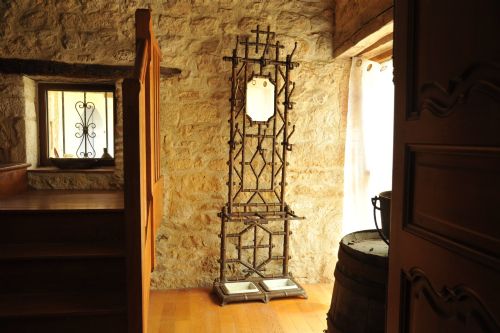
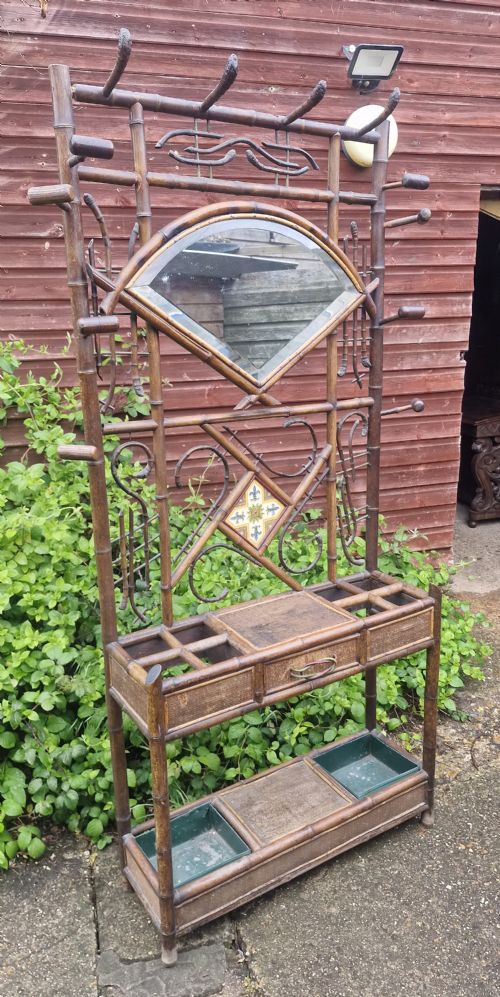
- A decorative finish where wood or metal is carved and painted to resemble bamboo stems. This technique gained popularity during the late nineteenth century.
- Bentwood
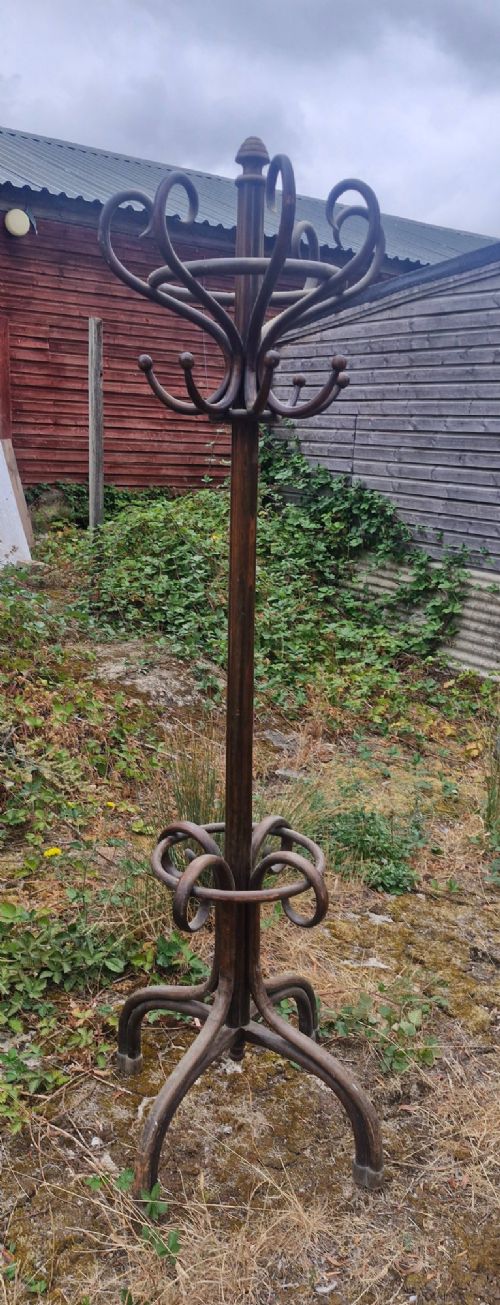
- Wood softened by steam and bent into curved shapes under pressure. It was widely utilised for lightweight coat and hat stands during the early twentieth century.
Victorian Hallstand Umbrella Rack: Frequently Asked Questions
What is the difference between a hallstand and an umbrella stand?
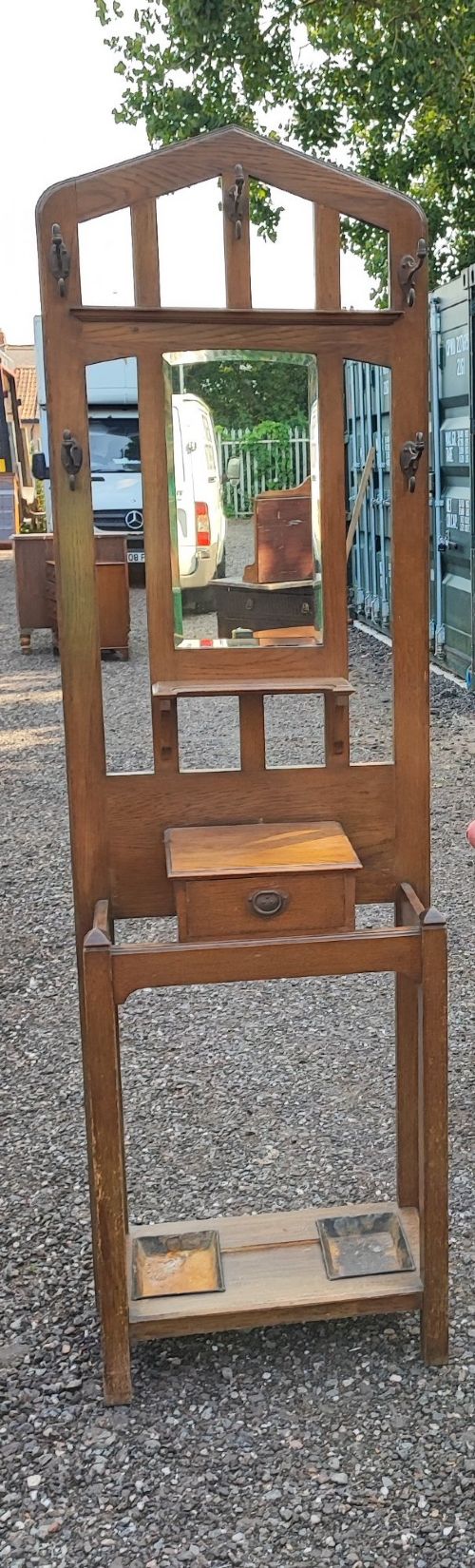
A hallstand combines coat hooks, hat storage, a mirror and umbrella receptacles into a single upright piece of furniture designed for an entrance hallway. An umbrella stand, or stick stand, is a smaller standalone vessel or frame dedicated solely to holding walking sticks and wet umbrellas.
While both served the same domestic purpose of greeting visitors and containing outdoor gear, hallstands anchored the main wall of a hall while umbrella stands sat independently on the floor.
How do I care for a wooden hallstand?
Keep wooden hallstands away from direct heat sources and damp environments to protect the polished oak or mahogany surfaces from splitting. Apply a quality beeswax periodically to nourish the grain and maintain the finish.
Ensure that umbrella drip pans are regularly emptied and dried to prevent moisture from damaging the base of the timber frame.
Were these pieces used in small homes?
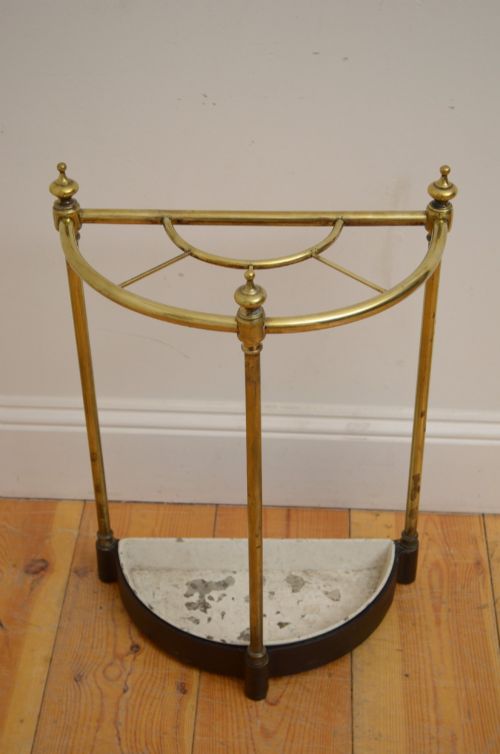
While grand country houses utilised massive carved oak hallstands, makers also produced narrow hall stands and compact half-moon umbrella racks suited for smaller townhouses. These scaled-down versions provided the same functional storage for hats and coats without dominating narrow entryways.
Cast iron stick stands offered a particularly compact footprint for modest hallways.
How do I identify the period of a hallstand?
Dating relies on stylistic clues and construction materials, such as heavy Gothic Revival carvings pointing to the mid nineteenth century and lighter bentwood forms indicating the early twentieth century. Aesthetic Movement and Japanese-inspired faux bamboo details typically suggest the final decades of the nineteenth century.
Examining the hardware, mirror bevelling and backboards further helps narrow down the manufacturing decade.