




Victorian Hall Chairs Set
These victorian hall chairs set groups bring robust timber seating and heraldic character directly into your entranceway.
Victorian Hall Chairs Set
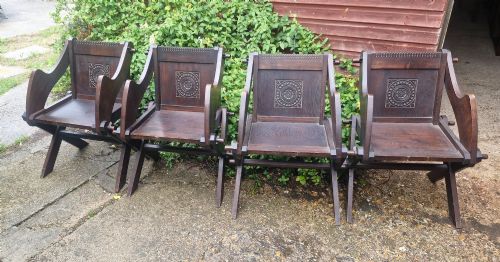
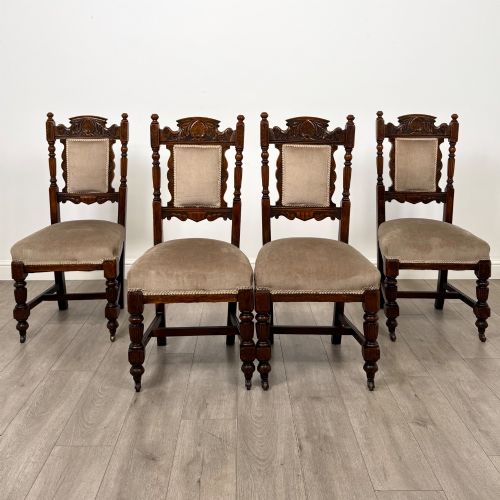
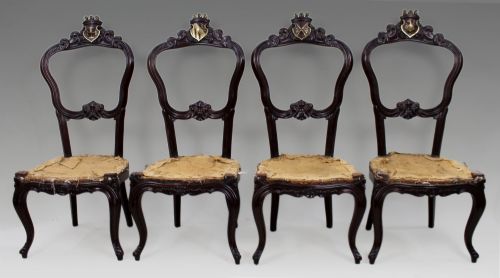
A victorian hall chairs set provides matching wooden seating traditionally placed in grand entranceways or reception rooms, often featuring carved backs and heraldic crests. These groupings emerge from the nineteenth century, ranging from simple oak and mahogany designs to elaborate Gothic Revival and Spanish styles.
Buyers frequently encounter sets of three, four, or six pieces constructed from hardwoods like oak, mahogany, ash, and elm. While some serve as formal hall seating with solid timber seats, others incorporate leather, fabric, or tapestry upholstery for reception spaces.
Origins span standard Victorian production, nineteenth-century Irish workshops, and specific revivals such as Jacobean, Rococo, and Gothic. The form prioritises a rigid silhouette designed to stand against a wall rather than provide deep domestic comfort.
Materials and construction
Cabinetmakers built these seats primarily from solid oak and mahogany, relying on the structural strength of dense hardwoods to support heavy carving and upright forms. Secondary timbers like ash, elm, and pitch pine also appear, shaped through traditional joinery techniques.
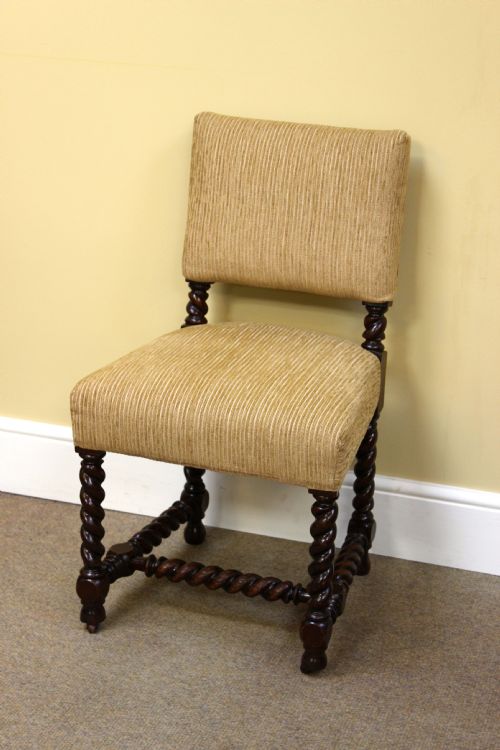
Decoration often involved deep hand-carving applied directly to wooden back panels, alongside turned components such as barley twist legs. Upholstered variants utilised materials like brass studs, leather, hessian, and tapestry fabric to secure padded surfaces.
Current listings feature oak, mahogany, ash, elm, and pitch pine across Victorian, Gothic Revival, and Spanish Revival styles.
Determinants of quality
Quality rests upon the crispness of the timber carving and the density of the chosen hardwood, separating utilitarian seating from bespoke commissions. Superior sets display deeply articulated heraldic crests, balanced proportions, and seamless joinery across every chair in the group.
The integrity of the timber grain and the original weight of the wood dictate endurance over decades of domestic use. Minor variations in grain pattern between matching pieces reveal the hand-selected nature of superior sets.
Holland & Sons·George Morant
The Victorian Hall Chairs Set Glossary
- Heraldic crest
- A carved or painted emblem representing a family coat of arms. These motifs frequently crown the wooden backsplats of nineteenth-century reception seating.
- Gothic Revival
- An architectural and decorative style drawing on medieval ecclesiastical forms. It manifests in pointed arches, trefoils, and heavy structural timber.
- Barley twist
- A turning technique resembling a spiralling rope. This decorative profile appears frequently on the uprights and legs of nineteenth-century wooden frames.
- Backsplat
- The central vertical wooden panel of a chair back. In entranceway seating, this component often carries the main carved decoration or crest.
Victorian Hall Chairs Set: Frequently Asked Questions
Where were hall chairs placed?
These chairs stood primarily in entrance halls, corridors, and reception rooms of grand nineteenth-century houses. They acted as formal seating for visitors waiting to be announced rather than casual lounge furniture.
Because they lined the walls of high-traffic zones, their designs emphasised upright posture and visual authority over physical comfort.
How do I identify Gothic Revival pieces?
Gothic Revival items feature architectural motifs borrowed from medieval churches, such as pointed arches, quatrefoils, and heavy chamfered framing. The timber is often dark oak or pitch pine.
These pieces project a solemn, monumental character that distinguishes them from lighter domestic seating styles of the same era.
Are these chairs meant for daily dining?
Most of these pieces feature rigid wooden seats designed for temporary reception use rather than prolonged sitting. Using them around a dining table requires adding cushions for comfort.
However, some listed examples explicitly combine dining and hall functions through sturdier proportions and upholstered surfaces.
What woods were used most often?
Oak and mahogany dominate these collections, prized for their strength, grain depth, and suitability for deep carving. Lighter timbers like ash, elm, and pitch pine appear in regional or vernacular pieces.
The choice of wood usually reflects the prevailing aesthetic of the specific revival style employed by the maker.