



Victorian Green Velvet Sofa
A victorian green velvet sofa brings rich colour and deep comfort to a room, offering sturdy nineteenth-century timber frames paired with luxurious pile.
Victorian Green Velvet Sofa
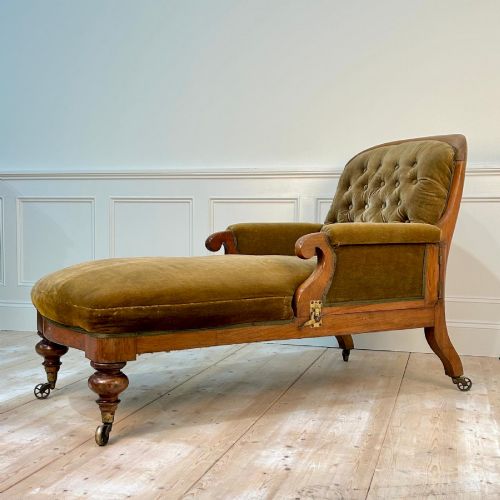
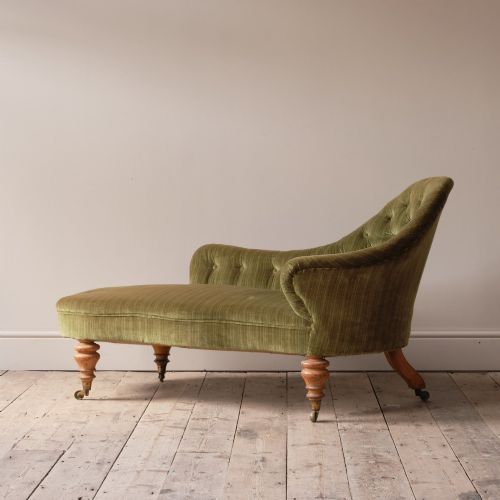
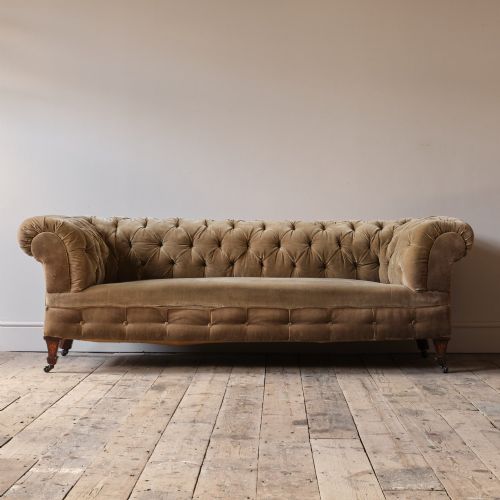
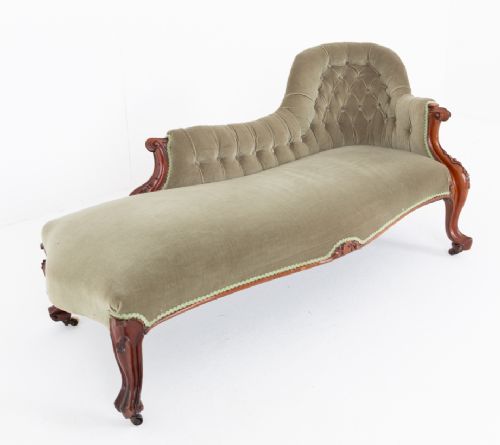
Buyers browsing a victorian green velvet sofa encounter nineteenth-century seating forms ranging from button-backed Chesterfields and spacious country house settees to elegant rosewood and walnut chaise longues. These pieces typically originate from the Victorian period, with occasional examples spanning from the Regency era through to the turn of the twentieth century.
The selection includes specific variations such as carved walnut conversation seats, mahogany framed upholstered settees, and large reception salon chaises. Makers and suites also appear, including drawing room suites and ebonised Aesthetic period arrangements featuring matching chairs alongside the primary seating.
Materials and construction
Frames rely on dense hardwoods like walnut, mahogany, rosewood, and beech to provide structural integrity for these substantial seats. Turnings, carvings, and polished show-wood frames frame the upholstered sections.
Upholstery involves traditional foundation materials including hessian combined with velvet coverings, often finished with brass details or deep buttoning secured through the padded structure.
Victorian Green Velvet Sofa Retail Price Guide 2026
Typical asking prices for victorian green velvet sofa among the pieces listed under this phrase on Sellingantiques today, from the lower quarter to the upper quarter. They describe what is for sale here now, not the wider market.
Conversation seats let two people whisper sweet nothings back-to-back without ever needing to swivel their necks.
Distinctions in quality
The standard of a piece rests upon the crispness of the timber carving and the sophistication of the timber frame's joinery. Superior examples display carefully selected grain patterns in walnut or rosewood and harmonious proportions across larger forms like settees and salon suites.
Upholstery execution separates simpler work from master craftsmanship, visible in the precision of deep buttoning, the symmetry of pleating, and the choice of textile weight. Maker attribution, when present through stamps or established workshop records, further elevates the standing of an individual seating piece.
Howard and Sons·Jas / James Shoolbred·C Hindley and Sons
The Victorian Green Velvet Sofa Glossary
- Chaise longue
- An upholstered sofa in the form of a chair with a seat long enough for the legs. These daybeds are designed for reclining while remaining seated upright.
- Chesterfield sofa
- A large upholstered couch traditionally featuring deep buttoning and arms of the same height as the back. This form offers generous depth and upright cushioned support.
- Conversation seat
- A multi-seated upholstered furniture piece shaped to allow occupants to face different directions while conversing. These circular or serpentine forms often feature central padded backs.
- Settee
- A long upholstered wooden bench with a back and arms designed for multiple people. This term is often used interchangeably with sofa in nineteenth-century contexts.
Victorian Green Velvet Sofa: Frequently Asked Questions
How do I clean antique velvet?
Antique velvet requires gentle brushing with a soft-bristled brush to lift the pile and remove surface dust. Avoid vigorous rubbing or water-based cleaning agents that can flatten or damage the delicate fabric.
For deeper cleaning, consult a specialist conservator experienced in handling historic textiles and traditional nineteenth-century upholstery materials.
Were these sofas originally green?
Many nineteenth-century seating pieces were upholstered in rich tones, though textiles were frequently chosen to suit specific domestic interiors. Green velvet has long been favoured for its depth and visual warmth.
While some pieces retain early or original upholstery fabrics, others have been recovered during their history to match contemporary decorative schemes.
How do I identify a Victorian frame?
Victorian frames typically utilise dense hardwoods such as walnut, rosewood, and mahogany, often shaped with hand-carved details or exposed polished timber. Construction methods visible underneath generally include traditional hand-tied springs and webbing.
Stylistic cues such as buttoned backs, scrolled arms, and turned wooden legs help distinguish these nineteenth-century forms from later reproductions.
Can I use these sofas daily?
These pieces were built for domestic reception rooms and drawing rooms, making them suitable for normal sitting when treated with care. The underlying hardwood frames and traditional sprung foundations offer sturdy support.
Placing them away from direct sunlight protects the timber finish and prevents the velvet pile from fading over time.