





Victorian Green Man Furniture
Victorian green man furniture brings deep-relief carved foliage and mythological faces into functional nineteenth-century domestic interiors.

Victorian Green Man Furniture
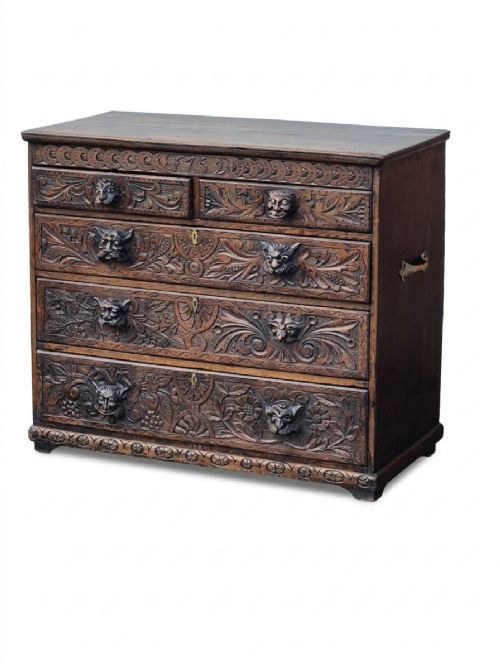
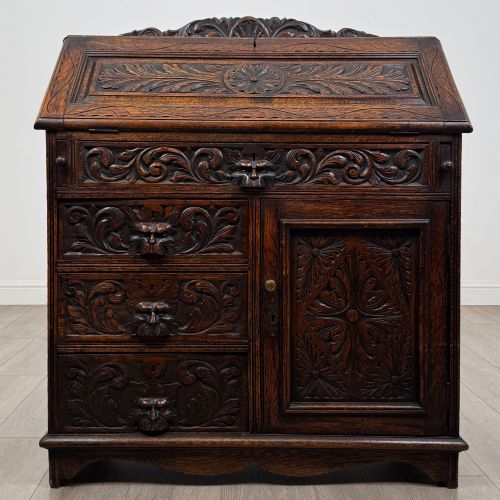
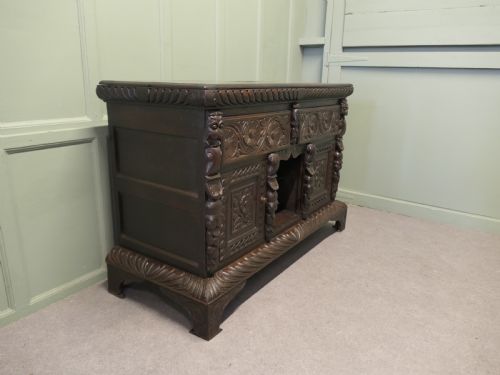
Victorian green man furniture comprises substantial oak seating, storage and display pieces dominated by carved forest foliage and male faces sprouting leaves. These works emerge primarily from the nineteenth century, aligning with Gothic revival, Jacobean revival and Renaissance revival movements that favoured ornate woodworking.
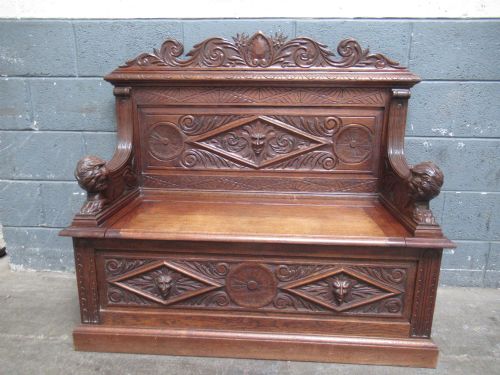
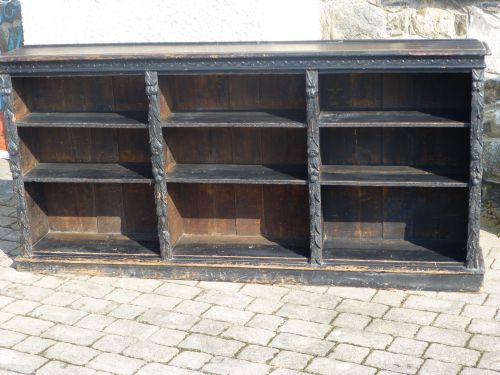
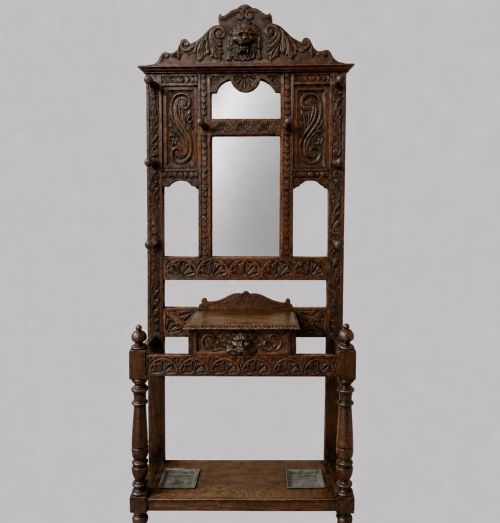
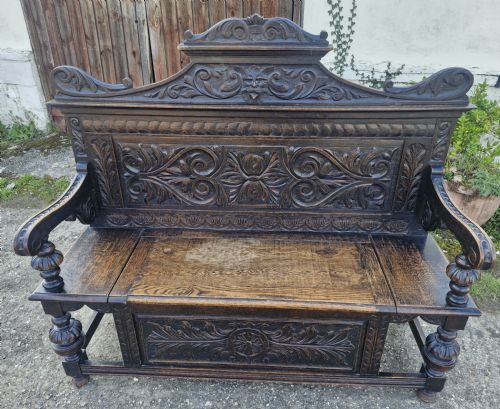
You meet these pieces most frequently in forms designed for entrance halls and living spaces, including hall stands with mirrors, monks benches, sideboards, bookcases and chests of drawers. The style spans standard oak, golden oak, ebonised oak and solid oak constructions, occasionally integrating brass hardware and leather upholstery.
The aesthetic bridges domestic utility with theatrical architectural detailing, utilising the green man motif as a central focal point on drop-front cabinets, buffets and davenport desks. Pieces range from straightforward hall benches to heavily carved dining tables and servers.
What varies in quality
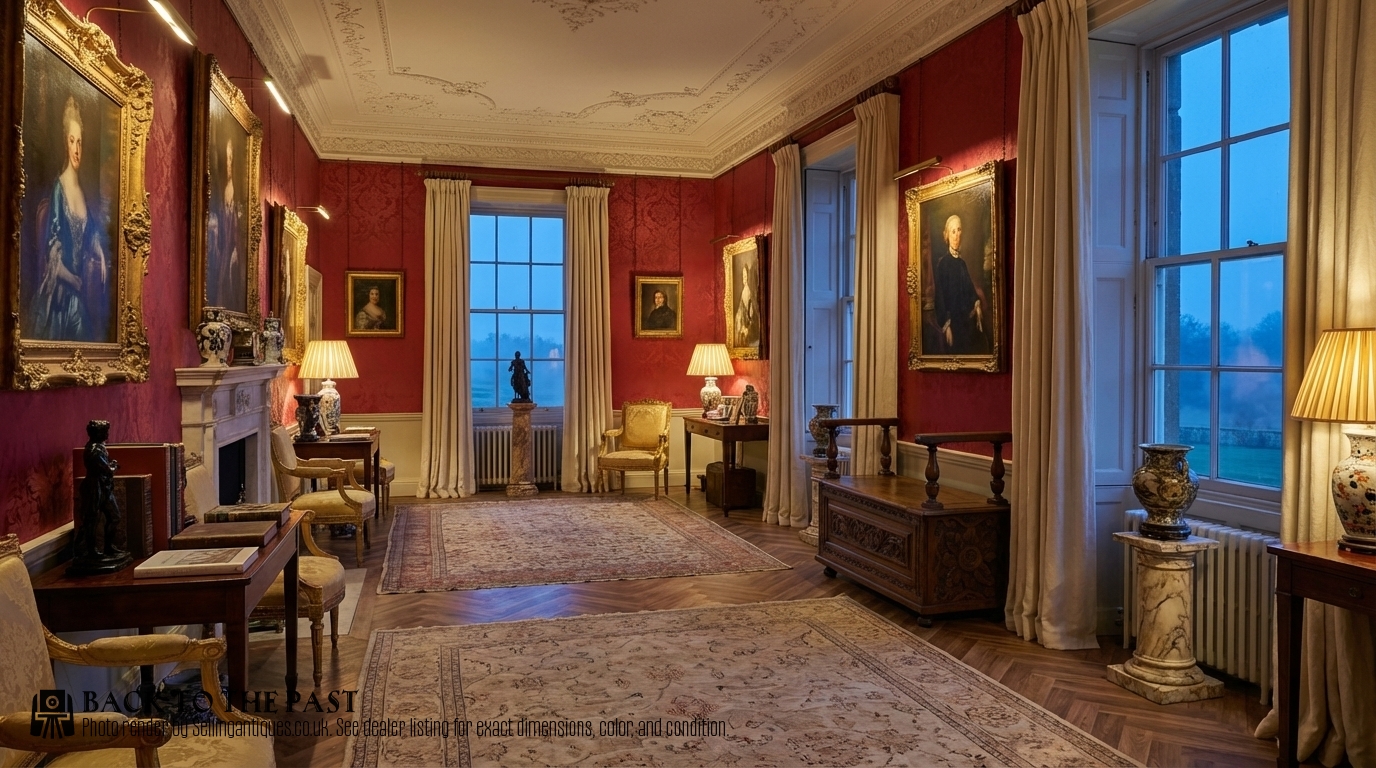
Quality rests upon the depth, sharpness and anatomical conviction of the woodcarving, distinguishing fluid, highly detailed foliage from flat or mechanical reproduction work. The choice of timber also dictates the standard, with solid oak and selected golden oak displaying superior grain patterning compared to lesser stock.
Proportion and structural integrity separate standard utility items from masterworks, particularly in large architectural forms like hall stands and sideboards where integrated mirrors and carved panels must align harmoniously.
Leafy woodland spirits stare out from unexpected places, ensuring your hallway furniture watches you return home every single evening.
The Victorian Green Man Furniture Glossary
- Green man
- A sculptural architectural motif of a human face emerging from or entwined with leaves, vines and branches. It symbolises rebirth and spring in various decorative traditions.
- Gothic Revival
- An architectural and decorative style drawing inspiration from medieval design. It frequently incorporates pointed arches, tracery and heavy carved woodwork.
- Ebonised oak
- Timber treated with a chemical stain or pigment to simulate expensive ebony wood. This dark finish was popular in nineteenth-century cabinet making for dramatic contrast.
- Monks bench
- A convertible piece of furniture functioning as a table with a hinged back that folds down to create a bench seat. They often feature storage compartments beneath the seat.
- Davenport desk
- A compact compact writing desk with a sloping lid, side drawers and a stationery compartment on top. They typically rest on small feet or casters.
Victorian Green Man Furniture: Frequently Asked Questions
What is a green man?
A green man is a decorative carving of a human face surrounded by or sprouting foliage from its mouth, nose or ears. The motif appears frequently in medieval stone architecture and Victorian woodwork.
In nineteenth-century furniture, these faces serve as expressive pulls, crests and central panel ornaments on large oak pieces.
How were these pieces used?
These items served practical functions in nineteenth-century homes, primarily in entrance halls, dining rooms and studies. Hall stands held coats, hats and umbrellas while providing mirror checks.
Sideboards, buffets and cabinets stored tableware and linens, whereas monks benches offered dual seating and table surfaces for daily living.
How do I date these items?
Dating relies on stylistic markers such as Gothic, Jacobean or Renaissance revival influences combined with timber selection and construction methods. The nineteenth-century examples often display specific regional revival traits alongside dense hand-carving.
Hardware, mirror bevelling and secondary woods further assist in narrowing the decade of production.
Are these pieces made of solid wood?
Most listings record solid oak, golden oak or ebonised oak as the primary material. Cabinet makers utilised heavy timber to support the deep relief carving characteristic of the style.
Some larger items integrate structural metal and glass panels alongside the timber framework.