



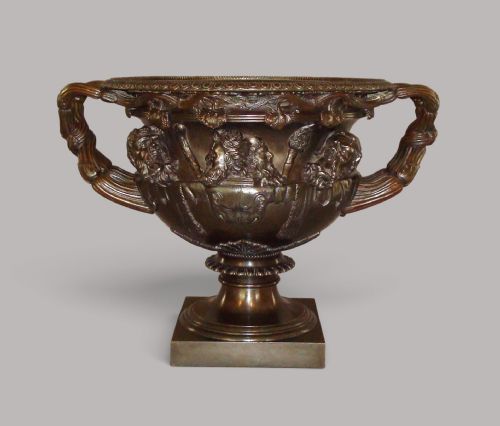


Victorian Grand Tour Vase
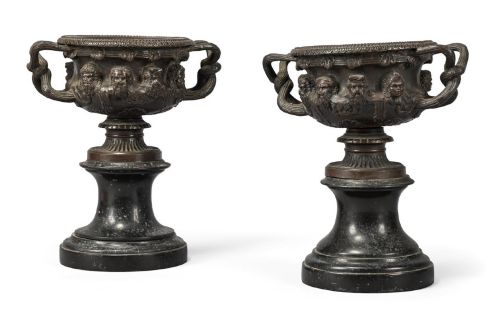
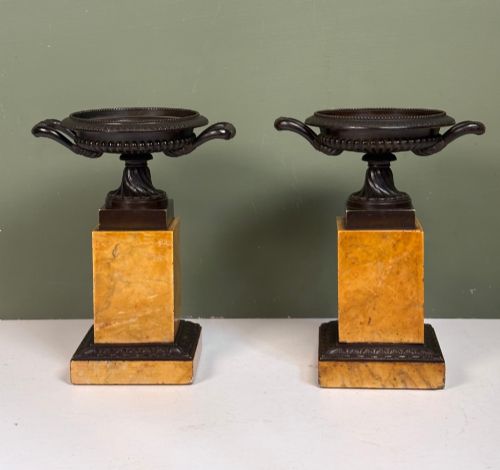
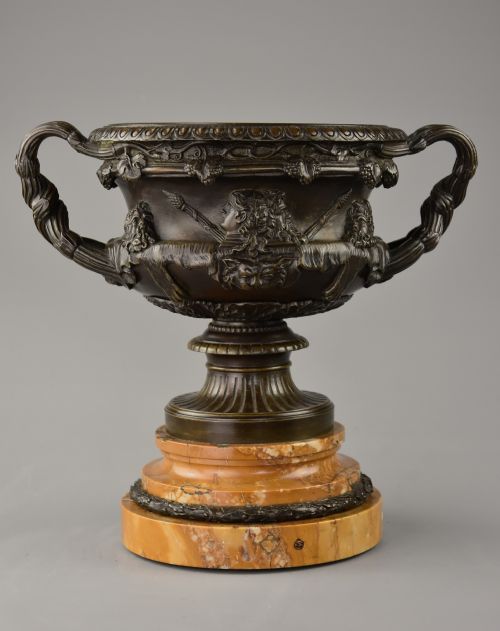
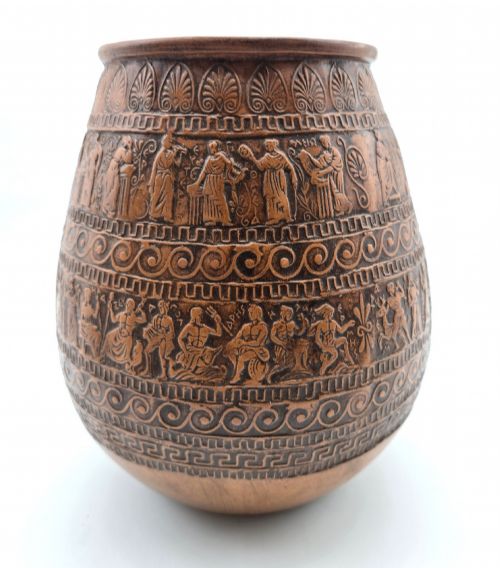
These bronze, marble, and terracotta pieces are a Victorian grand tour vase, collected by 19th-century travellers returning from classical sites in Italy.
Victorian Grand Tour Vase
A buyer searching for a victorian grand tour vase encounters decorative urns, ornamental ewers, and planters produced during the 19th century. These objects draw directly upon Neoclassical, Classical Revival, and Greek Revival styles, frequently modelled after famous ancient antiquities.
The most common forms on this page include bronze reductions of the Warwick Vase and the Albani Vase, alongside pedestal-mounted urns and serpentine marble vessels. Many of these items date from the mid to late 19th century, particularly around the 1850s to 1890s.
Originating as souvenirs for travellers touring Italy, these pieces bring classical Roman and Greek taste into domestic interior decoration. They range from small posy vases to large lidded bronze urns.
Materials and construction
These items rely principally on cast bronze, often patinated, combined with various forms of marble such as black marble and serpentine marble. Terracotta and wood also appear in the material record.
Many metal examples are cast as reductions of ancient monuments, requiring skilled foundry work to capture sculptural details after the antique originals. Stonework involves precise cutting and turning of marble and serpentine to form the bodies and pedestals of the vases.
Victorian Grand Tour Vase Retail Price Guide 2026
Typical asking prices for victorian grand tour vase among the pieces listed under this phrase on Sellingantiques today, from the lower quarter to the upper quarter. They describe what is for sale here now, not the wider market.
Travellers returning from Italy packed heavy bronze urns into their luggage to prove they had stood before the ancient ruins.
Evaluating the objects
Quality in these pieces depends heavily on the crispness of the casting and the depth of the patination on the bronze. Superior examples display sharp relief work that closely mirrors the classical sculpture they emulate.
The selection of stone also dictates the grade of the piece, with finely figured serpentine marble and heavy black marble bases separating standard souvenirs from more ambitious commissions.
The Victorian Grand Tour Vase Glossary
- Grand Tour
- A traditional trip through Europe, primarily Italy, undertaken by upper-class European young men of means as a part of their education. The souvenirs gathered on these journeys formed the basis for this category of decorative arts.
- Warwick Vase
- A colossal ancient Roman marble vase discovered at Tivoli and subsequently housed at Warwick Castle. 19th-century bronze reductions of this specific artefact form a major part of the surviving objects.
- Neoclassical
- A Western cultural movement in the decorative and visual arts drawing inspiration from the classical art and culture of ancient Greece or Rome. This aesthetic defines the ornamental vocabulary of these vases.
- Patination
- The process by which a bronze surface ages or is chemically treated to produce a specific surface colour and texture. Skilled patination enhances the sculptural definition of the metalwork.
Victorian Grand Tour Vase: Frequently Asked Questions
What is a grand tour vase?
These are 19th-century decorative objects cast in bronze, carved from marble, or formed in terracotta as souvenirs for travellers visiting classical sites in Italy.
They replicate ancient Roman and Greek antiquities, translating large architectural monuments into scale models for domestic display.
How were these vases displayed?
Victorian collectors placed these urns and ewers on mantelpieces, wooden pedestals, and side tables within formal reception rooms.
Their classical motifs signalled the owner's education, travel experience, and refined taste in antiquity.
How can I tell the age of a bronze vase?
Dating relies on examining the casting technique, the characteristics of the bronze patination, and the specific material combinations such as serpentine or black marble bases.
Pieces from the mid to late 19th century often show specific foundry methods and wear patterns associated with Victorian manufacturing.
What are the Warwick and Albani vases?
They are famous ancient marble vessels discovered in Italy that became prime subjects for 19th-century bronze reduction.
Foundries produced smaller scale bronze copies of these specific antiquities to satisfy the demand from travellers on the grand tour.