





Victorian Gothic Writing Table
A victorian gothic writing table brings heavy timber, pointed arches and functional writing surfaces together into one purposeful nineteenth-century object.
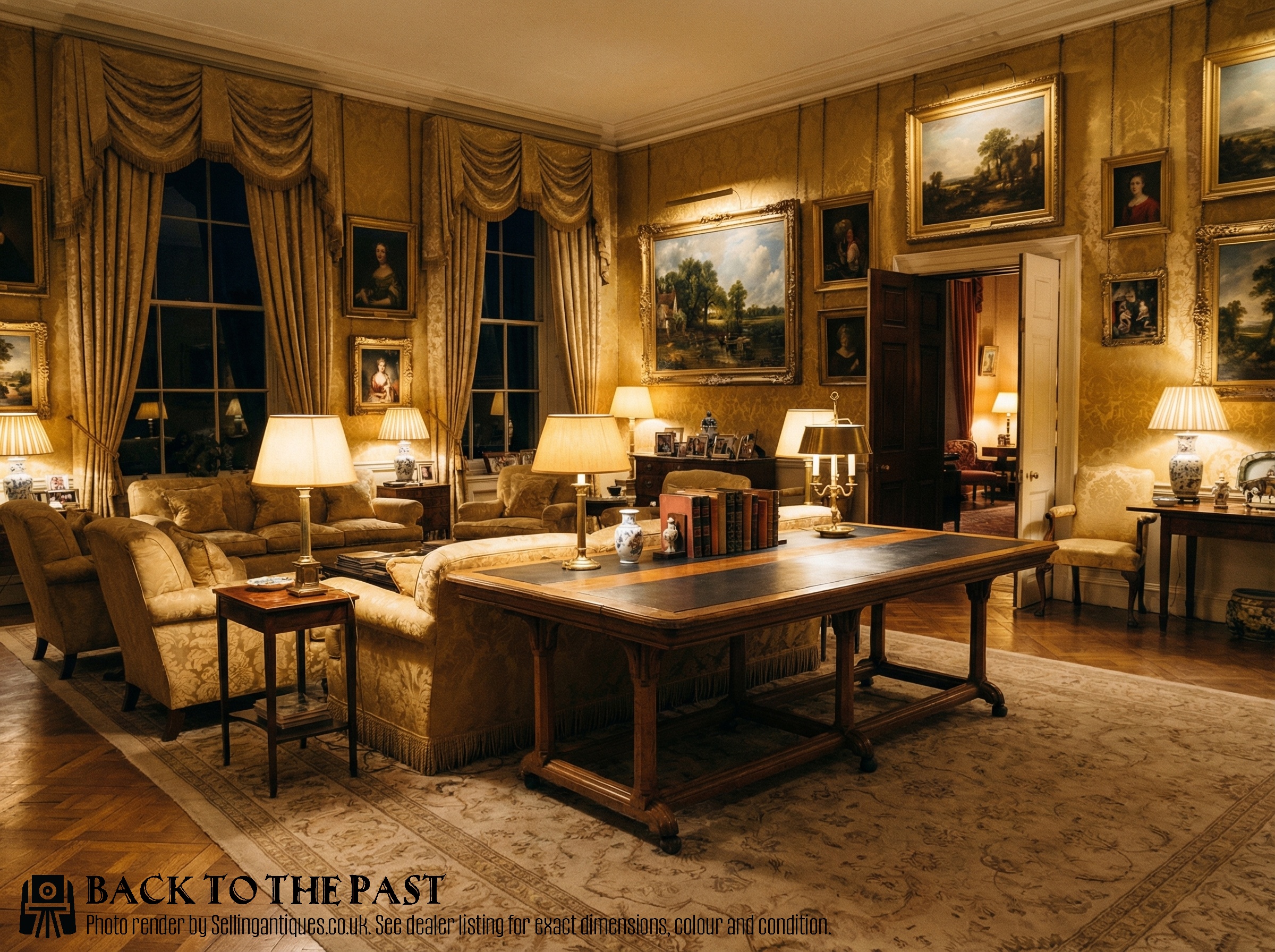
Victorian Gothic Writing Table
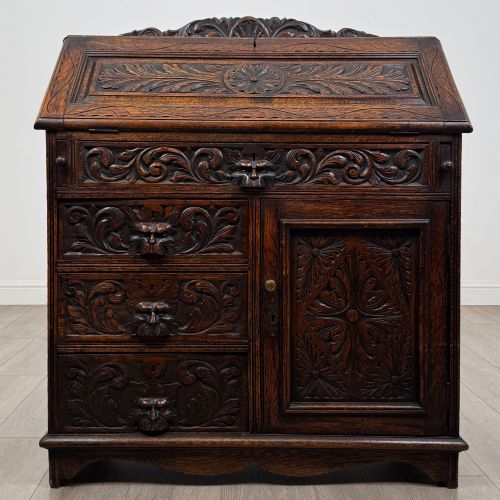
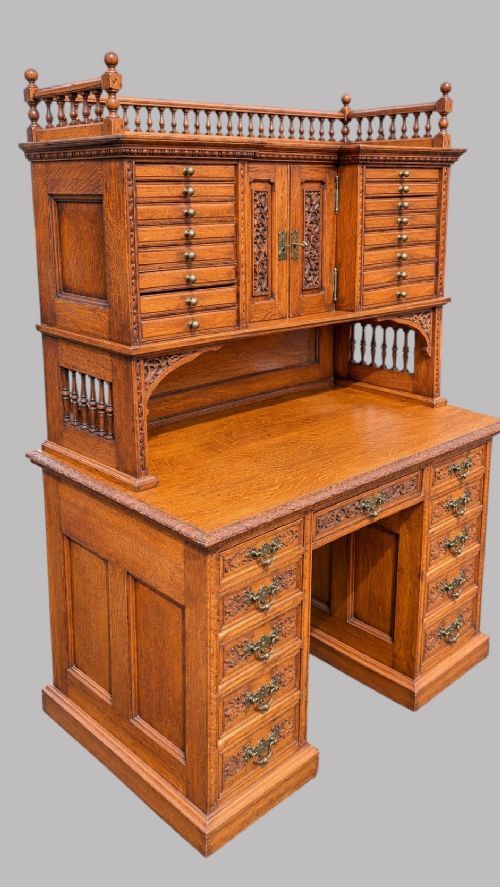
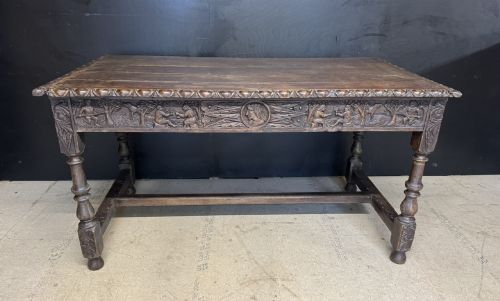
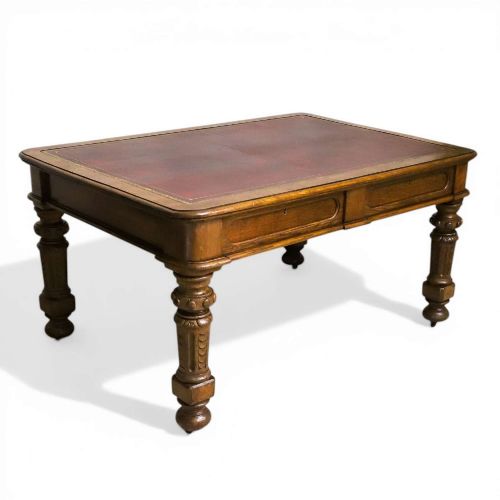
A victorian gothic writing table is a nineteenth-century desk or library table built under the influence of medieval architectural design, most frequently encountered in solid oak. These pieces range from compact kneehole desks and side tables with drawers to large partners writing tables and freestanding centre tables suitable for a library.
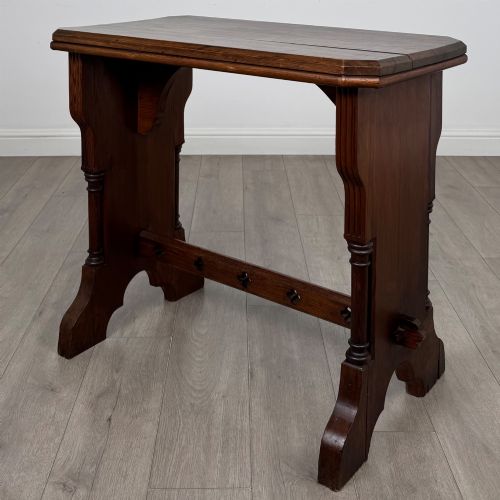
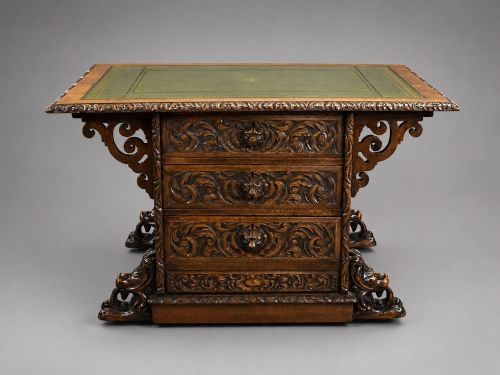
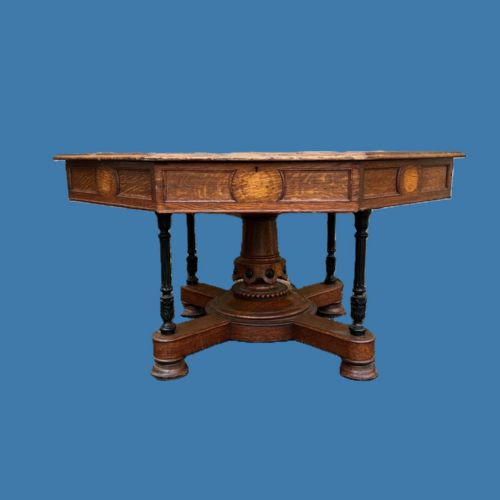
The prevailing aesthetic draws on Gothic Revival and Reformed Gothic styles, often displaying characteristic motifs such as Green Man carvings, tracery, and octagonal tops. Many examples incorporate original tooled leather writing surfaces, reflecting their primary purpose as places for correspondence and study.
Materials and Construction
Construction relies heavily on oak, alongside mahogany, pitch pine, walnut, burr walnut, and ebonised wood, reflecting the solid timber preferences of nineteenth-century cabinet makers. Brass mounts and handles provide functional contrast to the dark wood.
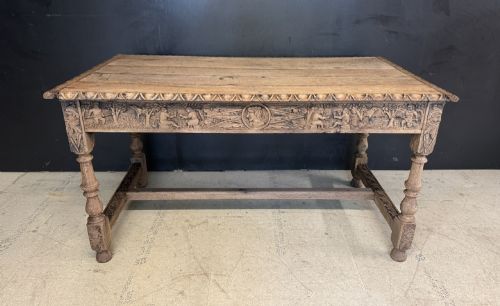
Carving is a defining technique, utilised for deep relief work on drawer fronts, friezes, and legs, often depicting foliage, masks, and architectural elements. Joinery techniques secure heavy timbers for prolonged use in domestic and institutional settings.
The listings on this page span the nineteenth century, with oak appearing as the dominant material alongside pitch pine and mahogany.
Distinctions in Execution
Quality rests in the depth and crispness of the timber carving, where hand-chiseled foliage and figural details show superior artistic execution compared to mechanical or shallow replication. The selection of wood also divides the range, particularly the choice of figured burr walnut or substantial quarter-sawn oak.
Howard & Sons·Richard Bridgen·Charles Bevan·Pugin
The Victorian Gothic Writing Table Glossary
- Gothic Revival
- An architectural and decorative style drawing inspiration from medieval design, featuring pointed arches, trefoils, and heavy massing. It dominated much of nineteenth-century furniture production.
- Green Man
- A sculptural motif depicting a human face surrounded by or sprouting from foliage, frequently carved into the woodwork of these tables. It symbolises rebirth and the spirit of nature.
- Library Table
- A large freestanding table designed to sit in the centre of a room rather than against a wall, often finished on all four sides with drawers or dummy drawers.
- Reformed Gothic
- A later nineteenth-century design approach that simplified Gothic forms, favouring geometric lines, exposed construction joints, and incised ornamentation over heavy medieval carving.
- Kneehole Desk
- A desk configuration featuring pedestals of drawers on either side of a central opening for the user's legs. This form provides substantial storage while maintaining a compact footprint.
Victorian Gothic Writing Table: Frequently Asked Questions
How do I identify a reformed gothic table?
Look for geometric incised decoration, straight structural lines, and visible construction joints rather than flowing medieval carvings. These pieces often feature octagonal tops and simpler hardware.
They reflect a lighter, more rational approach to design that emerged in the latter half of the nineteenth century.
Were these tables used in homes?
These tables served primarily in studies, libraries, and principal rooms of nineteenth-century houses where writing and correspondence took place. Larger versions functioned as partners desks for shared administrative tasks.
Institutional settings such as rectories and offices also utilised them for their durable construction.
What is a green man carving?
A Green Man carving portrays a face emerging from leaves and vines, acting as a decorative architectural motif borrowed from medieval churches. In furniture, it appears frequently on drawer fronts and friezes.
It represents a distinct link to medieval symbolism revived during the nineteenth century.
How do I care for leather writing surfaces?
Maintain the original tooled leather inset by keeping it away from direct sunlight and applying a neutral leather balm sparingly to prevent drying. Avoid heavy liquid cleaners that can damage the gold tooling.
Regular dusting with a dry cloth protects the surface during daily use.
What distinguishes a library table from a desk?
A library table is finished on all sides so it can stand freely in the centre of a room, whereas a standard desk is typically designed to back against a wall. Library tables often feature spacious tops for spreading out books and papers.
They may include drawers accessible from one or both long sides.