
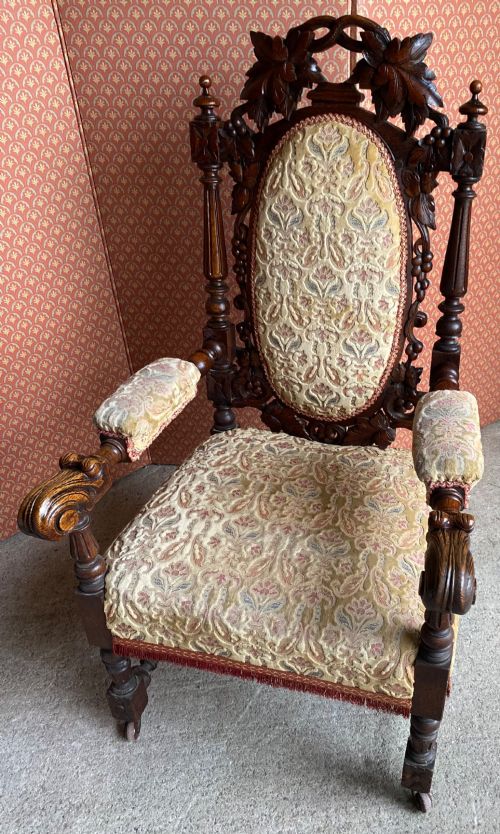
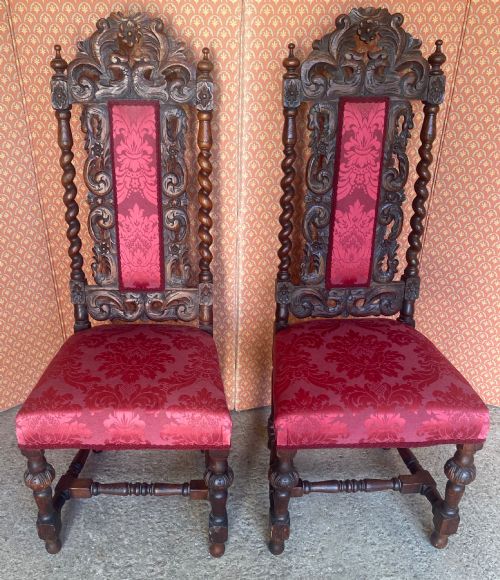
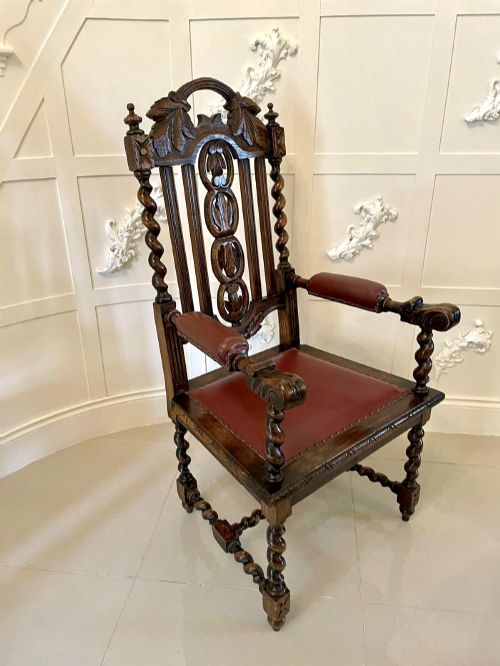
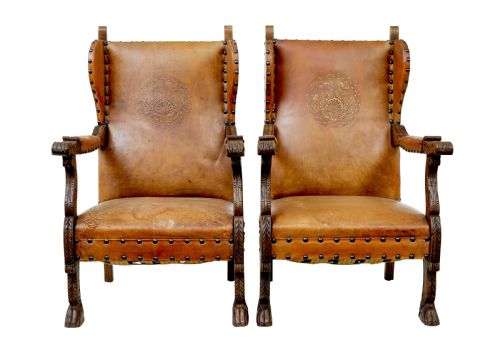



Victorian Gothic Throne Chair
When you search for a victorian gothic throne chair, you enter a world of heavy timber, high backs and architectural carving.
Victorian Gothic Throne Chair
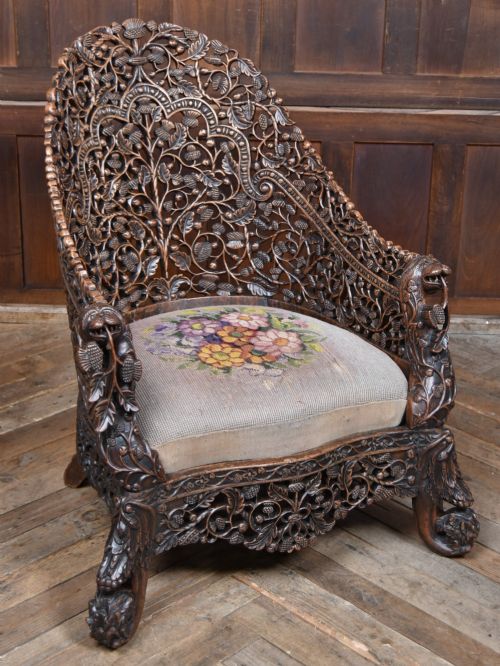
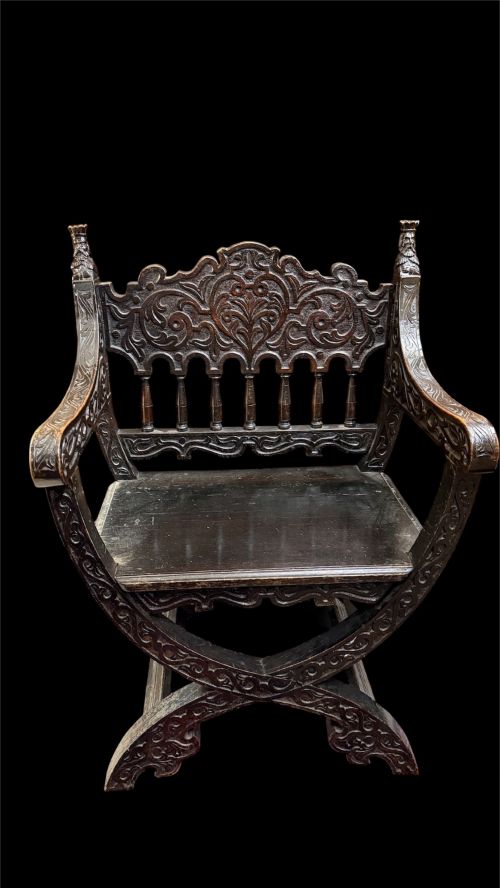
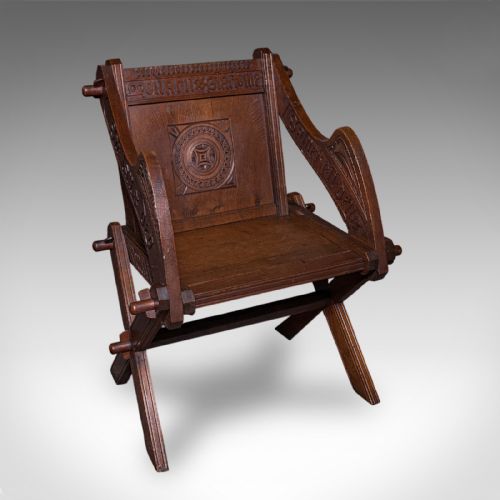
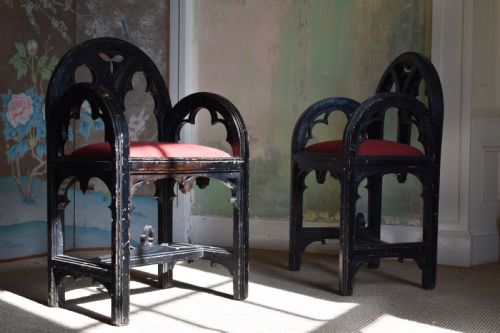
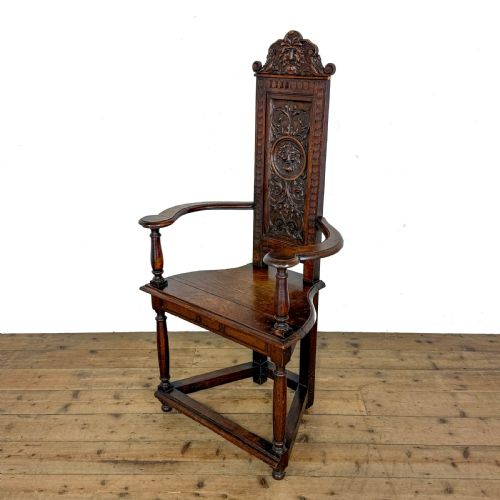
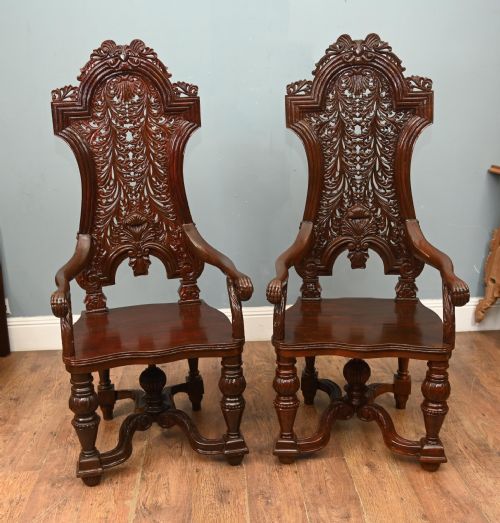
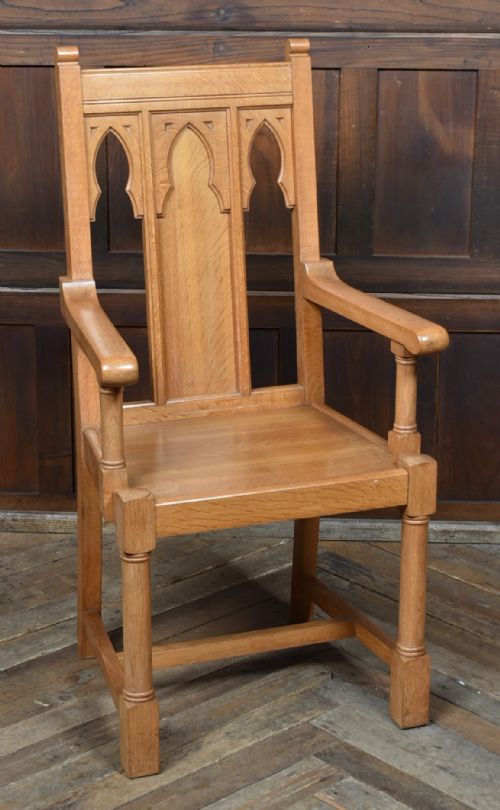
A victorian gothic throne chair is a substantial seating form designed to dominate a room with architectural presence and historical allusion. These pieces draw on medieval ecclesiastical and secular models, translating pointed arches, tracery and linenfold panelling into heavy domestic seating. Most examples on this page date from the nineteenth century, ranging from simple vernacular forms like Glastonbury chairs to elaborately carved oak thrones featuring green men or heraldic motifs.
Makers of the period adapted earlier styles such as Jacobean, Tudor and medieval Gothic Revival to satisfy Victorian tastes for historicism in domestic and ecclesiastical interiors. You will find armchairs, hall chairs and heavy elbow seats constructed for libraries, morning rooms, chapels and entrance halls. The forms serve both practical seating needs and symbolic functions, often acting as the visual anchor of a room.
The materials reflect a preference for durable native timbers, principally oak, supplemented by walnut, fruitwood and pitch pine. Upholstery ranges from plain embossed leather and tapestry to buttoned hides and textile panels. While some pieces adhere strictly to revivalist archetypes, others incorporate Arts and Crafts or French revival details.
How They Were Made
Construction relies heavily on solid oak joined by mortise and tenon techniques, creating a rigid frame capable of supporting deep relief carving. Workshops utilised hand chisels and gouges to render intricate foliage, dogs, hounds and grotesque masks directly into the timber. Panels were frequently pegged together, allowing the wood to expand and contract naturally without splitting.
Surface finishing involved wax polish or dark stains applied to accentuate the grain and impart an appearance of great antiquity. Where leather or fabric was integrated, upholstery nails with brass or bronze heads secured the textiles to the wooden framework. Turning lathes shaped the spindles and arm supports found on Glastonbury and Turner's chairs.
The archive and current listings show diverse revival influences, spanning Gothic, Jacobean, Renaissance and Arts and Crafts movements.
What Varies in Quality
The distinction between standard production and top-tier work rests on the depth and execution of the carving. Superior examples exhibit crisp undercutting, three-dimensional figures such as green men or hounds, and well-balanced proportions that prevent the heavy timber from appearing clumsy. Lesser pieces rely on shallow stamped decoration or mechanical plant-based ornamentation.
Material selection also defines the upper echelon of these chairs, with dense, figured oak and high-grade embossed leather commanding greater regard than plain softwoods or thin veneers. The architectural integrity of the joinery determines longevity, with tight joints and original pegged construction separating master workshop output from simpler provincial carpentry.
The Victorian Gothic Throne Chair Glossary
- Gothic Revival
- An architectural and decorative style drawing inspiration from medieval forms, pointed arches and structural stone masonry. This aesthetic dominated much nineteenth-century furniture design.
- Glastonbury Chair
- A folding armchair type with X-framed legs, sloping arms and a slanted panel back, traditionally associated with ecclesiastical seating. Many Victorian examples reproduce this medieval form in oak.
- Wainscot Chair
- A heavy wooden armchair constructed with panelled backs and solid wooden seats, typical of sixteenth and seventeenth-century English interiors. Victorian makers frequently revived this specific form.
- Green Man
- A sculptural architectural motif consisting of a face carved from or disgorged leaves and vines, symbolising rebirth. It appears frequently on the crest rails of nineteenth-century chairs.
- Turner's Chair
- A tripartite chair constructed entirely from turned wooden spindles and triangular seats, also known as a Saxon chair. The design dates to the Middle Ages and was revived during the Victorian era.
Victorian Gothic Throne Chair: Frequently Asked Questions
What is a victorian gothic throne chair?
A victorian gothic throne chair is a heavily carved wooden armchair produced during the nineteenth century, incorporating medieval architectural motifs like pointed arches and tracery.
These pieces were built primarily from oak for domestic libraries, halls and ecclesiastical settings, reflecting the era's fascination with historic revival styles.
Where were these chairs used?
Original placements included grand entrance halls, libraries, morning rooms and ecclesiastical spaces such as chapels. Their commanding height and architectural detailing made them focal points rather than casual seating.
In modern interiors, they function effectively as statement pieces in spacious rooms or studies where their substantial presence can be fully appreciated.
How do I identify a Glastonbury chair?
A Glastonbury chair is distinguished by its intersecting X-shaped underframe, sloping arms, and a flat panel back inscribed with text or simple tracery. The design allows the chair to be dismantled easily.
Nineteenth-century versions faithfully copy this medieval format, usually executed in solid English or Welsh oak with pegged joints.
What is the difference between a hall chair and a throne chair?
Hall chairs are generally lighter, more upright seats designed for temporary use in entrance halls, often featuring plain or carved wooden backs without upholstery. Throne chairs are much larger, heavier armchairs with high backs and padded leather or fabric seats.
Throne chairs are built for comfort and display, whereas hall chairs emphasise rigid posture and heraldic or carved decoration.