



Victorian Gothic Table Clock
These Victorian gothic table clock pieces bring together architectural brass frames and precision movements to anchor a room.
Victorian Gothic Table Clock
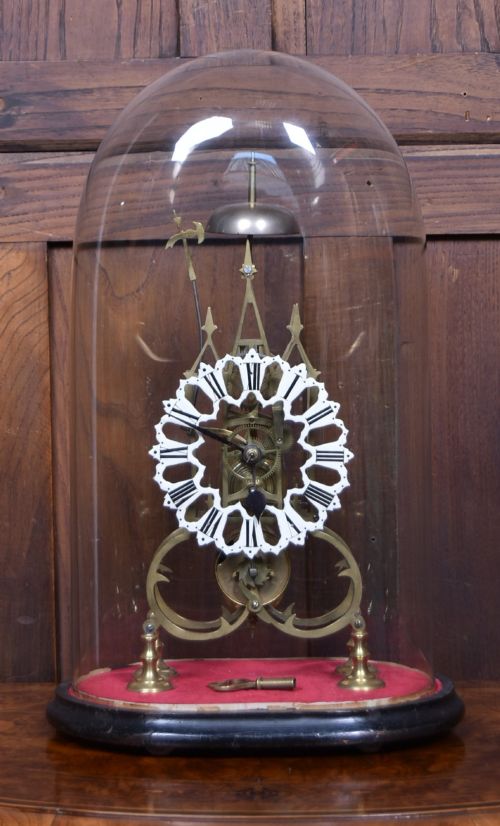
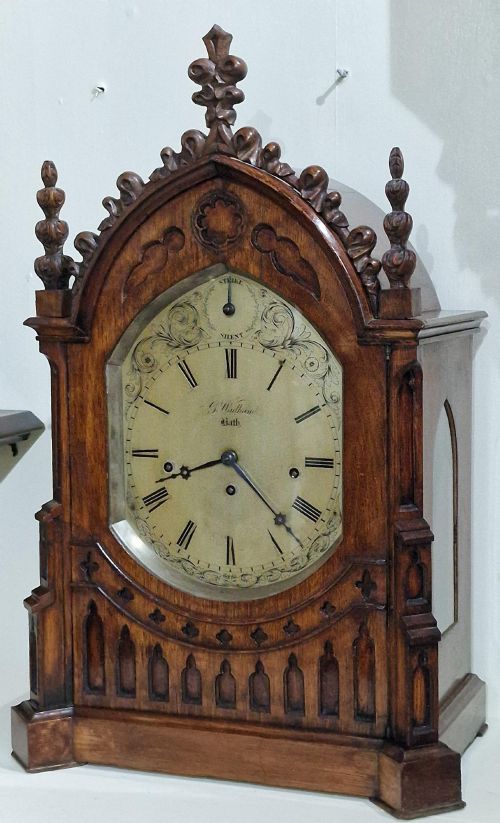
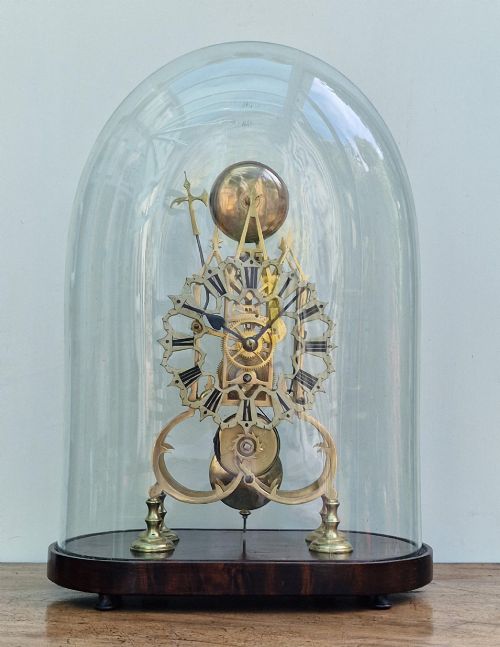
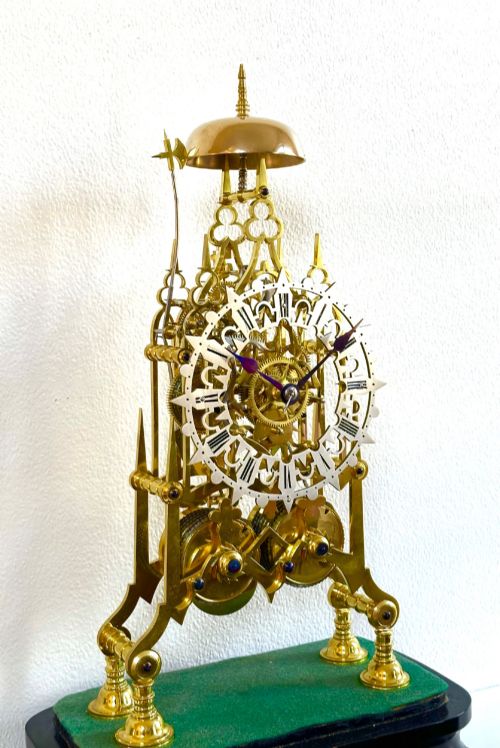
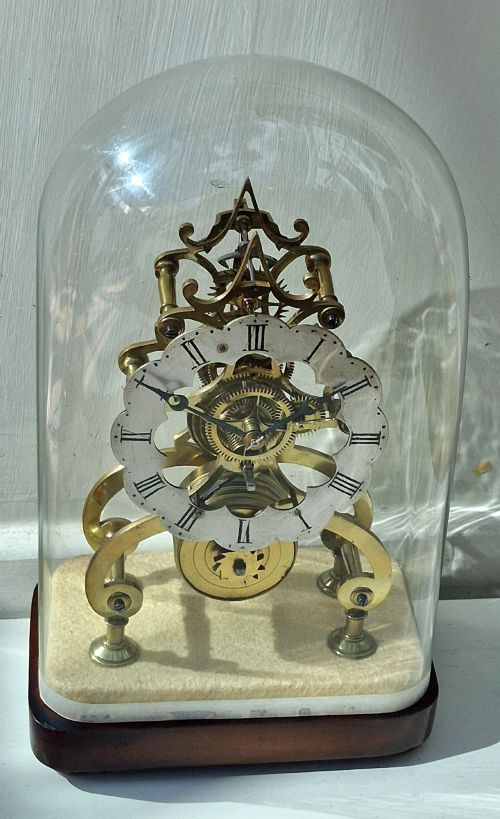
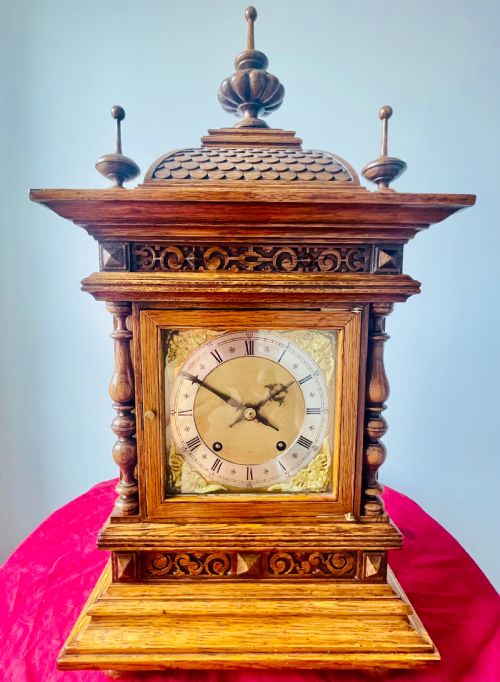
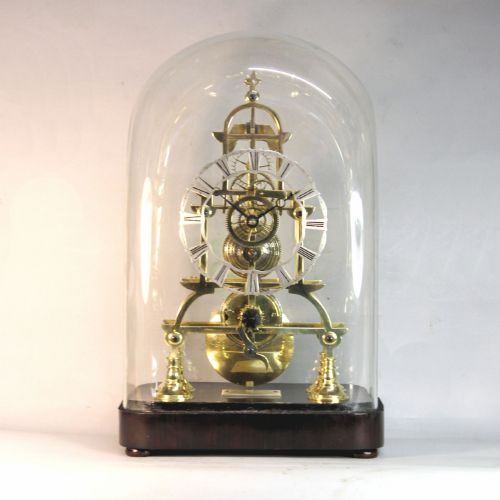
A Victorian gothic table clock draws upon medieval architectural motifs, presenting pointed arches, spire forms and skeletal brass frameworks that expose the wheel train within.
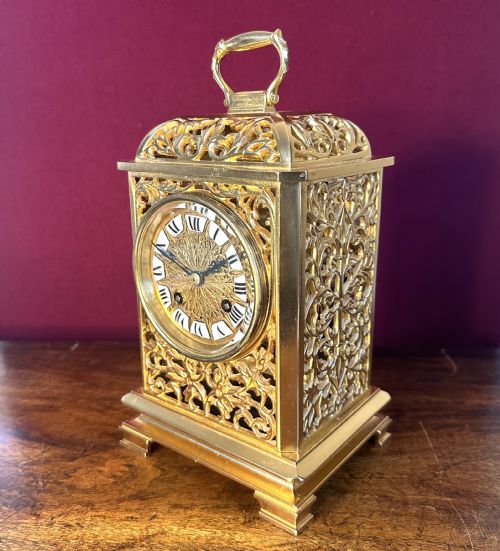
The selections span architectural bracket clocks in mahogany, oak and rosewood alongside exposed skeleton movements housed beneath glass domes.
Makers built these pieces during the nineteenth century, employing bronze, brass and marble to evoke cathedral structures on a domestic scale.
Materials and construction methods
Craftsmen built movements using brass and steel plates, often housing the gear trains in fusee configurations to maintain steady power delivery.
Cases utilise dense hardwoods like mahogany, rosewood and oak, frequently carved with lancet arches and architectural details that reflect the gothic taste.
Dials feature enamel chapter rings with Roman numerals, while select models incorporate bronze casting and faux marble finishes.
Listings feature movements housed in mahogany, oak, rosewood, brass, bronze, marble and glass.
Judging the calibre of a piece
The refinement of the movement dictates the standing of a piece, with triple fusee and quarter-striking mechanisms representing superior workshop output.
Case carving depth and the crispness of brass skeleton frames distinguish standard production work from bespoke commissions by notable makers.
Winterhalder And Hofmeier·George Wadham Bath·Thwaites Of London·Bryson Edinburgh
The Victorian Gothic Table Clock Glossary
- Fusee
- A conical pulley used in mechanical clocks to maintain even force on the gear train as the mainspring unwinds.
- Skeleton clock
- A timepiece designed with an open brass frame that exposes the entire gear train and escapement to view.
- Bracket clock
- A portable table clock originally designed to sit on a wall bracket or table surface.
- Lancet top
- A pointed, arched case design that mimics the lancet windows seen in gothic architecture.
Victorian Gothic Table Clock: Frequently Asked Questions
How do I wind a fusee clock?
A key winds the mainspring via the dial or side aperture, turning it gently until resistance meets the stop.
Care must be taken not to overwind antique movements, as excessive force can damage the fusee chain or gutline.
Why do some clocks have glass domes?
Glass domes protected delicate skeleton clock movements from household dust, smoke and accidental damage.
Keeping the original dome intact preserves the piece and shields the exposed brass and steel components.
What is a twin fusee movement?
A twin fusee movement employs two separate spring barrels and fusees, powering the timekeeping train and the striking train independently.
This setup ensures that the chiming mechanism does not draw power away from the clock's accuracy.
How can I tell the period of a mantel clock?
Stylistic clues such as ebonised wood, architectural gothic arches and brass casting techniques point directly to nineteenth-century manufacture.
Examining the backplate signatures and movement construction provides further confirmation of the decade of origin.