

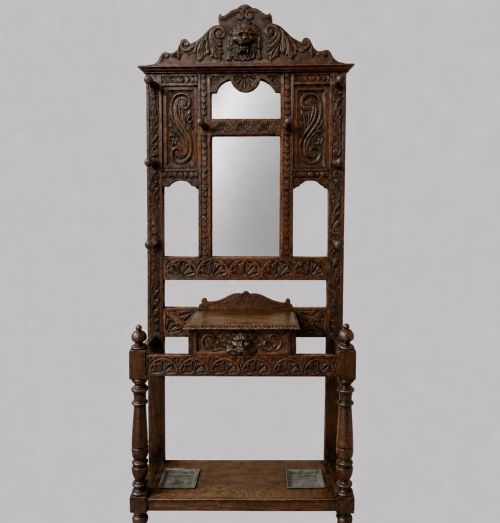


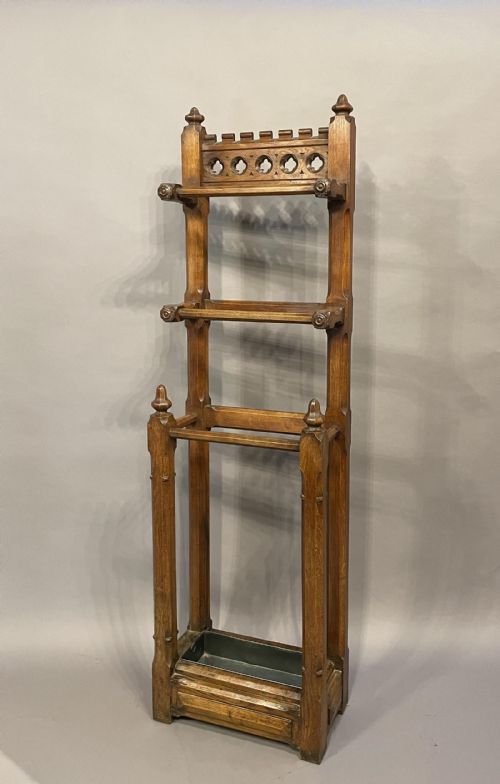


Victorian Gothic Stick Stand
These robust victorian gothic stick stand pieces organise hallways with medieval architectural motifs and utilitarian mass.
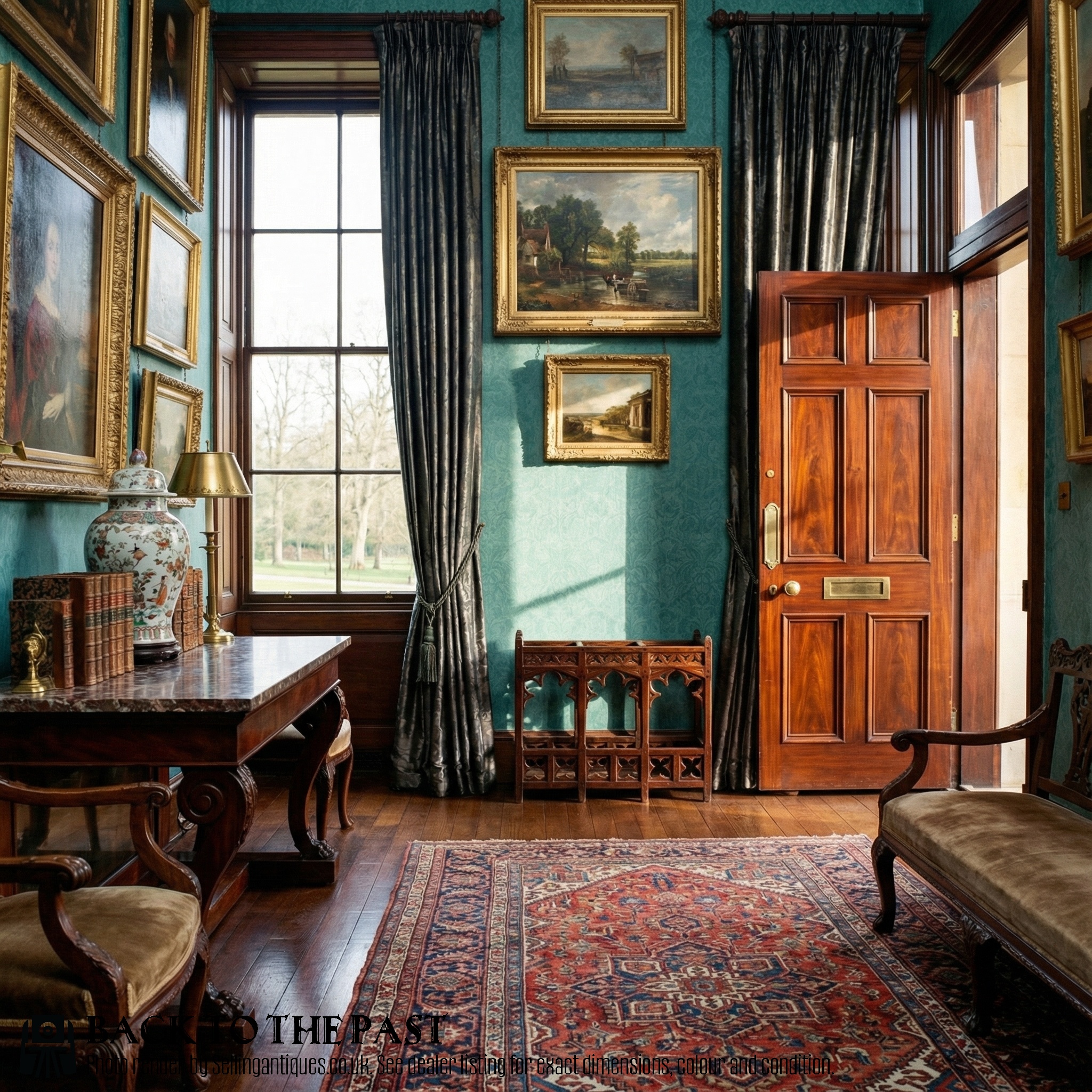
Victorian Gothic Stick Stand
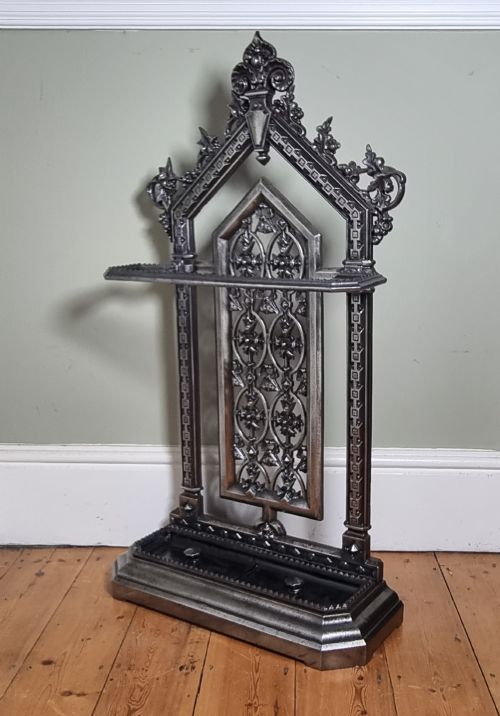
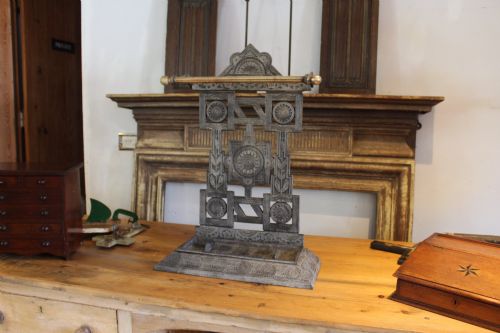
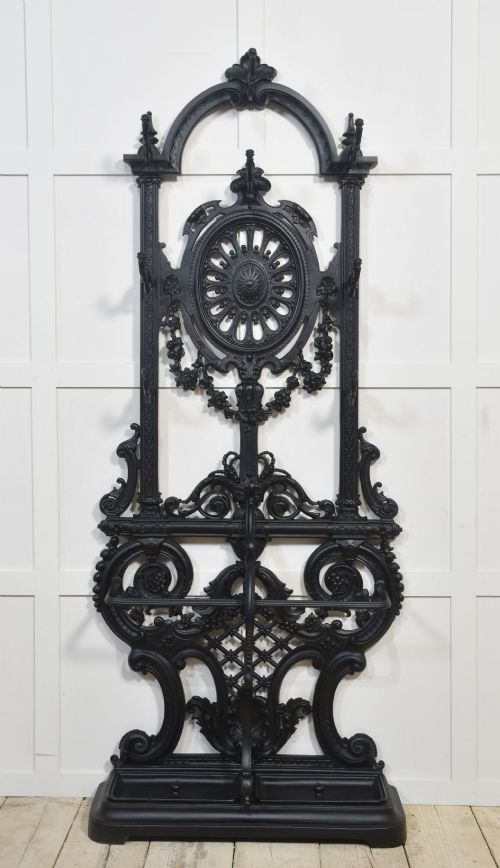
A victorian gothic stick stand combines heavy metal or carved timber construction with pointed archways, tracery and quatrefoil motifs suited to nineteenth century entrance halls. These items arrive in various forms including umbrella stands, combined hall stands with mirrors, and dedicated umbrella racks.
Cast iron and oak dominate the examples encountered here, spanning the Victorian period alongside related nineteenth century aesthetic movement and arts and crafts iterations. The purchaser encounters both floor standing cast iron designs featuring drip pans and substantial carved timber hallway furniture.
Makers such as Falkirk Foundry and Coalbrookdale produced durable cast metal examples, while country house workshops supplied carved oak versions featuring green man iconography. These pieces served domestic and institutional entryways by keeping wet umbrellas and walking sticks contained.
Materials and construction
Foundries utilised cast iron poured into moulds to create pierced architectural panels, lattice frames and integrated drip trays. This metalwork often received painted finishes or patination that endured heavy daily use in damp hallways.
Carpenters constructed timber variants using solid oak and pine, incorporating carved details like green man masks, mirrors and hat hooks. Zinc liners and brass fittings frequently accompanied these wooden frames to manage moisture from wet walking sticks.
Listings span the Victorian period into the early twentieth century, featuring cast iron, brass, oak, copper and zinc.
Evaluating quality and design
Design complexity and foundry attribution separate standard utility items from notable works. Cast iron pieces with crisp, deep relief casting and registered design marks demonstrate superior manufacture compared to plain utilitarian replacements.
The integrity of secondary elements such as original removable drip pans, zinc inserts and mirrors indicates careful preservation. Timber examples depend on the depth and sharpness of hand carving on elements like green man faces and structural joints.
Thomas Jeckyll·Coalbrookdale·Falkirk Foundry·T Thomason and Co
The Victorian Gothic Stick Stand Glossary
- Gothic Revival
- An architectural and decorative style drawing inspiration from medieval design, featuring pointed arches, trefoils and heavy vertical lines. This aesthetic strongly influences nineteenth century metalwork and hall furniture.
- Cast Iron
- An iron-carbon alloy poured into moulds to form rigid components. This material allows for intricate repetitive patterns such as pierced foliage and structural lattice work.
- Drip Pan
- A shallow metal tray positioned at the base of a stick stand to catch moisture from wet umbrellas. These pans are frequently removable for emptying and cleaning.
- Green Man
- A sculptural architectural motif depicting a human face emerging from or entwined with foliage. It appears frequently as a carved detail on nineteenth century oak hall furniture.
- Hall Stand
- A large piece of hallway furniture combining a stick stand, coat hooks, a mirror and sometimes a glove box. These multifunctional items served as central entry furniture in Victorian homes.
Victorian Gothic Stick Stand: Frequently Asked Questions
Where should I place a heavy stick stand?
These metal and timber pieces suit entrance halls and porches where visitors deposit wet umbrellas upon entry.
Ensure the floor surface can support the weight of cast iron or dense oak furniture, and verify that removable drip pans remain accessible for cleaning.
How do I maintain cast iron metalwork?
Dust metal surfaces regularly with a dry cloth and inspect painted finishes for signs of moisture exposure.
Keep drip pans dry to prevent rust accumulation inside the base of the stand.
What distinguishes gothic revival from aesthetic movement pieces?
Gothic revival items rely on medieval architectural details such as pointed arches, quatrefoils and heavy structural mass. Aesthetic movement designs often introduce cleaner geometric lines or stylised natural motifs inspired by Japanese art.
Both styles appear across nineteenth century metal and timber hall furnishings.
Are these stands suitable for modern umbrellas?
Most nineteenth century ring stands accommodate standard walking sticks and slim umbrella shafts comfortably.
Verify the internal ring diameter if storing oversized modern golf umbrellas.
How do I identify a foundry mark?
Examine the reverse or lower base of cast iron stands for raised lettering, registry diamonds or foundry names.
Foundries such as Falkirk and Coalbrookdale frequently stamped or cast their identities directly into the metal frame.