
Victorian Gothic Seat
When you want a victorian gothic seat, you are looking for architectural woodwork, heavy timber and ecclesiastical lines that bring nineteenth-century revival craftsmanship into a modern interior.
Victorian Gothic Seat
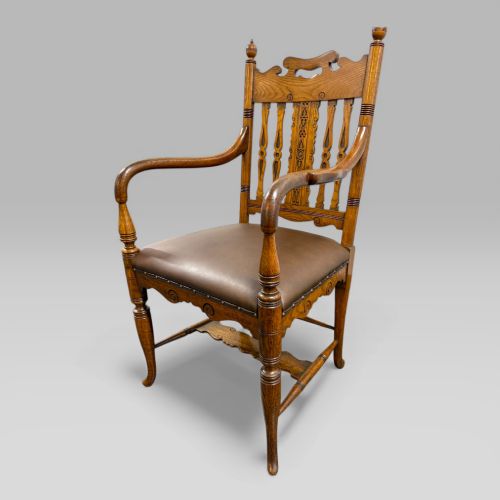
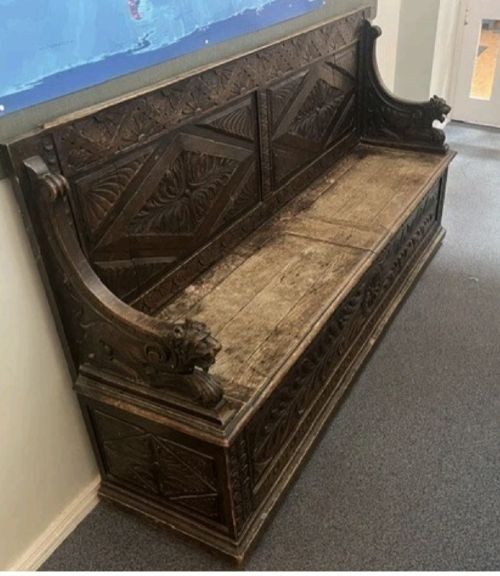
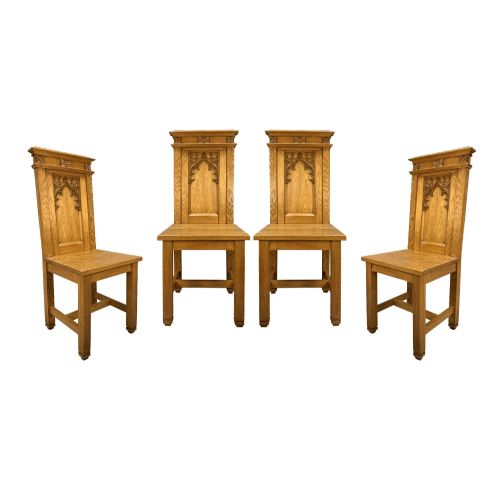
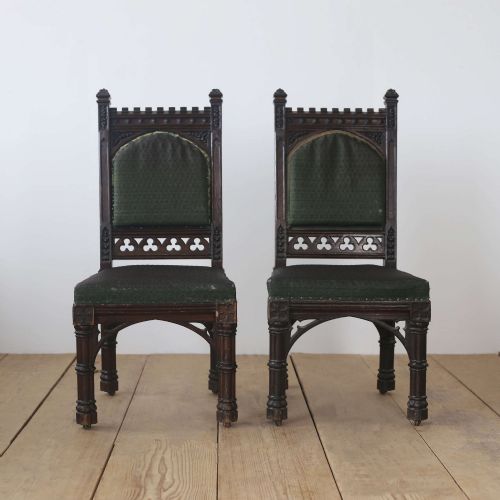
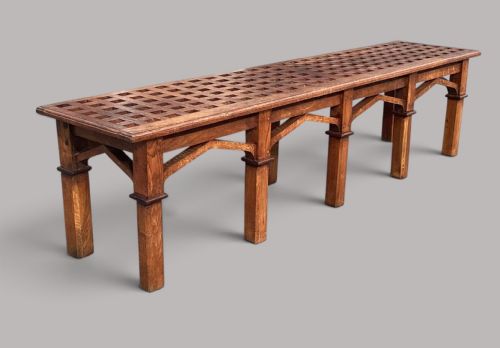
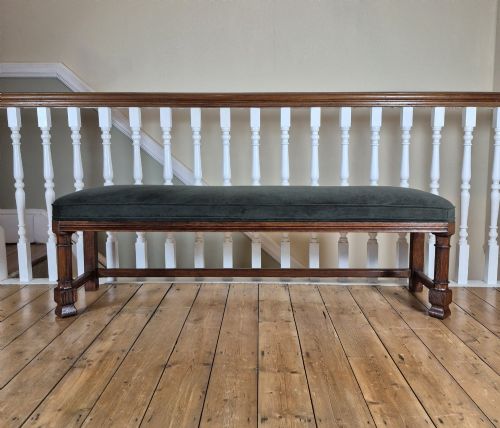
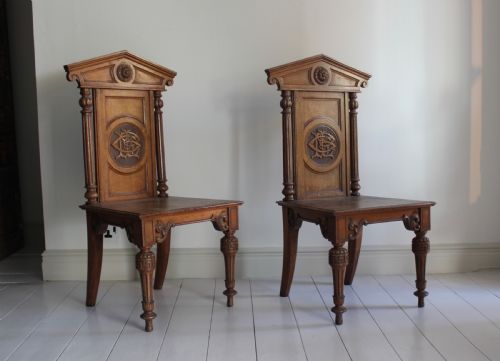
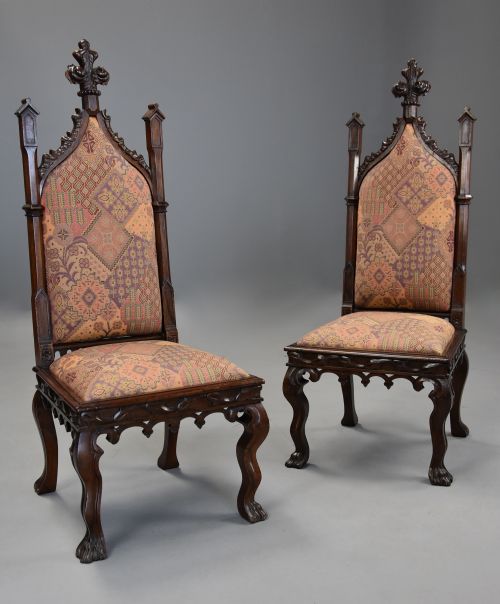
A victorian gothic seat encompasses a range of heavy wooden furniture built during the nineteenth century, drawing inspiration from medieval ecclesiastical design and architectural forms. The selection most commonly includes oak hall chairs, benches, church pews and dining chairs bearing pointed arches, cusping and carved tracery.
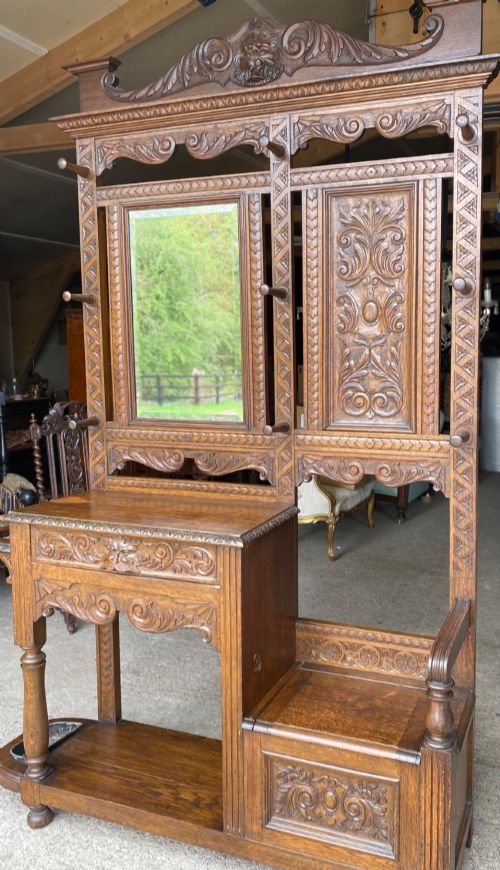
Makers of the period applied these medieval motifs to domestic seating, producing everything from simple hall benches to grand upholstered armchairs and revolving desk chairs. These items served functional roles in large Victorian entrance halls, dining rooms and libraries, often reflecting the architectural style of the buildings they inhabited.
How they were made
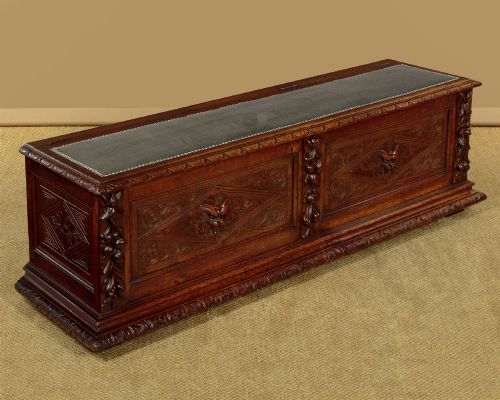
Cabinet makers relied predominantly on solid oak, walnut and pitch pine, framing structural elements with traditional mortise and tenon joints to withstand heavy daily use. Decorative details such as heraldic shields, thistle carvings and linenfold panels were hand-chiselled directly into the timber or applied as separate carved elements.
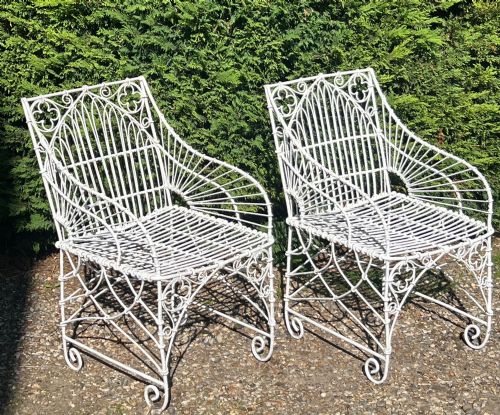
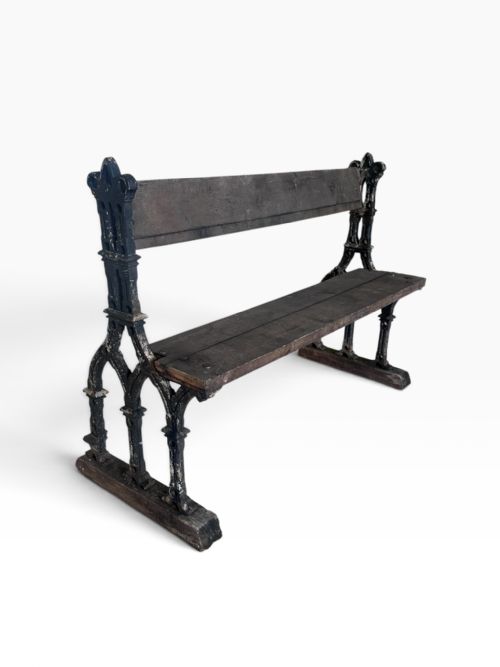
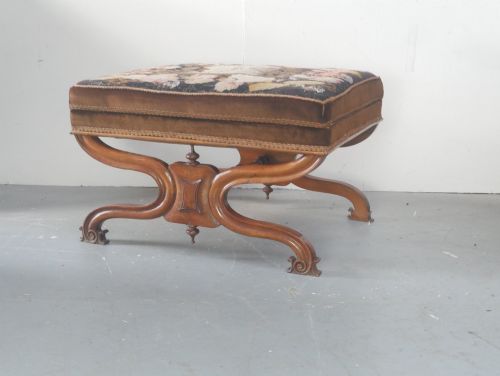
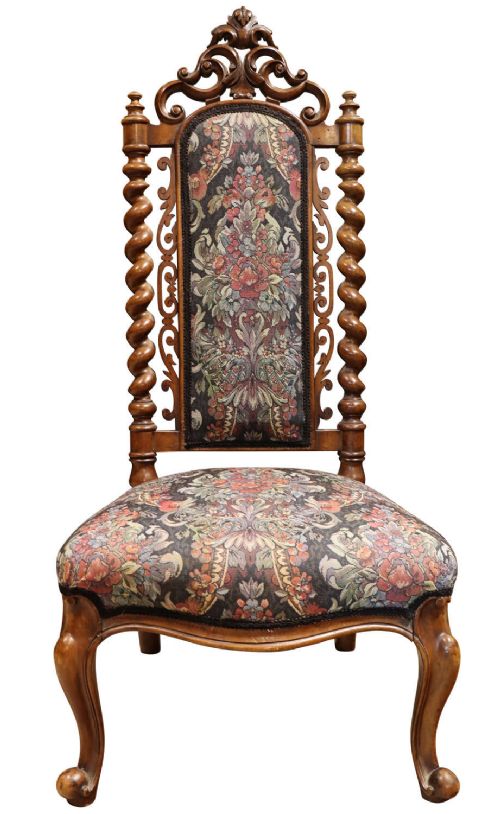
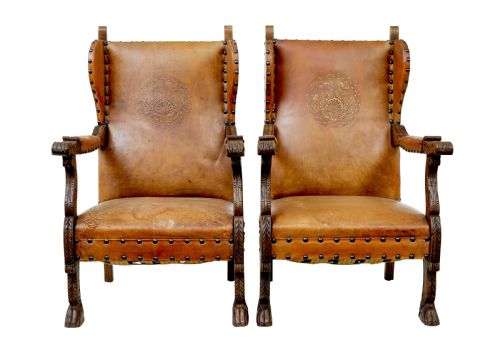
Upholstered variants integrated embossed leather, tapestry and fabric secured with brass studs, whilst metal components like cast iron appeared on garden benches and specific iron-framed chairs. Carpenters shaped architectural forms using turning lathes and handsaws, creating rigid silhouettes that mirrored stone window tracery.
Some nineteenth-century church pews retain faint ink stains and carved initials left behind by distracted Victorian parishioners during long sermons.
What varies in quality
The distinction between standard utility furniture and superior pieces rests on the depth and precision of the wood carving, the choice of timber and the structural integrity of the joinery. Workshop attribution also elevates standing, particularly when pieces bear authentic makers' labels or originate from notable commissions for cathedrals and large estates.
Simpler pine pews and utilitarian hall chairs contrast with richly figured rosewood, walnut or quarter-sawn oak examples featuring elaborate ecclesiastical tracery. The sophistication of the architectural proportions and the survival of original embossed leather or tapestry upholstery further separate everyday examples from exceptional finds.
GIllows·W.A. WILLCOCKS
The Victorian Gothic Seat Glossary
- Tracery
- Openwork stonework or woodwork ornamentation, typically consisting of intersecting ribwork in the head of a gothic window. Makers of these seats translated this architectural stone feature into carved wooden chair backs and panels.
- Glastonbury chair
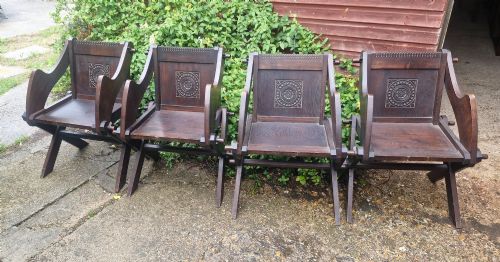
- A distinctive type of folding X-framed chair with a sloping wooden back and flat armrests, frequently executed in oak during the nineteenth-century revival. This form was copied from an ancient relic associated with Glastonbury Abbey.
- Pew
- A long wooden bench with a high back, historically found in churches and chapels but adapted for domestic hallways and reception rooms during the Victorian era. These items are constructed from solid oak or pitch pine.
- Settle
- A wooden bench with high armrests, a high solid back designed to block drafts, and often a box seat compartment underneath for storage. They formed substantial seating units in large nineteenth-century halls.
- Linencolour
- A decorative carving motif resembling folds of fabric or linen, frequently used on nineteenth-century panels to mimic ecclesiastical church woodwork. It adds texture and depth to the flat surfaces of oak furniture.
Victorian Gothic Seat: Frequently Asked Questions
Where were these seats placed originally?
These items were predominantly positioned in the entrance halls, corridors and libraries of large Victorian homes, civic buildings and churches. Their imposing architectural profiles created a formal impression for visitors arriving at the property.
Smaller side chairs and dining chairs were designed for formal reception rooms and dining tables. Benches and pews often lined the walls of spacious hallways to provide functional seating for removing coats and boots.
How do I care for antique oak furniture?
Maintain the timber by keeping it away from direct heat sources and sudden temperature fluctuations that can cause the wood to split. Apply a microcrystalline wax periodically to nourish the grain and protect the finish without building up heavy residue.
Dust regularly with a soft, dry cloth rather than using silicone-based sprays, which can penetrate porous antique wood surfaces. Handle leather and fabric upholstery with care, using specialised cleaning methods suited to nineteenth-century textiles.
Are these chairs comfortable for daily use?
Most nineteenth-century hall chairs and wooden benches were built with rigid upright postures intended for formal sitting rather than lounging. Their solid timber construction and high carved backs prioritise architectural presence and support over cushioned ease.
Upholstered armchairs, rocking variants and pieces with leather pad seats offer a softer sit for everyday living rooms and studies. Selecting the right version depends on whether you prioritise historical authenticity or relaxed comfort.
How can I identify the gothic revival style?
Look for pointed arch motifs, cusping, quatrefoils and heavy timber construction that mimics medieval cathedral architecture. The design language consciously rejects classical symmetry in favor of vertical lines and ecclesiastical ornamentation.
Details such as heraldic shield backs, linenfold panels and heavily turned legs point directly to this nineteenth-century movement. The integration of structural forms from church architecture separates these pieces from plain Victorian furniture.