



Gothic Carved Church Pew
These gothic carved church pew pieces bring centuries of solemn ecclesiastical craft into domestic halls, offering sturdy timber construction and rich architectural detailing.
Gothic Carved Church Pew
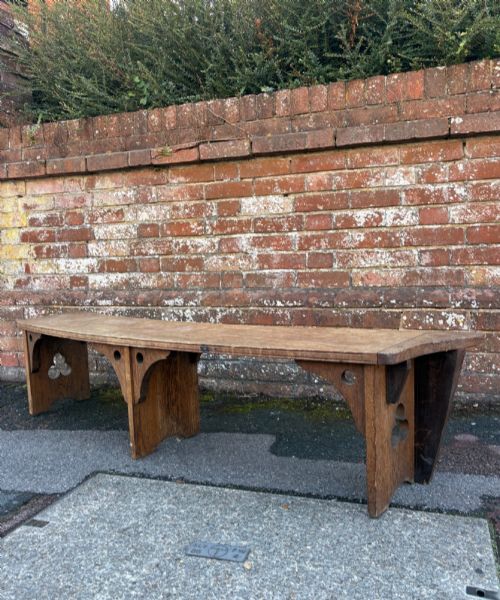
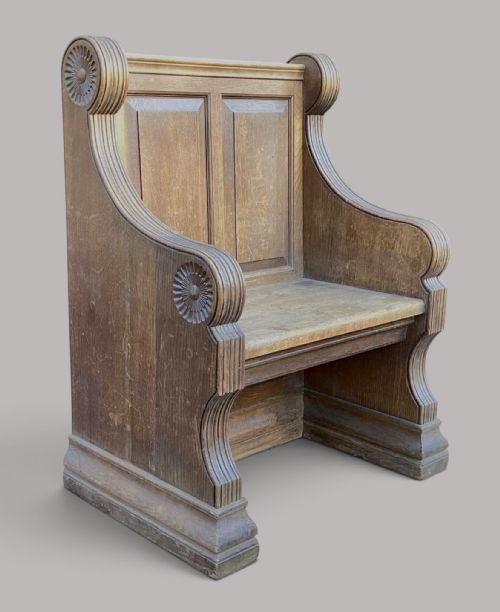
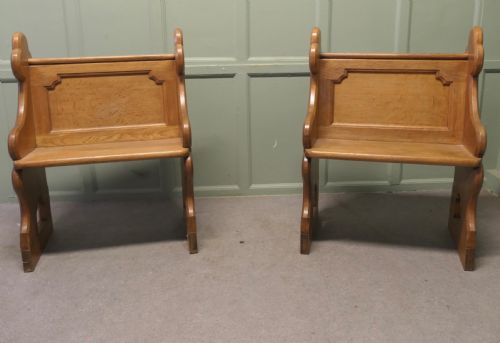
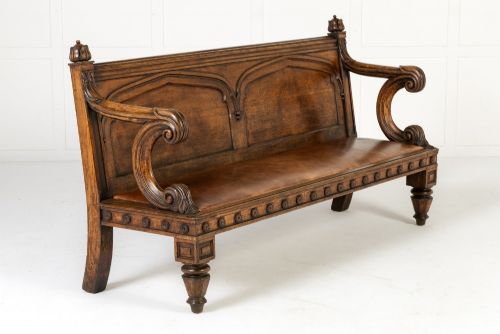
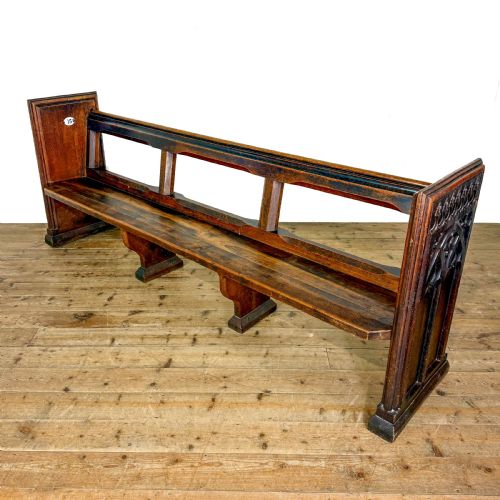
When you search for gothic carved church pew, you examine substantial oak and pine seating created for ecclesiastical spaces and later adapted for domestic halls and libraries. The items on this page range from long benches and settles to hall chairs and architectural panels derived from churches.
You are most likely to meet nineteenth-century Victorian examples, often carrying Gothic Revival styling. Pieces span from eighteenth-century fragments up to nineteen-hundred productions, showing the enduring appeal of pointed arches and trefoil supports.
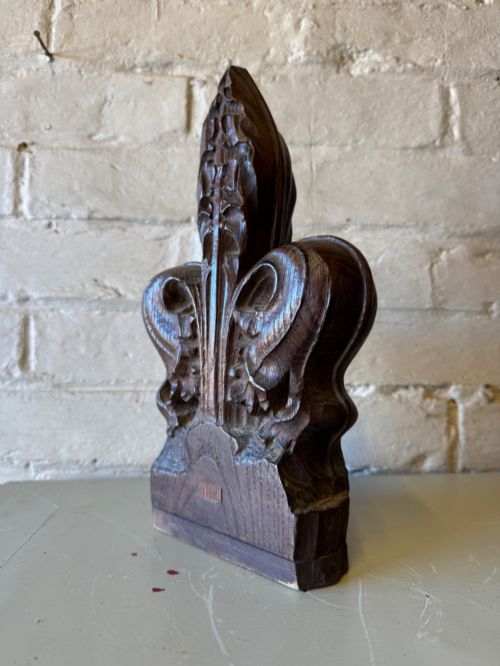
The form shifts between full benches designed for congregation seating and individual hall or library chairs. Architectural salvage panels and poppy head ends also appear, representing smaller components rescued from larger church furnishings.
How they were made
Joiners and carvers utilised solid oak and pine to construct these robust items, employing traditional framing techniques to withstand heavy ecclesiastical use. The timber surfaces frequently display carved details such as trefoils, poppy heads, and figural panels depicting saints and lions.
Makers applied Gothic Revival and Arts and Crafts design principles to shape structural elements like architectural forms and curved supports. Some variants incorporate leather alongside the primary wood components for added utility.
Listings on this site span oak and pine materials, featuring Victorian Gothic styles alongside Arts and Crafts variants.
What varies in quality
The distinction between standard utility seating and exceptional pieces rests in the depth and complexity of the carving. Carved panels featuring specific motifs like saints or poppy heads elevate an item above plain structural benches.
Material selection also defines the tier of a piece, with dense English oak commanding greater architectural presence than simpler pine constructions. The integrity of the original form, whether a complete pew or a curated architectural salvage panel, dictates the standing of the work.
The Gothic Carved Church Pew Glossary
- Poppy head
- An ornamental carved finial topping the end of a pew bench, frequently taking plant-based or gothic forms. It provides a distinct decorative termination to church seating.
- Gothic Revival
- An architectural and design movement reviving medieval forms, prominent in nineteenth-century furnishings. It utilises pointed arches, trefoils, and heavy timber framing.
- Architectural salvage
- Building elements or church furnishings rescued from structures destined for alteration or demolition. These components are repurposed for interior display or collection.
- Settle
- A wooden wooden bench with a high back and solid arms, designed to block draughts in domestic or ecclesiastical settings. It often includes enclosed storage beneath the seat.
- Trefoil
- A graphic ornament composed of three overlapping rings or leaf-shaped lobes. It appears frequently in gothic window tracery and carved bench supports.
Gothic Carved Church Pew: Frequently Asked Questions
What is a gothic carved church pew?
These items are solid oak or pine benches, settles, and chairs originally constructed for religious spaces and later utilised in domestic interiors. They are defined by medieval architectural motifs such as pointed arches and carved tracery.
Most surviving examples date from the nineteenth-century Gothic Revival period, though some eighteenth-century panels and poppy heads also survive. They bring a distinct architectural gravity to hallways and libraries.
How were church pews used?
Ecclesiastical pews provided structured seating for congregations during long services, whilst smaller variants served in private chapels or chancel areas. Their high backs and solid sides were designed to offer shelter from cold stone drafts.
In domestic settings, buyers repurposed them as hall benches and library seating. Their robust build made them practical for daily use near entryways.
How do I live with a church pew?
A long oak bench suits wide hallways, entrance passages, or large dining tables where its linear form anchors the room. Placing it against a plain wall allows the carved details and timber grain to stand out.
Care involves regular dusting and occasional treatment appropriate for historic timber. Leather elements, where present, require gentle conditioning to prevent drying.
How do I tell Victorian pieces apart?
Nineteenth-century pieces often display explicit Gothic Revival or Arts and Crafts styling, reflecting the Victorian enthusiasm for medieval design. They make frequent use of heavy oak frames and standardised machine-assisted joinery alongside hand carving.
Earlier eighteenth-century examples tend to show simpler, hand-hewn construction methods with deeper patination on the pine or oak surfaces. Architectural salvage panels from this era focus heavily on figural carvings like saints and lions.