


Victorian Gothic Revival Table
A victorian gothic revival table brings substantial architectural timber and pointed arches straight into a room.
Victorian Gothic Revival Table
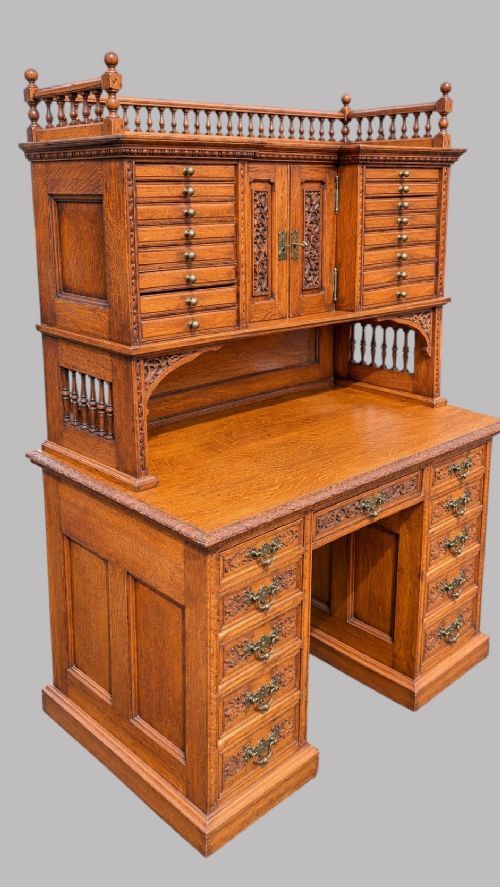
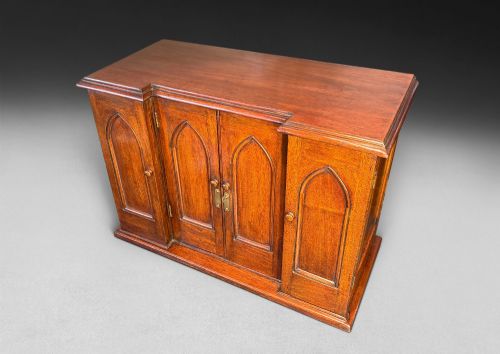
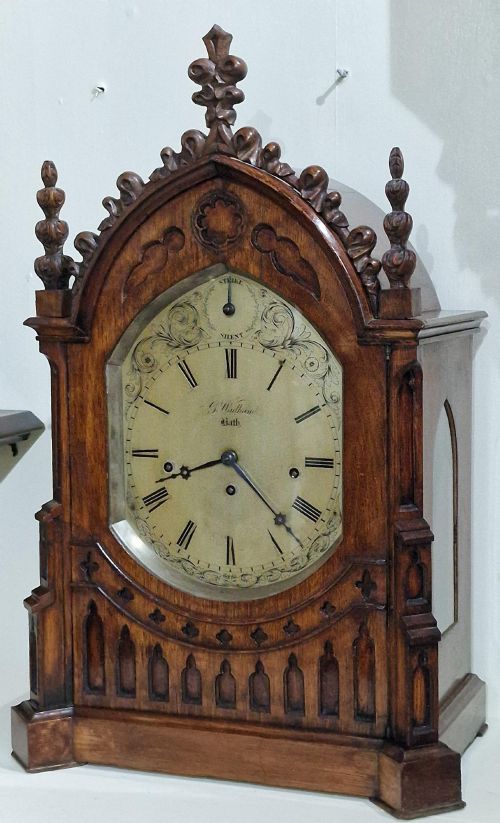
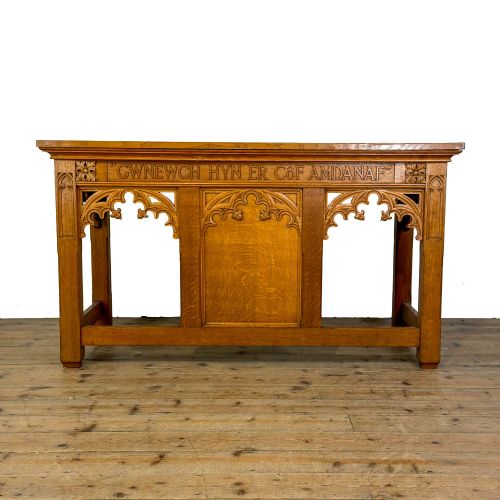
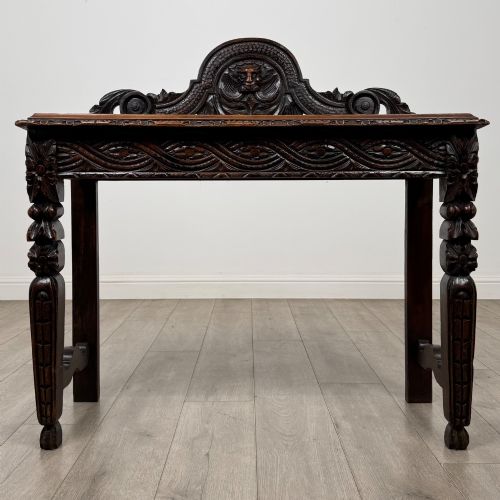
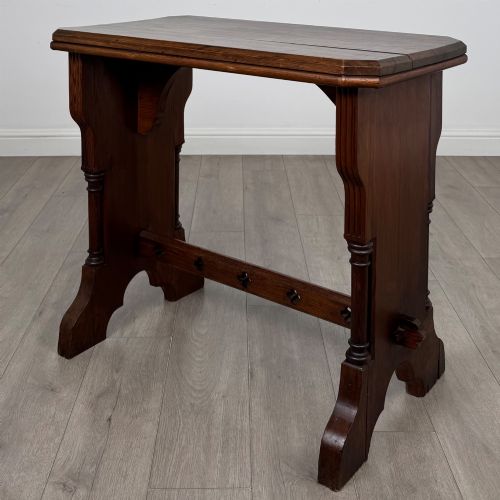
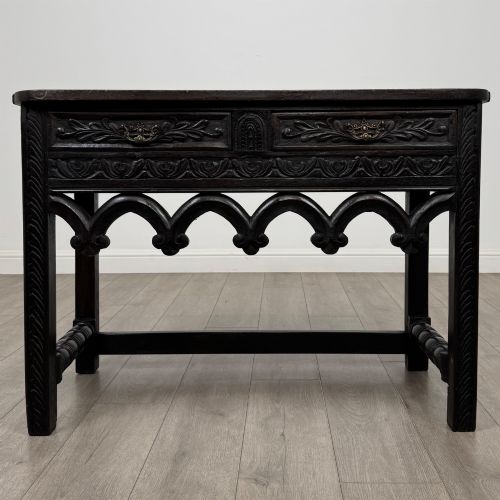
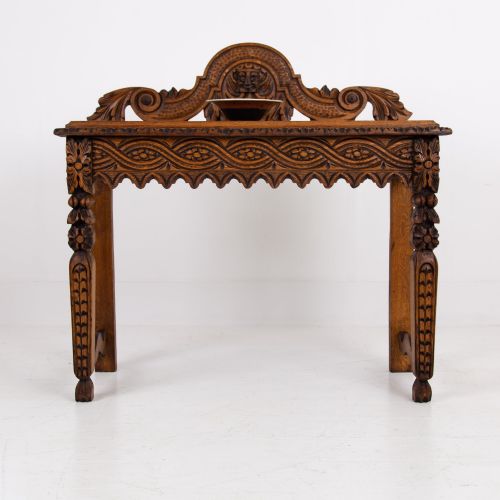
A victorian gothic revival table typically manifests as a heavy oak library centrepiece, a writing desk, or a compact hall side table from the nineteenth century. These pieces draw heavily on medieval ecclesiastical and architectural motifs, blending structural utility with dramatic pointed ornamentation.
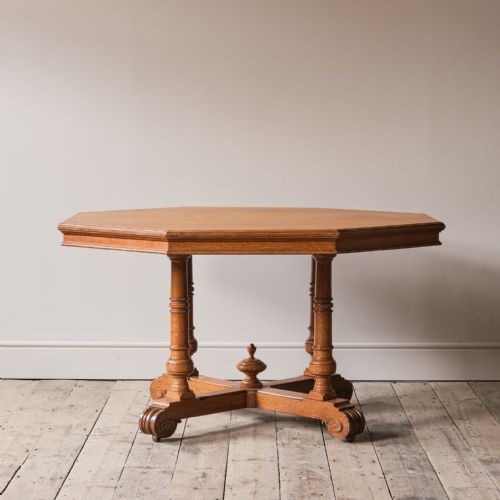
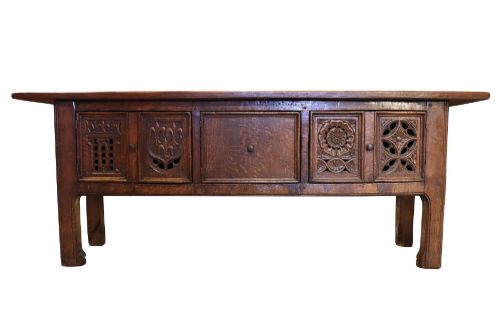
The version most commonly met on this page is the oak library or side table, often supported by octagonal columns or heavily carved panels. Buyers encounter variations ranging from utilitarian chapel furniture to refined parlour desks produced during the height of the Victorian era.
Makers and designers of the period looked to thirteenth and fourteenth-century stonework for inspiration, translating cathedral details into domestic wooden furniture. The resulting forms provide both practical surfaces and strong historical character within a modern interior.
Materials and construction
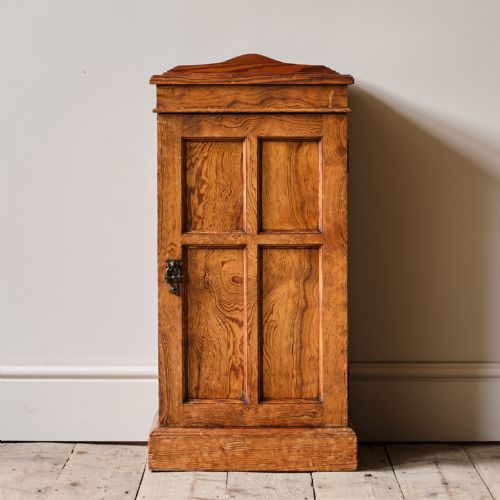
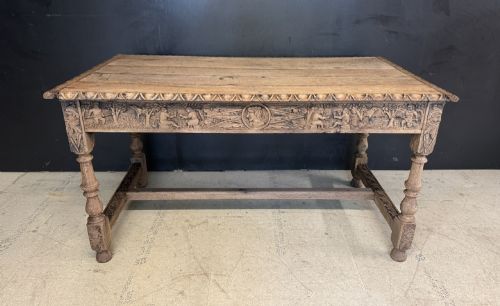
Makers relied principally upon solid oak, complemented by occasional deployments of mahogany, walnut, and pitch pine to achieve both structural rigidity and deep grain patterns. Timber was frequently selected for its ability to accept dense hand-carving along friezes, legs, and stretcher rails.
Joinery methods combined traditional mortise and tenon framing with robust pegged joints to support the heavy tops typical of ecclesiastical and domestic gothic furniture. Secondary materials such as leather writing surfaces, brass mounts, and ebonised highlights were integrated to add textural contrast.
Listings demonstrate a strong preference for 19th century solid oak construction, frequently incorporating carved gothic panels and octagonal supports.
Evaluating design and execution
Quality separates along the depth and sharpness of the hand-carved ornament, where crisp tracery and deeply undercut mouldings distinguish master workshop output from simpler commercial production. Timber selection also dictates grade, with quarter-sawn oak displaying prominent medullary rays marking superior material choice.
Proportion and structural integrity define the higher tier, where substantial centre tables maintain balanced weight distribution and original secondary woods without later alterations. Lesser examples rely on applied machine-moulded details rather than integral structural carving.
George Wadham·Winterhalder·Wm. Tonks & Sons·W. Williamson & Sons·Edwards & Roberts
The Victorian Gothic Revival Table Glossary
- Tracery
- Openwork stonework patterns translated into wooden furniture panels. This geometric decoration mimics the stone mullions found in medieval cathedral windows.
- Quatrefoil
- A decorative ornamental design featuring four partially overlapping circles of the same diameter. It appears frequently pierced through wooden gallery rails or carved into drawer fronts.
- Chamfer
- A transitional edge bevel cut at an angle to the two principal faces. Cabinetmakers used this technique to lighten the visual bulk of heavy timber legs.
- Stretcher
- A horizontal support connecting the legs of a table for added rigidity. In gothic revival pieces, these are often positioned low between the legs and heavily moulded.
- Medullary rays
- Radial cellular sheets running across the growth rings of hardwood timber. Visible prominently in quarter-sawn oak, these silvery flakes indicate high-grade milling.
Victorian Gothic Revival Table: Frequently Asked Questions
Where were these tables used originally?
These tables served primarily in the libraries, studies, and grand hallways of nineteenth-century homes, as well as institutional settings such as vicarages and chapels. Their robust construction was designed for heavy daily use.
Domestic versions provided sturdy writing surfaces or display areas, while larger library tables accommodated heavy volumes and reading materials.
How do I care for an antique oak surface?
Maintenance requires regular dusting with a dry, soft cloth and the occasional application of traditional beeswax to nourish the dry timber. Avoid placement near direct heat sources to prevent the solid oak panels from splitting.
Keeping leather inserts conditioned with specialised balm preserves the material without damaging the surrounding nineteenth-century wood.
How do I distinguish gothic revival from renaissance revival?
Gothic revival pieces emphasise verticality, pointed arches, trefoils, and ecclesiastical window tracery derived from medieval architecture. These elements give the furniture a distinctly pointed and structural silhouette.
Renaissance revival leans instead toward heavier classical motifs, including pilasters, sculptural figures, and rounded arches inspired by sixteenth-century continental design.
Can I use a library table as a desk?
Many library and centre tables from this period function exceptionally well as writing desks, provided the height matches standard seating requirements. Nineteenth-century writing tables often incorporate convenient drawers beneath the top.
Original leather or fabric writing surfaces offer a suitable texture for modern desktop work while retaining the authentic period aesthetic.