


Victorian Gothic Oak Table
When you examine a victorian gothic oak table, you find heavy timber, architectural details, and solid nineteenth-century construction built to last generations.
Victorian Gothic Oak Table
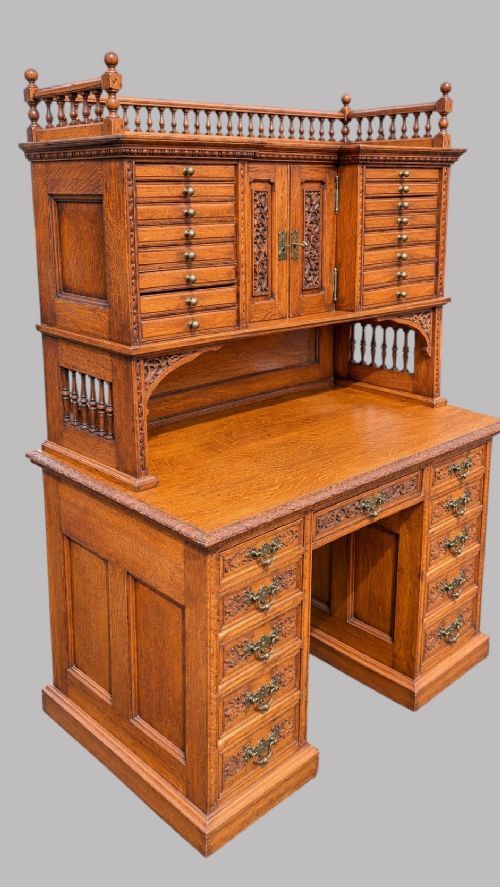
A victorian gothic oak table spans functional household furniture and heavy architectural forms produced throughout the nineteenth century. Buyers encounter side tables, library tables, and writing desks carrying distinct medieval architectural motifs.
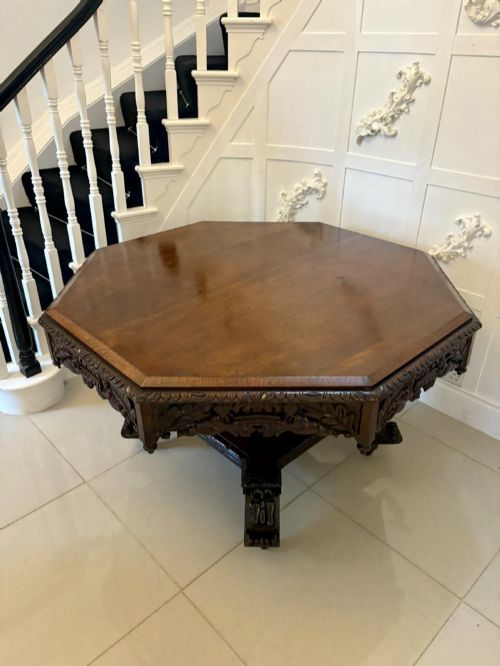
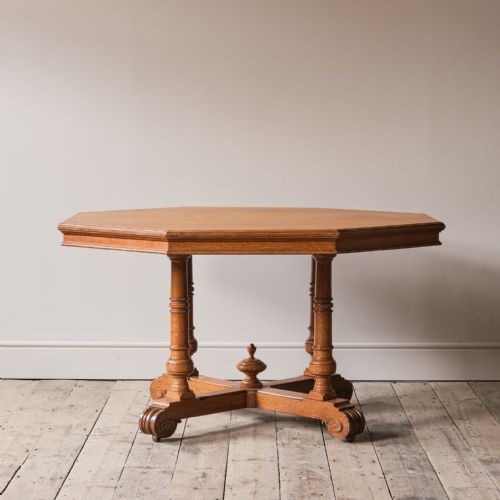
The selections frequently manifest as octagonal centre tables, hall tables, or side tables bearing heavy carving. These pieces reflect the nineteenth-century revival of medieval design aesthetics applied to domestic spaces.
How They Were Made
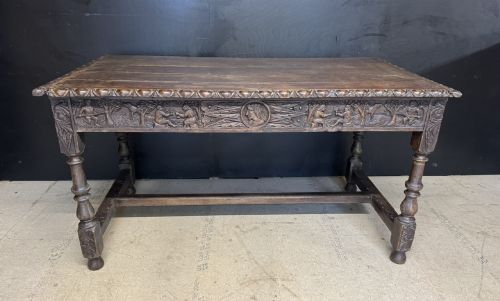
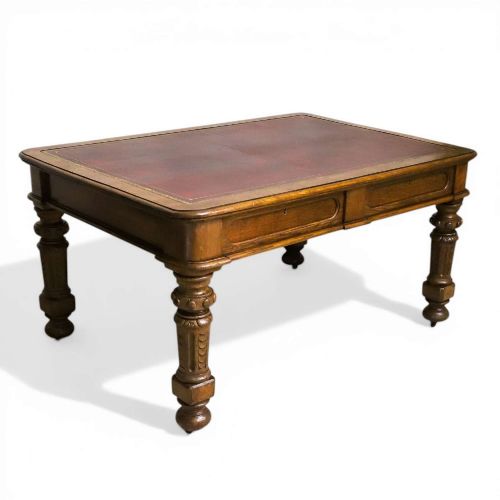
Carpenters utilised solid oak timbers, occasionally incorporating brass hardware, leather writing surfaces, or glass panels into the heavier structural framework. Surfaces display deep relief carving, chamfered edges, and pegged joints characteristic of the period.
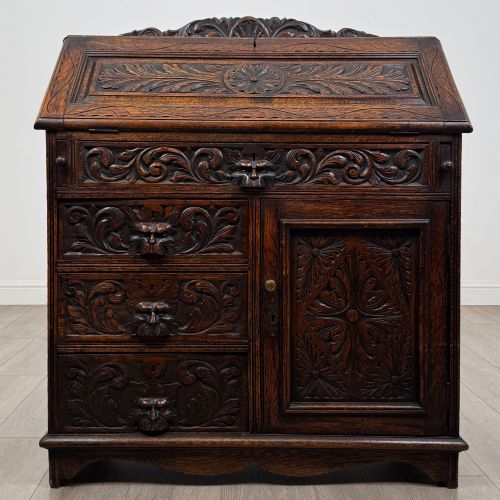
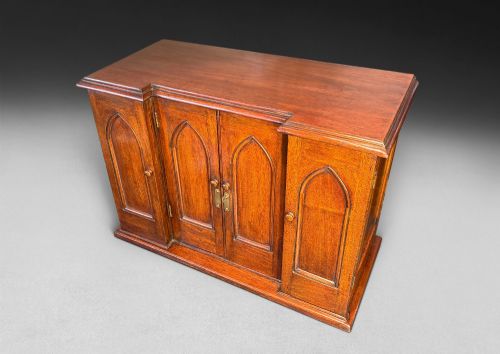
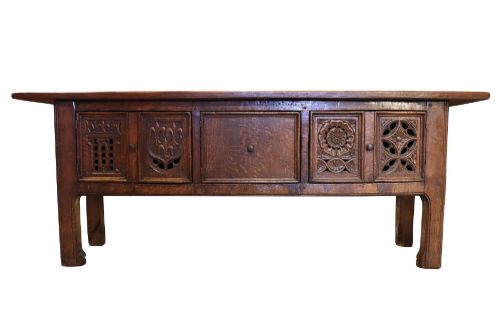
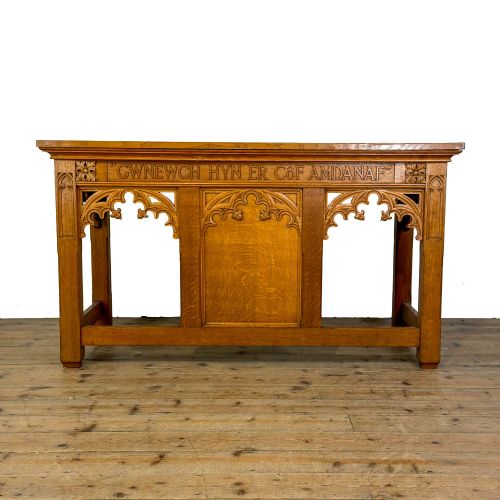
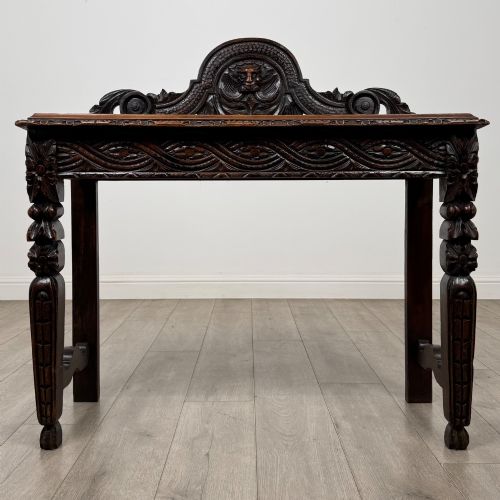
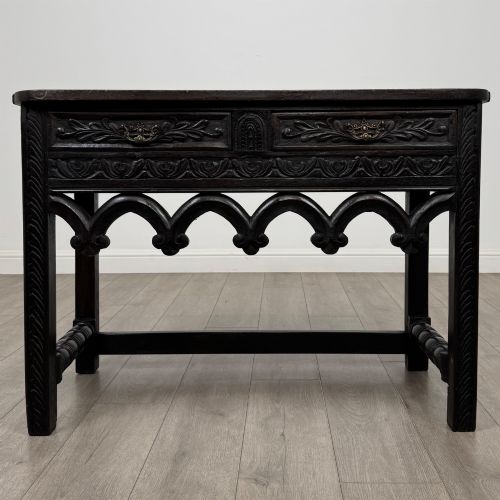
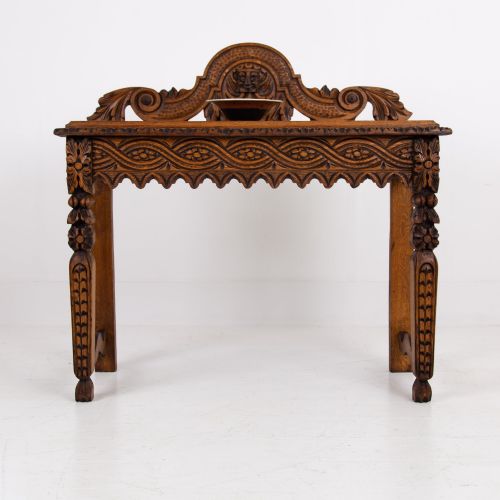
Workshops constructed these tables to withstand rigorous daily use, employing robust joinery methods that kept heavy timber stable over decades. Details such as trefoil cutouts, panel doors, and green man carvings were hand-tooled directly into the dense wood.
Several tables feature hidden green man carvings peering out from beneath heavy leaf scrollwork.
What Varies in Quality
Quality rests in the crispness of the hand-carved ornamentation and the selection of the timber grain. Tables featuring deeply undercut foliage, geometric tracery, and secondary woods like coromandel inlay demonstrate superior workshop execution.
Proportion and stability separate standard production items from exceptional commissions. Master carpenters ensured that heavy structural legs, aprons, and octagonal tops maintained balanced architectural symmetry without warping.
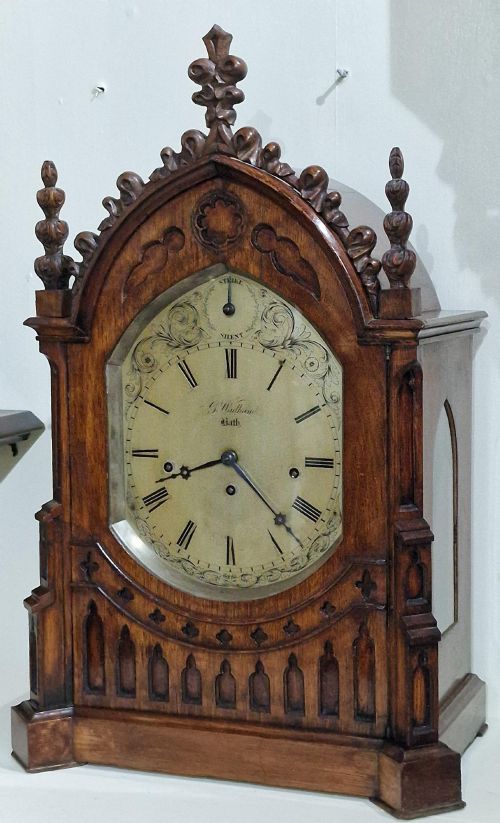
George Wadham·Winterhalder And Hofmeier·W Williamson And Sons·Richard Bridgen
The Victorian Gothic Oak Table Glossary
- Gothic Revival
- An architectural and decorative style drawing inspiration from medieval design, featuring pointed arches, trefoils, and heavy massing. This movement influenced furniture production across the Victorian era.
- Library Table
- A freestanding table designed for central placement in a room, often featuring leather writing inserts and drawers beneath the top. These pieces served scholarly domestic functions.
- Centre Table
- A table finished on all sides for placement in the middle of a room rather than against a wall. They frequently adopt round or octagonal configurations.
- Refectory Table
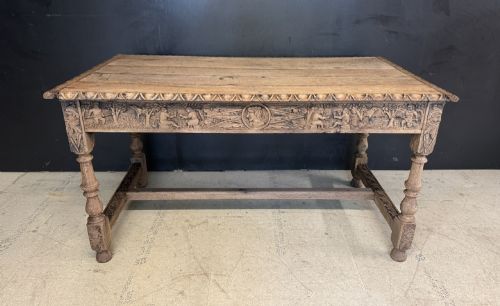
- A long, narrow dining table traditionally used in communal halls, constructed with sturdy timber legs and longitudinal stretchers. Victorian iterations adopted gothic revival ornament.
- Green Man
- A sculptural architectural motif representing a human face engorged with or emerging from foliage or vines. It appears frequently on carved Victorian furniture panels.
Victorian Gothic Oak Table: Frequently Asked Questions
Where did these tables sit?
Victorian households placed these tables in libraries, grand hallways, and principal reception rooms where heavy timber furniture suited formal interior schemes. Centre tables occupied the middle of the floor, whilst side tables stood against perimeter walls.
Writing tables and library desks found purpose in private studies or working libraries. Their substantial weight anchored them firmly in large, high-ceilinged nineteenth-century spaces.
How do I clean the oak?
Maintain the timber by dusting regularly with a dry, soft cloth to prevent particulate buildup within the deep carved recesses. Avoid silicon-based polishes that can degrade nineteenth-century wax finishes over time.
Feed dry timber occasionally with a traditional beeswax formulation to preserve the lustre of the grain. Keep the wood away from direct heat sources and excessive moisture fluctuations.
Are they all dining tables?
Most examples function as side tables, library tables, or writing desks rather than full-scale dining furniture. Smaller occasional and octagonal centre tables served decorative or conversational purposes.
Refectory and large extension dining formats exist within the broader nineteenth-century output, but they appear less frequently than smaller hall and library variants.
How do I spot a fake?
Examine the construction joints, timber seasoning, and tool marks to confirm nineteenth-century origin. Authentic pieces display period-appropriate hand-tooling and natural timber shrinkage consistent with age.
Machine-cut uniformity, modern adhesives, and artificially distressed surfaces indicate recent reproduction work. Genuine gothic revival pieces retain the heavy massing and structural honesty of the Victorian era.