


Victorian Gothic Desk Accessories
Victorian gothic desk accessories bring heavyweight brass, timber, and ecclesiastical lines straight into a modern study.
Victorian Gothic Desk Accessories
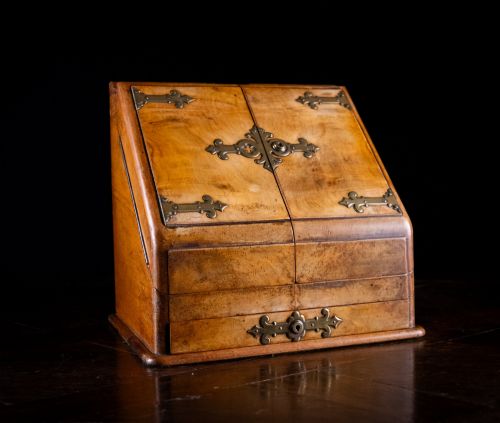
Victorian gothic desk accessories comprise utilitarian items fashioned to organise correspondence and hold writing equipment in nineteenth century libraries. The selection centres on stationery boxes, sliding book slides, inkstands, and matched desk sets produced during the Victorian and Edwardian eras.
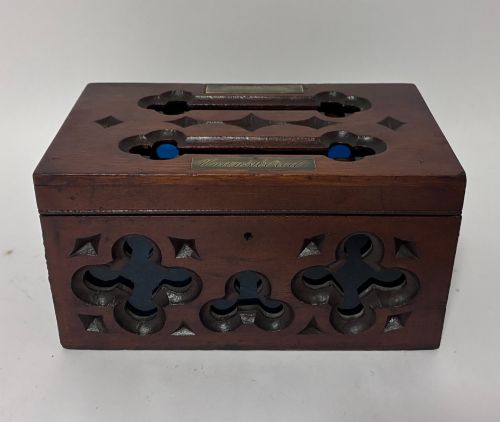
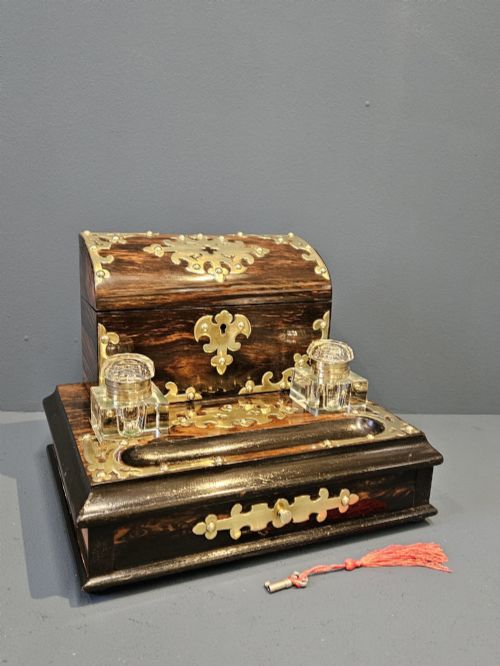
Makers shaped these functional objects from robust timbers and metals, incorporating architectural motifs such as pointed arches and hinges reminiscent of church hardware. Walnut, oak, and exotic coromandel appear frequently alongside heavy brass mounts and carved mahogany.
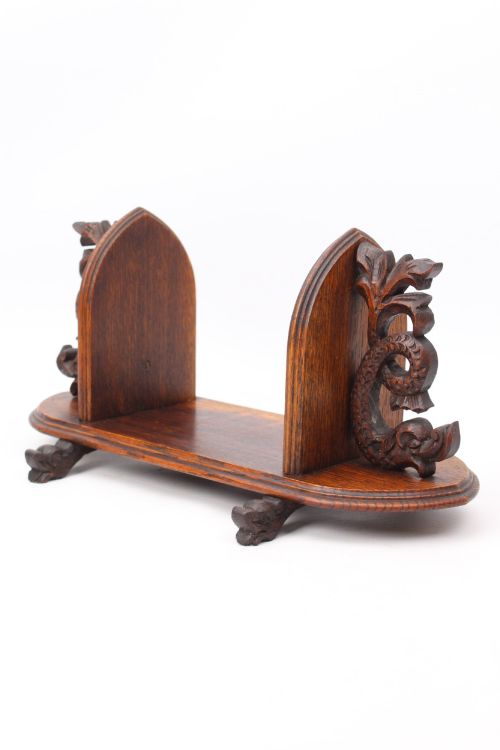
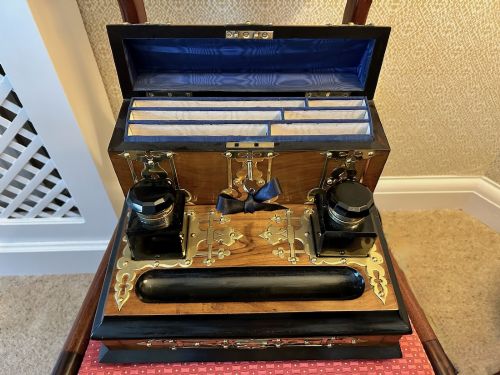
Book slides and stationery cabinets dominate the available forms, often fitted with expanding mechanisms, patent action, or compartments for pens and ink. Buyers encounter both plain oak library pieces and heavily decorated burr walnut boxes adorned with porcelain plaques or agate cabochons.
Materials and construction
Cabinet makers utilised dense hardwoods such as walnut, oak, mahogany, and pollard oak, frequently pairing them with contrasting coromandel or maple. These timbers provided a stable foundation for complex joinery, hinged desk sets, and expanding book slides.
Metalwork formed an integral part of the manufacturing process, employing cast brass, ormolu, and cast iron for hinges, corner brackets, candle shields, and structural mounts. Artisans secured these metal elements with precision screws to withstand daily desk use.
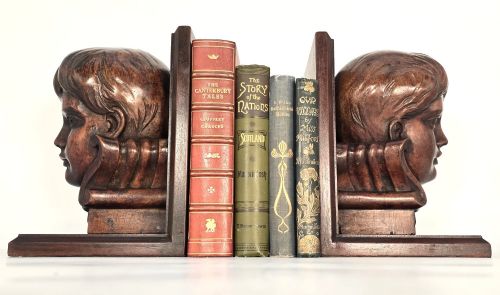
Surface ornamentation involved carving, black forest animal detailing, painted ceramic plaques, and inset semi-precious stones. Patent mechanisms by makers like Betjemann allowed wooden book slides to extend smoothly while concealing internal metal runners.
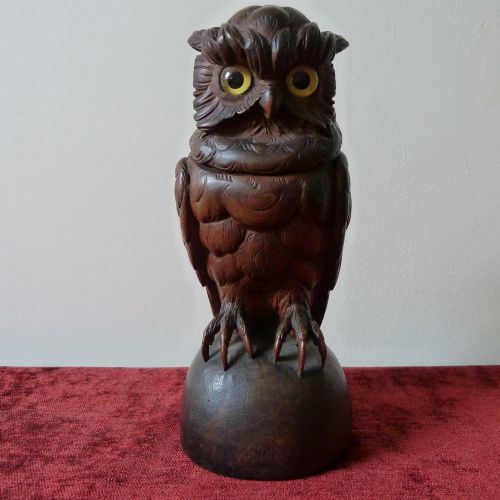
Black forest woodcarvers immortalised wise owls with glass eyes to glare sternly over inkwells on Victorian writing desks.
Distinctions in craftsmanship
Quality rests upon the choice of timber figure and the integration of metal hardware, distinguishing standard utility items from top tier library pieces. Burr walnut and coromandel carcasses paired with heavy, finely chased brass mounts represent the upper tier of production.
The sophistication of internal mechanisms dictates much of the merit, particularly in extending book slides and fitted stationery boxes. Smooth operation in patent actions and the inclusion of original glass inkwells or matched porcelain plaques signal superior workshop origin.
Betjemanns
The Victorian Gothic Desk Accessories Glossary
- Book slide
- An extending desktop rack designed to hold a row of volumes upright between two supportive ends. These often feature hinged or sliding wooden extensions.
- Stationery box
- A desk cabinet with a sloping or dome top designed to store writing paper and envelopes. Interiors typically include fitted divisions for stamps and nibs.
- Inkstand
- A tray or stand holding one or more inkwells alongside pen troughs. They frequently incorporate candlesticks or match holders.
- Gothic revival
- An architectural and decorative style drawing on medieval ecclesiastical design. It utilises pointed arches, heavy hinges, and structural pointed forms.
- Coromandel
- A dense, dark brown timber with striking black figuring imported from Asia. It was prized for luxury Victorian stationery boxes and desk sets.
Victorian Gothic Desk Accessories: Frequently Asked Questions
What is a Victorian book slide?
A Victorian book slide is an extending desktop accessory designed to hold a changing number of volumes upright between two decorative ends.
Most examples utilise wooden platforms with folding or sliding actions to adjust the length as books are added or removed.
How were stationery boxes used?
Stationery boxes sat upon library desks to keep writing paper, envelopes, and correspondence organised and protected from dust.
Opening the sloping or dome top lid typically revealed tiered wooden compartments tailored for different paper sizes and stamps.
What materials are common in these pieces?
Makers relied heavily on dense hardwoods such as walnut, oak, mahogany, and coromandel paired with structural brass mounts.
Details often included cast iron, porcelain plaques, agate cabochons, and carved wood elements like the iconic black forest animals.
How do I spot a patent mechanism?
Patent mechanisms usually feature stamped maker details, such as Betjemann, alongside smooth internal sliding brass tracks.
These clever engineering solutions allowed wooden book rests to extend effortlessly while maintaining a rigid lock at the desired width.