
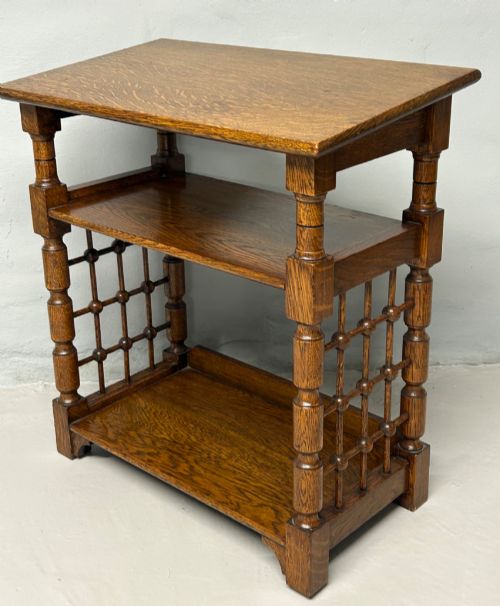


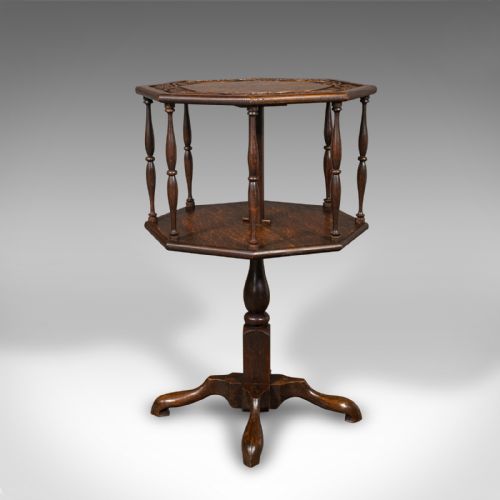

Carved Oak Book Trough
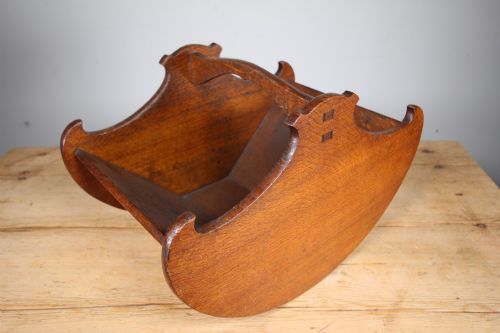
These carved oak book trough pieces are solid timber library items designed to hold volumes upright on desks or tables, offering straightforward utility and period character.
Carved Oak Book Trough
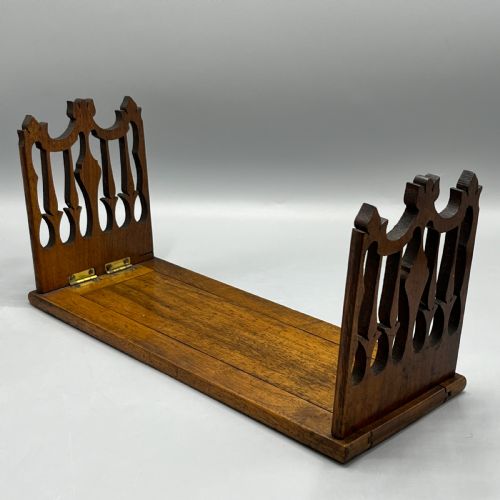
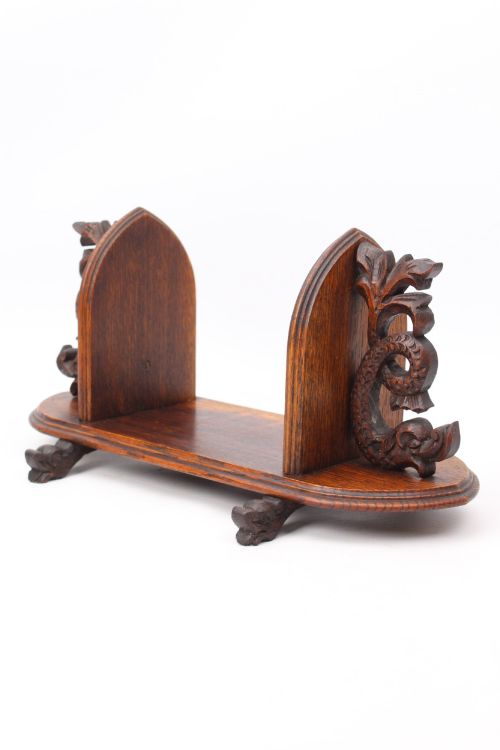
When you search for a carved oak book trough, you find wooden desktop and table pieces designed to organise and display volumes within domestic libraries and studies. The selection on this page spans Victorian, Edwardian, and 1920s periods, showing formats from simple desktop troughs to revolving bookcases, magazine racks, and extending book slides.
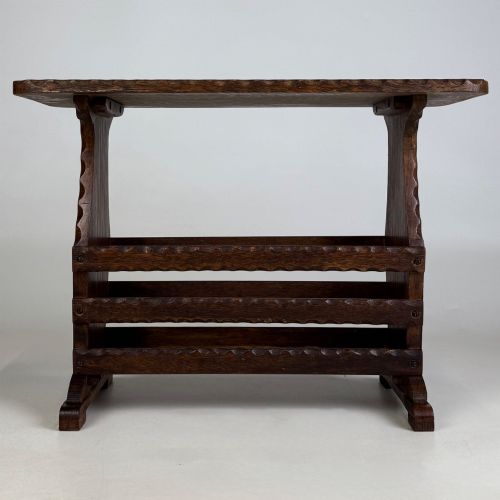
Most examples lean towards Arts and Crafts and Gothic Revival styles, reflecting the prevailing tastes of their makers. You will frequently encounter compact table-top formats alongside occasional tables fitted with integrated book shelves or troughs underneath.
The materials remain remarkably consistent across the inventory, relying primarily on solid oak with occasional brass hardware accents. Origins span English workshops alongside specific regional pieces such as Irish Arts and Crafts productions.
How they were made
Makers constructed these items predominantly from solid oak, utilising its dense grain and durability to support heavy volumes without sagging. Workshops employed traditional joinery methods to build sturdy troughs, stands, and revolving book cases.
Carving and decorative detailing were executed by hand, particularly on pieces associated with the Arts and Crafts and Gothic Revival movements. Brass fittings appeared on extending slides and specific hardware components, adding functional contrast to the timber.
What varies in quality
The standard of a carved oak book trough depends largely on the crispness of the hand-carved ornamentation and the integration of structural joints. Pieces displaying confident, deep relief work in the timber separate standard production items from finer studio examples.
Proportion and functional cleverness also dictate worth, particularly in mechanisms like revolving book stands and extending book slides that operate smoothly. Well-figured oak grain and thoughtful execution of style markers like Gothic tracery or Arts and Crafts chamfering elevate the overall execution.
Arthur Simpson
The Carved Oak Book Trough Glossary
- Book Trough
- A tabletop receptacle with open ends and sloping sides designed to hold a row of books upright. It keeps volumes accessible on a desk or table surface.
- Gothic Revival
- An architectural and decorative style drawing on medieval forms, featuring pointed arches, tracery, and robust proportions. It translates into heavy timber work with ecclesiastical motifs.
- Book Slide
- An adjustable desk accessory with expanding or sliding sections to hold varying quantities of books. It typically includes hinged or decorative ends.
- Revolving Bookcase
- A multi-sided shelving unit mounted on a rotating pivot base to allow access from any angle. It is frequently produced in compact table-top proportions.
Carved Oak Book Trough: Frequently Asked Questions
Where should I put a book trough?
These pieces sit comfortably on top of heavy desks, side tables, or wide windowsills where you keep current reading material. They keep volumes upright and within arm reach without requiring floor space.
Larger versions combined with occasional tables or magazine racks function well beside an armchair or at the end of a sofa in a study.
How do I identify Arts and Crafts pieces?
Look for visible timber grain, hand-chamfered edges, and simple structural forms that celebrate the natural material rather than hiding it beneath heavy veneer or excessive polish. Tool marks left by the maker often remain visible on the surface.
Stylised plant motifs, hammered brass hardware, and sturdy pegged joints further point towards the Arts and Crafts aesthetic found across several examples here.
Can these hold heavy hardback books?
Solid oak construction provides the natural strength required to support substantial hardback volumes and reference books without straining the structure. The dense timber resists warping under normal library loads.
Heavier items like Victorian Gothic pieces and dedicated book slides are engineered specifically to handle dense collections of nineteenth-century literature.