



Victorian Gold Wax Seal
These Victorian gold wax seal pieces are miniature works of functional art that stamp personal crests and initials into hot wax.
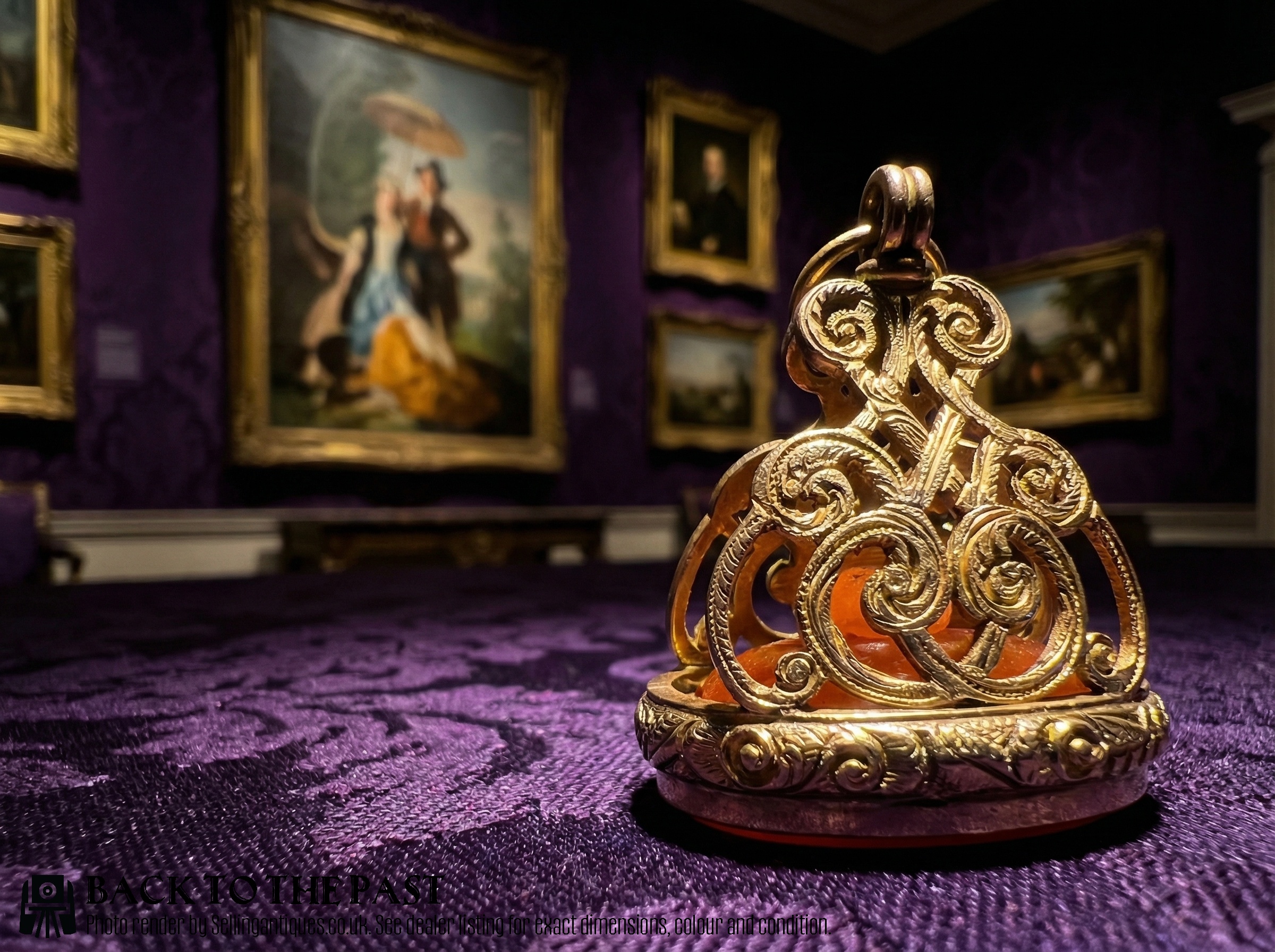
Victorian Gold Wax Seal
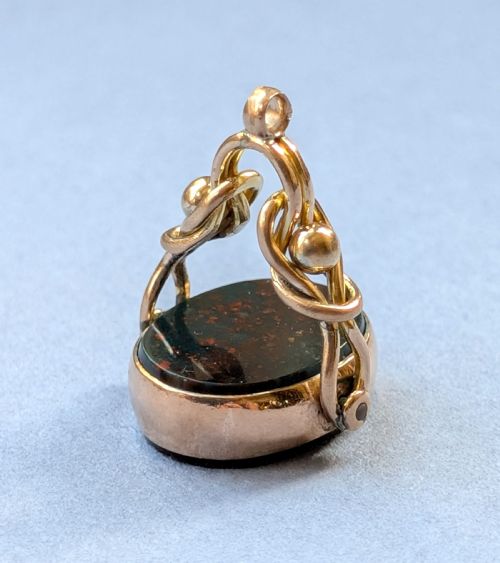
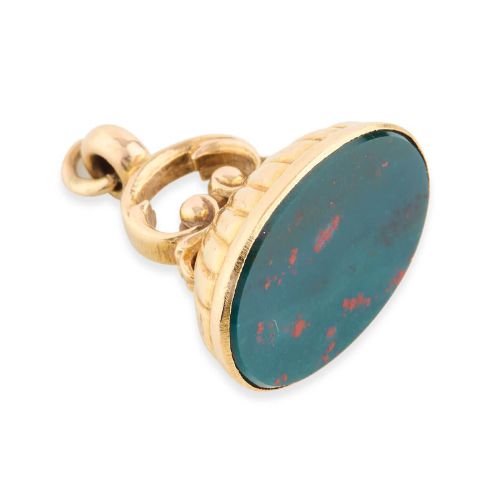
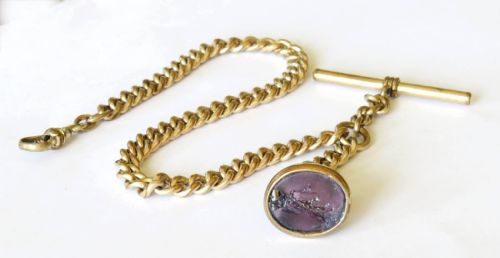
When you search for a Victorian gold wax seal, you encounter small pendant fob seals designed to hang from watch chains or charm bracelets. These items combine solid gold mounts with hardstone matrices carved for impressing wax.
The pieces on this page span several eras including Georgian, Victorian, and Edwardian periods, though Victorian examples dominate the selection. They appear as spinning fobs, pendant charms, and watch keys set with carved stones.
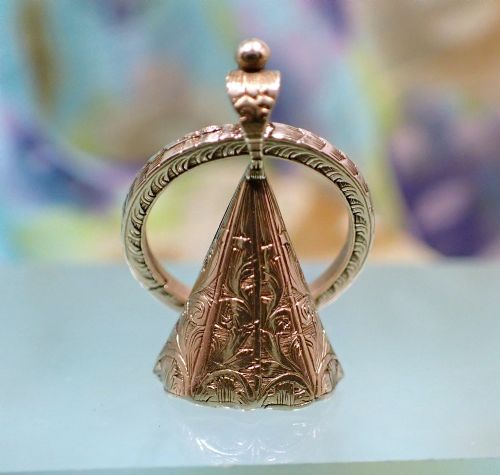
Makers utilised various yellow and rose gold purities alongside gold cased or rolled gold options to house these hardstone bases. The forms range from simple polished mounts to ornate lion and elephant figures holding the stone.
How they were made
Craftsmen shaped gold mounts through casting and hand chasing, creating ornate frames or simple swivel bezels for the stones. These mounts securely held hardstones like carnelian, bloodstone, chalcedony, and sardonyx.
Lapidaries carved intaglio designs directly into the stone matrices, depicting Greek figures, Roman emperors, initials, or names like Ann and Jane. The microscopic depth of these carvings demanded immense precision to ensure a crisp impression in wax.
An elephant charm holds the seal aloft, ready to stamp correspondence.
What varies in quality
The grade of gold determines the base tier, moving from rolled gold and gilt metal up to nine carat, fifteen carat, and higher purity solid gold. Heavier mountings with substantial gold content outlast lighter hollow or cased alternatives.
Carving clarity defines the upper echelon of these pieces, where finely detailed intaglios of figures or crisp lettering show superior skill compared to plain or worn stones. The choice of hardstone, from simple banded agate to richly coloured carnelian and bloodstone, elevates the overall presence.
The Victorian Gold Wax Seal Glossary
- Intaglio
- A design incised into the flat face of a stone so that an impression in wax creates a raised relief. This technique reverses the image, ensuring the stamped result reads correctly.
- Fob
- A short chain or ribbon with an ornament attached, historically worn dangling from a pocket watch. The seal itself served as the pendant weight at the end.
- Carnelian
- A brownish-red variety of chalcedony quartz used extensively for signet seals. It provides a smooth, translucent surface that highlights intaglio carvings.
- Bloodstone
- A dark green jasper flecked with red spots of hematite. It forms a durable and striking matrix for heraldic and personal seals.
- Swivel
- A pivoting mechanism allowing a double-sided fob to turn on its axis. This lets the user display two different stones or an engraved side and a plain side.
Victorian Gold Wax Seal: Frequently Asked Questions
What is a Victorian gold wax seal?
A Victorian gold wax seal is a small decorative item made from gold and hardstone, used historically to authenticate letters and documents by pressing into melted wax.
These pieces were commonly worn suspended from pocket watch chains or gathered together on charm bracelets as personal accessories.
How were wax seals used?
To use a seal, the owner heated sealing wax, dripped it onto folded paper or the flap of an envelope, and pressed the carved stone matrix firmly into the warm wax.
The resulting impression left a raised design unique to the sender, serving both as a signature and a secure closure for confidential correspondence.
How do I wear a fob seal today?
Many people wear these seals as modern pendants suspended from a sturdy gold chain around the neck. They also work well added to existing charm bracelets.
When wearing a seal on a bracelet or chain, ensure the jump rings are secure to prevent the heavier gold mounts from slipping off during daily movement.
How can I tell the gold purity?
Makers often stamped hallmarks or purity marks directly onto the gold mounts, indicating standards such as nine carat or fifteen carat gold. Some pieces lack marks and rely on testing or general period characteristics to determine metal content.
Unmarked items may also consist of rolled gold or gilt metal over a base metal core, which requires careful inspection of wear points to ascertain.