

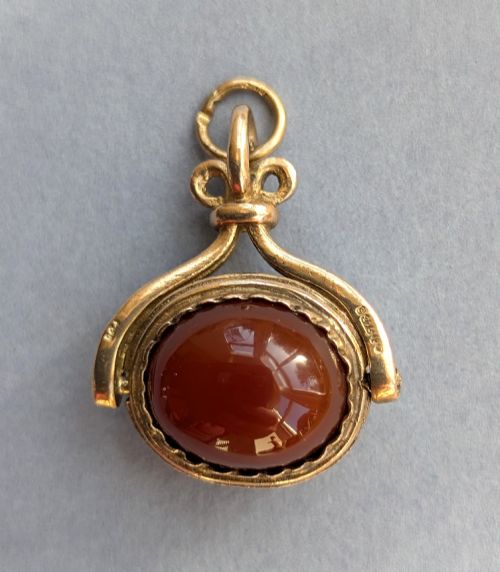
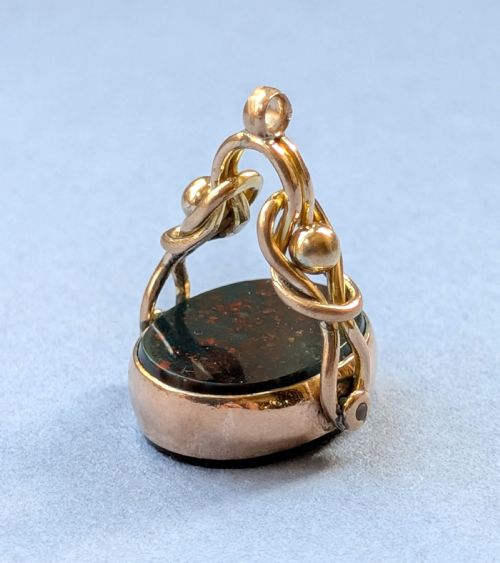


Victorian Carnelian Wax Seal
A victorian carnelian wax seal brings tactile history to a desk or a chain, offering carved intaglios set in gold or gilt metal.
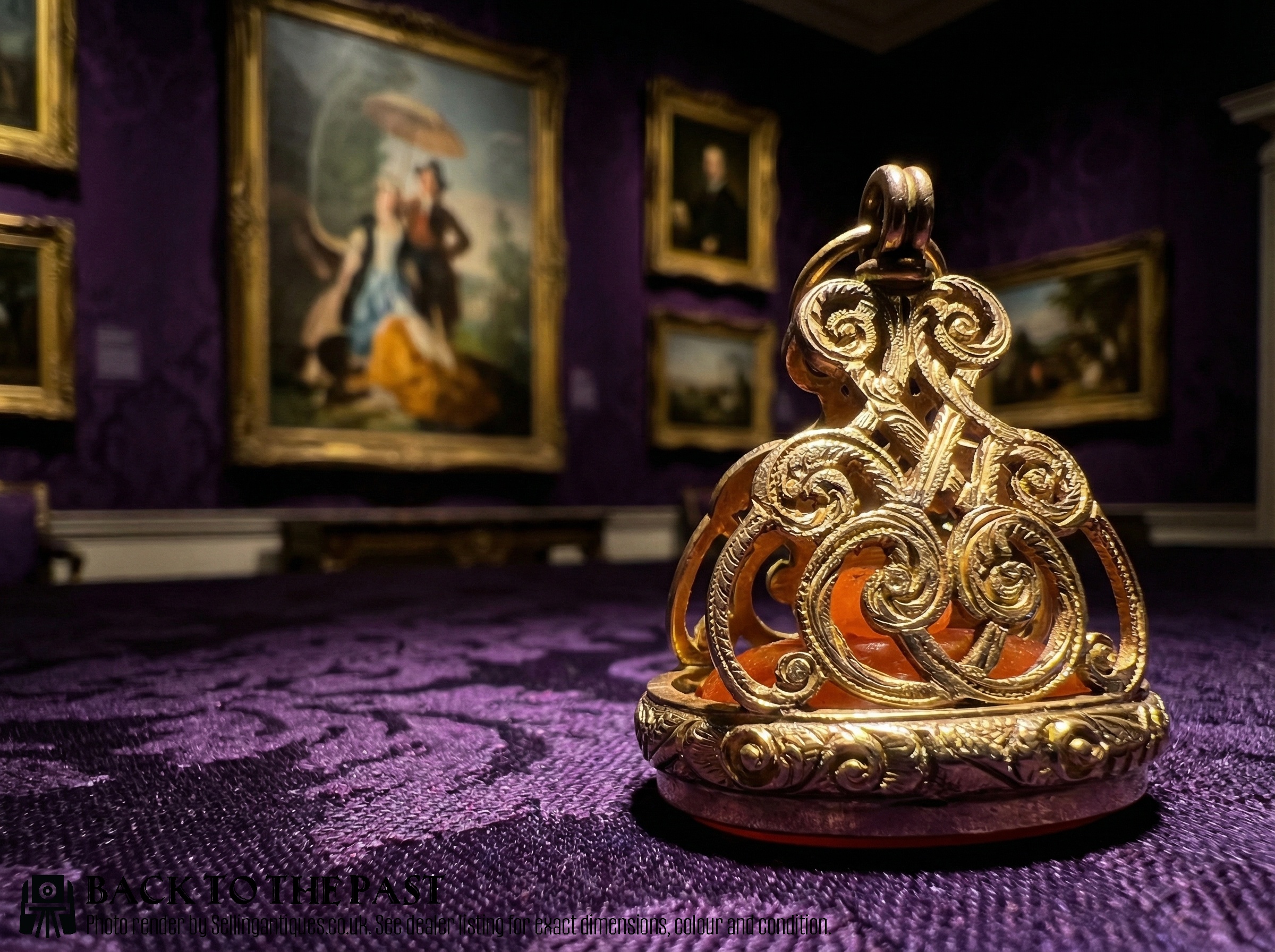
Victorian Carnelian Wax Seal
A victorian carnelian wax seal serves as both a personal signature and a pendant, designed to impress crests or initials into hot wax. These small objects combine functional stationery equipment with wearable jewellery, often worn suspended from chains or charm bracelets.
The selection ranges from simple swivel fobs to large pendant seals carved with classical figures or names. Most examples pair a reddish-orange chalcedony stone with mounts of nine-carat yellow or rose gold, though gilt metal versions also appear.
While the majority belong to the Victorian era, related pieces stretch from the Georgian period into the Edwardian years and the turn of the twentieth century. Collectors encounter them as single fob pendants or gathered together on charm bracelets.
How they were made
Goldsmiths shaped mounts from nine-carat gold, nine-carat rose gold, nine-carat yellow gold, or gilt metal to house the hard stones. These metals were cast, chased, and occasionally configured as spinning mechanisms that allowed a second face to turn into position.
Lapidaries carved the stones, using carnelian, cornelian, and bloodstone to create smooth faces and deep intaglio designs. Artisans cut Roman emperors, Greek figures, and personal names directly into the stone matrix so the impression would read correctly when stamped.
Victorian Carnelian Wax Seal Retail Price Guide 2026
Typical asking prices for victorian carnelian wax seal among the pieces listed under this phrase on Sellingantiques today, from the lower quarter to the upper quarter. They describe what is for sale here now, not the wider market.
Materials recorded across the inventory include carnelian, bloodstone, nine-carat rose gold, nine-carat yellow gold, and gilt metal.
What varies in quality
Quality rests in the crispness of the stone carving and the weight of the gold mount. Sharp intaglio details on figures and legible lettering distinguish finer carving work from simpler production.
The choice of materials also shapes the piece, with substantial nine-carat gold settings holding more intrinsic worth than gilt metal. Swivel mechanisms that turn smoothly and securely separate superior engineering from loose or worn mounts.
The Victorian Carnelian Wax Seal Glossary
- Carnelian
- A brownish-red variety of the silica mineral chalcedony that takes a high polish. It forms the primary stone surface for cutting intaglios.
- Intaglio
- A design incised into the flat face of a stone so that the impression in wax creates a raised relief. This technique has ancient roots.
- Fob
- A short chain or ribbon attached to a pocket watch, or the pendant hanging from it. Many seal fobs served this dual purpose.
- Gilt metal
- Base metal treated with a thin layer of gold or gold-coloured wash. It provides the appearance of solid gold at a different weight.
Victorian Carnelian Wax Seal: Frequently Asked Questions
What is a victorian carnelian wax seal used for?
These pieces were pressed into molten sealing wax to close letters and official documents with a personal mark. Today, people wear them as pendants or hang them from charm bracelets.
They function as both miniature sculptures and wearable pieces of nineteenth-century social history. Collectors often display them grouped on desk stands or chains.
Are all seals made of solid gold?
Mounts vary between solid nine-carat gold, rose gold, yellow gold, and gilt metal over base materials. Hallmarks or specific testing methods reveal the metal content.
Gilt metal versions offer an alternative weight and composition to the solid gold pieces. Both material types were produced across the nineteenth century.
What designs appear on the stones?
Carvings depict Roman emperors, Greek figures, family crests, monograms, and names such as Ann. These intaglios were reversed so the stamped wax impression read the right way.
Some seals feature rotating swivel heads with two distinct faces or stones. Others pair carnelian on one side with bloodstone on the reverse.