




Carnelian Gold Charm
Carnelian gold charm selections draw the eye with polished red-orange stones mounted in yellow, rose, and gilt metals across Victorian, Georgian, and Edwardian eras.
Carnelian Gold Charm
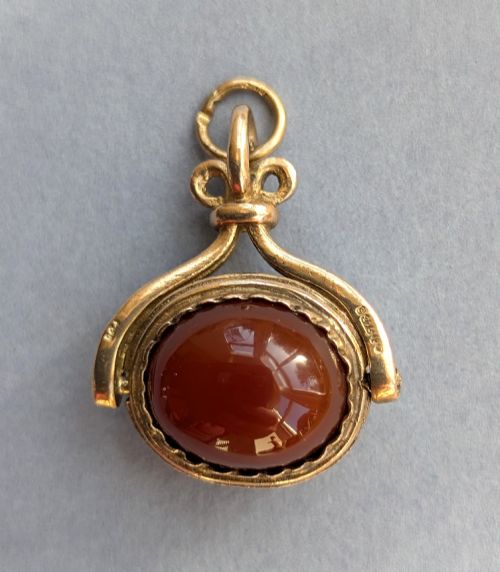
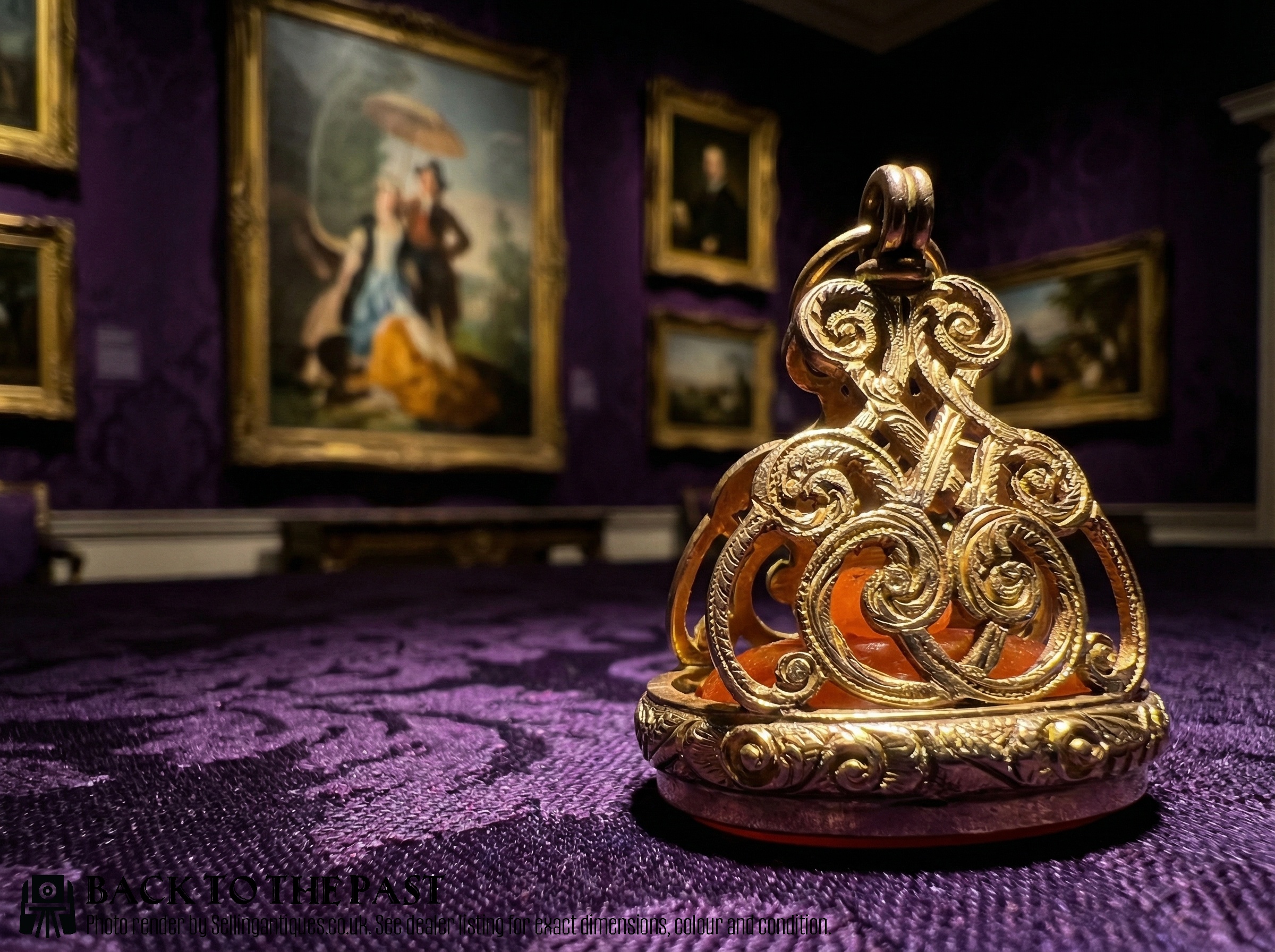
A carnelian gold charm or fob seal is a portable piece of jewellery designed to be worn on a chain, pendant mount, or charm bracelet. These items bridge decorative ornamentation and functional desk accessories, originating from periods when personal signets held everyday utility.
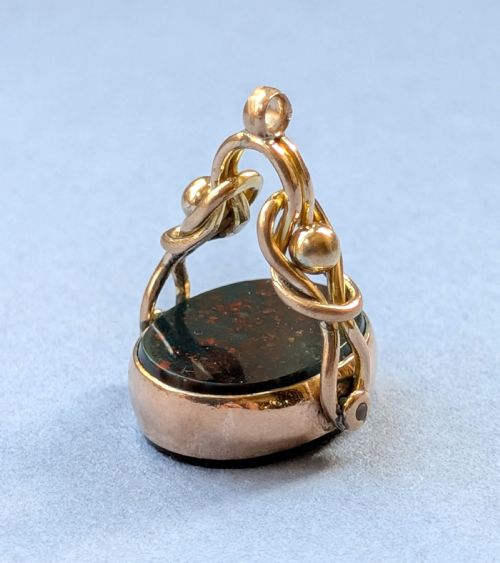
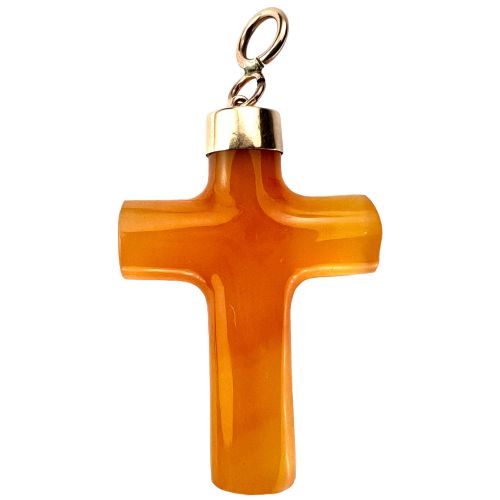
The pieces on this page span Victorian, Georgian, Edwardian, and nineteenth-century eras, appearing as swivel pendants, carved crosses, and engraved signets. Visitors are most likely to encounter gold-mounted fobs and pendants featuring polished carnelian, cornelian, and agate stones.
Makers utilised yellow gold, nine-carat rose gold, and gilt metal to house stones that range from plain polished surfaces to intaglios depicting Greek figures and Roman emperors. Such items reflect the prevailing neoclassical tastes and gentlemanly pursuits of their respective centuries.
How they were made
Goldsmiths shaped nine-carat gold and gilt metal into bezels and swivel frames to securely hold polished carnelian and agate stones. These metals provided both the structural strength for daily wear and the ductile property needed to form decorative mounts.
Craftsmen carved intricate designs directly into the chalcedony stone, producing intaglios such as Roman emperors and Greek figures intended for impression sealing in wax. Metalwork techniques combined casting, soldering, and hand engraving to produce intricate fob seals and charm bracelets.
Carnelian Gold Charm Retail Price Guide 2026
Typical asking prices for carnelian gold charm among the pieces listed under this phrase on Sellingantiques today, from the lower quarter to the upper quarter. They describe what is for sale here now, not the wider market.
Listings feature items from the Georgian, Victorian, Edwardian, and nineteenth-century periods, utilising carnelian, bloodstone, agate, and nine-carat gold.
What varies in quality
The refinement of the stone carving sets finer pieces apart, particularly where intaglios depict named figures or detailed classical motifs with crisp edges. Metal purity also distinguishes the range, moving from gilt metal and untested compositions up to nine-carat yellow and rose gold.
Structural complexity influences the standing of a piece, separating simple bezel-set stones from swivel pendants and multi-seal charm bracelets that incorporate bloodstone alongside carnelian.
The Carnelian Gold Charm Glossary
- Carnelian
- A brownish-red variety of the mineral chalcedony, traditionally polished into smooth domes or flat surfaces for seals.
- Fob seal
- A small pendant featuring a matrix carved with initials, a crest, or a classical figure, historically used for stamping wax seals.
- Intaglio
- A gem or stone carved with a design depressed below the surface so that an impression in wax yields a raised image.
- Swivel pendant
- A mounting style that allows the central stone or seal to rotate freely on a central axis within its outer metal frame.
Carnelian Gold Charm: Frequently Asked Questions
What is a carnelian gold charm?
A carnelian gold charm is a small historic pendant or fob seal incorporating orange-red chalcedony set in gold or gilt metal. These items were originally worn on watch chains or charm bracelets.
Many examples feature hand-carved intaglios depicting classical figures or personal initials, reflecting the jewellery styles of the Georgian, Victorian, and Edwardian eras.
How were these pieces used historically?
These items served primarily as signet seals for stamping hot wax to authenticate personal letters and documents. The carved stone matrix pressed into wax left a permanent, identifiable impression.
Over time, as their use for sealing correspondence declined, they transitioned into purely decorative pendants and components for charm bracelets.
How do I tell Victorian pieces from Georgian ones?
Georgian pieces typically display heavier closed-back settings and earlier neoclassical motifs, reflecting eighteenth and early nineteenth-century design priorities. Victorian examples often utilise distinct gold standards like nine-carat rose gold and display broader stylistic shifts.
Examining the metalwork construction, stone cutting style, and any engraved names provides clear clues to the period of origin.
Can I wear these on a modern bracelet?
Many pieces are suited for modern wear as pendants on chains or incorporated onto secure charm bracelets. Their sturdy gold and gilt metal mounts accommodate traditional jump rings and loop attachments.
Care should be taken with swivel mechanisms and antique stone settings to ensure daily stability during regular wear.