



Carnelian Fob Pendant
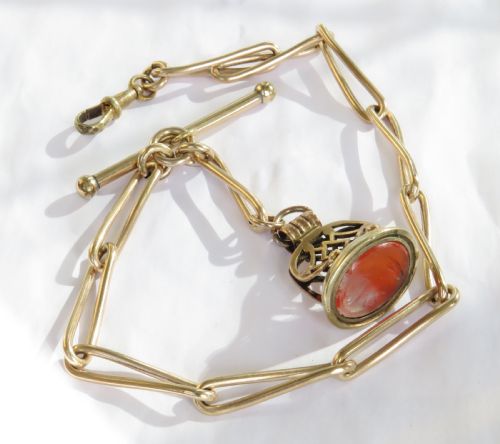
A carnelian fob pendant brings warm amber and red chalcedony to a chain, pairing historic seal engraving with wearable gold.
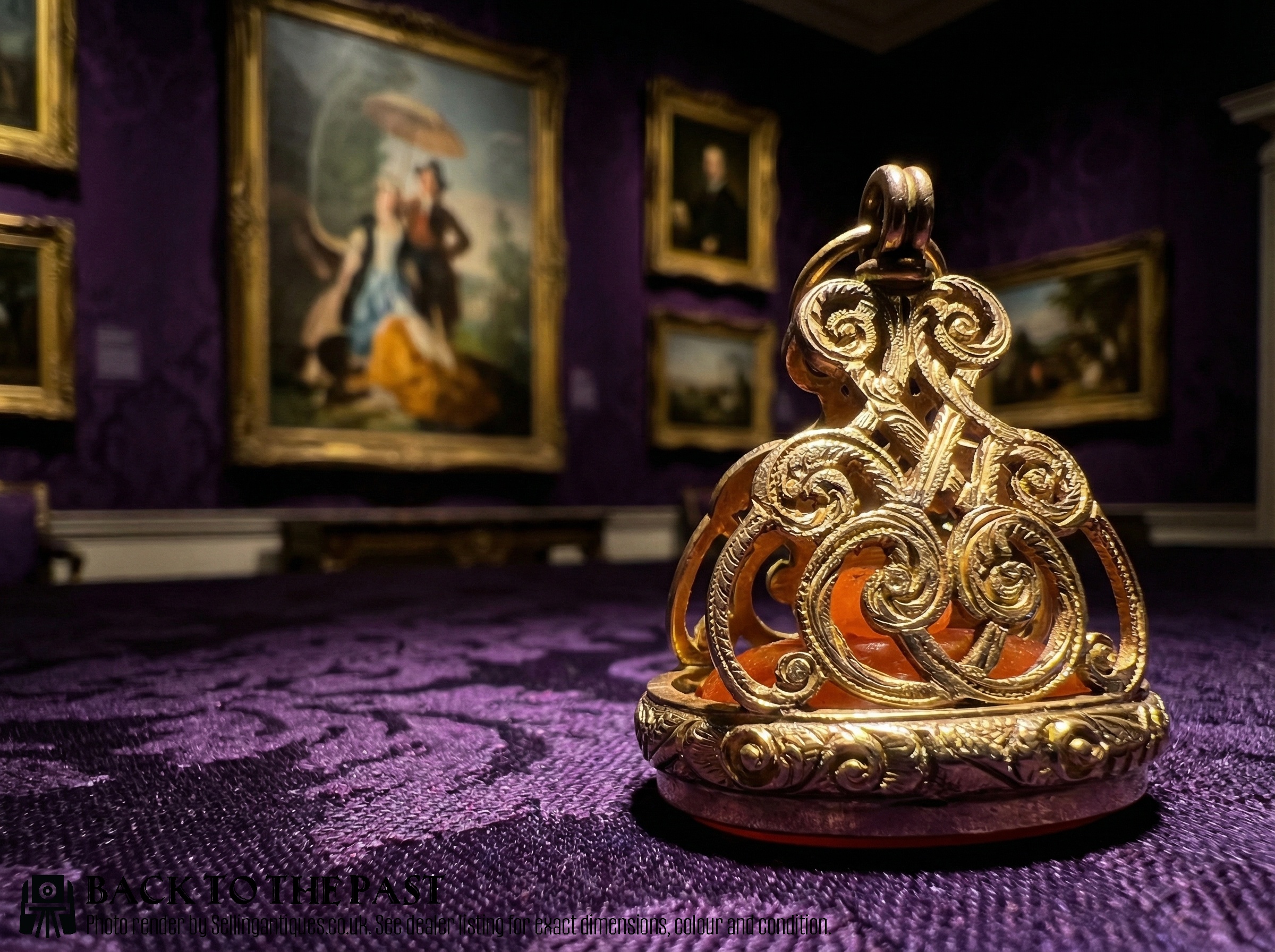
Carnelian Fob Pendant
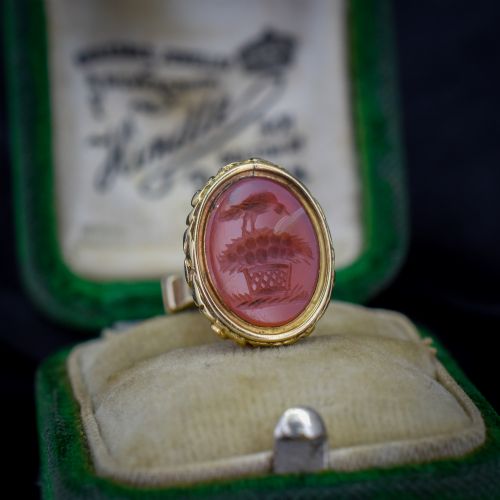
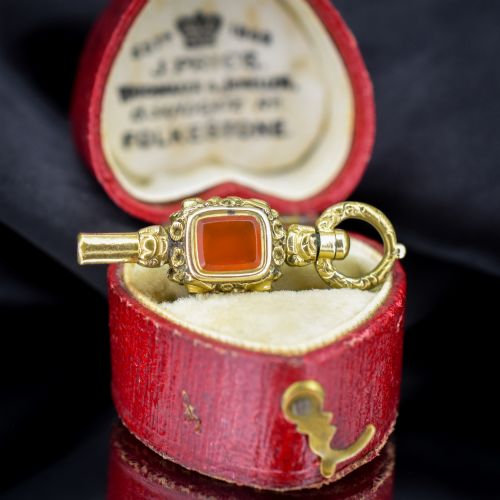
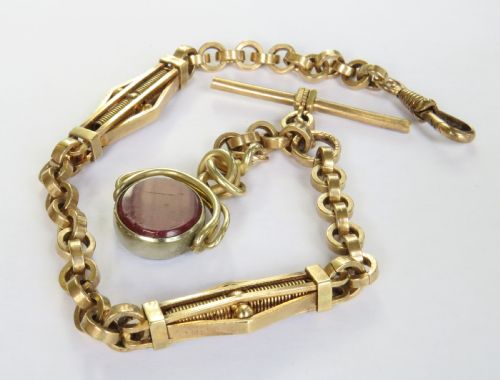
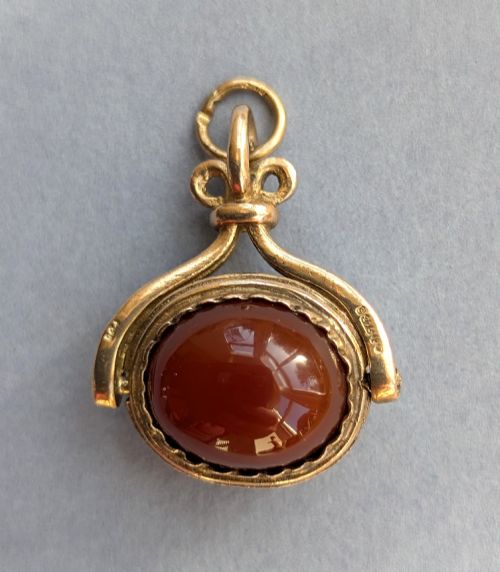
A carnelian fob pendant sits at the end of a pocket watch chain or hangs directly from a neck chain as a pendant. When you search for a carnelian fob pendant, you encounter pieces that originally functioned as wax seals or decorative watch accessories during the Georgian and Victorian eras. These items merge functional desk objects with personal adornment.
The pieces on this page span the Georgian, Victorian, Edwardian, and Art Deco periods, extending into the 1920s. You will find solid 9ct gold, 9ct rose gold, and gilt metal mounts securing polished orange-red carnelian stones. Many examples take the form of swivel fobs, allowing the wearer to rotate the stone to reveal a different face or an intaglio carving.
How they were made
Goldsmiths shaped mounts from 9ct gold, 9ct rose gold, rolled gold, and gilt metal to hold the chalcedony securely. Stones were cut and polished to smooth surfaces, often displaying high domed profiles or flat faces suited for pressing into sealing wax.
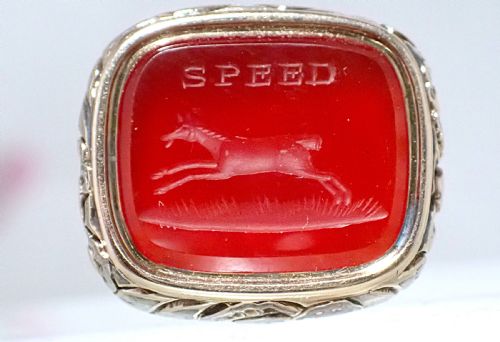
Craftsmen utilised hand engraving and intaglio cutting directly into the carnelian stone. Artisans carved crests, initials, classical figures, horses, and mottoes into the chalcedony to create working seals.
Carnelian Fob Pendant Retail Price Guide 2026
Typical asking prices for carnelian fob pendant among the pieces listed under this phrase on Sellingantiques today, from the lower quarter to the upper quarter. They describe what is for sale here now, not the wider market.
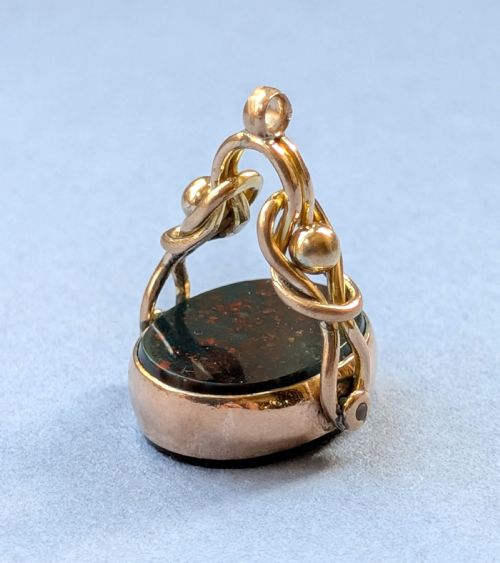
The archive includes revolving swivel fobs that combine carnelian with green bloodstone, allowing two distinct seal faces on a single mount.
What varies in quality
The depth and clarity of the intaglio carving dictate the level of artistry in a piece. Crisp engraving depicting a Roman emperor, a Greek figure, or a detailed horse surpasses shallow, plain polished stones.
The choice of metal mount also creates distinction. Heavy solid 9ct gold settings represent superior manufacture compared to gilt metal or rolled gold alternatives, while dual-sided swivel mechanisms demand precise engineering to function smoothly.
The Carnelian Fob Pendant Glossary
- Carnelian
- A reddish-orange variety of the mineral chalcedony used for signet rings and seals. Its warm translucent colour made it a favourite stone for nineteenth-century jewellery.
- Intaglio
- A gem carving technique where the design is incised below the surface of the stone. When pressed into hot wax, it leaves a raised impression.
- Fob seal
- A small pendant attached to a pocket watch ribbon or chain, featuring a hardstone matrix carved with a crest or initials. It was used to seal letters and documents.
- Swivel fob
- A pendant mounted on a central axis that rotates to display two different faces. Owners often paired carnelian on one side with bloodstone on the reverse.
- Gold cased
- A method of manufacturing watch cases and jewellery where a layer of gold is fused to a base metal core. It provided the appearance of solid gold at a lower cost.
Carnelian Fob Pendant: Frequently Asked Questions
How do I wear a fob pendant today?
You can slide a carnelian fob pendant onto a sturdy neck chain to wear it as a pendant, or attach it to a traditional watch albert chain. The substantial weight of these pieces makes them sit well on medium-length chains.
Many collectors prefer wearing them on short waist chains or grouping them with other seals and charms for a layered look.
What is the difference between carnelian and cornelian?
Carnelian and cornelian are simply different spellings for the exact same orange-red chalcedony mineral. Older British documents and antique dealers often preferred the cornelian spelling.
Both terms describe the translucent quartz stone historically prized for signet carving because hot sealing wax does not stick to it.
Can I still use a fob seal for wax?
You can use an intaglio-carved fob seal to stamp letters and documents with sealing wax. The hard surface of carnelian stands up to repeated pressing into warm wax without wearing down the carved design.
Check that the intaglio is free of heavy chips before pressing, as sealing wax can lodge in deep crevices if the stone is damaged.