


Victorian Gold Padlock Bracelet
A victorian gold padlock bracelet carries the secure weight of past centuries, offering a tangible connection to personal sentiment and meticulous metalwork.
Victorian Gold Padlock Bracelet
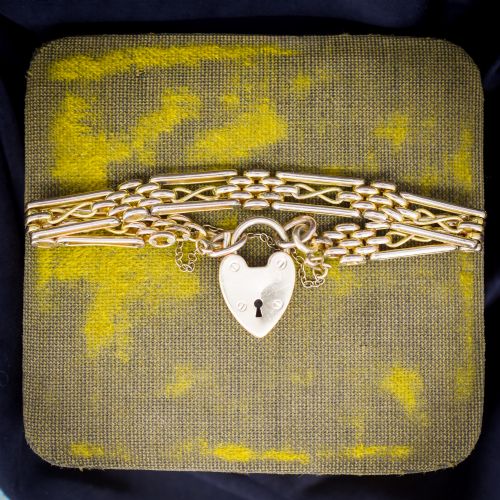
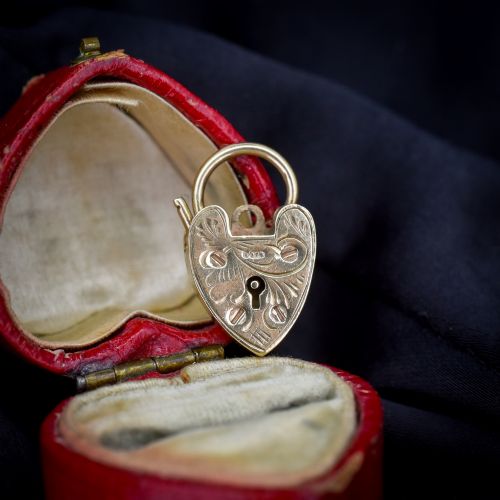
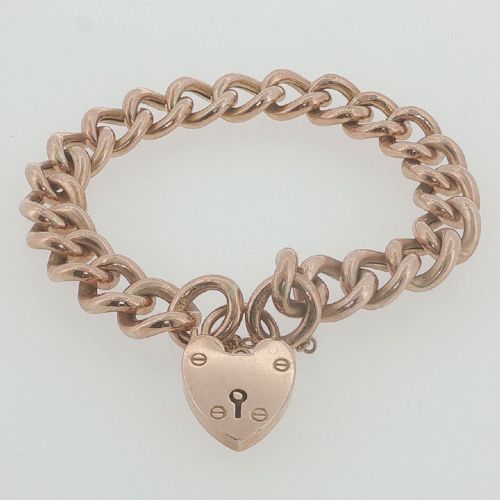
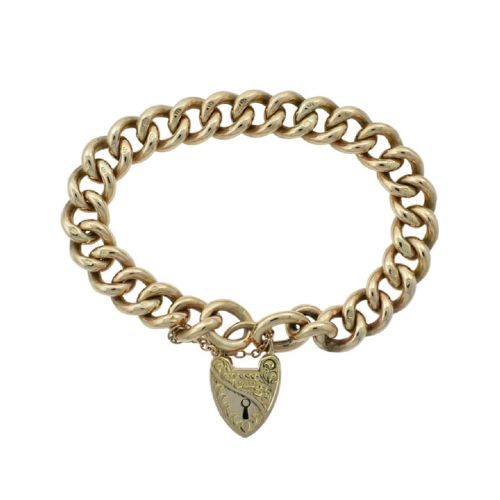
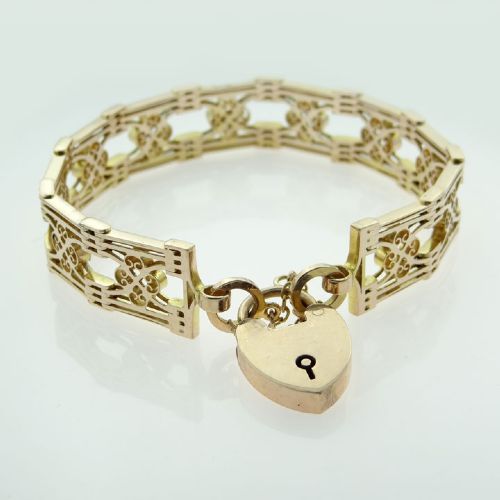
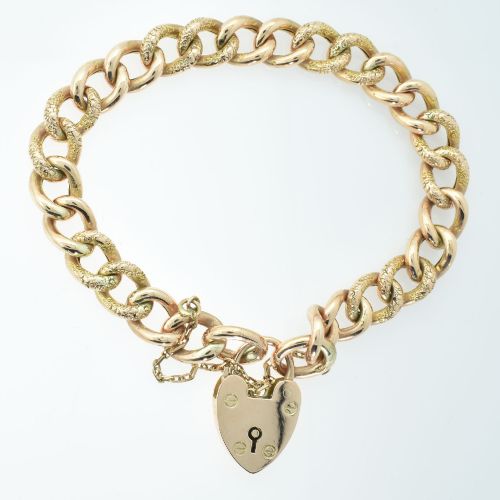
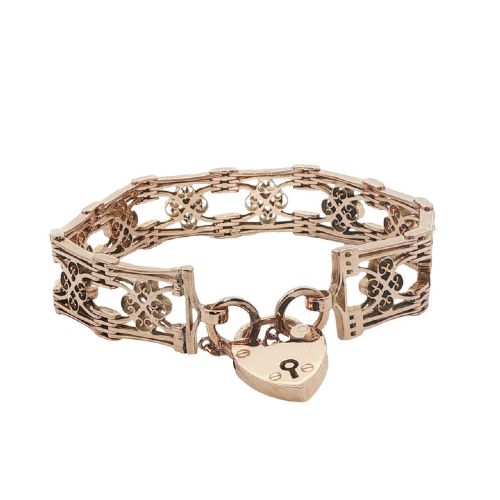
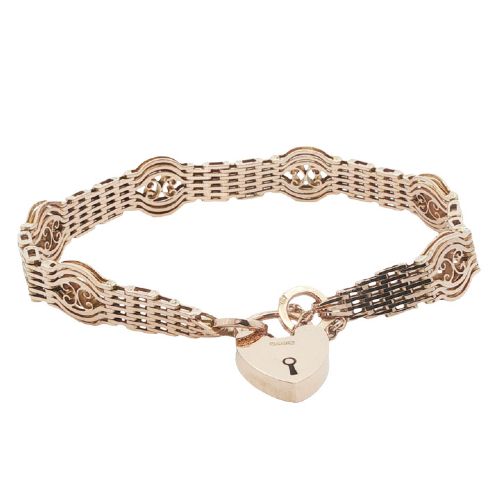
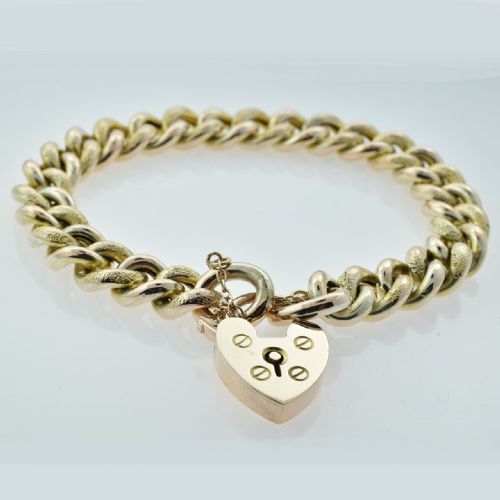
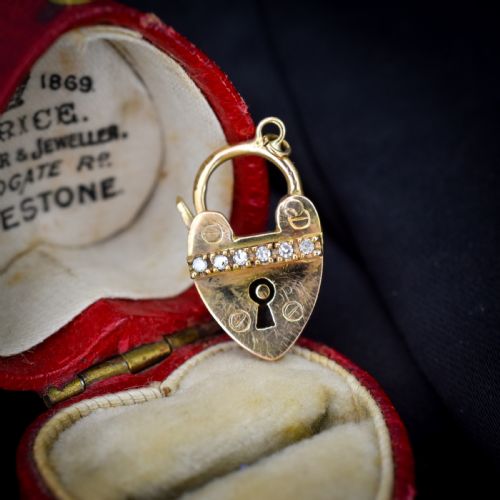
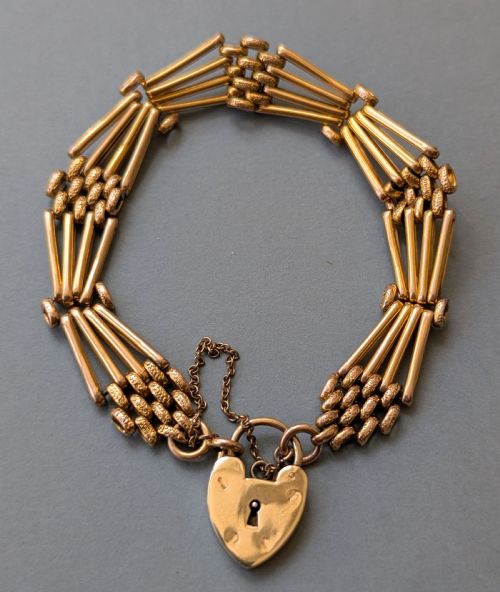
A victorian gold padlock bracelet brings together substantial link chains and functional clasp mechanisms designed to secure the wrist with authority. The most common form seen here is the robust curb link or gate bracelet, terminating in a secure heart-shaped padlock.
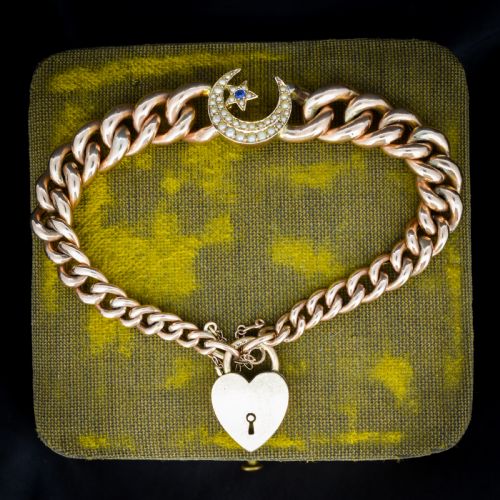
These pieces emerge primarily from the Victorian and Edwardian eras, extending into early twentieth-century revivals. Examples span solid yellow gold, rich rose gold tones, and lower-carat variations, frequently paired with decorative charms or gemstone accents.
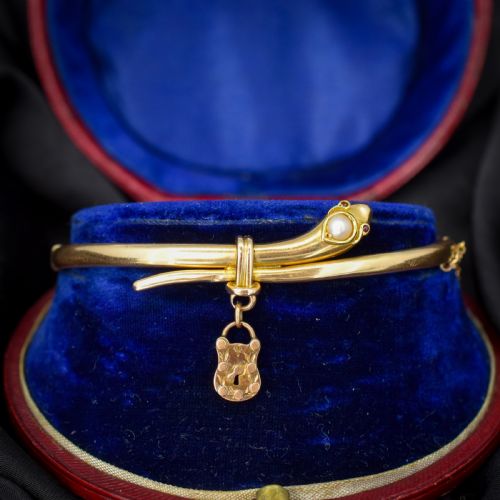
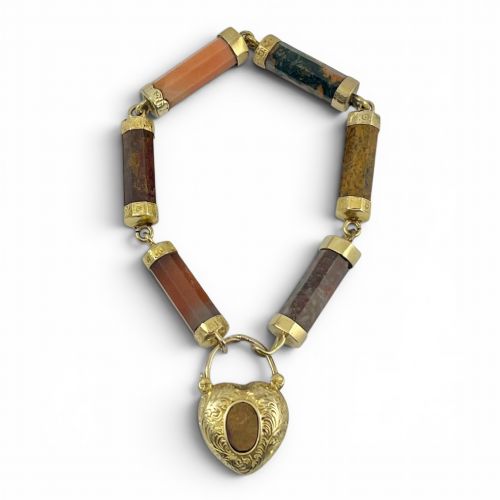
Beyond standard chains, certain variants integrate serpent motifs, intricate knotwork, or Scottish agate panels. Each configuration reflects the romantic and utilitarian sensibilities prevalent during the nineteenth and early twentieth centuries.
Materials and Techniques
Goldsmiths utilised various purities including nine-carat, fifteen-carat, and eighteen-carat gold, alongside rolled gold alternatives for lighter wear. Rose gold hues predominate among the surviving chain links and gate structures.
Craftsmen shaped metal into uniform curb links, intricate gate panels, and hollow tubular elements before hand-engraving surface patterns. Padlocks incorporated operational spring mechanisms, while gemstones like pearls, rubies, and chrysoberyls were flush-set or secured with tiny claws.
Distinctions in Quality
Substantial weight separates heavy daily-wear chains from lighter, hollow alternatives that bend under pressure. Solid construction ensures the links withstand decades of movement without stretching or thinning at the joints.
The clarity and depth of hand-engraving dictate visual refinement, where crisp lines on a padlock contrast against worn, shallow patterns. Additionally, original matching safety chains and fully functional, tight-closing padlocks elevate the integrity of the piece.
The Victorian Gold Padlock Bracelet Glossary
- Curb link
- A type of chain composed of flattened, interlocking links that lie flat against the wrist. This design provides both flexibility and high tensile strength.
- Gate bracelet
- A style featuring parallel rectangular bars connected by small links, resembling a decorative gate. It became exceptionally popular during the late nineteenth century.
- Rolled gold
- A material formed by bonding a thin sheet of gold to a base metal core under heat and pressure. It offers the appearance of solid gold with greater affordability.
- Padlock clasp
- A miniature functional lock, frequently shaped as a heart, used to secure the bracelet ends. Many open via a hidden spring mechanism or tiny lever.
Victorian Gold Padlock Bracelet: Frequently Asked Questions
What is a padlock bracelet?
A padlock bracelet is a linked chain or gate bracelet fastened by a decorative padlock clasp. These clasps frequently take a heart shape and serve as both the mechanism and the central decorative focal point.
Such designs were immensely popular during the nineteenth century, often given as tokens of affection or commitment. The lock itself typically opens via a push-pin or spring tongue concealed within the design.
How do I date these bracelets?
Dating relies upon hallmarks stamped into the metal, stylistic cues, and the construction methods of the links. British hallmarks often include letters denoting specific assay years alongside crown or carat stamps.
Heavier rose gold curb chains and gate links generally cluster around the late Victorian and Edwardian periods. Comparing the clasp mechanism and engraving style against documented examples helps narrow the decade of production.
Are these bracelets solid gold?
The listings encompass both solid gold pieces - typically nine-carat, fifteen-carat, or eighteen-carat - and rolled gold alternatives. Solid gold variants display distinct hallmarks indicating the metal purity and origin.
Rolled gold versions use a thick layer of gold mechanically fused to a base metal substrate. Examining the inner links and edges reveals whether the material is solid throughout or clad over a core.
How do I wear an antique bracelet safely?
Wearing an antique bracelet safely requires checking the tension of the padlock spring and ensuring the jump rings connecting the clasp are secure. Adding a subtle safety chain provides insurance against accidental loss if the main clasp opens during movement.
Avoiding exposure to harsh chemicals, perfumes, and abrasive surfaces preserves the softer gemstones like pearls and the delicate hand-engraved patterns on the metal.