




Victorian Glassware Jug
These Victorian glassware jug pieces bring nineteenth-century colour and hand-finished craft directly to the table.
Victorian Glassware Jug
Victorian glassware jug examples span water jugs, wine decanters, and tall pitchers designed for the dining room. These pieces appear in forms ranging from simple domestic vessels to elaborate matched drinkware sets.
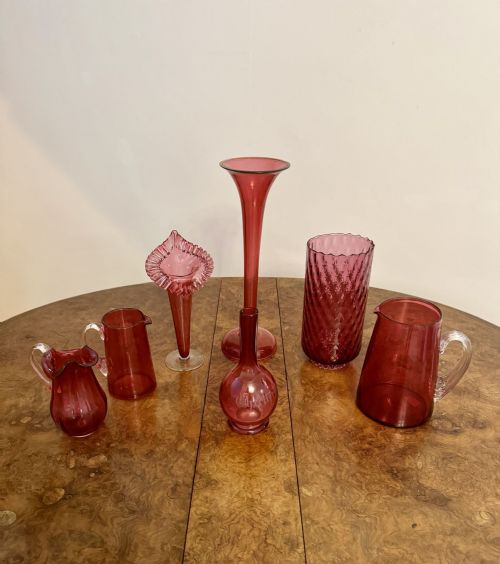
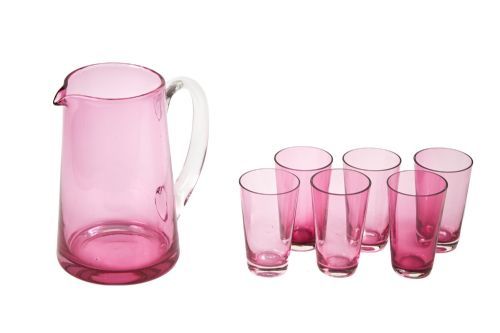
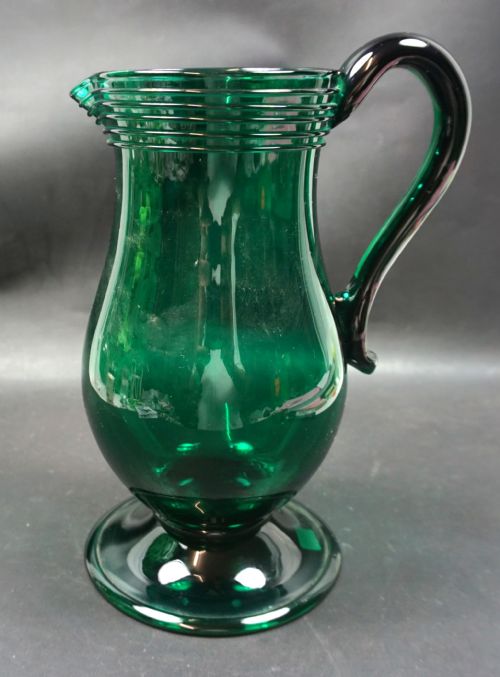
The selection on this page shows a heavy concentration of cranberry glass, alongside green and clear glass variations. Makers produced these vessels throughout the nineteenth century and into the early twentieth century.
Buyers will encounter jugs featuring applied trail rims, folded feet, and painted enamel decoration. Many examples survive alongside matching glasses or bowls as complete sets.
How they were made
Glassmakers utilised lead crystal and coloured glass formulas, including gold salt additives to achieve rich cranberry tones. Artisans shaped these materials while hot, often adding folded feet and trail rims by hand.
Decoration involved acid-etching, white glass latticinio work, and hand-applied enamel painting enhanced with gold leaf. Workshops such as Stevens & Williams and Baccarat employed skilled cutters and painters to finish each vessel.
Listings feature items spanning the Victorian, Edwardian, and French Second Empire styles, created in clear, green, and cranberry glass.
What varies in quality
Quality rests upon the crispness of the cut glass facets and the precision of the applied gilding and enamel work. Heavier lead crystal vessels demonstrate greater substance in the hand compared to lighter blown glass.
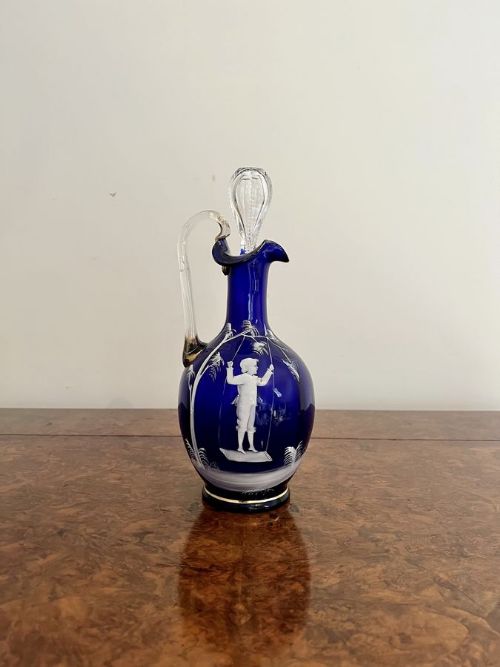
The complexity of the glass coloration and the integration of decorative elements like trail rims or Mary Gregory figural scenes distinguish standard production from exceptional examples.
Stevens & Williams·Baccarat
The Victorian Glassware Jug Glossary
- Cranberry glass
- A rich red-pink transparent glass produced by adding gold chloride to the molten batch. This distinctive colour defines a large portion of nineteenth-century tablewares.
- Mary Gregory
- A style of white enamel painting depicting silhouette children in pastoral settings, popular on coloured glass. The technique appeared on various Victorian green and blue vessels.
- Latticinio
- Fine opaque white glass threads embedded within clear crystal during blowing. This Venetian-inspired method creates delicate web or lace patterns inside the vessel wall.
- Trail rim
- A hot glass thread applied around the lip of a jug for reinforcement and decoration. Artisans manipulated this molten thread while shaping the spout.
- Overshot glass
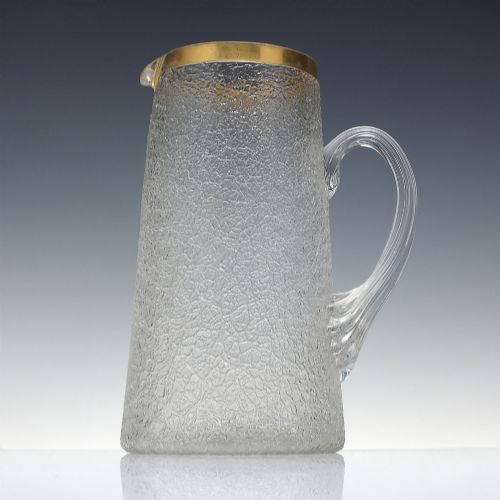
- A textured surface finish created by rolling hot glass over fragments of broken glass. This technique produces an icy, rough exterior texture.
Victorian Glassware Jug: Frequently Asked Questions
Were these jugs used for water or wine?
Makers produced these vessels for various table duties, including serving water, wine, and claret. Larger pitchers handled water at the dining table, while smaller decanters held wine.
The presence of matching glasses often indicates the intended beverage service for guests.
How can I tell cranberry glass from other red glass?
Genuine cranberry glass derives its colour from gold salts rather than cheaper copper or selenium agents. This gives the material a distinct pinkish-red hue that shifts subtly under different lighting conditions.
Examination under magnification often reveals the depth of tone characteristic of nineteenth-century batch formulas.
What is the Mary Gregory style?
Mary Gregory pieces feature white enamel illustrations depicting Victorian children amidst foliage or landscapes. These painted scenes appear primarily on coloured glass grounds like green, blue, or cranberry.
The style takes its name from an American decorator, though most surviving examples originated in British and European glasshouses.