




Red Glass Carafe
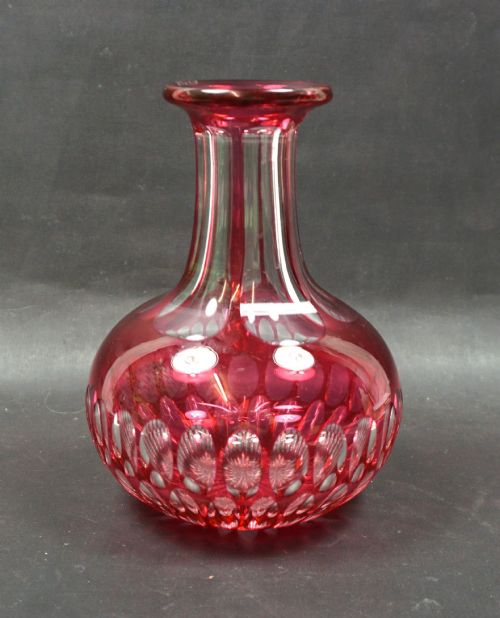
A red glass carafe brings rich ruby and cranberry tones to the table, offering a striking vessel for serving wine or water.
Red Glass Carafe
A red glass carafe encompasses serving bottles, wine decanters, and claret jugs designed for the dining table. These vessels emerge predominantly from the Victorian and Edwardian eras, spanning the nineteenth and early twentieth centuries.
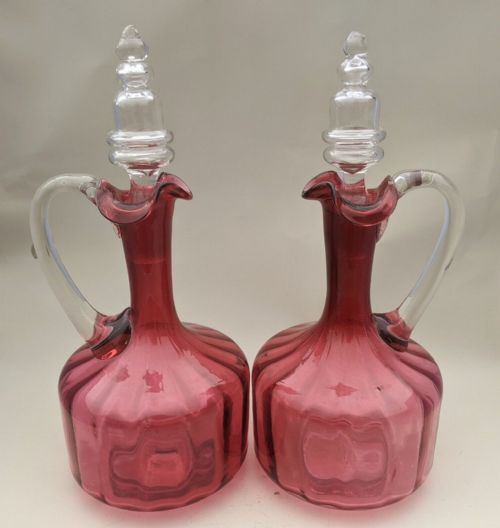
Buyers will most frequently encounter cranberry glass and ruby glass pieces, often shaped as decanters or serving bottles. English makers feature strongly among the selections, alongside items mounted in silver plate or sterling silver.
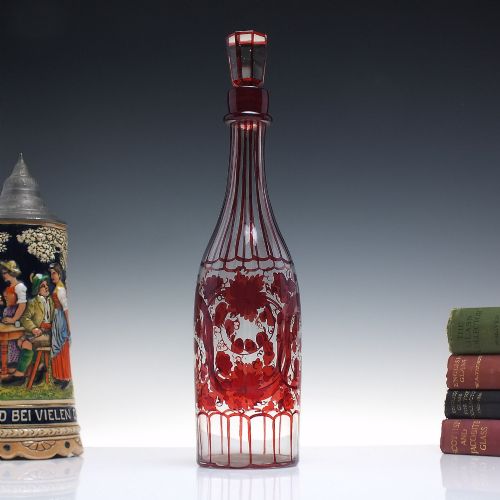
The forms range from simple serving bottles to elaborate wine jugs engraved with fruiting vines or accented with enamel and hand painting. Pairs appear alongside single pieces, offering matching options for table service.
How they were made
The primary material is glass, manipulated through cranberry overlay, ruby glass techniques, and cut crystal methods. Artisans applied coloured layers over clear glass before cutting back the surface to reveal contrasting depths.
Decoration often involved hand painting and detailed engraving, particularly depicting fruiting vines on large crystal wine jugs. Mounts utilise sterling silver and silver plate, fitted securely to the necks of the glass bodies.
Listings feature pieces spanning the Victorian and Edwardian periods, utilising cranberry glass, ruby glass, cut crystal, and sterling silver mounts.
What varies in quality
Depth and saturation of the red glass set pieces apart, alongside the precision of overlay work where clear crystal meets the coloured layer. Crispness in the cut crystal facets and finesse in hand-painted enamel details distinguish finer examples.
The presence of hallmarked sterling silver mounts adds distinction compared to standard glass necks or simpler silver plate fittings. The scale of the vessel and the inclusion of matching pairs also influence the standing of the piece.
The Red Glass Carafe Glossary
- Cranberry Glass
- A transparent pinkish-red glass produced by adding gold chloride to the molten batch. It became exceptionally popular during the Victorian period for tableware.
- Ruby Glass
- A deep red glass coloured typically with copper or gold, yielding a rich dark tone. It forms the body of many late nineteenth-century decanters.
- Overlay
- A technique where a layer of coloured glass is fused over a base of clear glass. Artisans then cut through the outer layer to create contrasting patterns.
- Claret Jug
- A specialised pouring vessel designed specifically for serving red wine. These often feature metal mounts and hinged lids.
- Sterling Silver Mount
- A collar and pourer cast in standard British silver fitted to the neck of a glass bottle. These mounts frequently carry hallmarks indicating the year of assay.
Red Glass Carafe: Frequently Asked Questions
What is a red glass carafe used for?
These vessels serve wine, water, and liqueurs at the dining table, combining practical function with strong decorative colour. They allow hosts to present beverages in traditional nineteenth-century style.
Many examples function as decanters or serving bottles, while others with handles and spouts operate as claret jugs for dinner parties.
How do I date a red glass carafe?
Dating relies on stylistic clues, manufacturing techniques, and any accompanying metal mounts. Victorian pieces often display rich cranberry tones and hand-painted or engraved decoration.
Edwardian items frequently incorporate sterling silver collars with clear hallmarks that provide exact years of manufacture. Glass weight and cutting styles also help distinguish mid-nineteenth-century examples from later ones.
What is the difference between cranberry glass and ruby glass?
Cranberry glass typically displays a brighter, pinker red hue achieved through the use of gold in the glass recipe. It was widely favoured by Victorian makers for decorative tableware.
Ruby glass tends toward a darker, deeper crimson shade. Both materials appear frequently across the decanters and serving bottles from this era.
How should I care for an antique carafe?
Gentle hand washing with warm water and mild soap protects both the glass and any historic silver mounts. A soft bottle brush helps clean the interior without scratching the surface.
Harsh detergents and automatic dishwashers should be avoided to preserve hand-painted details, enamel, and the polished finish of the glass.