

Glass Stoppered Bottle
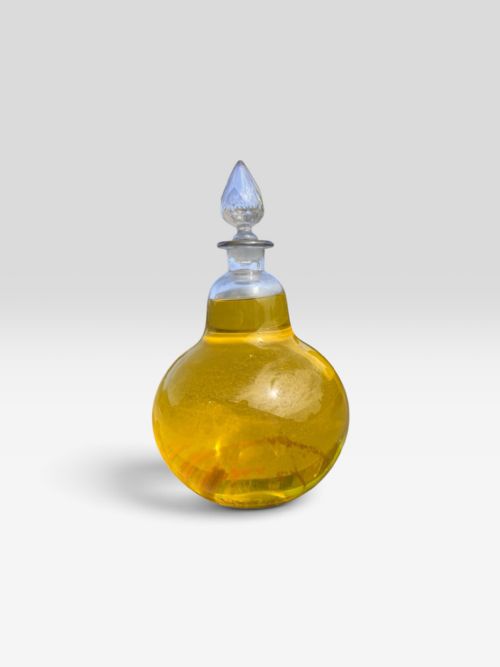
A glass stoppered bottle holds liquids safely while adding brilliant clarity and colour to a room.
Glass Stoppered Bottle
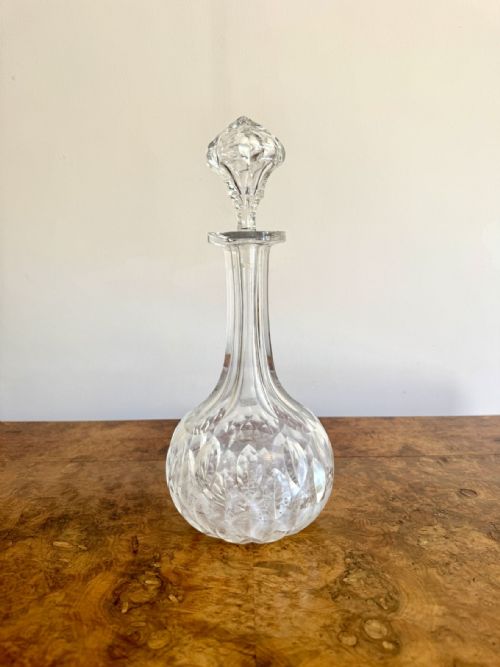
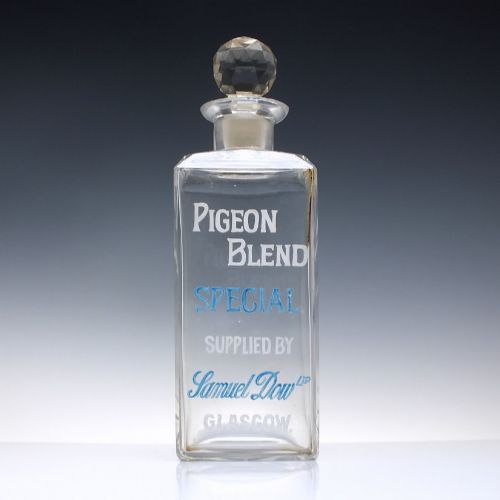
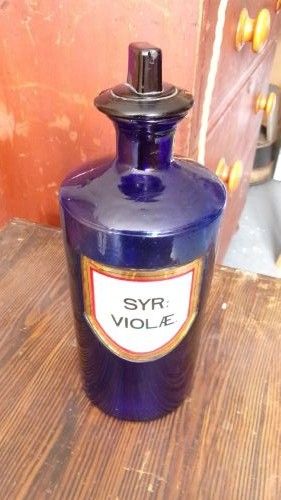
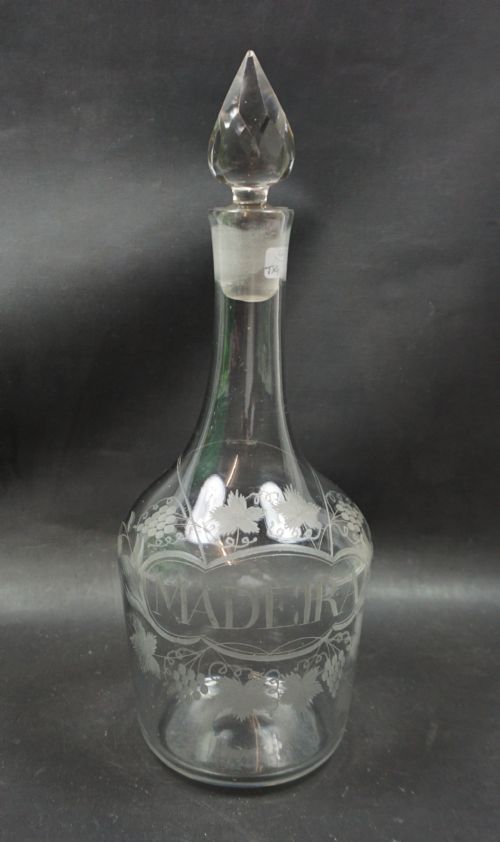
A glass stoppered bottle encompasses practical vessels designed to hold wine, spirits, perfume, or apothecary contents securely beneath a matching glass closure. Buyers seeking a glass stoppered bottle encounter domestic decanters, pocket scent flasks, and heavy pharmacy jars spanning from the eighteenth century into the twentieth century.
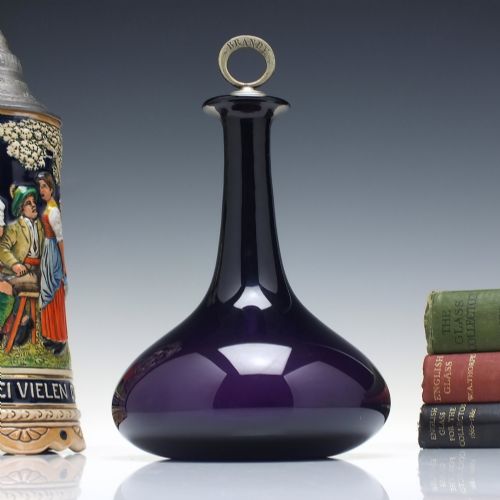
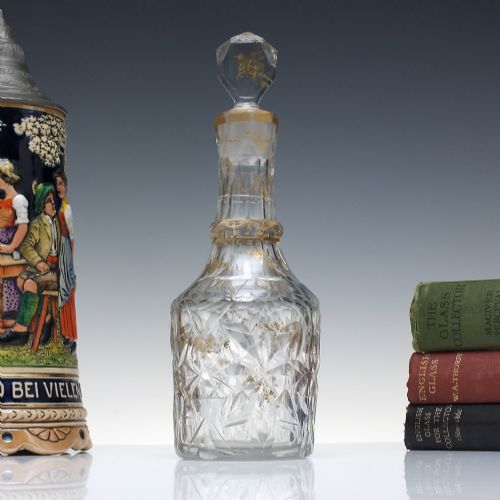
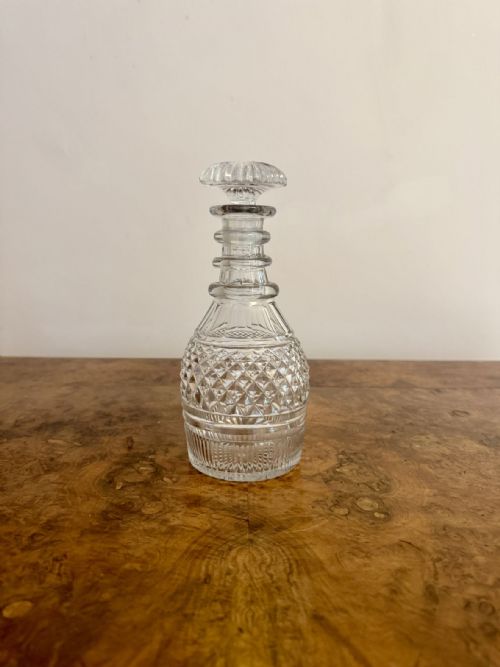
The domestic decanter dominates the selection, appearing in Georgian, Victorian, and Edwardian forms intended for the dining table or sideboard. These range from heavy lead crystal spirit bottles to slender amethyst mell vessels and gilt-decorated carafes.
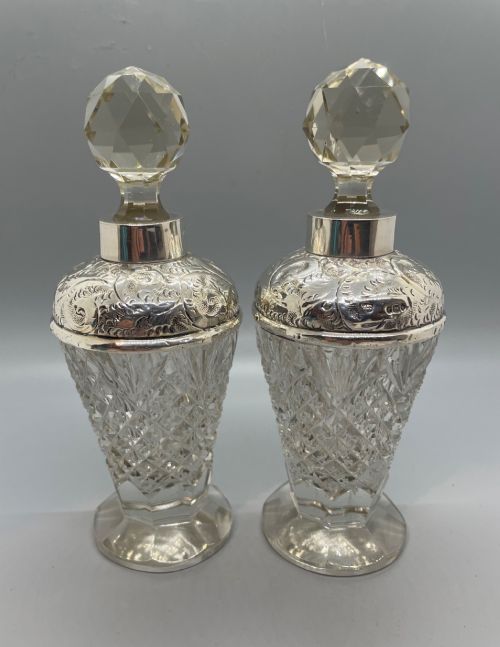
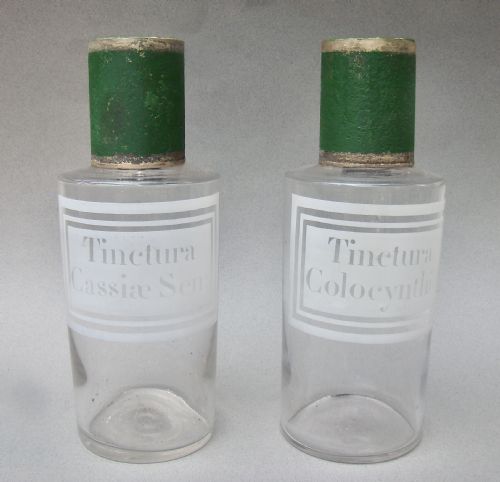
Smaller personal bottles and utilitarian pharmacy containers also populate the range. Apothecary jars, chemist carboys, and silver-collared perfume flasks demonstrate the wide utility of a tight-fitting glass stopper across different domestic and professional settings.
How they were made
Hot molten metal was gathered and shaped using traditional free-blowing or mould-blowing techniques to form the basic body and neck of the vessel. Artisans often ground the inner neck and the matching stopper by hand to achieve an airtight seal.
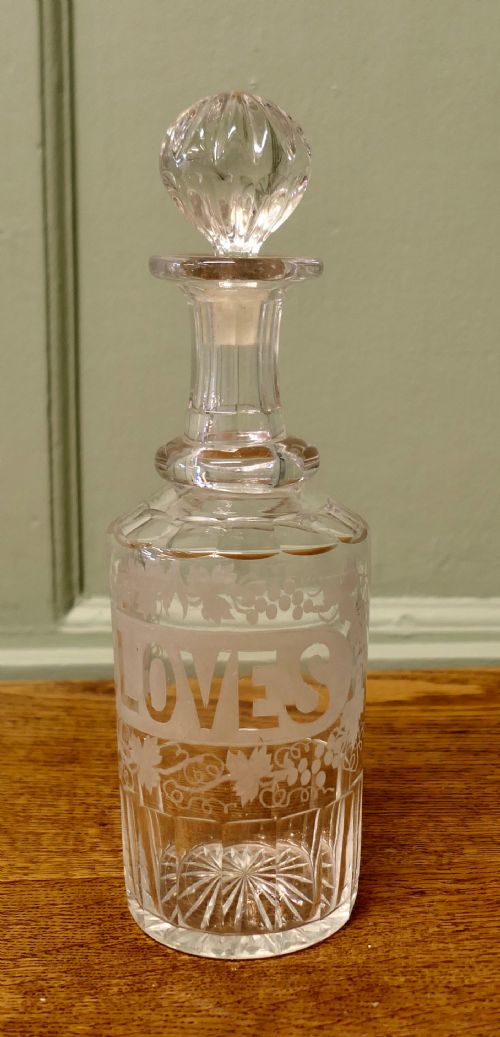
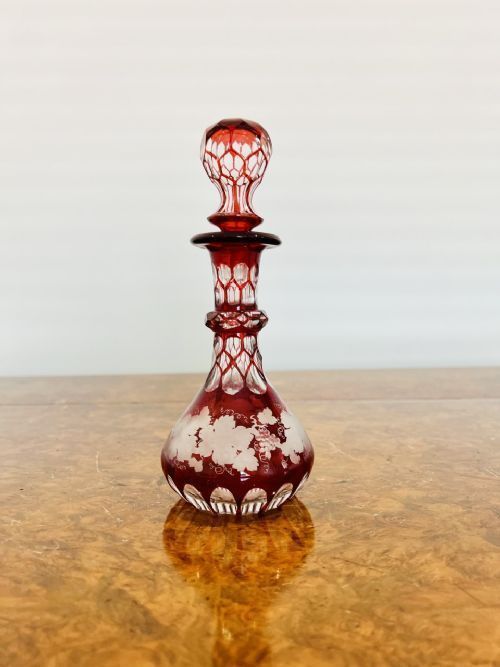
Decoration relied on wheel-cutting, acid-etching, hand-painting, or applying delicate enamel and gold leaf directly to the surface. Cut glass utilised deep facets to refract light through lead crystal or standard glass.
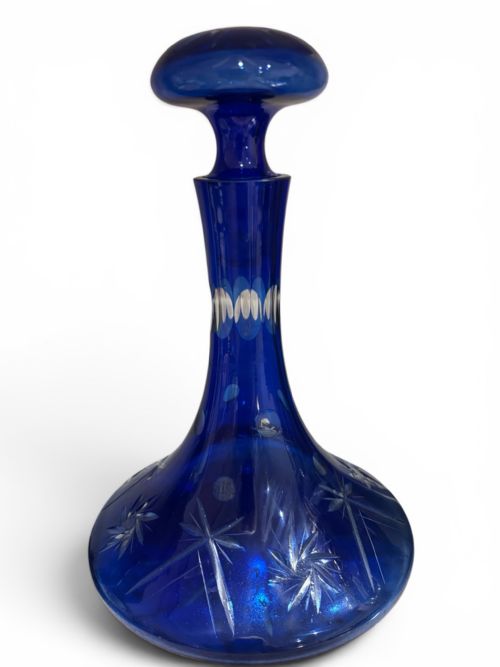
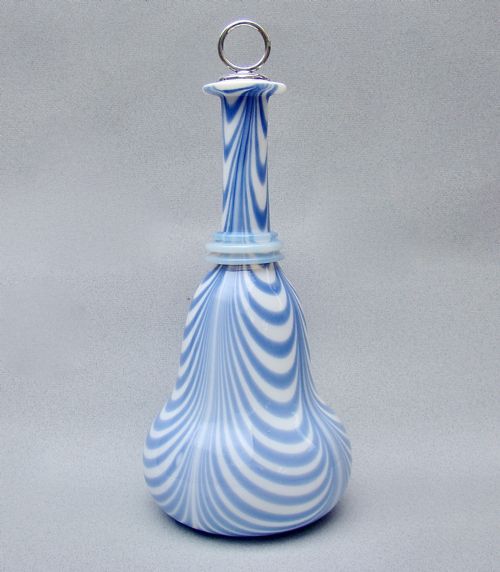
Specialised regional methods produced distinct effects, such as the looped opaque threads seen in Nailsea type vessels or the contrasting layers found in Bohemian cobalt and amber crystal.
Listings span multiple centuries, ranging from eighteenth-century Georgian shaft and globe carboys to twentieth-century Art Deco moulded perfume flasks.
What varies in quality
The weight and purity of the glass material set the baseline for quality, with high lead crystal providing a heavy feel and brilliant acoustic ring. Thinner, bubbling utilitarian glass belongs to a different functional category than fine display decanters.
The precision of the hand-ground stopper dictates functional success and historical integrity. A stopper that sits flush and matches the original grinding marks of the neck indicates superior craftsmanship.
The complexity and crispness of surface decoration separate standard production items from masterworks. Hand-gilding, careful wheel-engraving, and fine enamelling elevate a simple container into a piece of decorative art.
Atelier of James Giles·Karl Palda·Stevens & Williams·Pauly & Co.
The Glass Stoppered Bottle Glossary
- Lead crystal
- A type of glass containing lead oxide that increases weight, clarity, and the capacity to refract light.
- Mell
- A traditional English shape of decanter characterised by a broad body tapering towards the shoulder.
- Carboy
- A large, rigid container traditionally used for holding liquids in laboratory or apothecary settings.
- Latticinio
- A glassmaking technique involving opaque white or coloured glass threads embedded within clear glass.
- Nailsea type
- Glassware featuring characteristic looped or splashed opaque white streaks, originally associated with nineteenth-century production.
Glass Stoppered Bottle: Frequently Asked Questions
What is a glass stoppered bottle used for?
These vessels served to store and pour liquids such as wine, whisky, brandy, and medicinal contents while preventing evaporation or contamination. Their tight seals kept volatile perfumes and potent spirits fresh over long periods.
In domestic settings, they transitioned from cellarettes to dining tables and dressing stations. Apothecary and chemist versions held bulk ingredients or liquid preparations in professional dispensaries.
How do I clean a glass stoppered bottle?
Residue inside antique vessels requires gentle treatment without harsh abrasives or sudden temperature changes that might crack historical glass. Warm water and specialised cleaning beads safely dislodge sediment from the base.
Stoppers should be cleaned separately and stored loosely when the vessel remains empty for long periods. Forcing a stuck stopper can damage the hand-ground mating surfaces.
How can I tell the period of a glass stoppered bottle?
Pontil marks on the base, manufacturing weight, and decorative styles provide key clues to the era of production. Georgian pieces often show deep pontil scars and heavy cutting, whereas Edwardian examples exhibit machine-smoothed bases and refined brilliance.
Colours also shift by era, with deep cobalt blues, rich amethysts, and cranberry hues pointing to specific nineteenth-century glasshouse palettes. Silver collars and hallmarked mounts give exact calendar years when present.
Are original stoppers important?
The presence of the original matching stopper significantly preserves the historical and aesthetic completeness of the piece. Because stoppers were easily broken or swapped over generations, finding a matched pair is a distinct advantage.
Each stopper was individually ground to fit its specific neck, meaning historical replacements often sit differently. Close inspection of the glass tint and wear patterns helps confirm if a stopper belongs to the bottle.
Can I use antique decanters for daily dining?
Most antique crystal and glass vessels remain entirely functional for serving wine and spirits today. Hand-washing preserves the delicate surfaces and prevents damage to historic glass.
Acidic liquids should not be left inside lead crystal containers for extended periods. Careful handling ensures these historic items continue their original purpose.