




Victorian Glass Trinket Jar
These Victorian glass trinket jars bring colour and useful refinement to a dressing table.
Victorian Glass Trinket Jar
A Victorian glass trinket jar is a small lidded vessel designed to hold pins, rings and personal ornaments on a dressing table or vanity. These pieces span the nineteenth century and the Edwardian period, appearing in forms such as dressing table jars, decorative glass jars and trinket boxes. Examples range from compact desk pieces to components of larger dressing table sets.
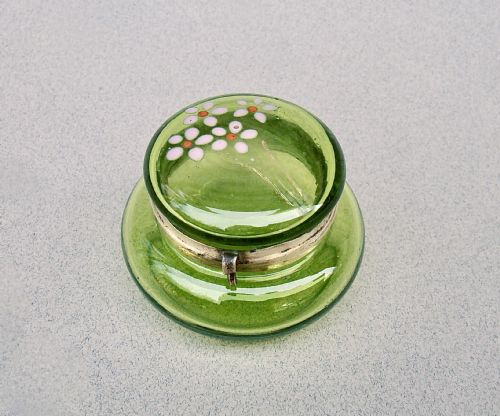
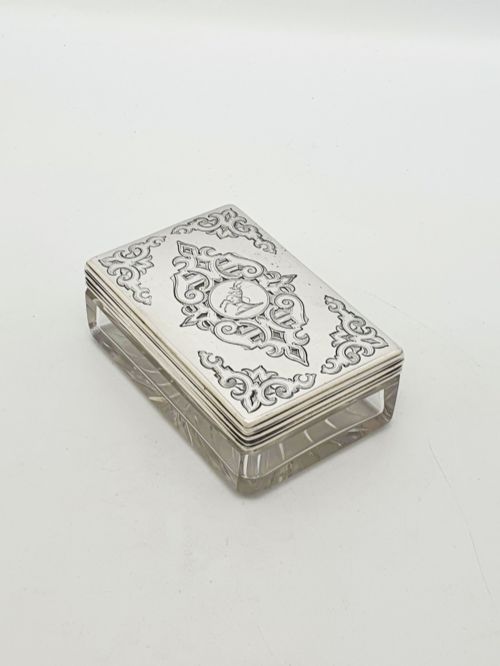
The objects on this page reflect diverse origins, including English manufacture and nineteenth-century French workshops. Colours vary widely, taking in Bristol blue, green, and cranberry glass alongside clear cut crystal. Many incorporate mounted mounts in silver, silver plate, brass or other metals to secure the lids and rims.
Makers and decorators utilised decorative techniques that include polychrome enamel work and painted figural scenes. Pieces date from the eighteen-forties through to nineteen hundred, showing the enduring popularity of small glass containers across multiple decades.
How they were made
Makers produced these jars using blown or moulded glass, often shaping them in distinct hues such as deep blue, emerald green and cranberry. Glasshouses like Clichy contributed specific coloured wares, whilst English and continental workshops applied deep facet cutting to clear crystal and heavy glass bodies.
Metalwork played an integral role in construction, with sterling silver, silver plate and brass formed into hinged mounts, collars and lids. Artisans secured these metal mounts directly to the glass rims, frequently adding chased or engraved detailing to the metal surfaces.
Surface decoration frequently involved hand-applied enamel painting directly onto the glass body or incorporated porcelain elements. Mary Gregory style pieces featured white enamel silhouettes of children amidst foliage, whilst French examples displayed intricate floral or abstract enamelling.
Victorian Glass Trinket Jar Retail Price Guide 2026
Typical asking prices for victorian glass trinket jar among the pieces listed under this phrase on Sellingantiques today, from the lower quarter to the upper quarter. They describe what is for sale here now, not the wider market.
Listings feature nineteenth-century and Edwardian pieces, incorporating materials such as sterling silver, brass, enamel, and cut crystal.
What varies in quality
The weight and depth of the glass cutting separate basic containers from superior items, particularly in heavy cut crystal and moulded pieces. Crispness in the facet edges and clarity in the coloured glass indicate higher standards of production in the glasshouse.
The quality of the metal mounts and the security of their fit influence the overall standard of a box. Sterling silver mounts and substantial brass mountings demonstrate greater ambition than plated alternatives, especially when the hinges remain tight and properly aligned.
The precision and preservation of painted enamel decoration determine distinction in decorated jars. Finely detailed brushwork in polychrome enamels requires greater skill than simple linear applications, while complete enamel retention adds relative merit.
Clichy
The Victorian Glass Trinket Jar Glossary
- Clichy glass
- A nineteenth-century French glass production associated with distinctive colour palettes and fine decorative techniques. Pieces from this tradition often appear with enamel ornamentation and metal mounts.
- Mary Gregory
- A style of decorative glassware featuring painted white enamel silhouettes depicting children, birds or foliage, typically set against coloured glass backgrounds such as green or cranberry.
- Dressing table jar
- A lidded container specifically proportioned for holding cosmetics, hairpins or small jewellery on a vanity or dressing chest. These items often feature matching metal lids.
- Cut glass
- Glassware shaped and patterned by grinding facets or decorative motifs into the surface using a rotating wheel. This technique creates light-reflecting surfaces on crystal and coloured vessels.
- Silver plate
- A base metal object coated with a thin layer of silver through electroplating or older techniques. It provides the appearance of solid silver at a different manufacturing level.
Victorian Glass Trinket Jar: Frequently Asked Questions
What were Victorian glass trinket jars used for?
These jars served as practical containers on dressing tables for small personal items such as hairpins, rings, brooches and cosmetic patches. Victorian dressing habits required dedicated vessels to keep washstands and dressing chests orderly.
Over time, they transitioned from purely functional dressing room accessories to decorative objects displayed in bedrooms and parlours. Their compact size made them suitable for holding everyday valuables securely under a fitted lid.
How do I identify a Mary Gregory piece?
Mary Gregory items are characterised by hand-painted white enamel decoration depicting Victorian children, usually shown outdoors amidst foliage or playing games. The white enamel is applied with a raised texture directly onto coloured glass grounds.
While named after an American glass decorator, most pieces in this style originated in European and English factories during the nineteenth century. The presence of the distinctive white silhouette against green or cranberry glass defines the type.
Are these jars made of solid silver?
The metal components vary between sterling silver, silver plate, brass and other base metals. Hallmarks stamped into the metal mounts help identify solid silver components and provide clues to the year of manufacture.
Many jars combine glass bodies with metal collars, hinges and lids rather than being constructed entirely of precious metal. Examining the mounts reveals whether the metal is solid or plated over a base material.
How do I clean an enamelled glass jar?
Enamelled glass requires gentle cleaning to protect delicate surface painting from damage. Lukewarm water and a mild detergent applied with a soft cloth are usually sufficient for removing dust without affecting the enamel.
Harsh chemical cleaners, abrasive sponges and prolonged soaking must be avoided, as they can lift or dissolve the fired enamel colours. Metal mounts should be polished carefully while keeping creams away from the glass surface.