


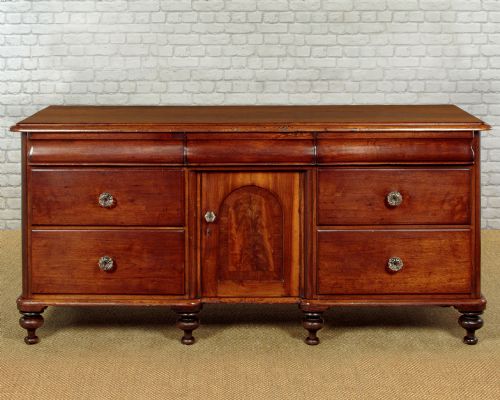
Victorian Glass Sideboard
These pieces gather under the victorian glass sideboard search phrase, bringing together credenzas, display cabinets and sideboards designed to showcase and store.
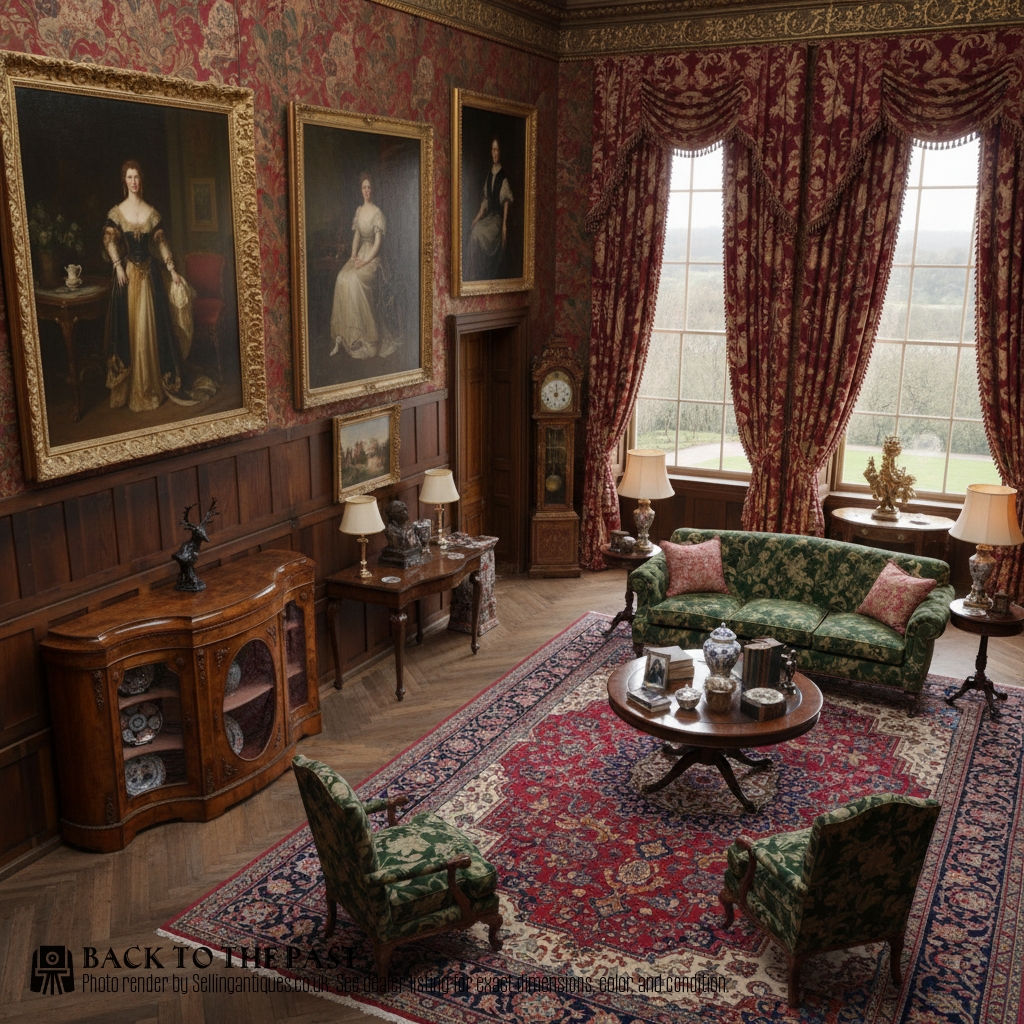
Victorian Glass Sideboard
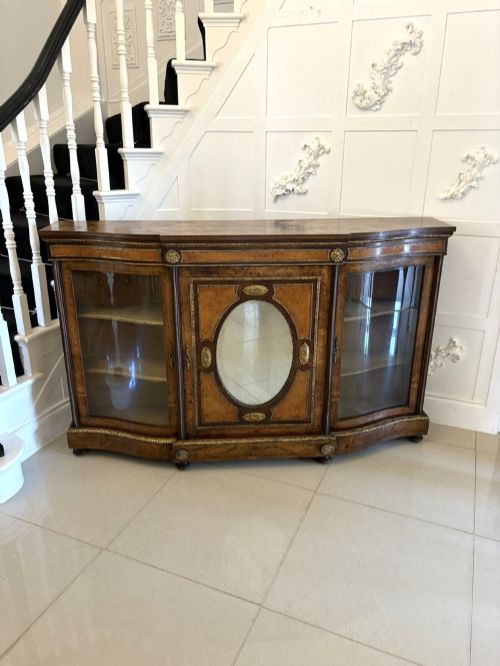
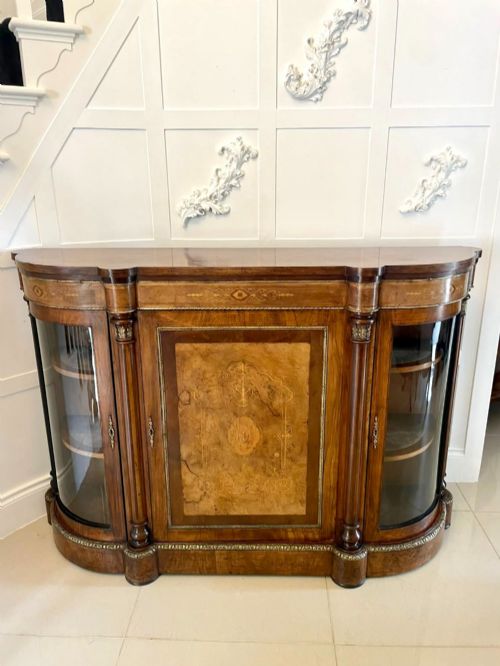
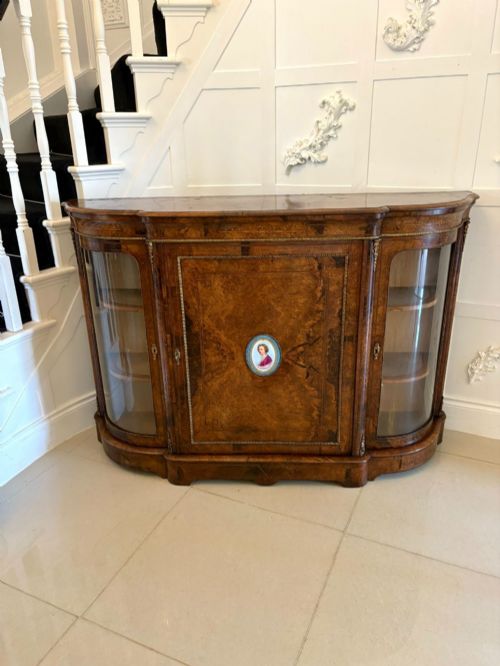
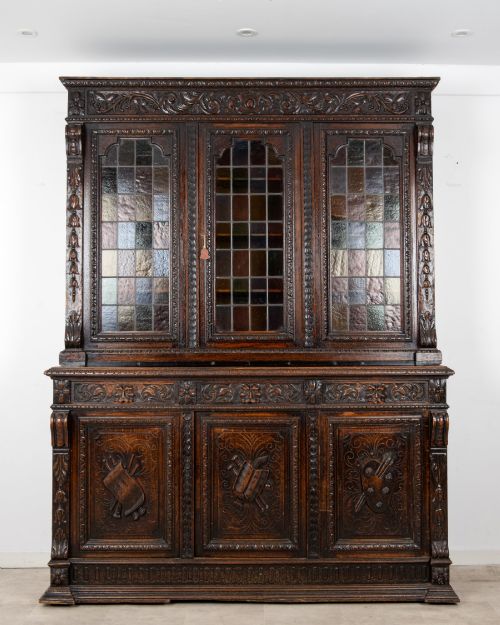
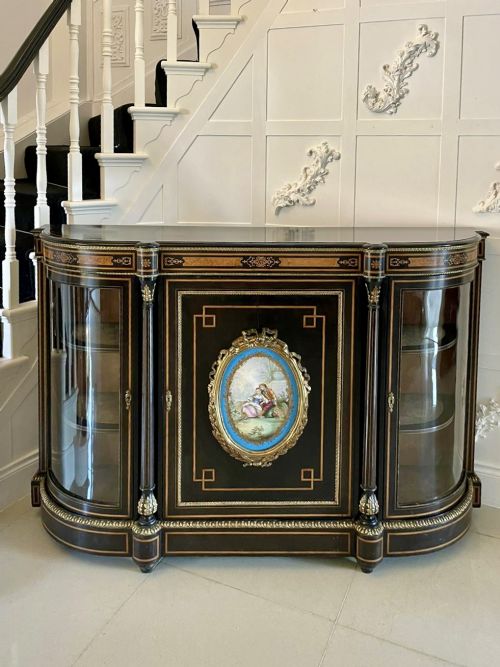
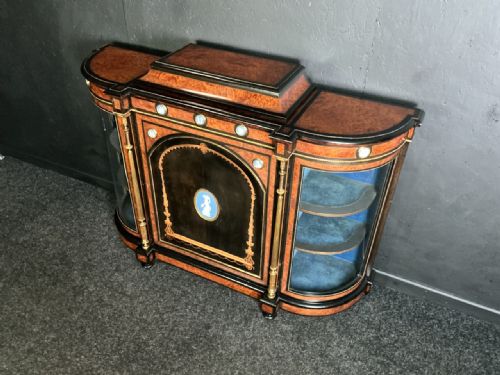
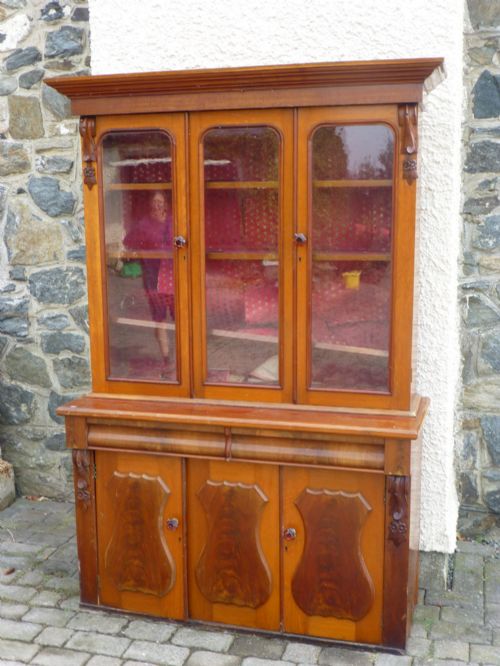
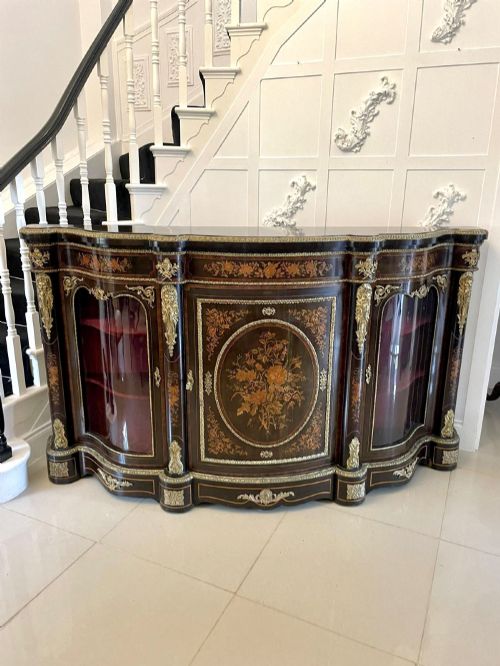
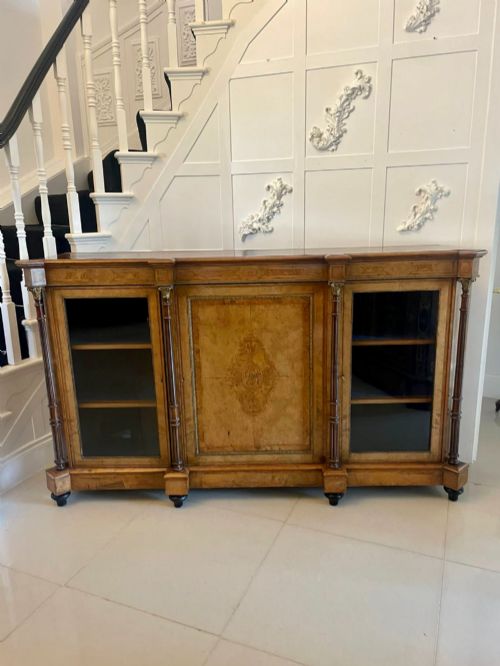
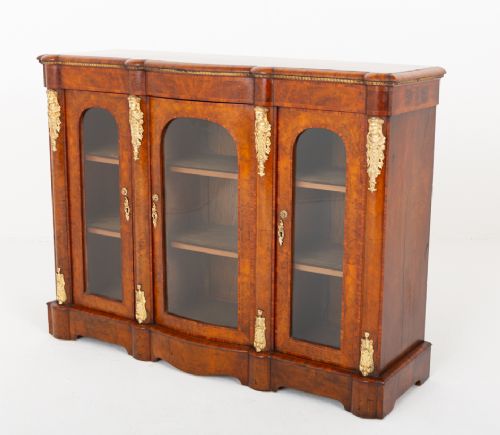
A victorian glass sideboard typically appears as a credenza, pier cabinet or glazed bookcase originating from the nineteenth century. These forms were built for the principal rooms of the house to display porcelain and books behind glass doors.
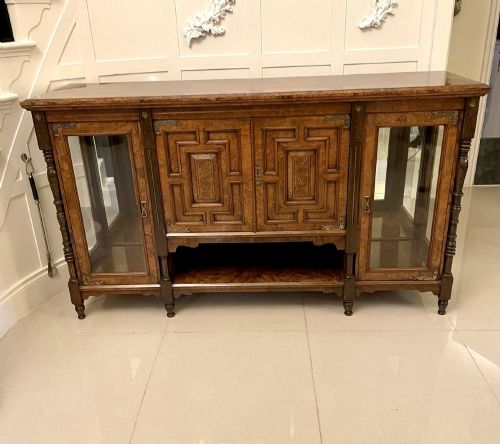
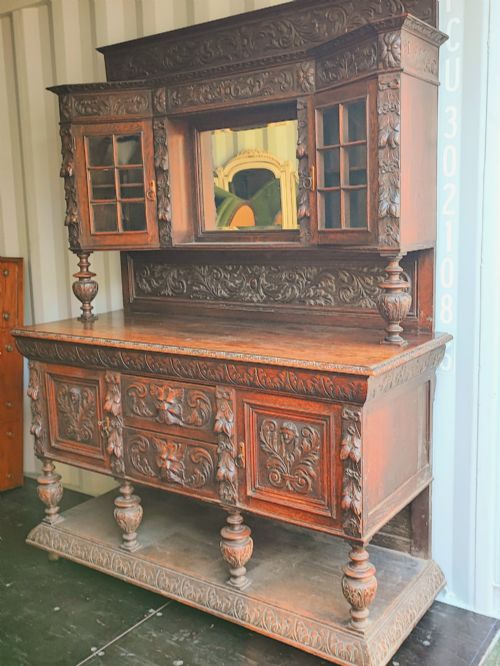
The evidence shows credenzas and side cabinets forming the bulk of the selection, frequently paired with matching sideboards and bookcases. Makers drew on styles ranging from Aesthetic Movement and French Revival to Jacobean Revival and Arts and Crafts.
Originating largely in Victorian Britain and influenced by continental movements, these items combine display functions with substantial timber storage. Buyers encounter serpentine shapes, breakfront profiles and flat-fronted cabinets alike.
Materials and Construction
Workshops relied heavily on burr walnut, mahogany and oak carcasses enriched with boxwood inlay, amboyna, kingwood and ebonised wood veneers. Marquetry panels and floral inlay appear frequently across the woodwork.
Metal mounts in ormolu and brass accent the timber surfaces, framing glass doors and supporting shaped feet. Glazing is integrated into bookcases, dressers and credenza doors to protect contents while allowing visibility.
Listings span the nineteenth century, capturing Victorian, Aesthetic Movement, and Arts & Crafts styles executed in burr walnut, oak, and amboyna.
Execution and Detail
Quality rests in the selection of timbers, where dense burr walnut and figured yew display rich grain patterns across the main panels. Finer examples integrate elaborate ormolu mounts and precise marquetry rather than simpler painted or stained finishes.
The complexity of the carcass shape dictates the standard of craftsmanship, with serpentine and breakfront forms demanding greater skill from the cabinetmaker. Ormolu mounts that fit precisely against curved timber edges separate standard production from exhibition pieces.
Liberty & Co.·Maison Gagneau
The Victorian Glass Sideboard Glossary
- Credenza
- A low cabinet, often featuring glazed side doors and a central cupboard, designed for the Victorian drawing room.
- Ormolu
- Gilded bronze mounted onto furniture timber for decorative effect. It frames panels and edges on finer cabinets.
- Marquetry
- Fitted wood veneers arranged in pictorial or floral patterns. Craftsmen use contrasting timbers to create these designs.
- Pier Cabinet
- A narrow display cabinet built to stand against the wall space between windows. These typically house glass doors and shelves for porcelain.
- Boulle
- An inlay technique using brass and tortoiseshell arranged in elaborate patterns. It appears on French-influenced Victorian pieces.
Victorian Glass Sideboard: Frequently Asked Questions
Where do I put a victorian glass sideboard?
These cabinets suit drawing rooms, dining spaces or wide hallways where glazed doors can protect books and ceramics while keeping them visible.
Ensure the floor space accommodates the serpentine or breakfront projection of the specific carcass before placing it against a wall.
How do I care for burr walnut veneer?
Keep timber cabinets away from direct sunlight and sudden temperature shifts to prevent the burr walnut veneer from lifting or drying out.
Dust gently with a dry cloth and avoid silicone-based polishes that can build up on the french polished surface over time.
What is the difference between a credenza and a pier cabinet?
A credenza typically presents a low, symmetrical profile with a central cupboard flanked by curved glass side doors. These were designed for central wall placement in grand reception rooms.
A pier cabinet is narrower and taller, built specifically to fit the masonry pier between windows. They usually feature a single glass door enclosing display shelves.
How can I tell an Aesthetic Movement piece apart?
Aesthetic Movement pieces lean towards simpler geometric lines, ebonised wood surfaces and Japanese-inspired decorative motifs. They contrast with heavily carved Victorian Gothic Revival or ornate ormolu-mounted French Revival designs.
Look for restrained inlay and a focus on structural form over applied ornamentation.