


Victorian Glass Hurricane Lamp
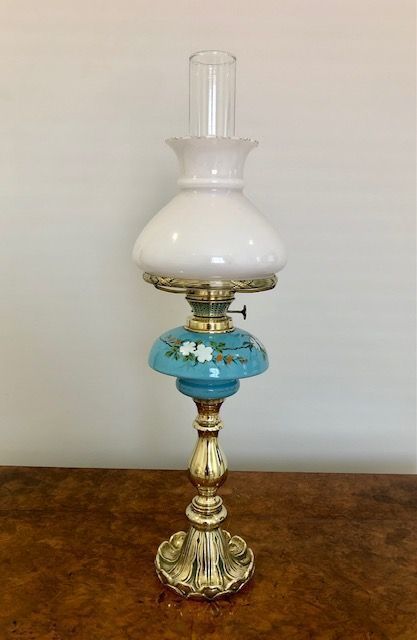
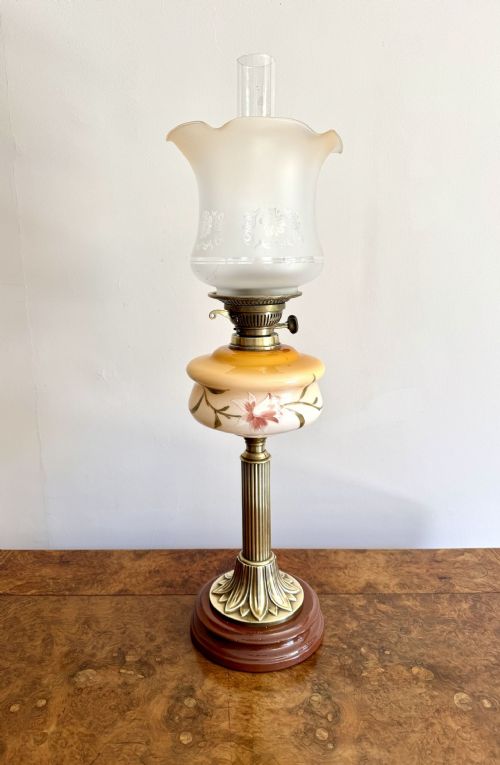
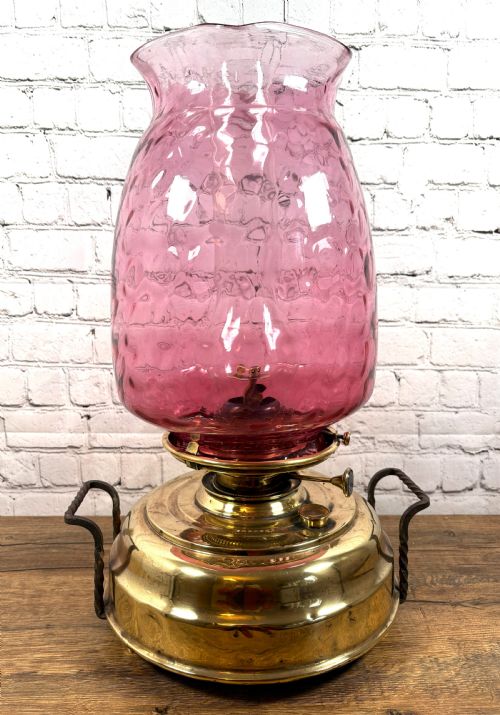
These Victorian glass hurricane lamps combine brass and coloured glass to bring practical period lighting into modern rooms.
Victorian Glass Hurricane Lamp
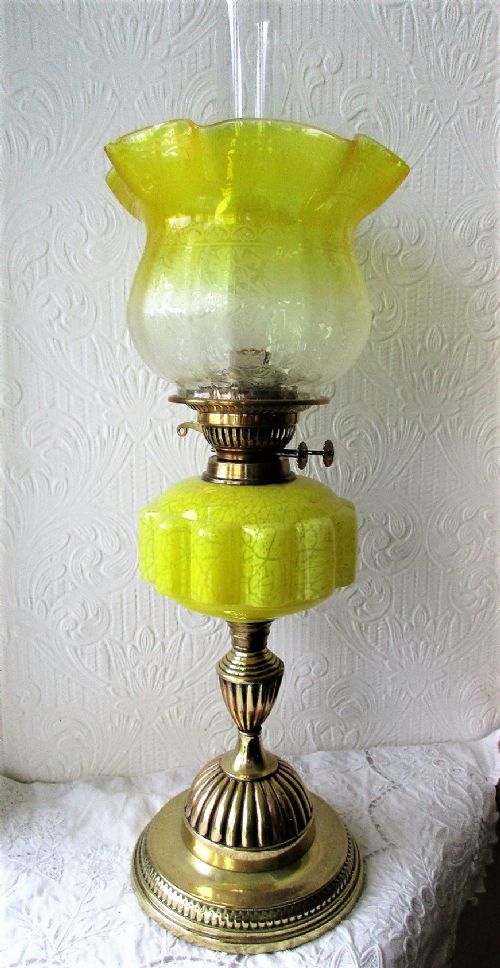
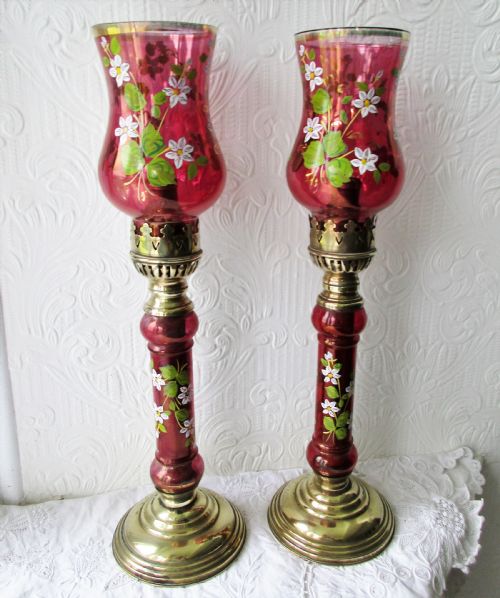
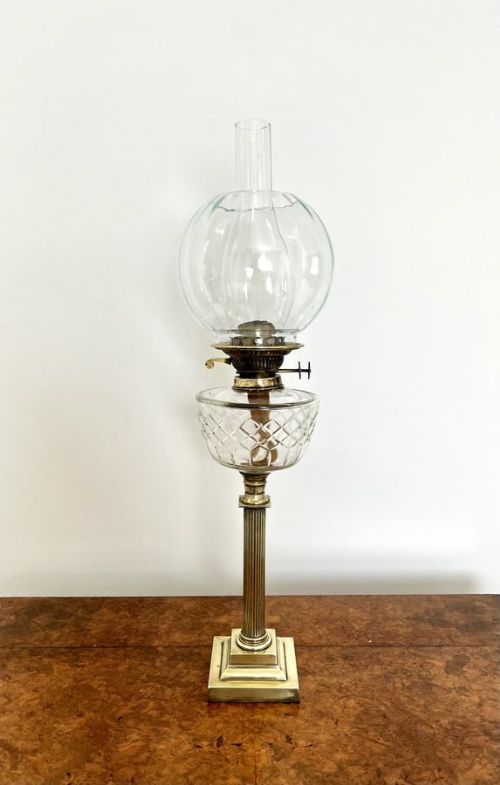
A victorian glass hurricane lamp typically combines a sturdy brass or silver plated base with a protective glass shade or chimney designed to shelter a flame from drafts. The selection ranges from tall table oil lamps with hand painted fonts to pairs of mantel lustres and candle lamps intended for drawing rooms.
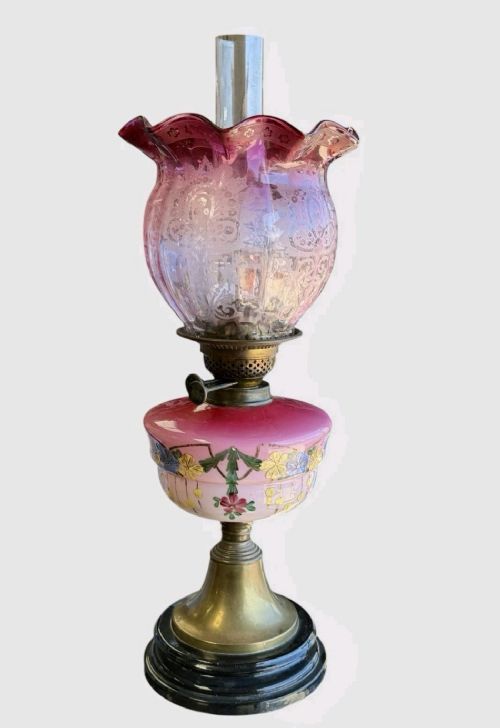
Most examples date from the nineteenth century, spanning periods from eighteen sixty through to nineteen hundred, including Edwardian iterations. They appear as single statement pieces or matched pairs complete with tinted glass shades in ruby, pink, yellow, and opaline hues.
How they were made
Maker workshops built these lamps using heavy brass castings for stability alongside blown or pressed glass for the fonts and chimneys. Many incorporate silver plating, gilt decoration, and hand painted enamel details directly onto the glass surfaces.
The construction frequently pairs turned brass columns or embossed bases with delicate cranberry glass, clear cut glass, or opaque opaline glass components designed to diffuse the light.
Some nineteenth-century pulpits utilised specialised oil lamps fitted with heaters to keep clergymen warm during lengthy winter sermons.
What varies in quality
Quality rests in the weight of the brass casting, the crispness of any embossed decoration, and the depth of colour within the glass. Superior examples feature hand painted details on the font and matching original glass shades rather than later replacements.
The refinement of the mounting and the presence of makers' details, such as patent markings on the glass or fittings, separate standard utility pieces from finer decorative lighting.
Clarke·Meissen Porcelain
The Victorian Glass Hurricane Lamp Glossary
- Font
- The oil reservoir of a lamp, usually formed from glass or ceramic and mounted above the base. It holds the fuel supply for the burner.
- Chimney
- A tall, narrow glass cylinder placed over the flame to steady the draught and protect the light. They are essential for proper oil lamp combustion.
- Cranberry glass
- A rich red transparent glass coloured with gold chloride during production. It is a defining material of nineteenth-century decorative lighting.
- Opaline glass
- A pale, translucent white glass that diffuses a soft, milky light. It was widely used for Victorian shades and mantel ornaments.
- Mantel lustre
- An ornamental glass or ceramic vase hung with long glass prisms designed for a fireplace mantel. Some variations include fitted storm shades.
Victorian Glass Hurricane Lamp: Frequently Asked Questions
How do I date a victorian glass hurricane lamp?
Examine the metal casting techniques, the method of glass manufacture, and any patent stamps on the burner fittings. Nineteenth-century pieces often display heavier brass work and hand finished components.
Compare the style of the glass shade and font decoration against known periods from eighteen sixty to nineteen hundred to narrow down the decade of production.
Can these antique lamps still burn oil?
Many retain their original brass burners and can be used with suitable liquid paraffin once the internal mechanisms are checked for safety. Professional rewiring or restoration is often undertaken if conversion to electricity is preferred.
Inspect the condition of the metal collar and the glass thread before attempting to use any vintage burner system.
Are replacement glass shades common?
Replacement chimneys and globes frequently occur because fragile glass components broke during nineteenth-century domestic use. Finding a shade that matches the exact period tint and collar size requires careful observation.
Original matched shades significantly enhance the character and desirability of any table lamp or candle holder.
How should I clean brass and coloured glass?
Dust glass chimneys and shades gently with a soft dry cloth to preserve hand painted enamel or gilt decoration. Avoid harsh chemical polishes on aged brass surfaces to retain the natural nineteenth-century patina.
Wash removable glass components in lukewarm soapy water, ensuring they are completely dry before reassembly.