



Victorian Glass Dome Case
These victorian glass dome case pieces protect and display fragile taxidermy, clocks and botanical arrangements behind clear blown glass.
Victorian Glass Dome Case
When searching for a victorian glass dome case, a buyer examines display vessels designed to protect delicate interior contents from dust and damage in the home. These items combine blown glass covers with fitted wooden bases, serving as table or mantel ornaments.
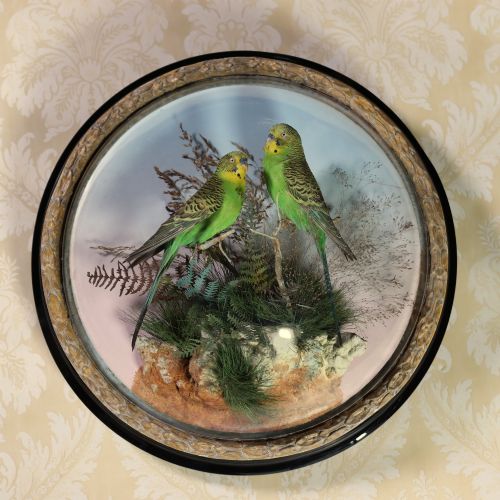
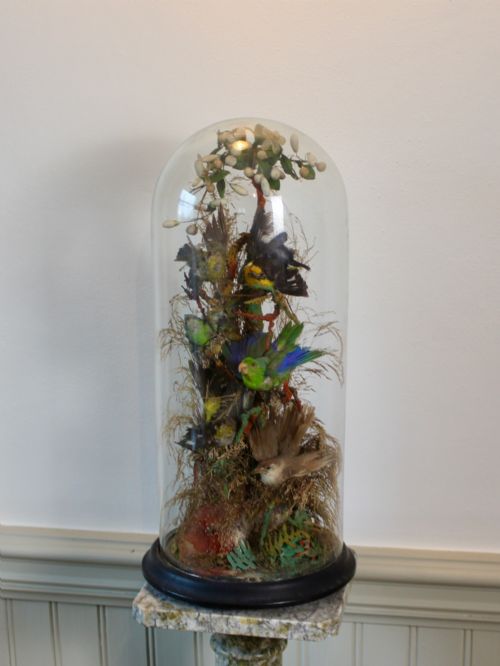
The most frequent examples found here date from the Victorian and Edwardian periods, stretching from the mid nineteenth century into the early twentieth century. These protective enclosures house taxidermy birds, beadwork bouquets, fruit models and clocks.
Makers shaped the bases in circular, oval and flat sided configurations using woods such as ebonised timber, mahogany, oak, pine and rosewood. Interior platforms often incorporate fabric, velvet, felt or feathers to stage the specimens.
How they were made
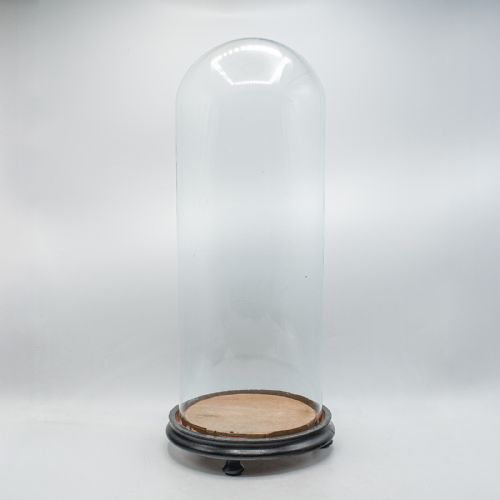
Craftsmen blew clear glass into tall bell jar, ovoid or flat sided dome shapes, creating smooth transparent covers designed to sit flush within timber grooves. These glass covers varied in height and span depending on whether they housed a tall bird specimen or a wide clock.
Makers constructed the circular and oval bases from ebonised wood, mahogany, oak, pine and rosewood, often moulding the edges with turned feet or stepped profiles. Interiors utilised fabrics like velvet, felt and fabric linings to cushion the displayed objects.
Taxidermists and collectors arranged birds, botanical specimens and beadwork bouquets inside the enclosures before sealing the glass cover to the base with paper tapes or adhesives.
Victorian Glass Dome Case Retail Price Guide 2026
Typical asking prices for victorian glass dome case among the pieces listed under this phrase on Sellingantiques today, from the lower quarter to the upper quarter. They describe what is for sale here now, not the wider market.
Listings feature periods spanning the nineteenth and twentieth centuries, including Victorian, Edwardian and specific dates from eighteen sixty to nineteen hundred and five.
What varies in quality
Quality in these glass enclosures depends upon the clarity and weight of the blown glass cover, with thicker, distortion free glass representing finer production. Superior examples display minimal bubbles and consistent thickness throughout the dome curve.
The craftsmanship of the wooden base distinguishes standard utilitarian pieces from finer decorative models, particularly in the selection of timbers like mahogany or rosewood and the precision of the turned mouldings. Bases featuring sturdy construction and original interior velvet or felt linings retain greater integrity.
The complexity and preservation of the enclosed contents, whether taxidermy birds, French beadwork bouquets or fruit still lifes, influence the overall desirability of the composition.
James Gardner·Davis & Co
The Victorian Glass Dome Case Glossary
- Glass Dome
- A transparent blown cover shaped to protect interior objects from dust. These covers rest upon wooden bases and take round, oval or flat sided forms.
- Ebonised Wood
- Timber treated to imitate ebony through staining or painting. This dark finish provides a stark contrast against colourful taxidermy birds.
- Taxidermy
- The art of preparing, stuffing and mounting the skins of animals for display. Victorian examples often feature compositional arrangements of birds under glass.
- Flat Sided Dome
- A glass cover formed with flattened sides to fit specific mantel or shelf spaces. This variation maximises internal display width while reducing overall depth.
Victorian Glass Dome Case: Frequently Asked Questions
What fits inside a victorian glass dome case?
These enclosures house taxidermy birds, botanical specimens, fruit still lifes, clocks and beadwork bouquets. The interior space dictates the scale of the object displayed.
Larger models accommodate standing taxidermy specimens or carriage clocks, while smaller versions protect delicate floral arrangements and single birds.
How do I clean the glass dome?
Lift the glass cover carefully from its wooden base and wash it using warm soapy water with a soft cloth. Dry the glass thoroughly before replacing it over the display.
Avoid using harsh chemical sprays near the antique wooden base or interior taxidermy components.
Are the wooden bases attached to the glass?
The glass cover typically rests unattached within a channel or groove on the wooden base. Some historical examples use paper tape or seals around the rim to secure the glass.
Exercise caution when lifting the assembly to prevent the glass cover from separating unexpectedly from the base.
How do I date a glass dome?
Dating relies upon the timber of the base, the manufacturing traits of the glass and the style of the interior contents. Victorian examples often feature ebonised wood bases and heavier glass.
Edwardian pieces from around nineteen hundred tend to utilise lighter oak or mahogany mounts alongside refined taxidermy mounting techniques.