




Victorian Glass Candleholders
Victorian glass candleholders combine practical illumination with decorative flair, offering vibrant colours and intricate forms that transform any mantelpiece.
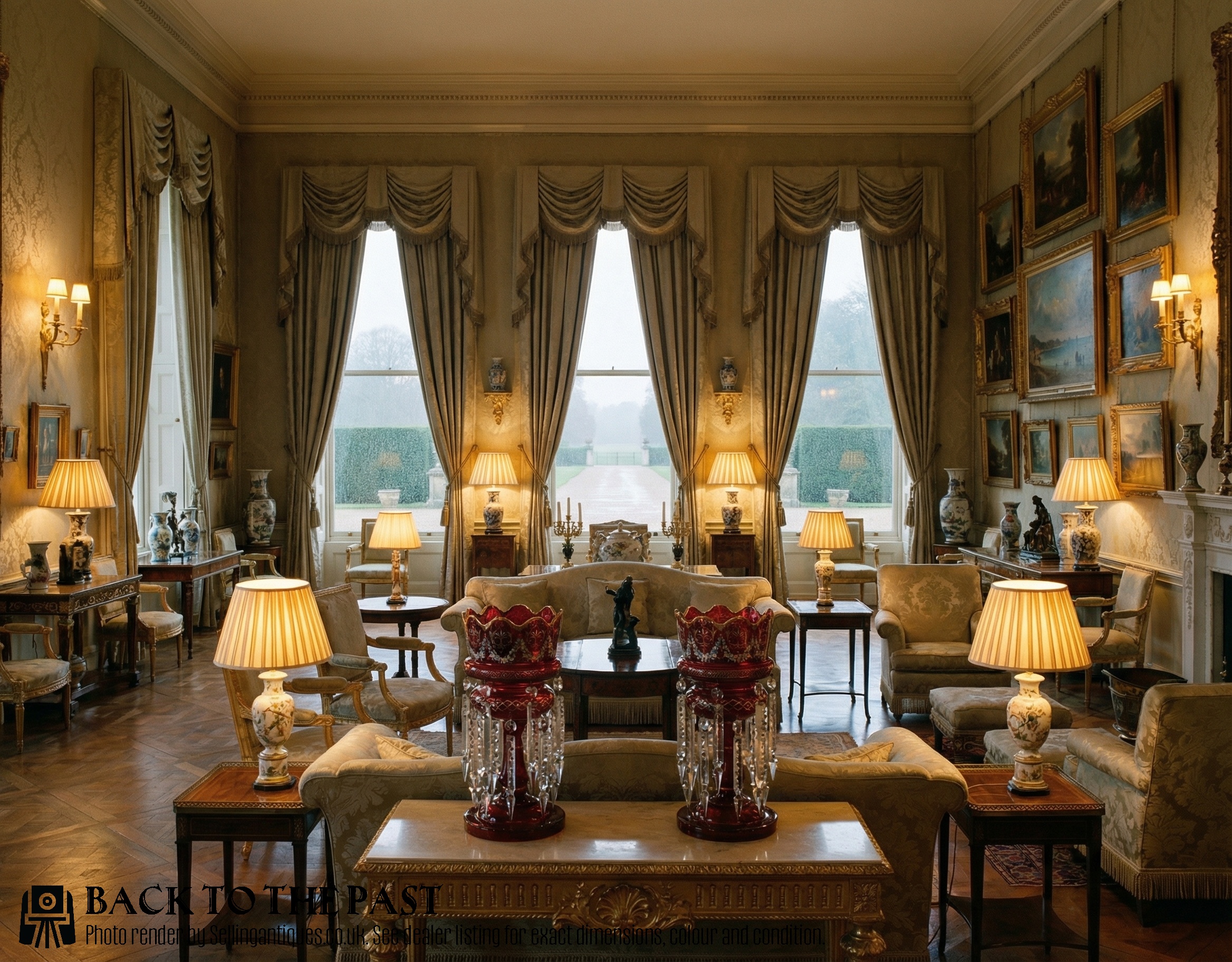
Victorian Glass Candleholders
Victorian glass candleholders encompass a variety of forms designed to hold candles securely while adding visual interest to a room. When exploring this category, buyers frequently encounter pairs of mantel lustres, candlesticks, and table lustres dating from the nineteenth century.
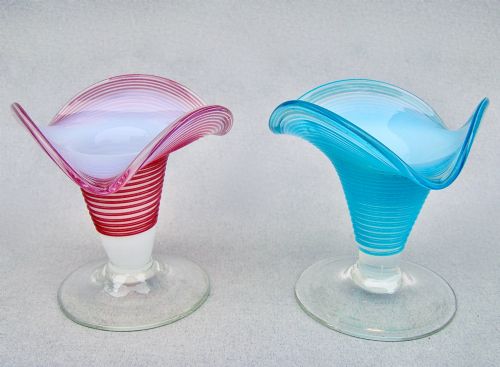
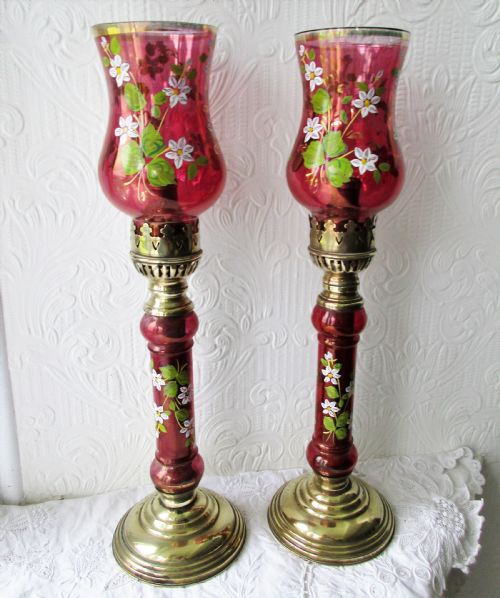
The inventory on this page highlights pieces spanning several decades of the Victorian era, alongside related lighting such as brass and glass candle-lamps and night fairy light holders. These objects range from deep ruby glass and cranberry tones to clear cut crystal and green glass.
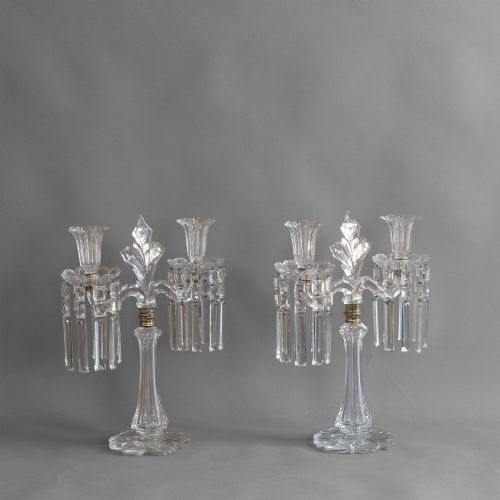
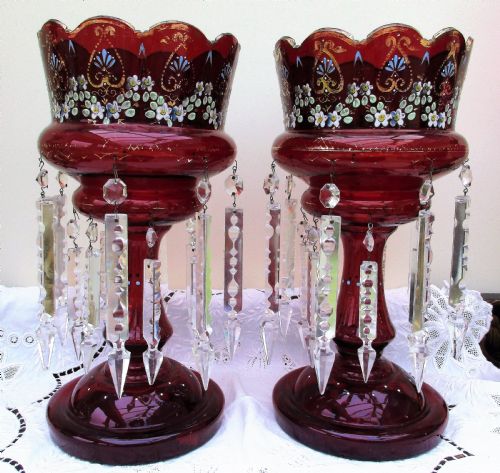
Mantel lustres dominate the selection, often featuring hanging crystal prisms that catch and refract candlelight. Alongside standard candlesticks and candelabras, these decorative items reflect the varied production methods of English and continental makers during the period.
Materials and methods of construction
Glass production during the nineteenth century relied on skilled blowing and moulding techniques, often utilising flash glass methods where a thin layer of coloured glass coats a clear or white base. This allowed artisans to cut through the outer layer to reveal contrasting colours beneath, creating intricate patterns on ruby and cranberry glass.
Many pieces incorporate mixed media, pairing blown or cut glass with cast brass frames, silver plate, or enamel decoration. Lustres are additionally finished with applied gold leaf and suspended crystal prisms attached via small metal loops.
Victorian Glass Candleholders Retail Price Guide 2026
Typical asking prices for victorian glass candleholders among the pieces listed under this phrase on Sellingantiques today, from the lower quarter to the upper quarter. They describe what is for sale here now, not the wider market.
A Victorian novelty lighthouse advertising an Ozokerit night fairy light proves that nineteenth-century branding found its way even onto the mantelpiece.
Distinctions in quality and execution
The degree of hand-cut detail and depth of colour separate standard production items from finer examples. Superior ruby glass shows rich saturation and precise facet cutting that enhances light refraction.
Completeness significantly influences a piece, particularly in lustres where original hanging crystal prisms must match in number and cut. The quality of supplementary materials, such as heavy cast brass mountings or detailed enamelling, also distinguishes higher grade pieces.
The Victorian Glass Candleholders Glossary
- Lustre
- A decorative tabletop or mantelpiece ornament featuring a bowl or vase fitted with a ring of hanging crystal prisms. These prisms catch and multiply the light from a candle placed inside or nearby.
- Flash glass
- Glass made by coating a core of one colour with a thin layer of another colour while molten. Craftsmen then cut away portions of the outer layer to reveal the contrasting glass beneath.
- Cranberry glass
- A rich pinkish-red glass created by adding gold chloride to the molten batch. It became exceptionally popular for Victorian tableware and decorative accessories.
- Candelabra
- A branched candlestick designed to hold multiple candles simultaneously. Victorian versions frequently combine glass shafts with metal arms.
- Prism
- A cut crystal pendant suspended from the rim of a lustre. Their faceted surfaces disperse candlelight across the room.
Victorian Glass Candleholders: Frequently Asked Questions
How do I clean Victorian glass candleholders?
Cleaning requires gentle handling, particularly for pieces with enamel details or applied gold leaf. Lukewarm water and mild soap are generally sufficient for the glass body.
Prisms should be washed individually and dried thoroughly before reattachment. Avoid harsh chemical cleaners that might damage the surface.
What colours are common in Victorian glass?
Ruby red and cranberry dominate the surviving examples from this period, achieved through specific metallic oxide additives during manufacturing. Green glass and clear cut crystal also appear frequently.
Makers often utilised flash glass techniques to layer these vibrant hues over clear glass bases.
Are these candleholders safe to use?
While operational, original Victorian pieces are largely treated as decorative antiques today. The heat from modern candles can occasionally stress antique glass, particularly if burners fit too snugly.
Using appropriately sized candles or modern LED alternatives helps preserve the integrity of fragile nineteenth-century items.