



Victorian Glass Candle Holders
Victorian glass candle holders bring undeniable colour and candlelight to a room, ranging from simple domestic sticks to elaborate ruby table lustres.
Victorian Glass Candle Holders
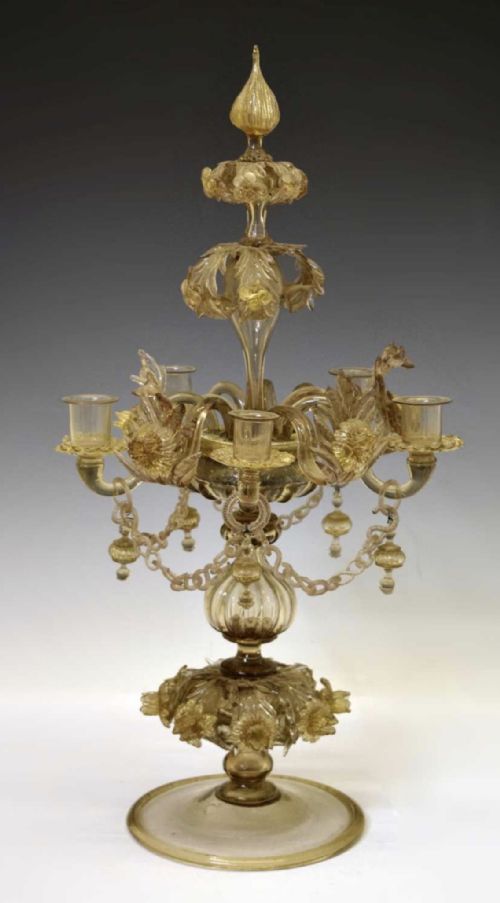
When searching for victorian glass candle holders, you are looking at items designed to burn tallow, wax, or paraffin safely in nineteenth-century interiors. These pieces appear as simple candlesticks, multi-branch candelabra, mantel lustres set with glass drops, and specialised night-light holders.
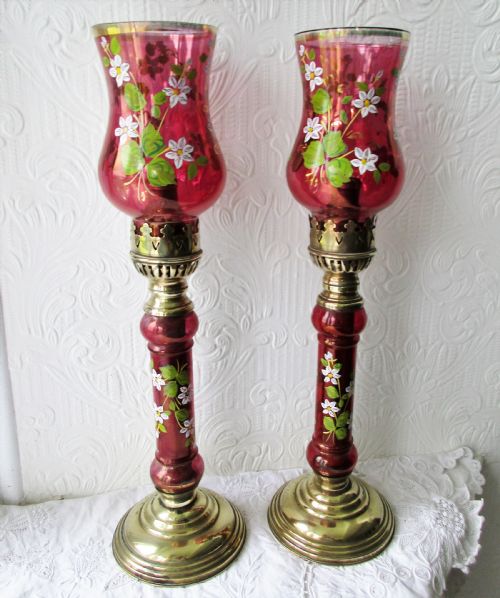
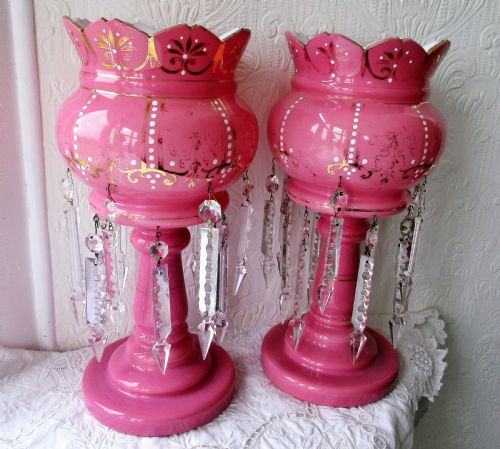
The most common examples on this page are pairs of table lustres rendered in ruby, green, or pink glass, often complemented by brass, bronze, or silver-plated mounts. You will also encounter patent night-light assemblies and architectural column sticks designed to hold taper candles.
Origins span English, continental European, and Venetian workshops, reflecting diverse glass-blowing and cutting traditions of the period. While the core of the selection dates to the nineteenth century, related pieces stretch from the Regency era into the early twentieth century.
Materials and construction
Glassmaking of this era relies heavily on free-blowing, mould-blowing, and heavy cutting to achieve deep facets and light refraction. Coloured glass variants, notably ruby flash and green glass, are created by applying distinct chemical agents or layered cased glass techniques.
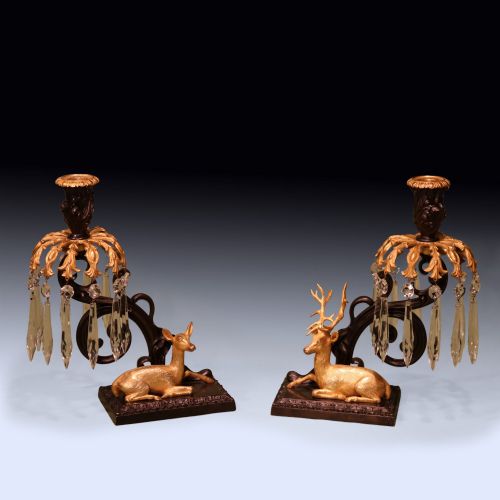
Metal mounts in brass, bronze, or silver plate provide structural stability and decorative contrast to the brittle glass components. Cut crystal drops are frequently suspended from metal rings to catch and scatter the light from burning candles.
A Victorian novelty lighthouse advertises Ozokerit night fairy lights, proving domestic safety measures could take surprisingly nautical forms.
Assessing quality and merit
Quality rests upon the crispness of the glass cutting, the depth and saturation of the colour, and the weight of the metal components. Superior examples display clean facet edges, well-matched pairs of suspended drops, and robust mounts that secure the glass firmly without wobble.
The presence of registered patent marks, maker-specific inscriptions such as Clarke's Cricklite, or unusual forms like novelty lighthouse holders elevates a piece beyond standard production. Finer lustres exhibit careful hand-painting, gilding, or overlay techniques rather than simple press-moulded uniformity.
The Victorian Glass Candle Holders Glossary
- Lustre
- A decorative tabletop vessel, usually of glass or porcelain, hung with crystal prisms designed to reflect candlelight. These items were traditionally displayed on mantelpieces or sideboards.
- Cricklite
- A patented night-light system developed by Clarke, featuring specialised glass shades and chimneys designed to burn safely. They often incorporate silver-plated or brass stands.
- Flash glass
- Glass formed of a thin layer of coloured glass applied over a clear or contrasting body before being cut away to reveal the base colour. This technique creates high-contrast patterns.
- Girondelle
- A type of wall mirror fitted with one or more candle branches affixed to the frame. The reflective glass surface amplifies the illumination in dimly lit Victorian rooms.
- Ormolu
- Gilded bronze or brass applied to decorative mounts and fittings. The finish adds a warm, metallic sheen that complements coloured glassware.
Victorian Glass Candle Holders: Frequently Asked Questions
What is the difference between a candlestick and a lustre?
A standard candlestick holds a single taper candle to provide direct illumination on a surface.
A lustre includes a central column fitted with a ring of hanging crystal prisms that catch and scatter the candlelight, serving primarily a decorative purpose.
How do I safely clean antique glass candle holders?
Wash glass components gently in lukewarm water using a mild, non-abrasive detergent.
Keep water away from metal mounts, gilt surfaces, and silver plating to prevent corrosion, and dry thoroughly with a soft cloth.
Were these pieces meant for everyday use?
Many simpler glass and brass sticks served practical daily lighting needs in Victorian bedchambers and parlours.
Elaborate multi-branch candelabra and ruby glass table lustres were typically reserved for formal reception rooms and evening entertaining.
How can I tell if a pair of lustres is genuinely nineteenth century?
Examine the base for pontil marks, hand-cut facets, and minor irregularities typical of period glass-blowing techniques.
Check the metal mounts and hanging drops to ensure they show consistent age-appropriate wear and construction methods matching nineteenth-century standards.