
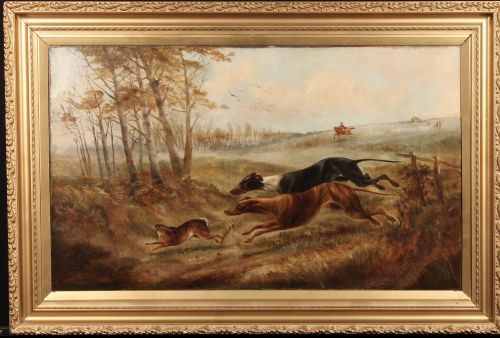
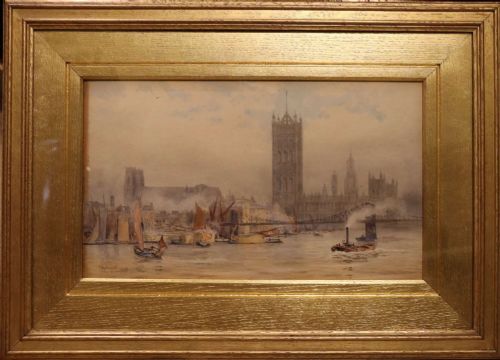
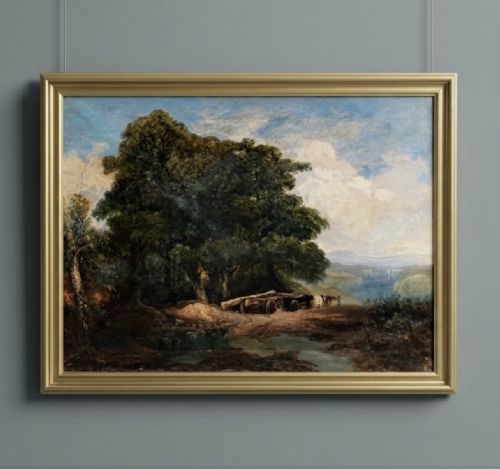
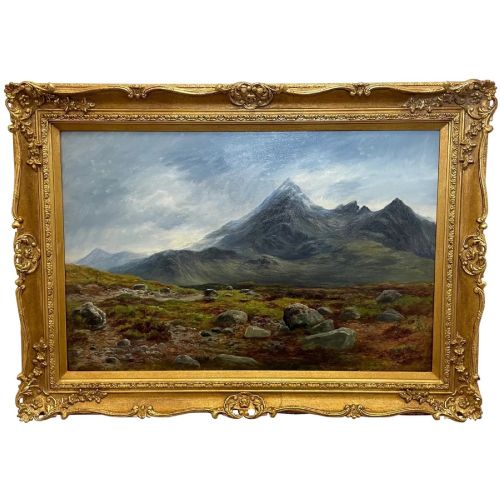

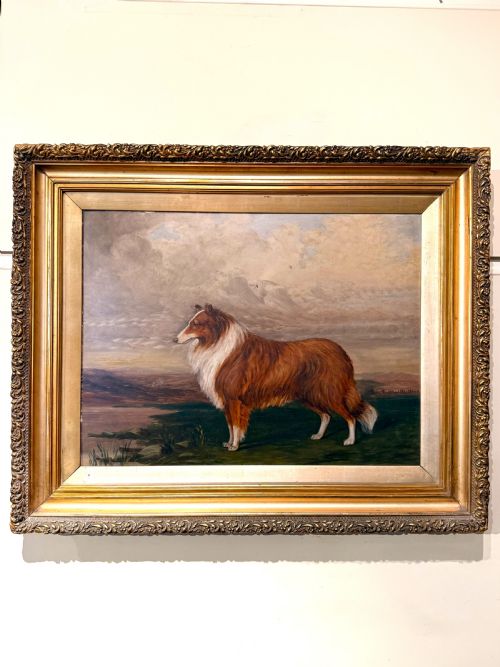
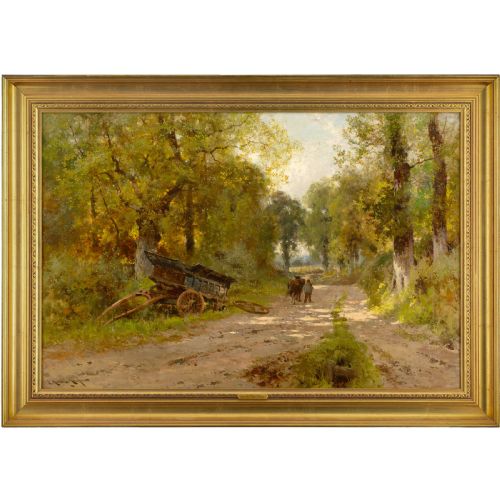
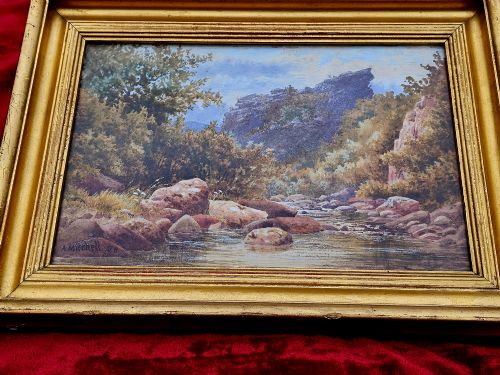
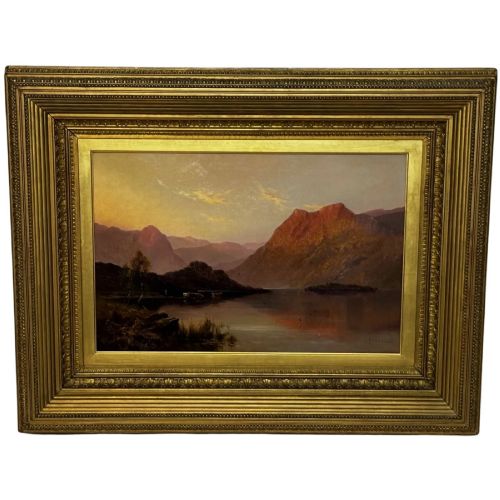


Victorian Gilt Framed Landscape
These pieces gather victorian gilt framed landscape works, bringing pastoral views and marine scenes bound in ornate wooden surrounds into your interior.
Victorian Gilt Framed Landscape
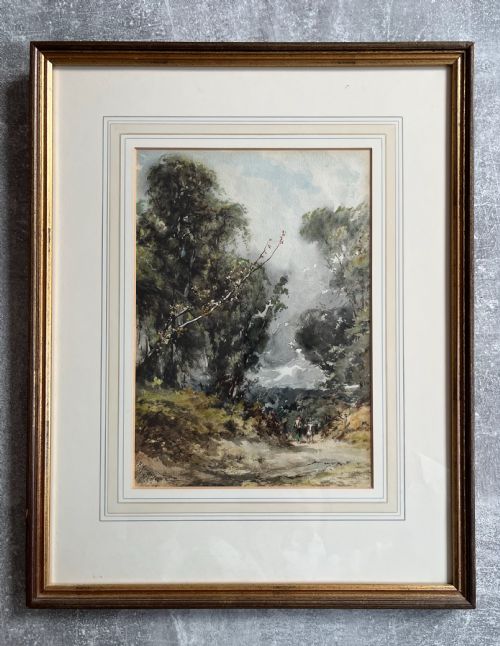
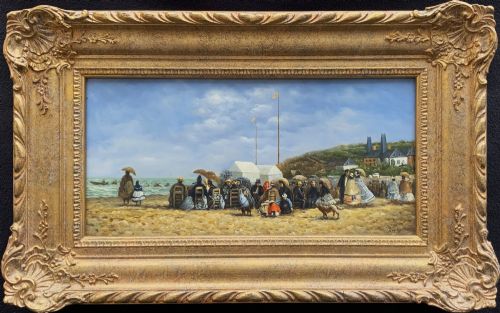
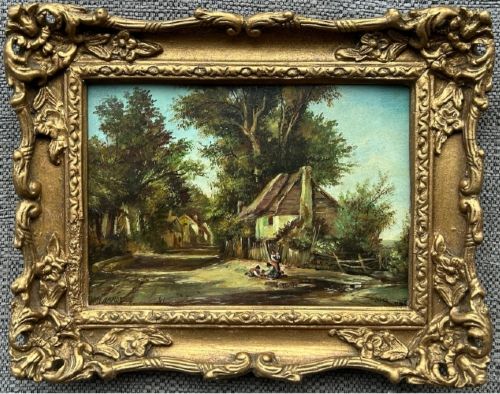
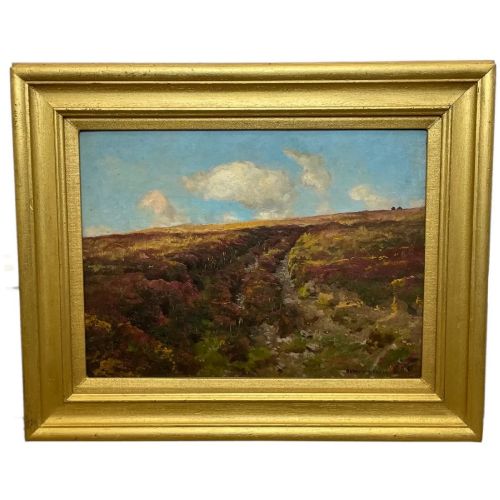
A victorian gilt framed landscape delivers a painted view of the countryside, sea or river enclosed within a decorative metallic border. The search phrase covers oil paintings and watercolours originating primarily from the nineteenth century and the Edwardian era.
Most examples present pastoral scenes, woodland paths or coastal harbours executed on canvas, panel or paper. These works reflect nineteenth-century realism and romanticism through depictions of agricultural life, domestic animals and expansive skies.
Makers and artists range from Royal Academy exhibitors to regional painters working across Britain and Europe. The surrounding frames typically consist of moulded wood finished with gesso and gold leaf to complement the pastoral subject matter.
Materials and Construction
Painters utilised oil on canvas, wood panels or watercolours on paper, applying pigments to capture natural light and atmospheric depth. Canvases and panels rest within wooden framework secured by backing boards and protective glazing where appropriate.
Frames are constructed from timber moulded into complex profiles, then coated with gesso to create a smooth surface for applying gold leaf. This combination provides structural stability while framing the painted composition with a reflective metallic sheen.
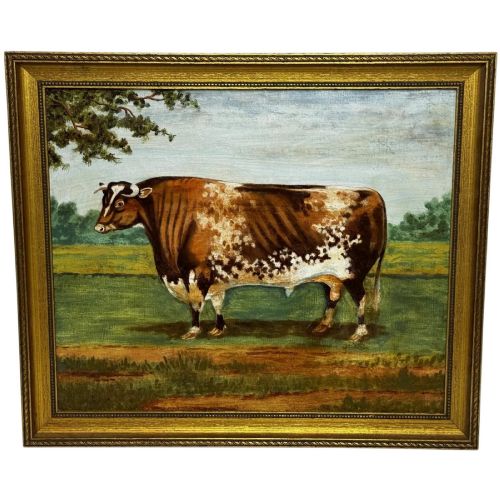
Several Victorian artists balanced grand academic landscapes with intimate portraits of prize-winning bulls and working gun dogs.
Quality and Execution
Distinction across the range depends upon the artist's handling of perspective, light and natural detail within the painted surface. Superior works demonstrate precise brushwork in foliage, water and figures, whereas simpler examples rely on formulaic compositions.
The craftsmanship of the surrounding frame also determines the overall standard of the piece. Hand-modelled gesso ornamentation and intact gold leaf gilding indicate higher production values compared to plain or heavily restored wooden surrounds.
Richard Sebastian Bond·William Beattie Brown·George Fotherly Hargitt·William Howard Hardy·Arthur Wardle·John Horace Hooper·Alfred Fontville de Breanski·Edward Mills·William Banks Fortescue·Thomas W Lascelles·David Bates·Robert John Hammond·Walter Heath Williams·Robert Thorne Waite·Francis Moltino·Bernard Benedict Hemy·Thomas Creswick·Thomas Sidney Cooper·Ernest Arthur Rowe·Frederick Walker·Henry H Parker·Robert Watson
The Victorian Gilt Framed Landscape Glossary
- Gesso
- A plaster mixture applied to wood frames as a base for gilding. It is carved or moulded into decorative patterns before the application of gold leaf.
- Oil on Canvas
- A painting technique using pigments suspended in drying oils applied to stretched woven fabric. This medium allows for rich colour blending and textured brushwork.
- Watercolour
- A painting method where water-soluble pigments are applied to paper. It produces translucent washes of colour suited to delicate landscape effects.
- ,Gilding
- The application of thin gold leaf or powder to wood or gesso surfaces. This process creates a brilliant metallic finish that enhances the artwork.
- Romanticism
- An artistic movement emphasising emotion, individualism and awe of nature. Landscapes in this style often feature dramatic weather and expressive brushwork.
Victorian Gilt Framed Landscape: Frequently Asked Questions
What subjects appear in these paintings?
The artwork depicts rural countryside, agricultural fields, coastal harbours, and woodland scenes featuring figures, livestock, or boats. Many compositions capture specific British and European locations during daylight or sunset.
Artists also recorded domestic animals, including cattle, sheep, horses, and dogs, integrated into working pastoral environments.
How should I hang these framed works?
These pieces require secure wall fixings capable of supporting the combined weight of the wooden stretcher, canvas, and heavy gilt frame. Position them away from direct sunlight and moisture sources to protect the painted surface and gold leaf.
Maintain stable indoor temperatures to prevent expansion or contraction of the timber panels and canvas supports.
Are the frames original to the paintings?
Many works retain their period wooden frames finished with gesso and gold leaf, matching the nineteenth-century or Edwardian date of the canvas. These surrounds were designed specifically to complement the aesthetic of the painted scene.
Over long periods, certain pieces may have received replacement frames or professional regilding to preserve their overall appearance.
How do I identify the period of a piece?
Dating relies on stylistic clues within the brushwork, costume details of any figures, and the construction methods of the wooden stretcher or frame. Signatures, dates, and artist biographical records offer precise chronological placement.
Materials such as nineteenth-century canvas weaves, early paper types, and traditional gesso formulations provide further verification of age.