


Victorian Gateleg Tea Table
A victorian gateleg tea table brings compact versatility to a room, offering a folding surface that expands easily for afternoon tea.
Victorian Gateleg Tea Table
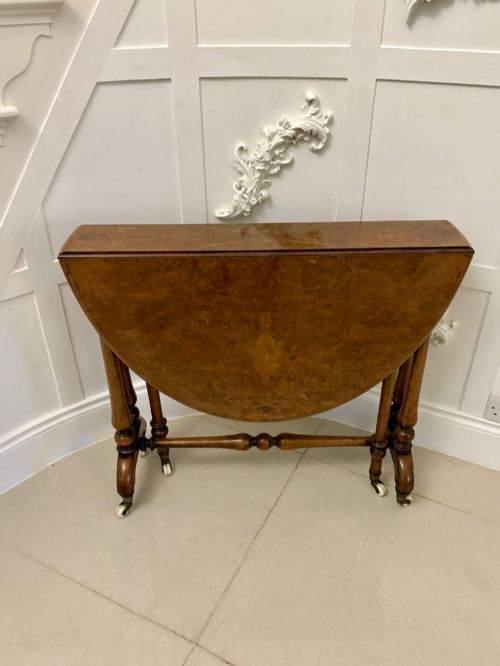
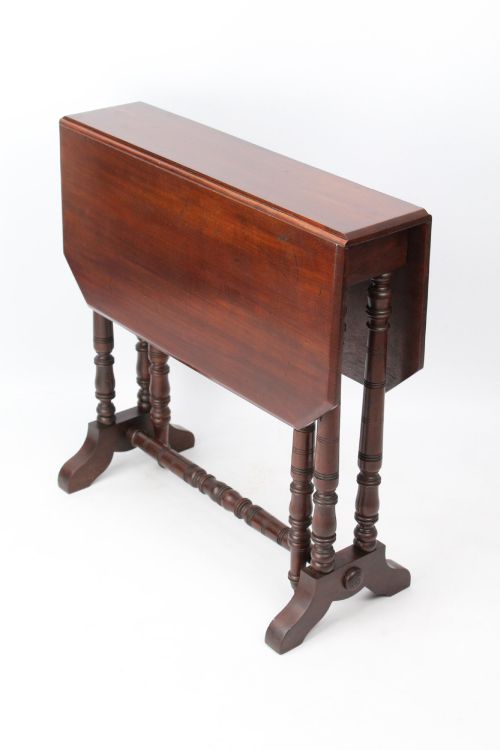
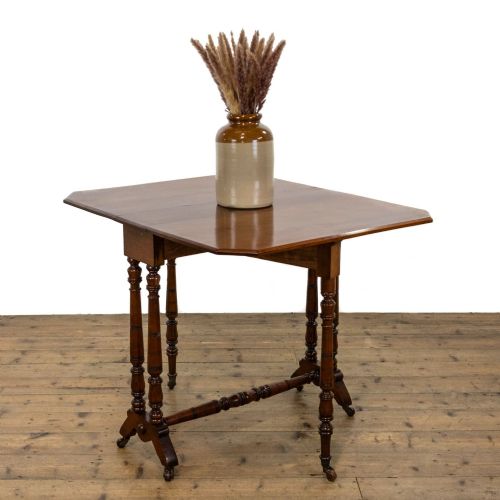
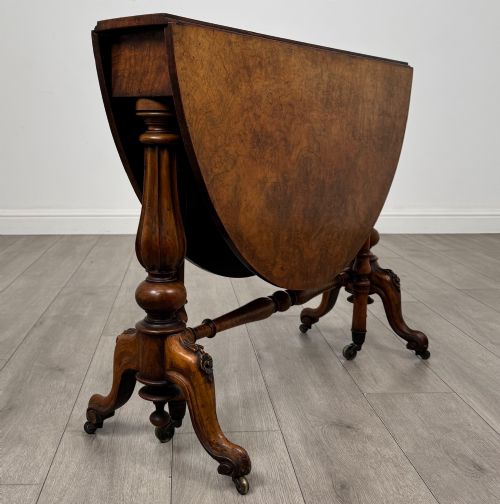
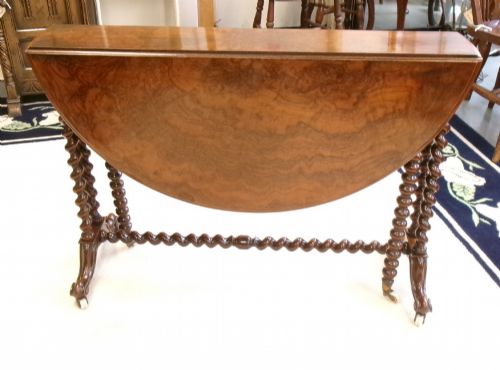
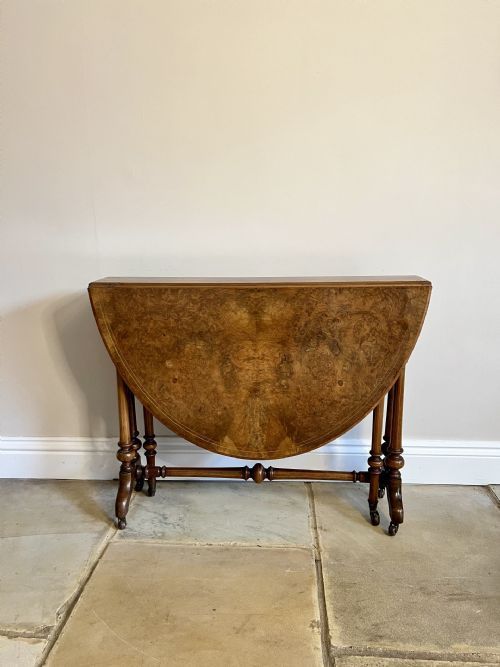
When searching for a victorian gateleg tea table, buyers encounter a specific variety of drop-leaf furniture predominantly known as the Sutherland table. These pieces date principally from the nineteenth century, spanning the Victorian and Edwardian periods, alongside a few examples from the William IV era. The form functions primarily as an occasional table, side table, or small coffee table, designed with hinged leaves supported by swing legs.
How they were made
Cabinet makers utilised choice hardwoods such as mahogany, walnut, and burr walnut, frequently pairing them with contrasting satinwood inlay or delicate wood inlay. Surfaces often display decorative figuring, particularly on burr walnut tops, while internal mechanisms rely on sturdy timber gateleg actions to support the drop leaves.
Construction techniques focus on mobility and space-saving efficiency, resulting in slender frames like spider tables alongside more robust solid walnut and oak structures. Brass fixtures and ceramic castors appear on select pieces to facilitate movement across floor surfaces.
Object types recorded on this site include Sutherland tables, occasional tables, drop-leaf tables, tea tables, and spider tables.
What varies in quality
The standard of timber selection marks a primary distinction across pieces, with richly figured burr walnut and finely grained mahogany sitting above plain domestic woods. The complexity of decorative embellishment also sets examples apart, ranging from simple turned supports to intricate marquetry and satinwood inlay.
Proportion and scale influence the overall character, where smaller baby or petit formats demonstrate finer joinery and more delicate turning in the leg assemblies compared to standard utility furniture.
The Victorian Gateleg Tea Table Glossary
- Sutherland table
- A narrow drop-leaf occasional table invented in the nineteenth century, featuring exceptionally slender flaps supported by swing legs. It folds flat to occupy minimal floor space when not in use.
- Gateleg table
- A table with hinged leaves supported by legs that swing outward like a gate to hold the flaps in position. This mechanism provides stable support while allowing the table to fold compactly.
- Burr walnut
- A prized timber veneer taken from the wart-like growths on walnut trees, characterised by swirling, intricate grain patterns. It is frequently utilised on Victorian tabletop surfaces to create decorative visual impact.
- Marquetry
- The art of applying decorative pieces of veneer to a structure to form intricate patterns or pictures. Craftsmen often employed this technique using lighter woods like satinwood against darker mahogany or walnut.
Victorian Gateleg Tea Table: Frequently Asked Questions
How were these tables used originally?
These tables served primarily for serving afternoon tea or as flexible occasional surfaces in Victorian sitting rooms. Their folding design allowed servants to wheel or carry them into a room and expand them only when required.
When not in use, the narrow profile meant the furniture could stand flat against a wall out of the way. This adaptability made them popular for entertaining in varied domestic spaces.
What is a Sutherland table?
A Sutherland table is a specific type of drop-leaf table characterised by particularly narrow central leaves and exceptionally long flaps. The swing legs support these wide leaves when extended.
First appearing during the nineteenth century, the design prioritises a slim footprint when folded down. Most examples function as side, occasional, or small tea tables.
How do I date a Victorian table?
Dating relies on observing timber choices, construction methods, and stylistic cues recorded across the period. Walnut and burr walnut gain prominence around the mid to late nineteenth century, while Edwardian pieces often exhibit lighter satinwood elements.
Specific production decades are frequently indicated by the turning style of the legs and the presence of ceramic castors or brass fittings. Comparing construction details helps narrow the decade of manufacture.
Where should I place one at home?
These pieces suit tight spaces such as hallways, landings, or beside a sofa where a full-sized table proves too bulky. The drop leaves let you expand the surface for drinks or books whenever needed.
Their compact closed footprint makes them practical for modern rooms requiring flexible, period furniture. Placing them against a wall highlights the slender profile when folded.