





Victorian Gallery Top Desk
A victorian gallery top desk combines practical workspace with a decorative brass surround designed to keep your inkwells and papers secure.
Victorian Gallery Top Desk
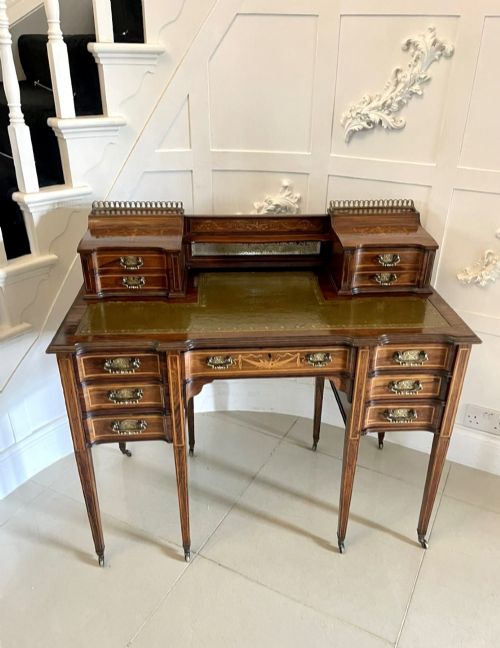
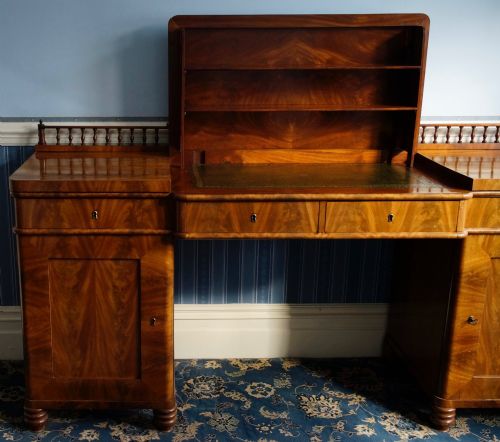
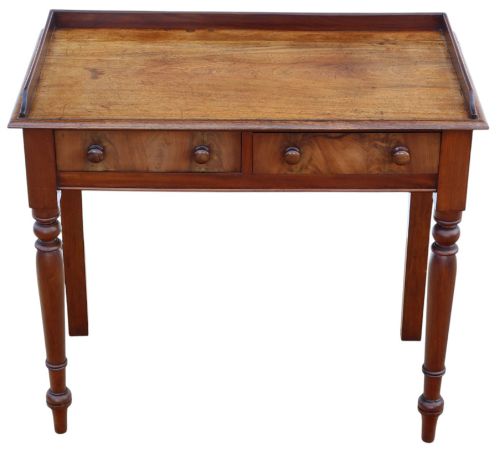
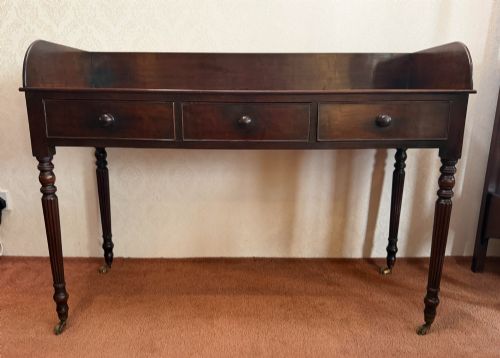
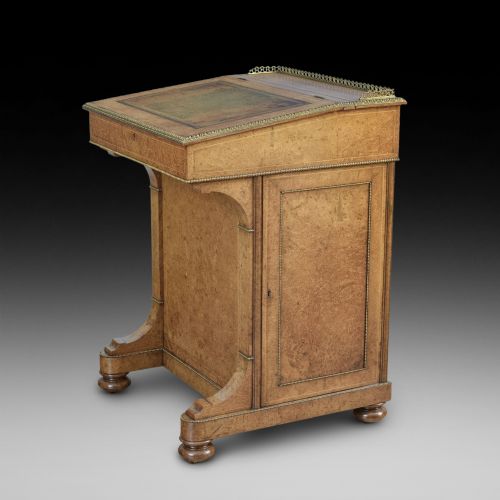
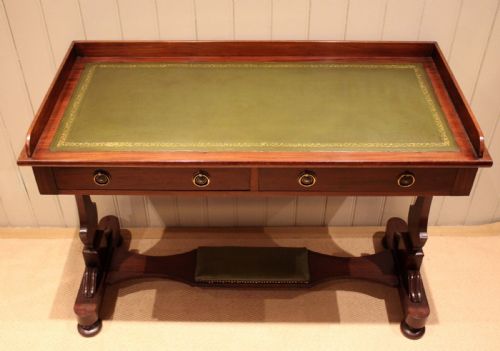
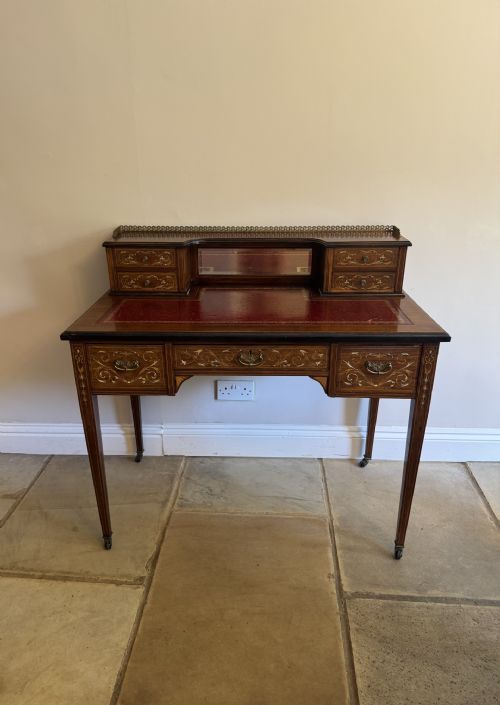
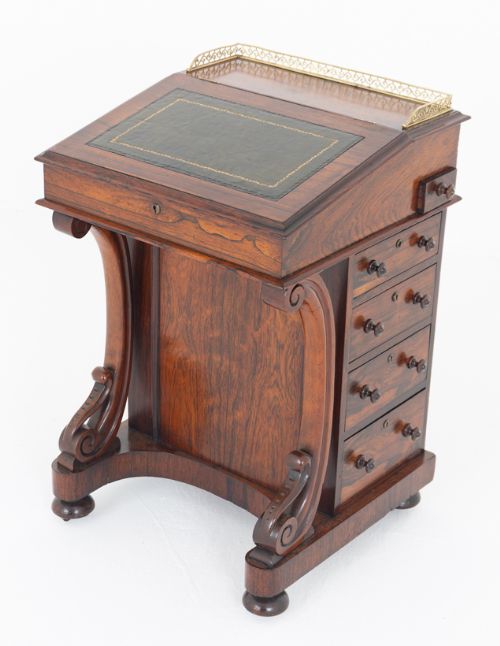
When you search for a victorian gallery top desk, you encounter substantial nineteenth century writing furniture designed for studies, libraries, and drawing rooms. These pieces typically feature a raised superstructure of spindlework or pierced metal along the upper rear edge to prevent items from rolling off the writing surface. The selection ranges from compact writing tables and slope front davenports to larger pedestal formats and refined bonheur du jour designs.
The materials reflect the tastes of the nineteenth century, utilising dense hardwoods and decorative veneers rather than simple utility timbers. You will regularly find examples shaped from rich mahogany, burr walnut, and rosewood, often enhanced with contrasting stringing or marquetry. Smaller variants include satin birch and amboyna, while sturdy oak serves for heavier estate and pedestal forms.
Dating primarily from the middle to late nineteenth century, these desks exhibit stylistic influences that stretch from early Victorian and William IV heaviness to later revival tastes. Some incorporate French or Sheraton revival motifs, while others remain strictly functional English library pieces. The inclusion of the gallery top distinguishes them from plain writing tables, adding both architectural presence and daily utility.
Materials and construction methods
Cabinet makers of the period built these desks using solid structural carcasses faced with choice veneers or worked entirely in solid hardwoods like mahogany and oak. Burr walnut, rosewood, and satinwood appeared frequently as premium surface treatments, displaying complex grain patterns that cabinet makers highlighted through careful polishing. Brass featured not only in the distinctive gallery rails but also as mounts, handles, and hinges on finer davenports and pedestal desks.
Writing surfaces traditionally relied on inset panels of tooled leather to provide a durable and tactile writing area. Drawers were hand dovetailed with secondary timbers, and complex internal fittings utilised secret compartments and stationery pigeonholes. The gallery rails themselves were cast, turned, or pierced from brass and securely mounted to the desk top to withstand regular handling.
The listings show desk forms spanning the Victorian era, utilising mahogany, burr walnut, rosewood, and oak with brass hardware.
Assessing quality and craftsmanship
The distinction between standard commercial production and exceptional cabinet work rests in the choice of timber and the precision of the joinery. Superior examples employ highly figured burr walnut, amboyna, or dense mahogany with book matched veneers that continue seamlessly across drawers and flaps. Lesser pieces rely on plain, unfigured timbers and simpler construction methods without decorative crossbanding or fine inlay.
Hardware and interior fittings further separate ordinary desks from masterworks. Quality pieces feature substantial cast brass galleries, original working locks with keys, and meticulously fitted stationery compartments inside cylinders or davenport lids. Finer desks also bear the stamp or paper label of notable makers, confirming their origin in high status workshops.
Maple and Co·Gillow and Co·Collinson and Lock
The Victorian Gallery Top Desk Glossary
- Gallery
- A raised ornamental railing of brass or wood placed along the edge of a desk top. It stops rolling objects from falling off.
- Davenport
- A compact compact writing desk featuring a sloping lid and drawers opening to the side. This form became particularly popular during the Victorian period.
- Crossbanding
- A narrow strip of veneer applied across the grain of the primary surface to form a border. It frames the central wood panel.
- Pedestal desk
- A heavy freestanding writing desk comprising two banks of drawers supporting a wide top. The user sits in the central kneehole space.
- Bonheur du jour
- A light ladies writing desk featuring a small set of drawers and shelves on the upper surface. The name translates from French as daylight joy.
Victorian Gallery Top Desk: Frequently Asked Questions
How do I use a davenport desk?
A davenport provides a sloping writing surface lined with leather, which lifts to reveal a small compartment for stationery. Drawers typically open to the side rather than the front, often concealed behind locking mechanisms.
These compact pieces suit modern studies or living rooms where floor space is limited. Their internal pigeonholes and small drawers help organise contemporary correspondence and small items.
How do I date a Victorian desk?
Dating relies on observing changes in timber choice, hardware styles, and construction techniques across the nineteenth century. Early pieces often show restrained classical lines in mahogany, while mid to late Victorian examples frequently employ burr walnut, amboyna, and elaborate brass galleries.
Cabinet makers' marks, stamps on drawer linings, and the style of lock mechanisms help narrow the decade of production. Examining the secondary woods inside drawers also confirms nineteenth century origin.
Are these desks suitable for daily work?
These desks accommodate laptop computers and writing tasks comfortably, provided the dimensions match your ergonomic requirements. Many historical writing tables and pedestal formats offer generous surface area and sturdy kneeholes.
Protecting the antique leather surface with a blotter or custom glass top ensures the timber and tooling remain undamaged during regular use. The built in drawers and compartments assist with modern desk organisation.