


Victorian Fruit Artwork
When you search for victorian fruit artwork, you encounter meticulously rendered oil paintings and watercolours celebrating nature's harvest in traditional frames.
Victorian Fruit Artwork
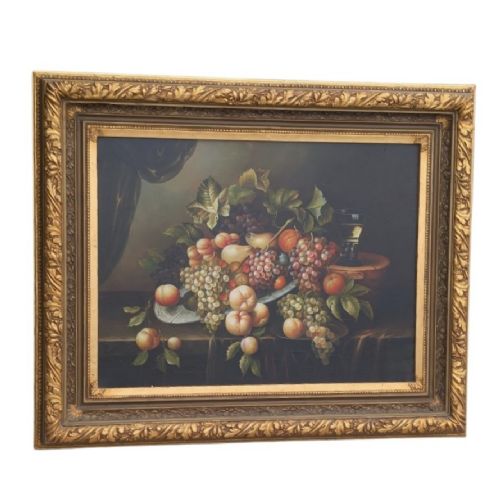
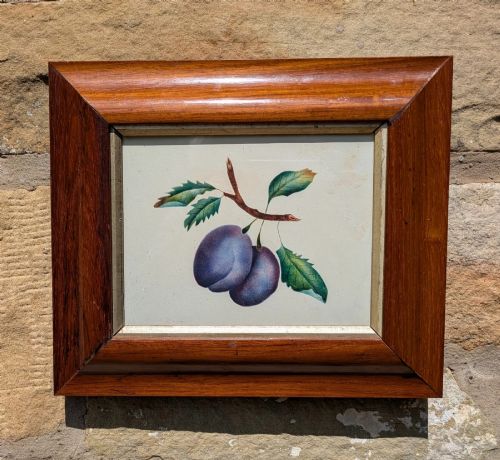
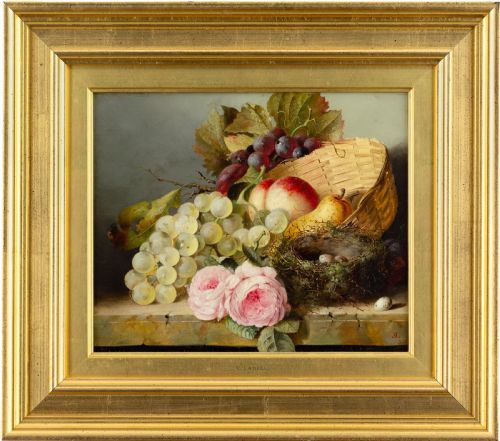
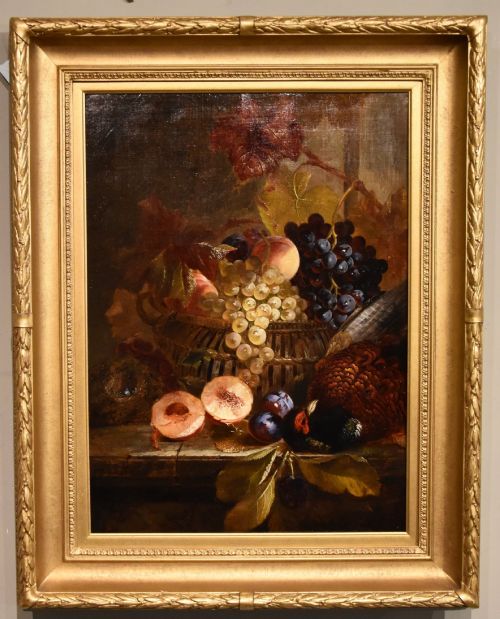
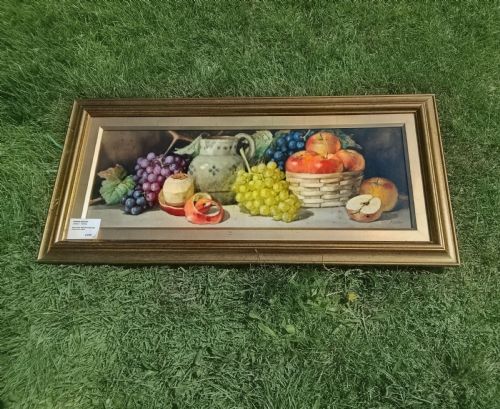
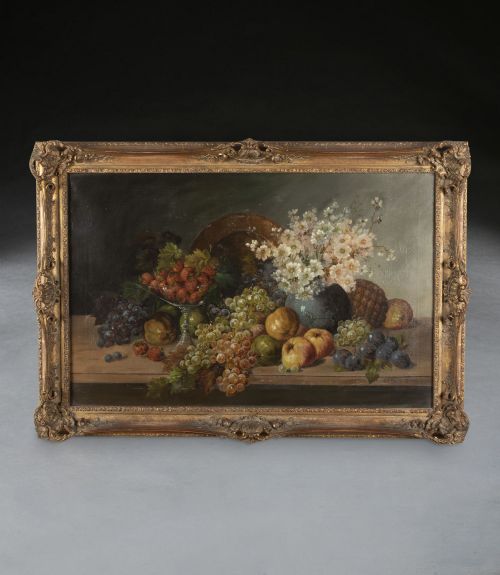
Victorian fruit artwork encompasses detailed oil paintings, delicate watercolours and hand-painted porcelain plaques depicting still-life arrangements of apples, grapes, peaches and baskets. These pieces reflect a nineteenth-century fascination with natural abundance, academic realism and domestic dining themes.
The selections on this page span the nineteenth century into the early twentieth century, capturing the transition from academic classical compositions to regional British realism. Works appear in various formats, including wood panels, canvas supports and framed paper studies.
Makers and painters of the period focused heavily on texture, light and shadow to bring subjects like plums, pomegranates and wine glasses to life. Collectors encounter both intimate botanical watercolours and grander oil studies housed in giltwood or rosewood surrounds.
Materials and Technique
Painters relied primarily on oil paint applied to canvas or wood panels, alongside watercolour pigments on paper. These mediums allowed artists to build up rich layers of colour, capturing the translucent skin of grapes and the soft down of peaches.
Common framing materials recorded include giltwood, rosewood and solid wood period surrounds.
Assessing Quality
Quality rests upon the artist's ability to render light, texture and botanical accuracy convincingly across subjects like fruit and foliage. Finer works display meticulous brushwork that distinguishes the velvety skin of a peach from the reflective surface of a glass vase.
The choice of support and the integrity of the original frame also influence the overall standard of a piece. Original giltwood or rosewood frames that suit the period enhance the historical and visual cohesion of the artwork.
Edward Ladell·William Henry Ward·John Sherrin·Evelyn Chester·William Duffield·Vincent Clare·Helena Maguire·Thomas Hooper·William Rayworth·John Robertson Reid·Oliver Clare·George Lance·James and William Ward
The Victorian Fruit Artwork Glossary
- Oil on Canvas
- A painting technique where oil-based paints are applied to a woven fabric stretched across a wooden frame. This method was favoured for its durability and capacity for rich blending.
- Watercolour
- A painting method where pigment is suspended in a water-based solution on paper. It produces translucent effects suitable for delicate botanical studies.
- Giltwood
- Wood carved and coated with a thin layer of gold leaf. It is frequently found on nineteenth-century picture frames.
- Wood Panel
- A rigid flat wooden surface used as a support for oil paintings before canvas became universally adopted. Panels offer a stable base for minute detail.
- Porcelain Plaque
- A flat ceramic sheet fired and painted with enamel colours. Several pieces utilise this smooth surface for fine miniature portraits and still-life scenes.
Victorian Fruit Artwork: Frequently Asked Questions
What subjects appear in these paintings?
Artists typically depicted arrangements of seasonal produce such as grapes, apples, peaches and plums, often accompanied by baskets, birds' nests, wine glasses or Chinese ginger jars.
These compositions focused on celebrating natural abundance and domestic dining themes through academic realism.
How were these artworks displayed?
Victorian households hung these paintings in dining rooms, parlours and drawing rooms to reflect refinement, hospitality and a connection to the natural world.
They were almost exclusively mounted in substantial frames made of giltwood, rosewood or solid wood to command attention on domestic walls.
How do I identify the period?
Dating relies on stylistic markers such as academic realism, subject matter, artist signatures and the construction of the supporting frame or panel.
Nineteenth-century works frequently exhibit meticulous attention to botanical accuracy and chiaroscuro lighting typical of Victorian exhibition standards.
Are watercolours as durable as oils?
Watercolour paintings require protection behind glass to prevent moisture damage and fading from direct sunlight compared to robust oil on canvas works.
When properly glazed and framed, these paper-based pieces preserve their delicate pigments and fine brushwork across generations.