
Framed Fruit Art
Framed fruit art brings centuries of observed harvest into domestic interiors through oils, watercolours and gouache.
Framed Fruit Art
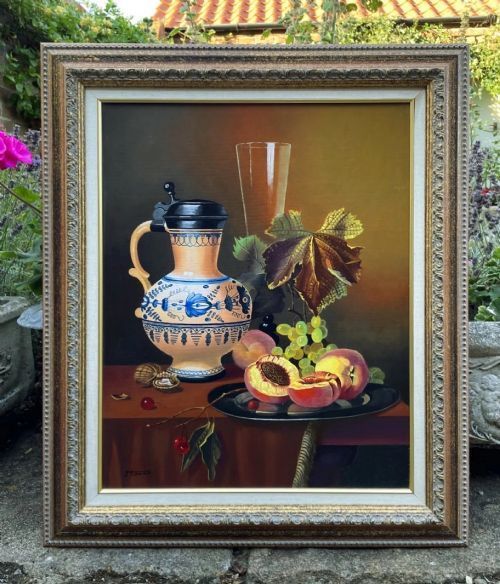
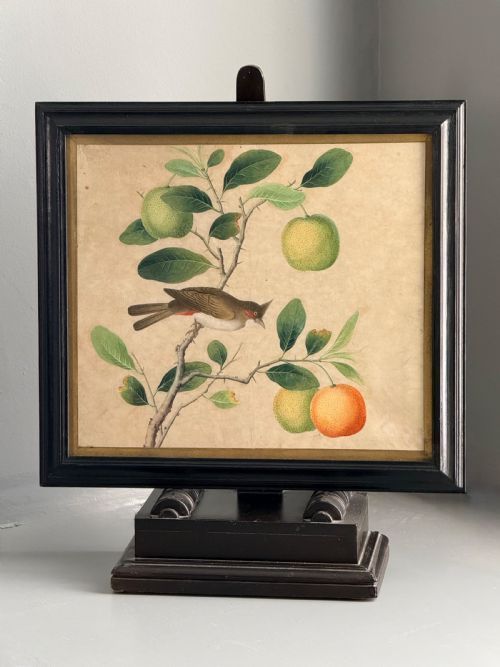
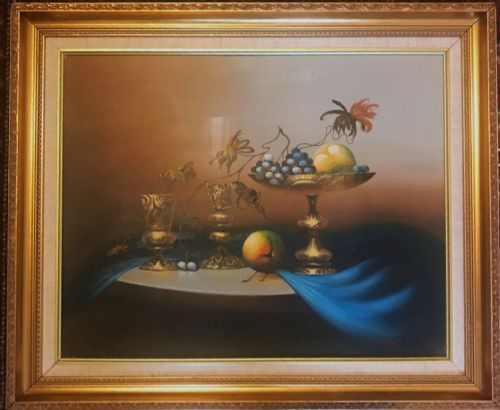
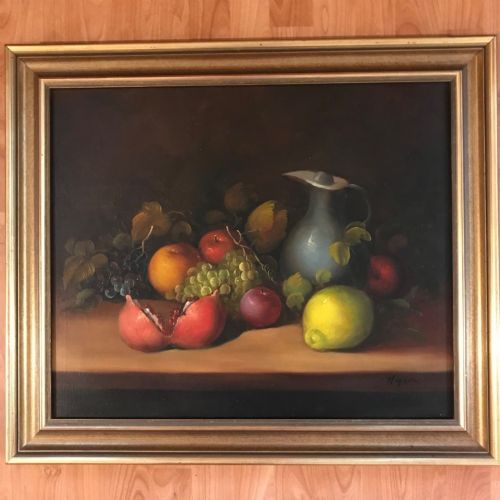
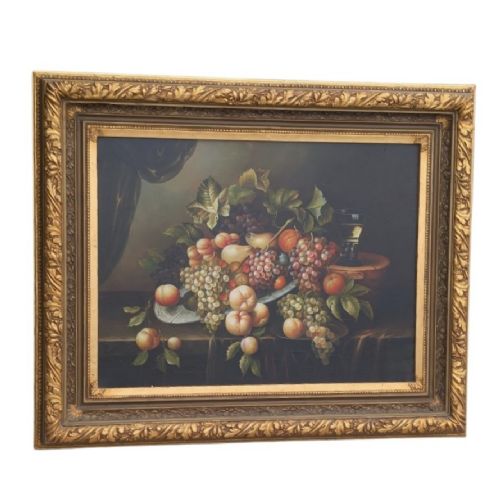
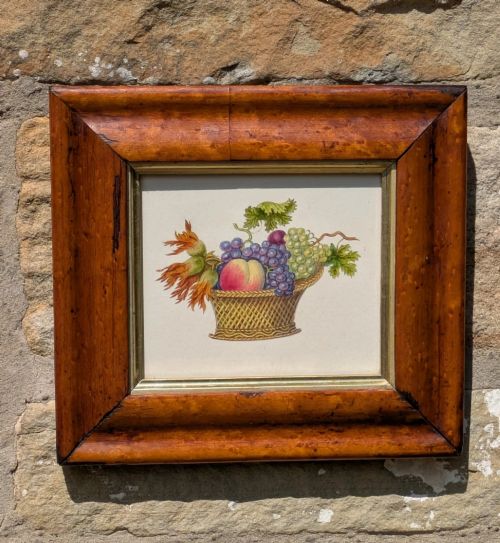
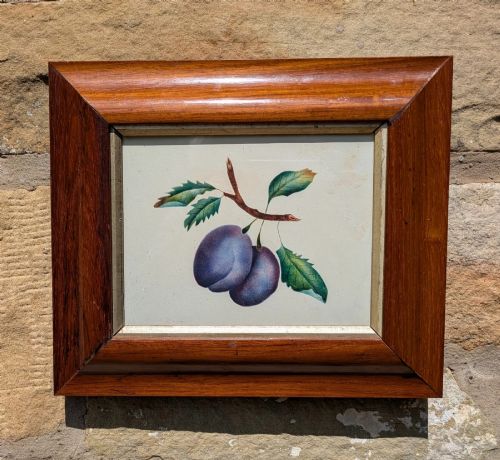
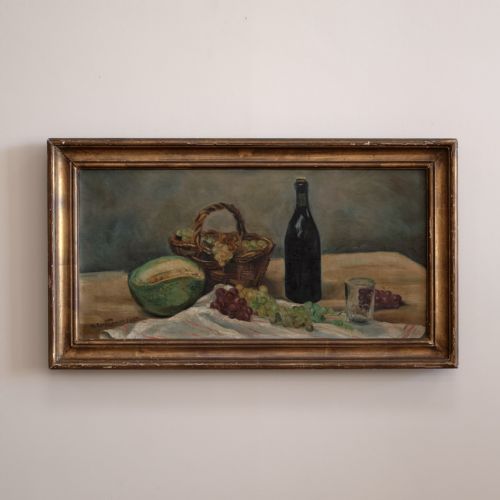
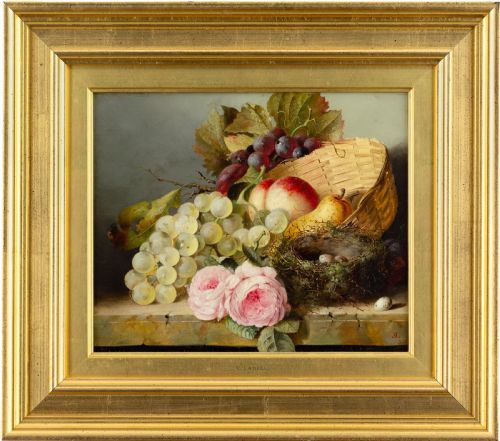
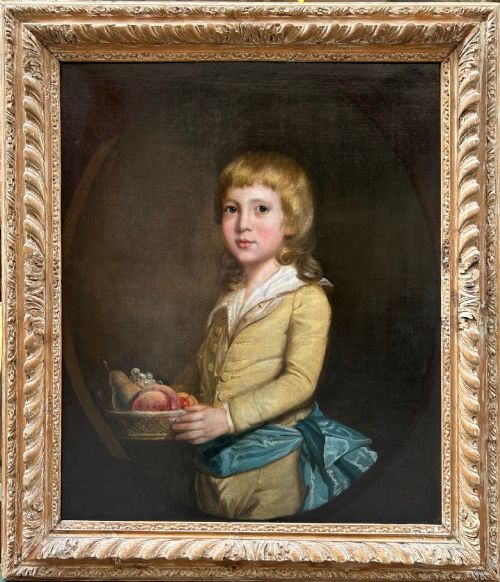
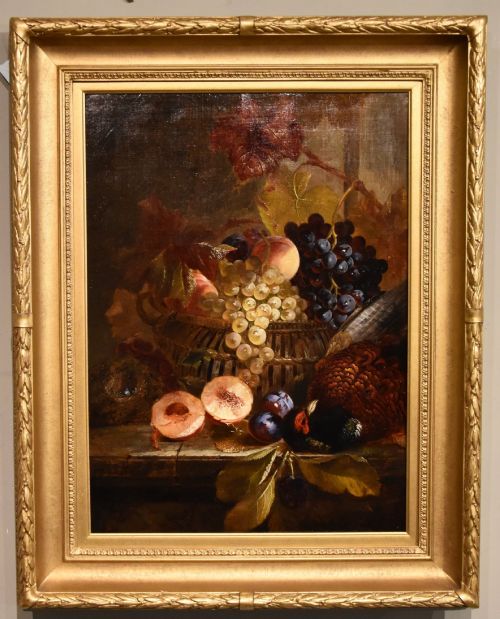
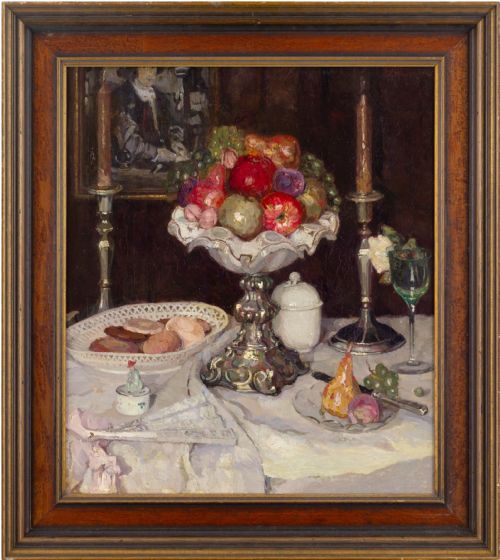
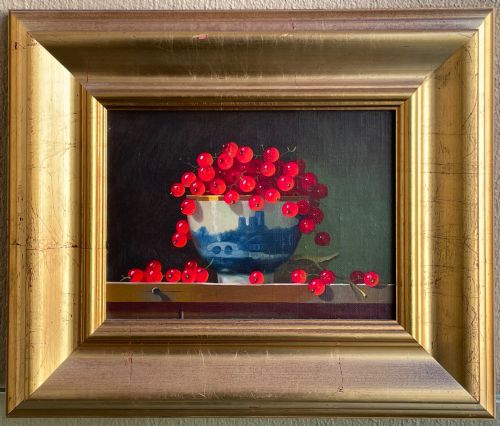
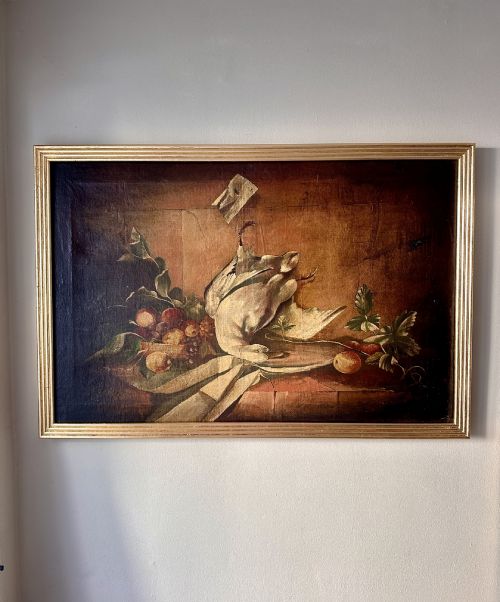
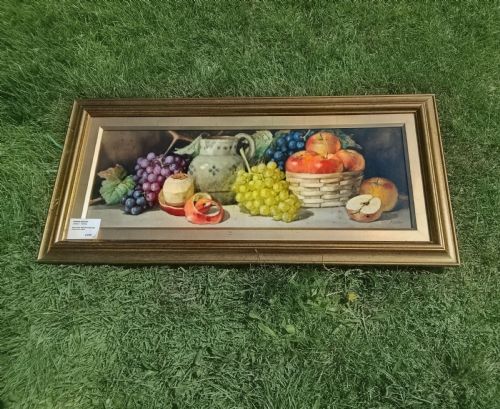
Framed fruit art comprises historical paintings and works on paper depicting still life arrangements, baskets and market scenes. Buyers encounter pieces ranging from Regency watercolours and 18th-century gouache on pith paper to Edwardian and mid-century oil paintings on canvas or wood panel.
The category spans detailed botanical studies of plums and berries alongside lavish banquet compositions featuring apples, grapes and pomegranates. These artworks primarily manifest in period wood, giltwood or rosewood frames that form an integral part of the piece.
How they were made
Artists applied oil paint or watercolour to canvas, wood panels, paper and pith paper, building rich textures and colour harmonies. Canvases and panels receive brushwork depicting the glossy skins of grapes and the matte surfaces of peaches, while watercolours capture translucent detail.
Makers housed these works within solid wood and gilt frames, often utilising carved ornamentation or repoussé brass elements to complement the visual weight of the subject matter.
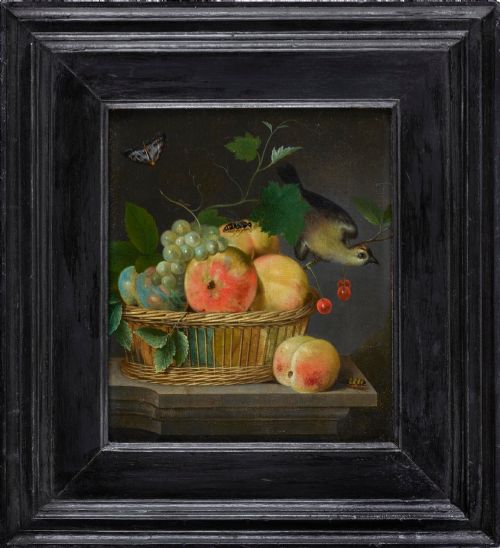
Several baskets of fruit must share their canvas space with unexpected onlookers, including inquisitive birds and a foal stealing snacks.
What varies in quality
The sophistication of brushwork and the naturalistic rendering of light across fruit surfaces distinguish superior works from standard decorative pieces. Master hands achieve depth and volume through subtle tonal gradations rather than flat application.
The integrity and period appropriateness of the surrounding frame heavily influence the overall standard. Original giltwood or solid wood frames that retain their historic finish elevate the piece considerably compared to later replacements.
Edward Ladell·Thomas Beach·Gaspar Peeter Verbruggen·William Henry Ward·Else Preußner·Ian Parker·Vladimir Aldoshin·Arthur Dudley·John Sherrin·Victor Simonin·James Tower·Evelyn Chester·Henri Joseph Pauwels·William Duffield·Vincent Clare·Helena Maguire·Bela Balogh
The Framed Fruit Art Glossary
- Gouache
- An opaque water-based paint that dries to a matte finish, allowing for vibrant colour representation on paper.
- Pith paper
- A delicate material formed from the pith of the Tetrapanax papyrifer plant, historically used for intricate watercolour and gouache painting.
- Still life
- An artwork depicting mostly inanimate subject matter, typically commonplace objects such as baskets of fruit, glassware and game.
- Giltwood
- Wood that has been coated with a thin layer of gold leaf or gold paint, frequently utilised in ornate picture frames.
Framed Fruit Art: Frequently Asked Questions
What periods do these pieces come from?
The selection spans from the 17th century through the Regency era, Victorian period, Edwardian years and into the mid-20th century.
Earlier examples often utilise watercolours or gouache on paper, while 19th and 20th-century works predominantly feature oil on canvas or wood panel.
How should I hang these paintings?
Display them away from direct sunlight to protect pigments, particularly watercolours and works on paper.
Ensure wall fixings match the substantial weight of solid wood and giltwood frames.
Are the frames original?
Many listings specify period frames made of solid wood, rosewood or giltwood that correspond to the era of the artwork.
Some pieces retain their original makers' framing, while others feature complementary period surrounds.
What surfaces were used?
Artists painted on stretched canvas, wooden panels, standard paper and delicate pith paper.
Support mediums vary by period and technique, with oil painters favouring canvas and wood, and watercolourists using paper.