



Victorian Fretwork Whatnot
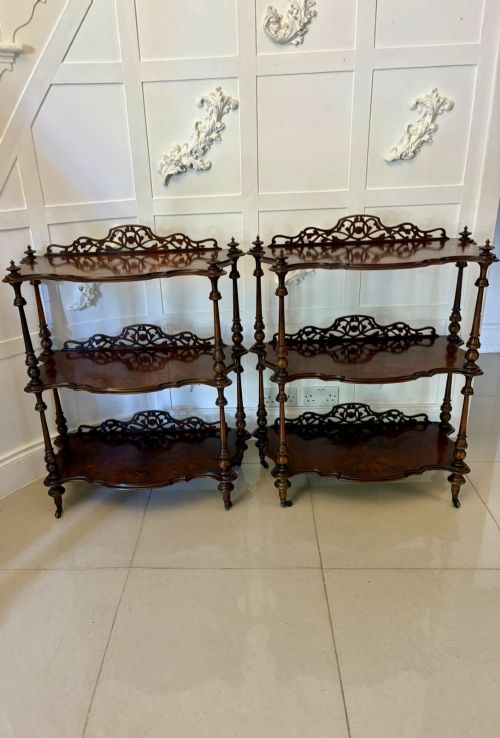
These victorian fretwork whatnot pieces are tiered display stands designed to hold books and ornaments, bringing distinct mid-century elegance to a room.
Victorian Fretwork Whatnot
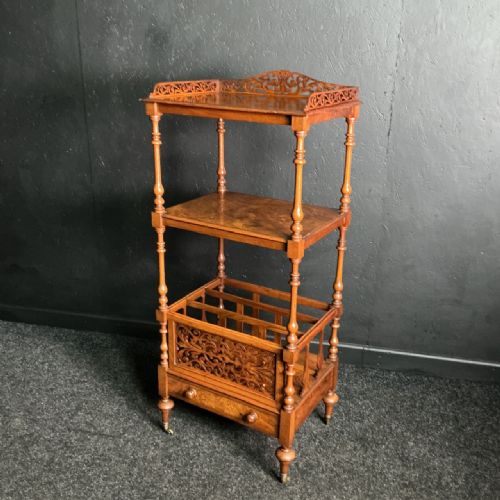
A victorian fretwork whatnot is a multi-tiered shelving unit designed for displaying ornaments, ceramics, and books in the principal rooms of a Victorian home. The examples found here span the Victorian period, the nineteenth century, and specifically the year eighteen sixty, taking various forms including corner shelves, demi-lune display consoles, and Canterbury combinations.
Buyers seeking these pieces will frequently encounter walnut, burr walnut, and rosewood constructions, often enhanced by marquetry inlay or brass fittings. Forms range from simple five-tier shelving units and corner cabinets to complex tables featuring integrated lower compartments for holding sheet music.
The layout of these stands allows them to fit neatly against flat walls or utilise neglected corners, making them both practical storage items and decorative centerpieces. Their tiered nature provides varying heights for display, reflecting the Victorian desire to showcase curated collections of small objects.
Materials and construction
Cabinet makers utilised rich timbers such as walnut, burr walnut, and rosewood, often selecting figured veneers to create striking patterns on the shelves and top surfaces. Marquetry inlay adds decorative contrast, while brass components and glass elements occasionally appear as structural or ornamental details.
Construction techniques include multi-tiered stacking supported by turned or twisted uprights, such as hollow barley twist columns, alongside corner-fitting designs. Tables with integrated Canterbury sections combine shelving with compartment dividers for functional storage of folios and papers.
Some stands feature hollow barley twist columns that make five tiers look astonishingly light.
Judging the range
Quality in these pieces is dictated by the choice of timber veneer, particularly the richness and figuring of burr walnut or rosewood used across the tiers. Fine examples display precise marquetry inlay and well-executed turnings, such as barley twist supports, rather than plain structural framing.
The integration of functional elements like Canterbury compartments or demi-lune console shapes alters the complexity of the piece. Superior craftsmanship shows in the crispness of carved details and the stability of multi-tiered shelving units.
The Victorian Fretwork Whatnot Glossary
- Whatnot
- A piece of furniture consisting of a set of open shelves for small objects and ornaments. These units typically feature three to six tiers.
- Canterbury
- A low stand with partitioned sections for holding sheet music, books, or portfolios. Frequently incorporated into the base of Victorian display tables.
- Demi-lune
- A half-moon shape used for console tables and corner-fitting furniture. This curved profile allows the piece to sit flush against a wall.
- Marquetry
- Decorative inlay work using various woods and veneers to create pictorial patterns on furniture surfaces. This technique highlights the top tier of finer models.
- Burr walnut
- A highly prized timber grain showing swirling patterns caused by growth knots. Makers selected this veneer for prominent display surfaces.
Victorian Fretwork Whatnot: Frequently Asked Questions
What is a Victorian whatnot used for?
These tiered stands served as display furniture in nineteenth-century drawing rooms and parlours for ornaments, ceramics, and small collections. Some variations included lower compartments specifically designed to hold sheet music or books.
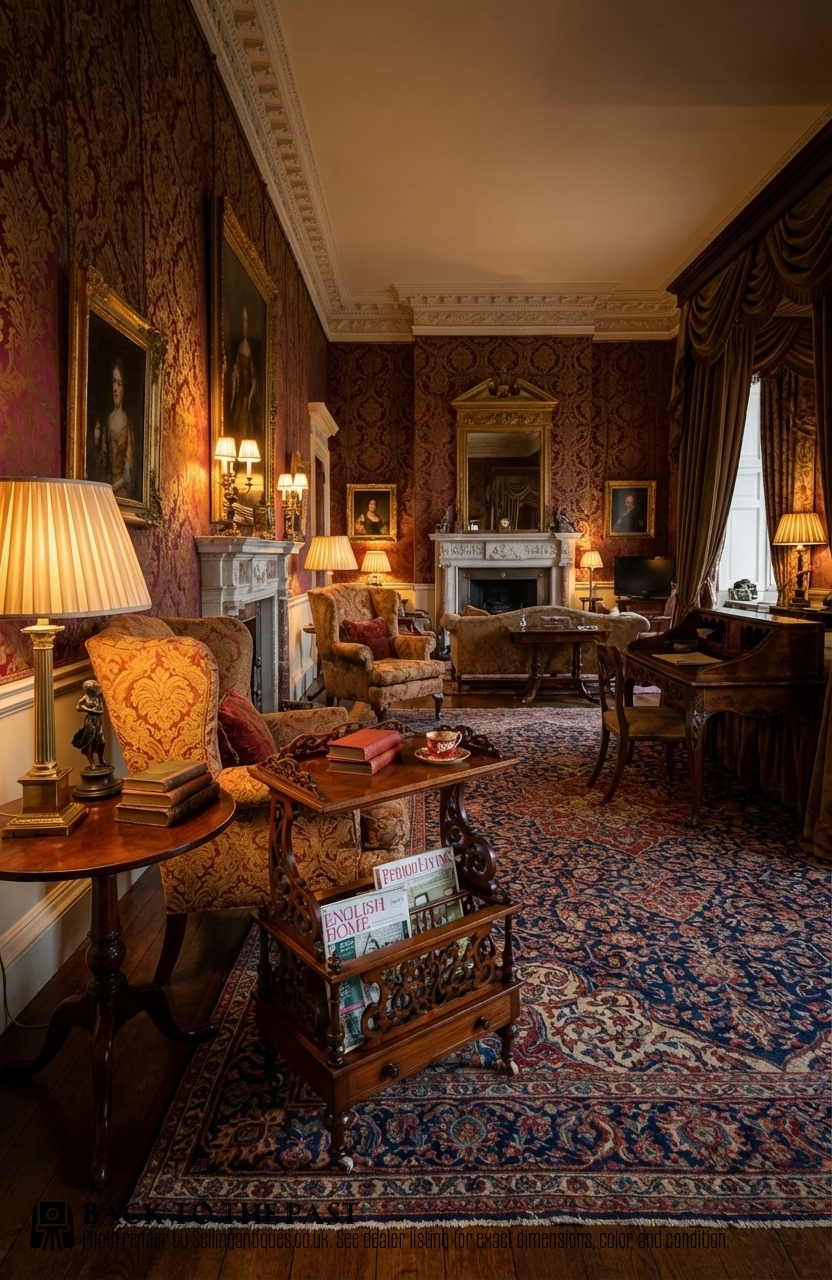
Today, they function well in modern interiors for displaying plants, framed photographs, or small sculptural objects while taking up minimal floor space.
How do I identify a Victorian whatnot?
Look for characteristic nineteenth-century timber choices such as walnut, burr walnut, and rosewood, often complemented by marquetry inlay or turned upright supports. The presence of multiple open tiers defines the form, sometimes combined with corner designs or demi-lune console shapes.
Construction details typically reflect nineteenth-century cabinet-making standards, including fixed or tiered shelving arrangements without modern fixings.
Where should I place a corner whatnot?
Corner whatnot units fit directly into ninety-degree room angles, making use of space that standard rectangular furniture cannot occupy. They work effectively in smaller reception rooms or hallways to add vertical display height.
Ensure the wall surface is even so the tiered structure rests securely without requiring excessive fixing.
What is the difference between a whatnot and a Canterbury?
A whatnot is primarily a multi-tiered open shelving unit for display, whereas a Canterbury is a low stand featuring partitioned vertical sections for holding papers or folios. Many Victorian pieces combine both forms into a single item with shelves above and compartment storage below.
This hybrid design provided both decorative display space and practical tidying capacity for a music room or parlour.