

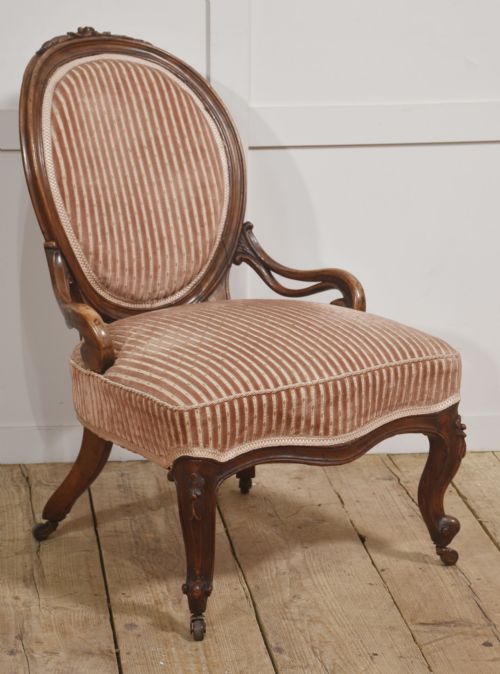


Victorian French Walnut Chairs
Victorian french walnut chairs bring continental styling to nineteenth-century interiors through carved frames, serpentine lines and rich timber tones.
Victorian French Walnut Chairs
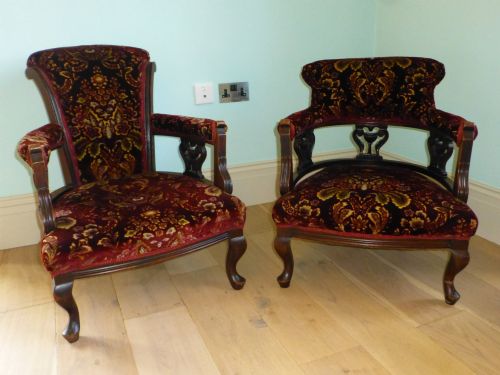
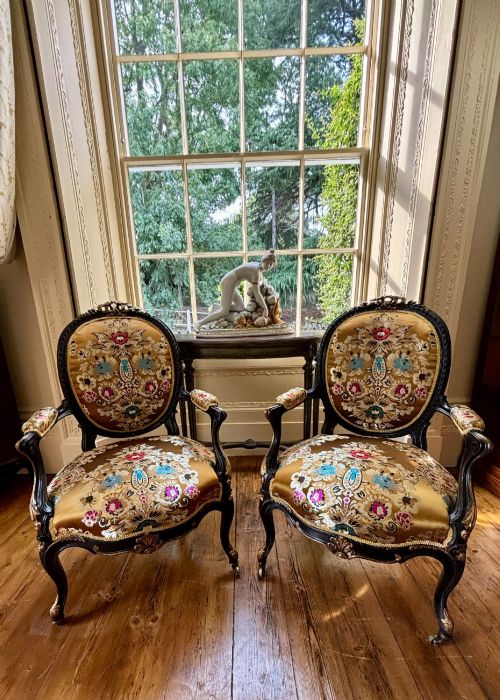
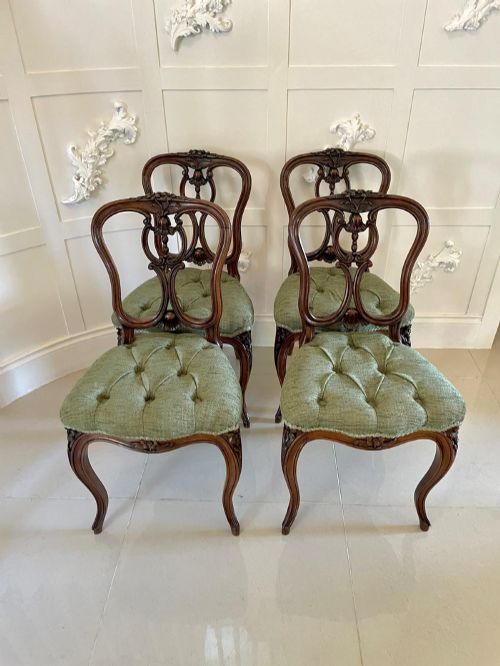
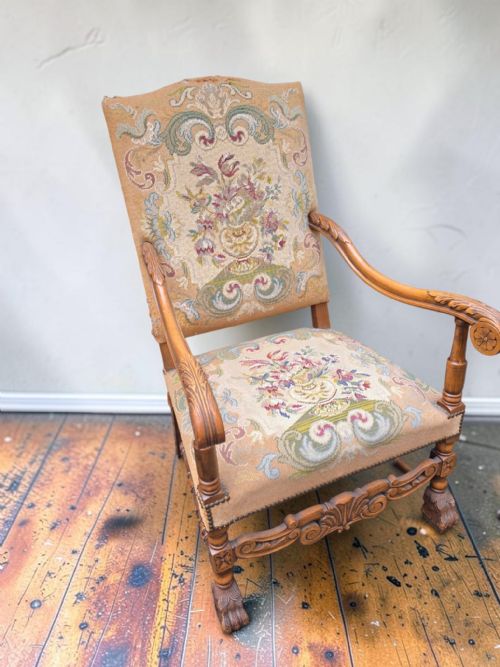
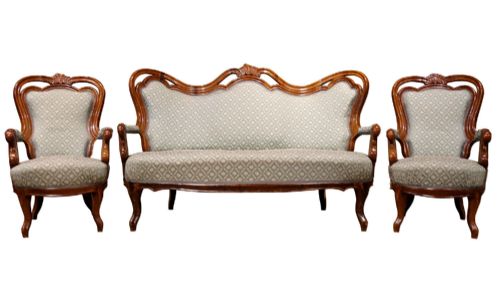
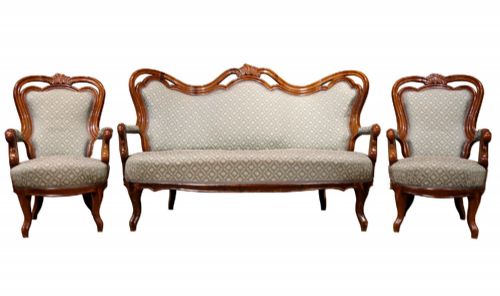
Victorian french walnut chairs encompass open armchairs, side chairs, salon suites, and chaise longues produced across the nineteenth century. The selection leans heavily toward individual armchairs and matched pairs, alongside dining sets and larger salon arrangements.
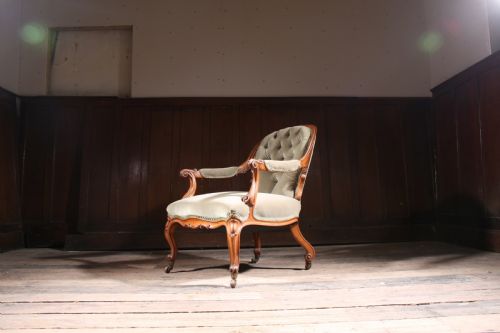
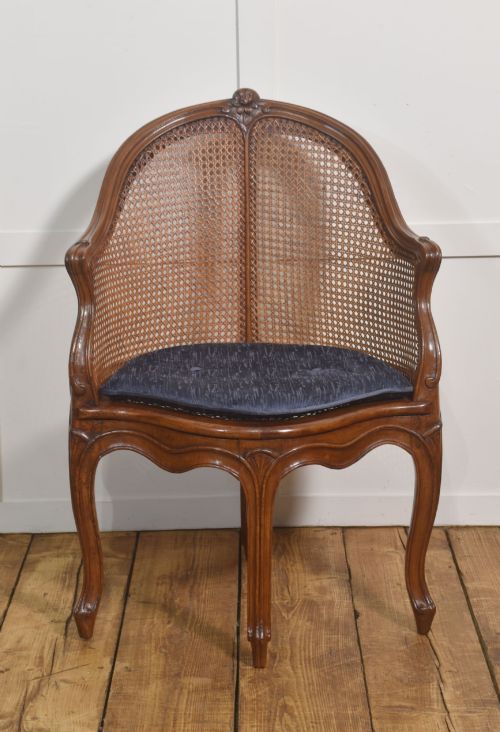
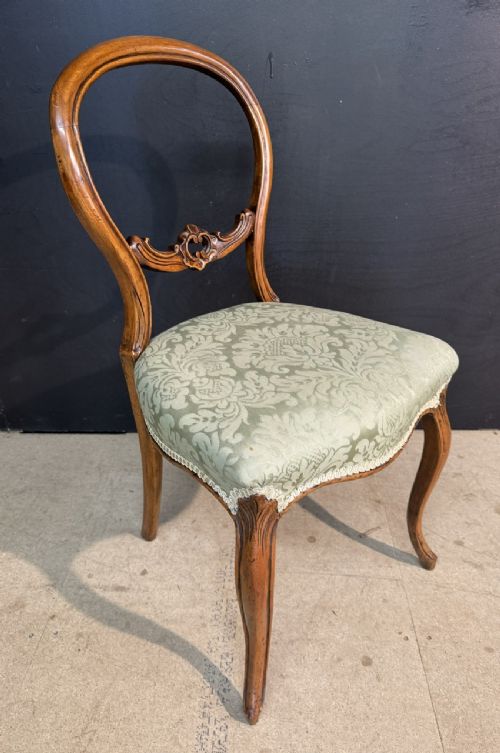
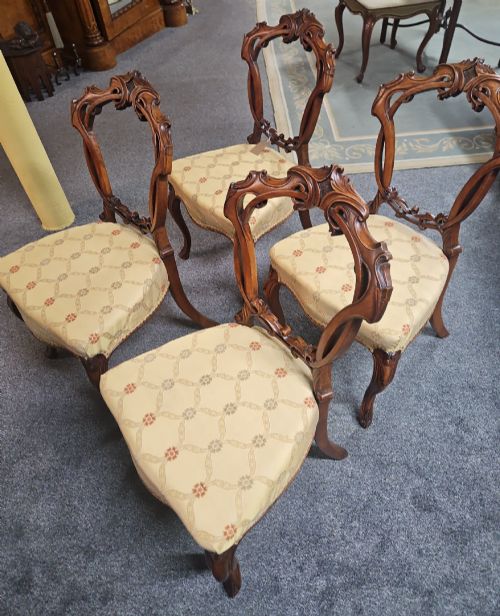
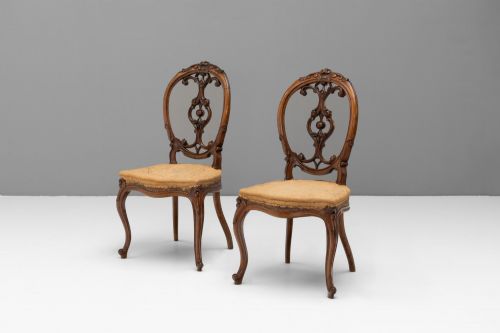
Makers drew on continental design idioms, resulting in forms influenced by Louis XV Revival and Rococo Revival styles. Pieces frequently display carved wooden frames shaped with cabriole legs and scrollwork, bridging English Victorian domestic taste with French aesthetic models.
How they were made
Carpenters utilised solid walnut for structural frames, taking advantage of the timber's grain and strength to support deep carving. Frames were shaped into cabriole legs, balloon backs, and open arm structures using traditional joinery methods.
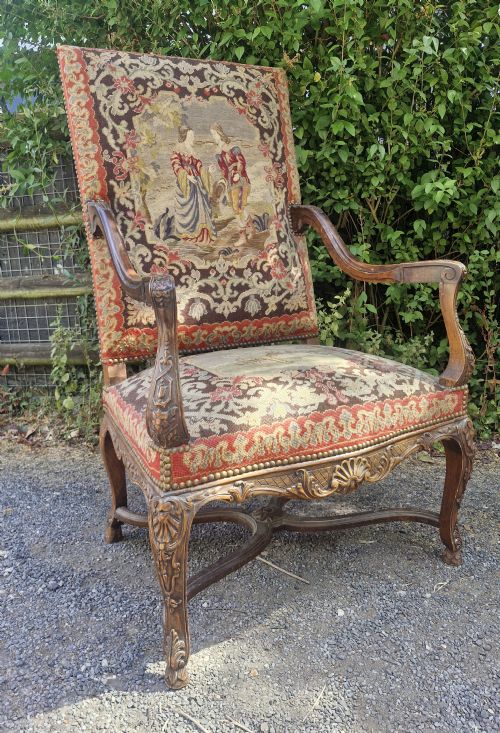
Upholstery formed a central part of the construction, incorporating fabrics such as velvet, damask, tapestry, needlework, and leather, often secured over buttoned backs or cane panels.
Victorian French Walnut Chairs Retail Price Guide 2026
Typical asking prices for victorian french walnut chairs among the pieces listed under this phrase on Sellingantiques today, from the lower quarter to the upper quarter. They describe what is for sale here now, not the wider market.
Materials recorded across the selection include solid walnut paired with brass hardware and various textile coverings.
What varies in quality
The depth and crispness of the hand-carving on the walnut frame separate standard production from superior examples. Skilled carvers achieved sharp relief work on scroll legs and crest rails, whereas simpler items relied on shallow profiling.
The choice of covering material and the integrity of the underlying sprung or stuffed upholstery dictate the finish of each piece. Original or period-appropriate textiles like needlepoint tapestries and fine leather indicate higher-tier commission levels.
The Victorian French Walnut Chairs Glossary
- Cabriole leg
- A furniture leg that curves outward at the knee and inward at the ankle, ending in a pad or scroll foot. This shape is characteristic of Louis XV revival seating.
- Bergere
- An enclosed upholstered armchair with wooden framing around the sides and back. It frequently incorporates cane work into the structural panels.
- Salon suite
- A matched set of seating comprising a sofa and multiple armchairs designed for formal entertaining. These groups share unified walnut framing and textile upholstery.
- Petit point
- A fine, counted-thread embroidery executed on canvas using diagonal stitches. It is often found on nineteenth-century chair backs and seats.
- Balloon back
- A rounded, oval-shaped chair back resembling a swollen contour popular in the Victorian era. The wooden frame curves continuously from the seat rail upward.
Victorian French Walnut Chairs: Frequently Asked Questions
How do I identify French revival styles?
French revival pieces exhibit asymmetric scrollwork, floral carvings, and pronounced cabriole legs derived from eighteenth-century models.
English interpretations often blend these continental motifs with heavier Victorian upholstery proportions.
Are these chairs suitable for daily use?
Most antique seating functions well for daily sitting provided the internal webbing and joints remain stable.
Checking the rigidity of the walnut frame ensures the piece can handle regular weight.
What textiles were used originally?
Original coverings included woven damask, wool tapestry, patterned velvet, and smooth leather hides.
Needlework and petit point panels were also worked by hand for formal parlour armchairs.
How can I date a walnut chair?
Dating relies on stylistic shifts between mid-century Rococo revival forms and later aesthetic movement designs.
Construction marks and screw types inside the frame offer further clues to the decade of manufacture.