



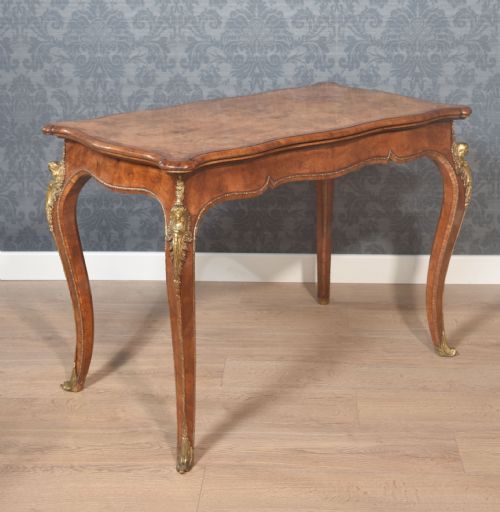
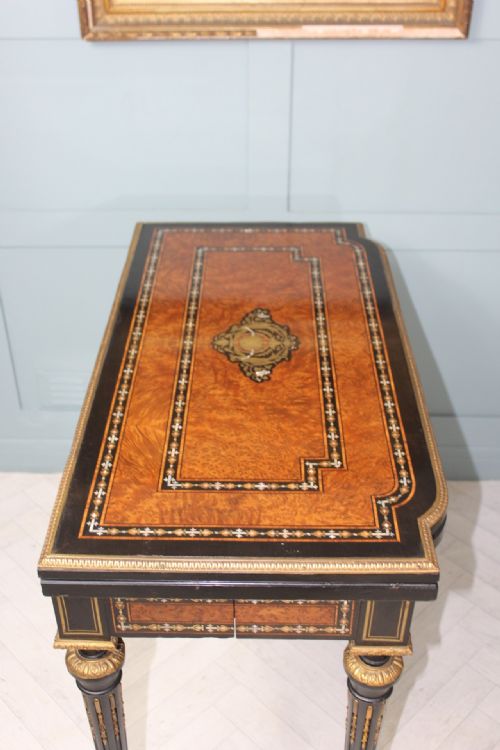
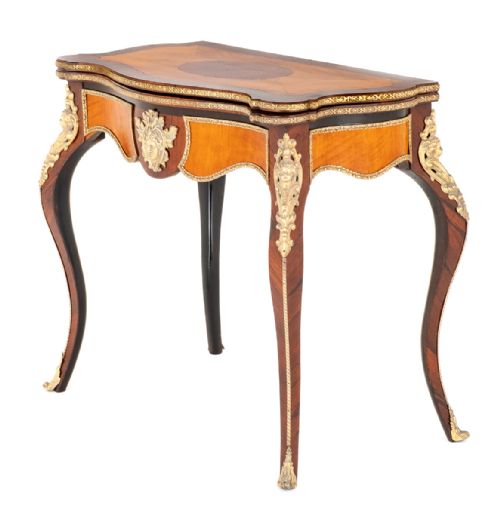


Victorian French Games Table
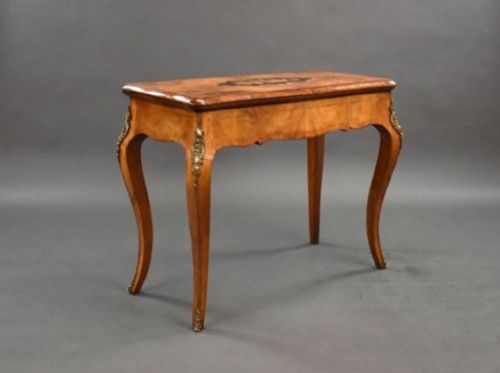
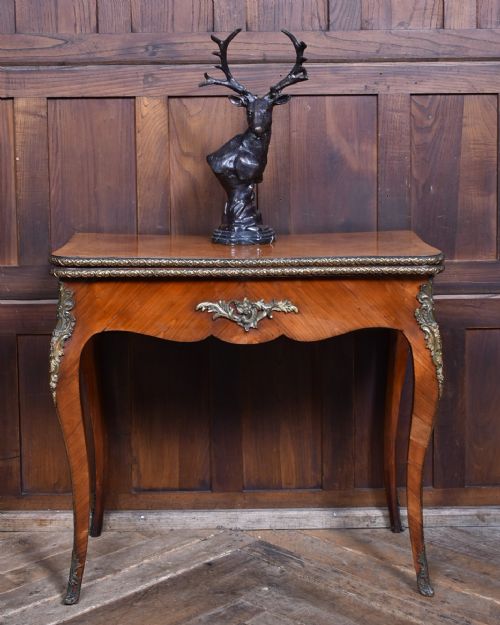
These Victorian French games tables combine continental revival styles with ingenious folding tops designed for parlour entertainment.
Victorian French Games Table
A victorian french games table is typically encountered as a card or console table that opens to reveal a baize-lined surface for play.
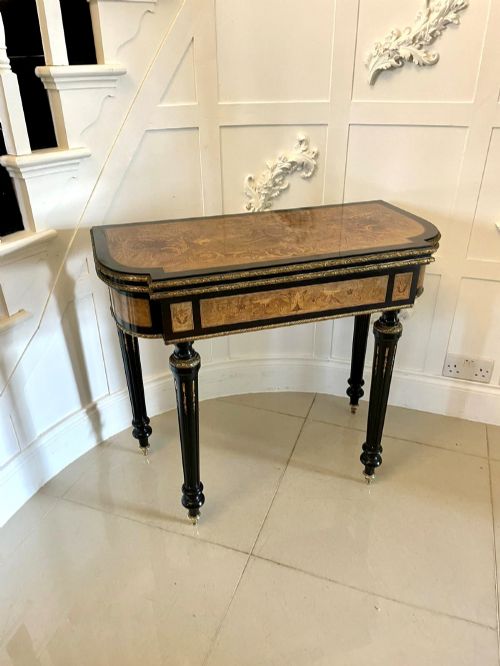
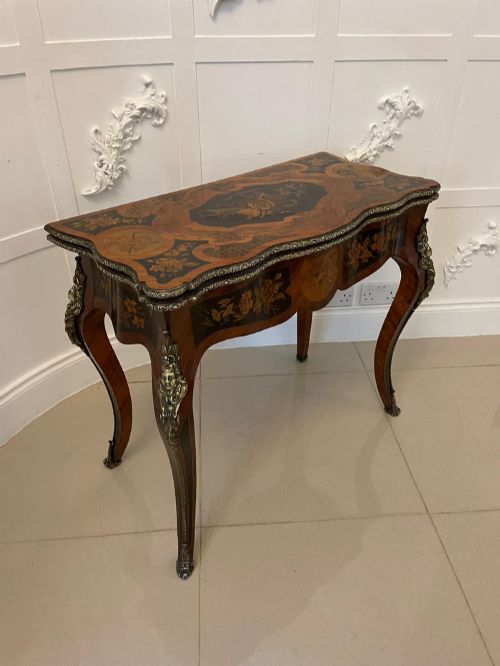
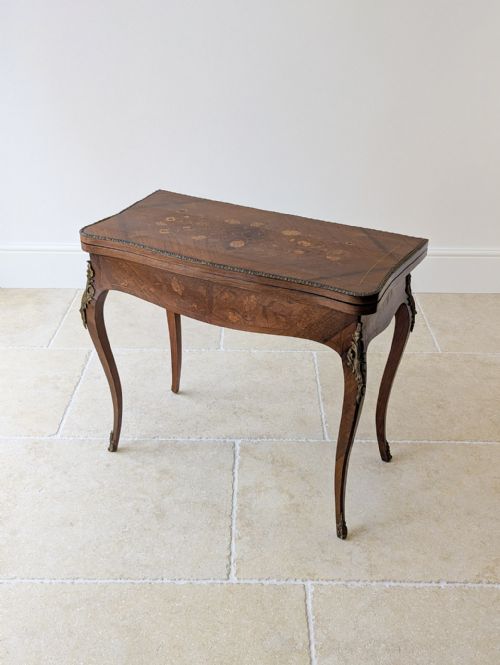
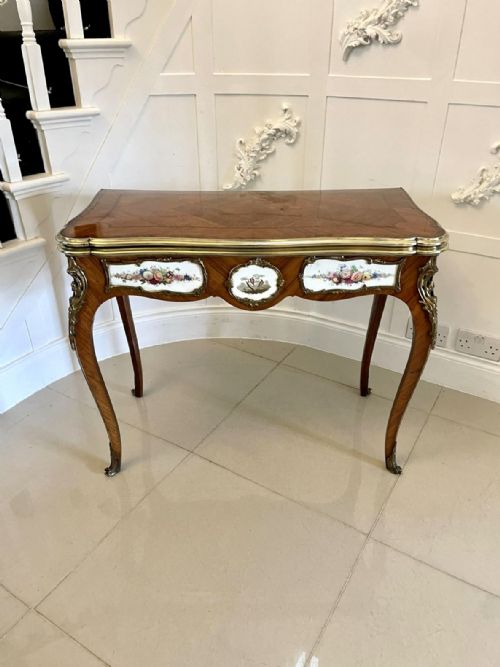
The pieces on this page span the mid to late nineteenth century, predominantly showcasing Louis XV style, Napoleon III, and rococo revival aesthetics.
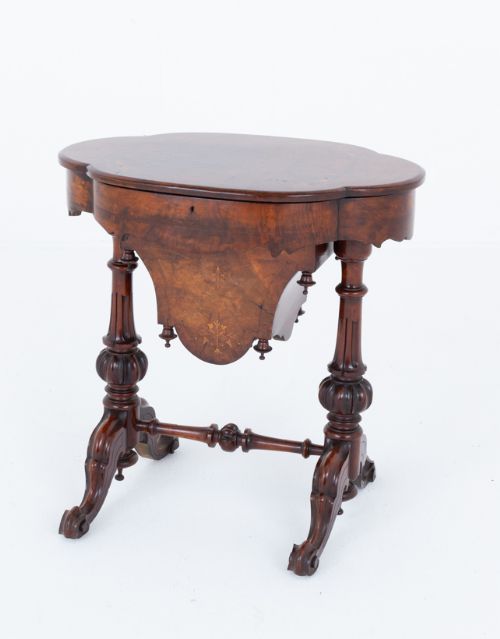
Makers and workshops of the period produced these hybrid items in forms ranging from sewing tables to roulette setups alongside traditional card tables.
How they were made
Cabinet makers utilised dense hardwoods such as kingwood, walnut, rosewood, and ebonised wood as the foundation for intricate marquetry and cross-banding.
Mounts of cast ormolu and polished brass frame the corners and legs, whilst porcelain plaques and mother-of-pearl detail are inlaid directly into the timber surfaces.
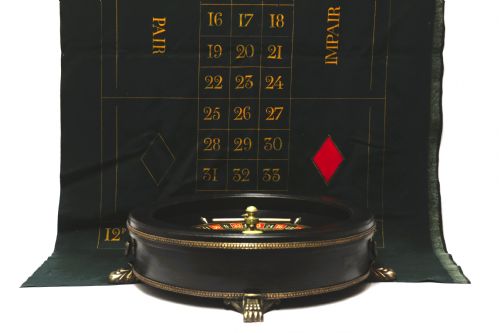
A nineteenth century roulette wheel survives complete with its original felt cloth, ready for an impromptu parlour casino.
What varies in quality
The distinction between standard production and exhibition grade pieces rests on the complexity of the marquetry and the precision of the bronze ormolu mounts.
Signed works by notable cabinet makers demonstrate superior timber selection, heavier cast mounts, and more refined mechanisms for the folding and pivoting tops.
G T Morant·Edwards and Roberts·Henry Dasson
The Victorian French Games Table Glossary
- Ormolu
- Gilded bronze mounts applied to furniture. This technique provides decorative highlights and protects vulnerable corners.
- Marquetry
- Inlaid patterns using various coloured wood veneers. Craftsmen assemble these pictorial designs to create geometric or floral motifs.
- Kingwood
- A dense, richly grained Brazilian timber favoured in fine nineteenth century cabinet making. Its dark and golden streaks suit elaborate cross-banding.
- Boulle
- A style of marquetry using brass and tortoiseshell inlay. It was named after the master craftsman André-Charles Boulle.
Victorian French Games Table: Frequently Asked Questions
How do these tables open?
Most examples feature a fold-over top that rotates on a pivot to reveal a hidden compartment for cards and counters beneath.
The hinged leaf then rests flat upon the extended frame to create a stable playing surface lined with felt or cloth.
Were these used for real gambling?
While roulette wheels and card tables served for parlour wagers, nineteenth century households used them primarily for social card games and polite evening entertainment.
The sophisticated marquetry ensured the furniture remained an impressive decorative console when closed.
How do I care for kingwood surfaces?
Maintain the polished timber by keeping the table away from direct sunlight and sudden temperature shifts that can warp delicate veneers.
Apply a traditional beeswax polish sparingly to preserve the sheen of the exotic woods and brass mounts.
How do I distinguish Napoleon III pieces?
Napoleon III pieces often utilise ebonised wood contrasting with bright brass inlay, mother-of-pearl, and elaborate ormolu mounts.
They reflect the eclectic revival tastes of the Second French Empire during the mid nineteenth century.