


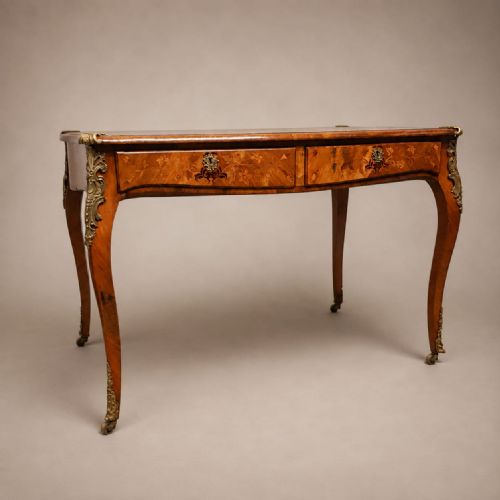
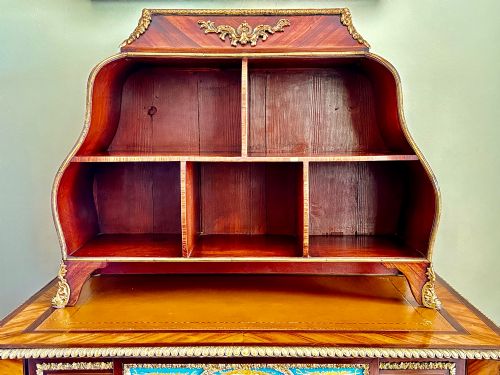
Victorian French Desk
A victorian french desk brings continental flair to writing spaces through rich timbers and decorative mounts.
Victorian French Desk
When searching for a victorian french desk, collectors encounter refined workspace furnishings spanning the nineteenth century. These objects combine British Victorian eras with continental styles such as Louis XV Revival and Rococo Revival.
Many examples incorporate marquetry or parquetry inlays alongside integrated stationery compartments. Writing surfaces often feature fitted leather skivers for daily correspondence.
Materials and construction methods
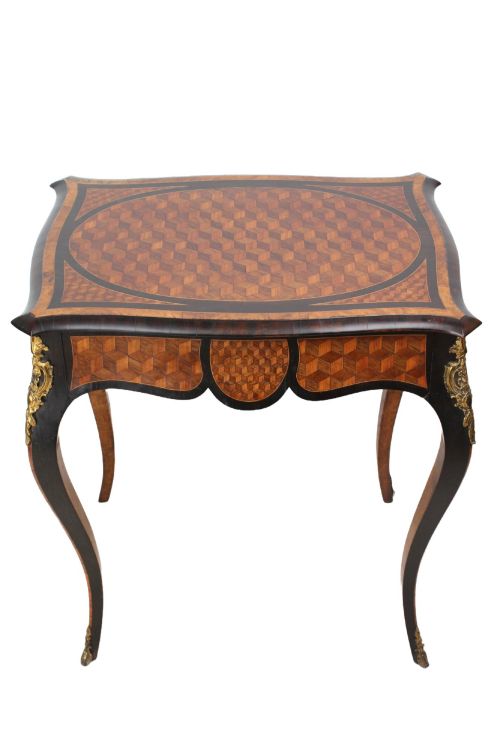
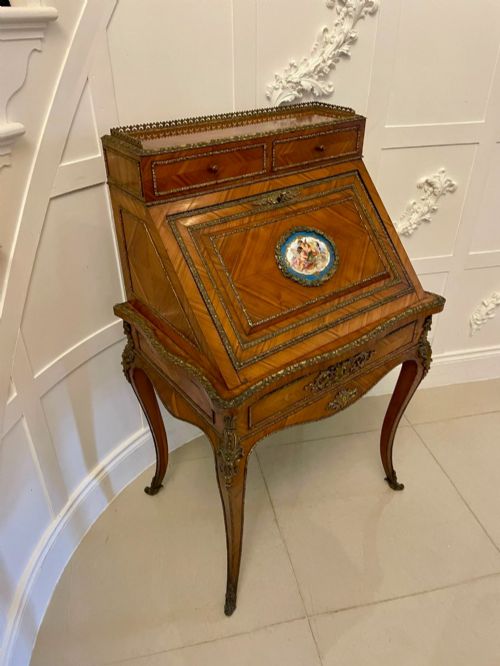
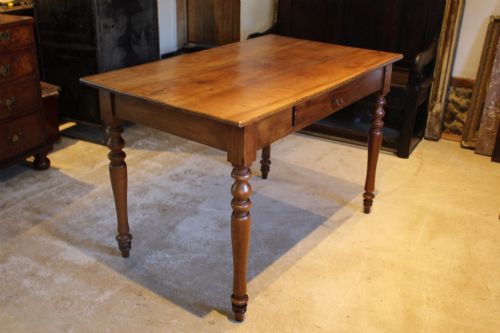
Cabinetmakers utilised dense hardwoods including walnut, kingwood, and satinwood as carcase foundations, frequently applying intricate floral marquetry or geometric parquetry patterns across the timber surfaces.
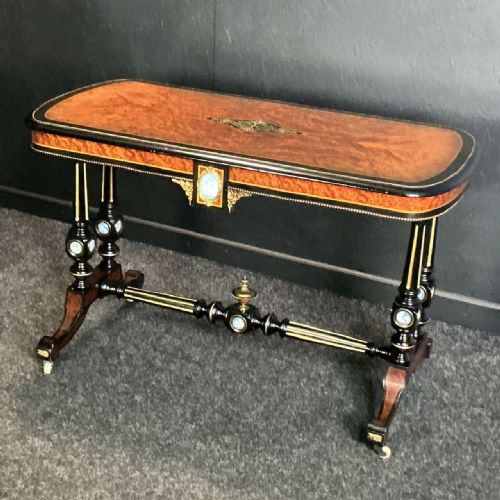
Decorative metalwork defines much of the ornamentation, employing cast or fire-gilt ormolu and brass mounts along cabriole legs, drawer edges, and corners.
Specialised writing surfaces incorporate tooled leather inserts, whilst interior compartments utilise fine secondary timbers for drawers and secret compartments.
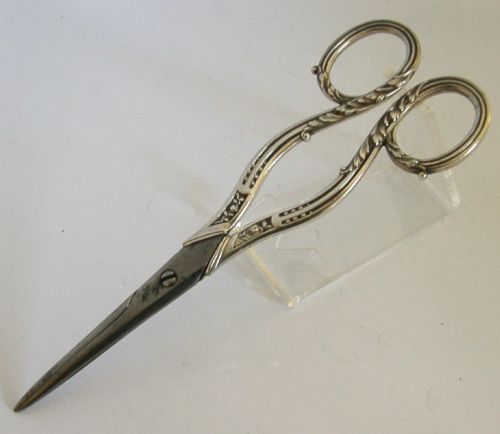
Desk accessories range from bronze inkwells shaped like grotesque creatures to elaborate brass scissors.
Assessing craftsmanship and execution
Superior examples display crisp, hand-chased ormolu mounts that integrate seamlessly with the timber contours rather than appearing secondary. The precision of the wood marquetry and the fluidity of the cabriole leg carving indicate workshop capability.
Interior construction reveals workmanship standards through secret drawer mechanisms and dovetail joints executed in secondary woods. Finished backs allow freestanding placement in a room, marking higher grade furniture.
Material selection dictates overall elegance, where dense burr walnut or figured kingwood veneers exhibit balanced grain patterns across the primary surfaces.
JAS Shoolbred·Henri Jacot·Edmé Samson·Durand·Naudet
The Victorian French Desk Glossary
- Bureau plat
- A flat-topped writing table, typically freestanding with one or more drawers in the frieze. This form dates back to seventeenth-century France and remained popular during the Victorian revival periods.
- Ormolu
- Gilt bronze ornamentation applied to furniture and clocks. The technique involves treating brass or bronze with a gold amalgam before heating.
- Marquetry
- Decorative veneer patterns formed from pieces of contrasting wood, shell, or ivory. Craftsmen assemble these designs to create floral or geometric scenes on table tops and drawer fronts.
- Bonheur du jour
- A small, light lady's writing desk featuring a tiered superstructure with shelves or small drawers above the main writing surface. These dainty pieces emerged in France during the mid-eighteenth century.
- Parquetry
- Geometric wood mosaic work used for floors and furniture surfaces. Artisans arrange small blocks of timber to produce repeating diagonal or checkerboard patterns.
Victorian French Desk: Frequently Asked Questions
What is a bonheur du jour?
A bonheur du jour is a small, light lady's writing desk featuring a tiered superstructure above the main writing surface.
These compact pieces often include small drawers or pigeonholes for stationery storage.
What woods were commonly used?
Cabinetmakers utilised exotic and domestic timbers including walnut, kingwood, rosewood, and satinwood.
Veneers were frequently arranged in parquetry or marquetry patterns.
Where were these desks placed?
These pieces served as writing tables in principal reception rooms, boudoirs, or studies.
Freestanding designs allowed placement in the middle of a room rather than against a wall.
How do I care for the surface?
Maintain timber surfaces by applying quality beeswax polish sparingly with a soft cloth.
Protect leather writing inserts from direct sunlight and excessive moisture.