


Victorian French Commode
A victorian french commode brings substantial weight and imported continental style to a room, offering deep drawers beneath smooth stone surfaces.
Victorian French Commode
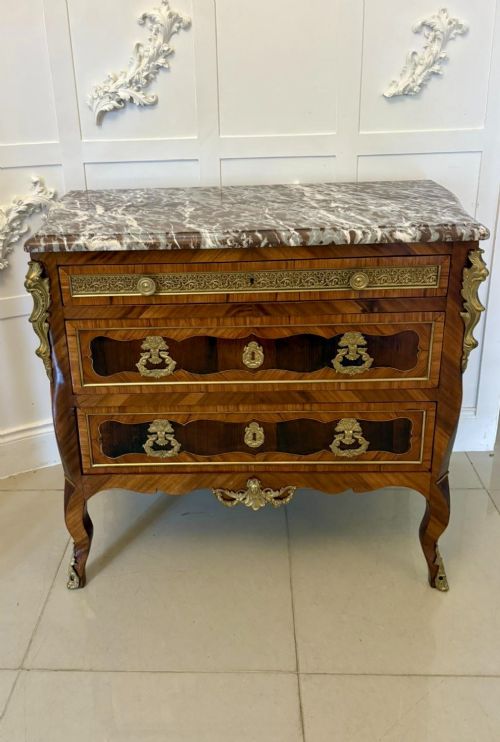
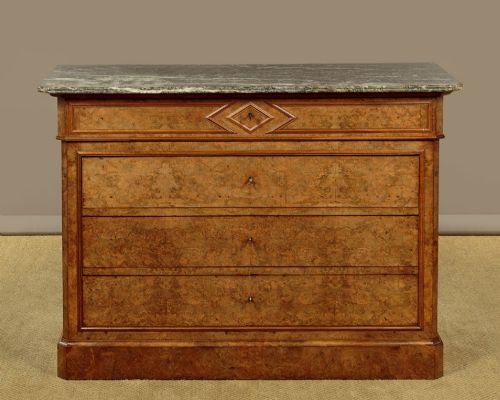
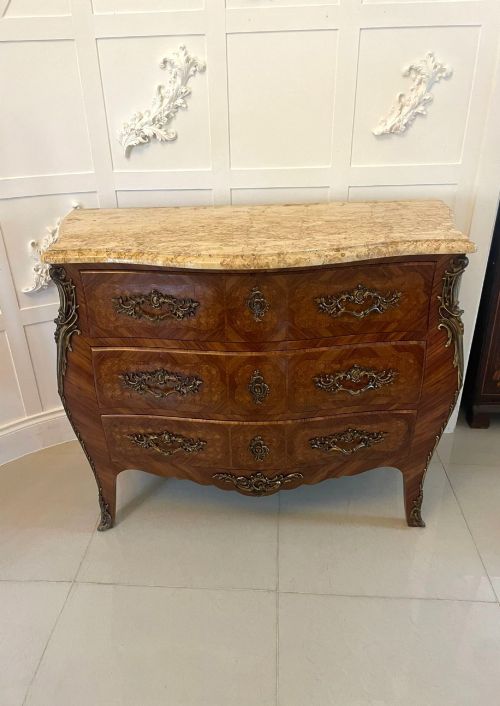
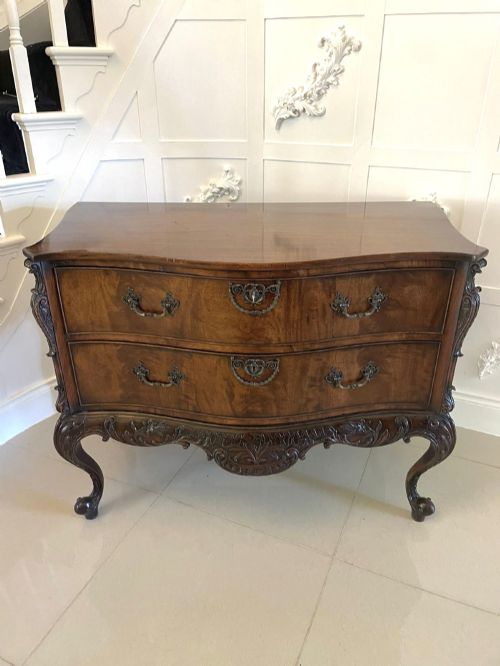
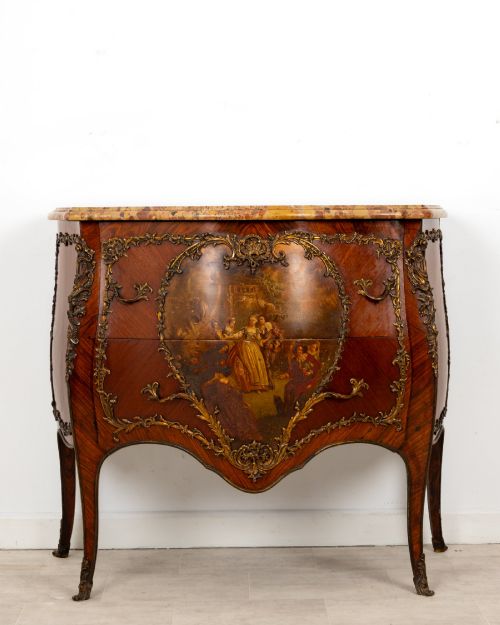
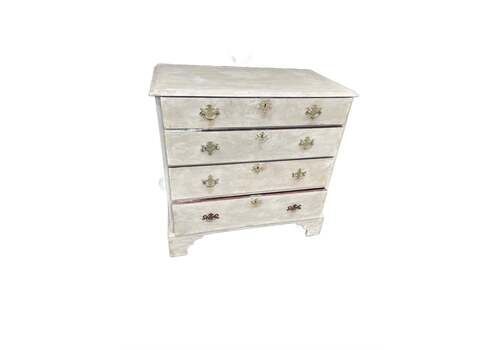
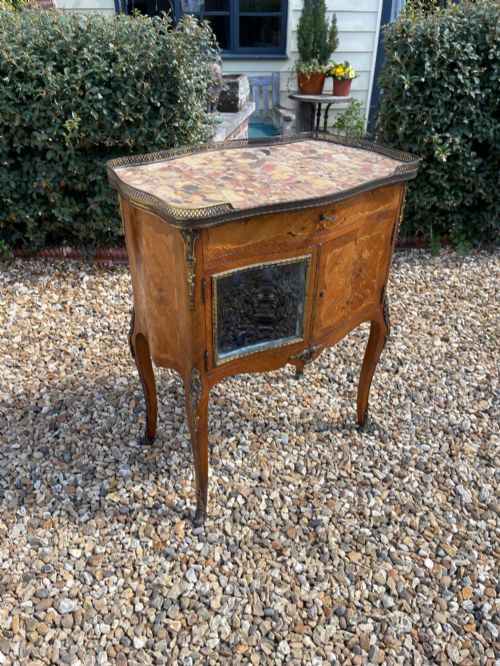
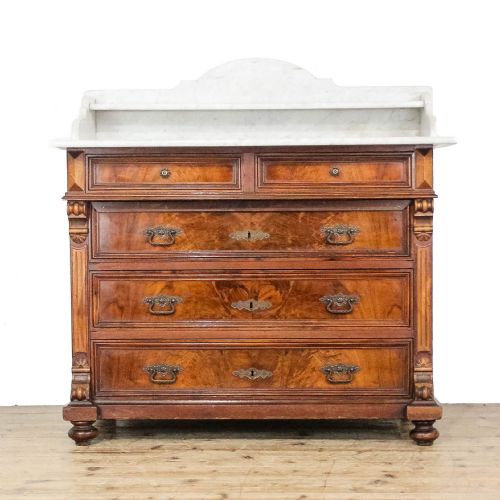
A victorian french commode stands as a heavy storage chest, often topped with polished marble and designed with continental influence. These pieces emerge in styles ranging from Louis XV Revival and Louis Philippe to French Provincial and French Rococo Revival.
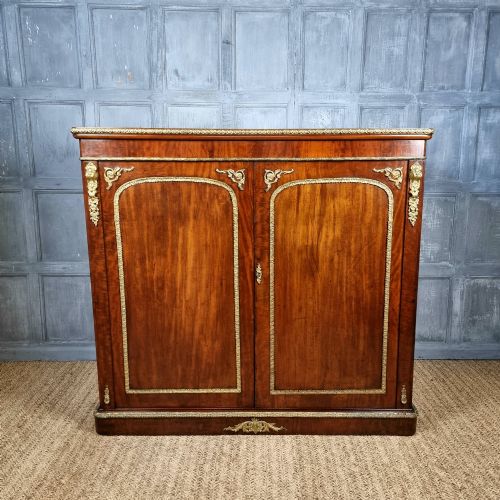
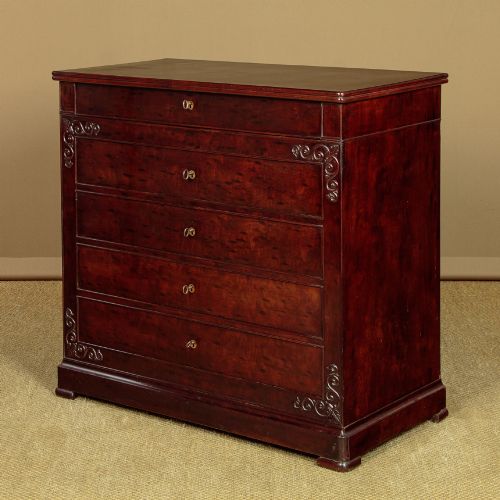
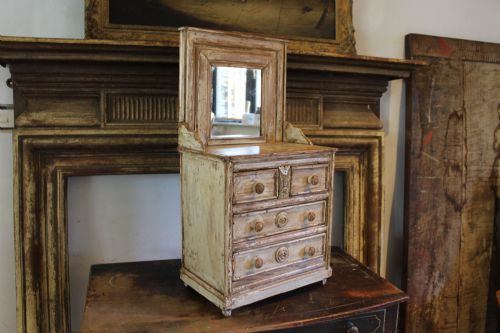
Buyers frequently encounter variations combining mahogany, walnut, kingwood, and parquetry surfaces. The forms span full-sized chests of drawers, side cabinets, and occasional miniature apprentice pieces.
Origins stretch across nineteenth-century workshops, Paris creations, and continental workshops exported to British buyers. The standard presentation integrates timber carcasses with gilt-bronze, ormolu, and brass mounts.
Materials and construction
Cabinet makers utilised dense hardwoods including mahogany, burr walnut, and kingwood as the structural foundation for these chests. Veneers and parquetry patterns decorate the drawer fronts and sides, showing precise geometric or floral arrangements.
Heavy marble slabs form the upper surface of many examples, providing a cool, resilient top. Cast ormolu, gilt-bronze, and brass mounts frame the corners, handles, and apron outlines.
Joinery methods rely on traditional drawer construction housed within substantial timber carcasses. Vernis Martin finishes and applied glass accents appear on specific revival pieces.
Listings feature woods such as walnut, kingwood, mahogany, and birds-eye maple paired with marble, brass, and ormolu.
Judging execution and finish
Quality rests upon the crispness of the gilt-bronze and ormolu mounts and the precision of the kingwood or parquetry veneer work. Superior examples display fluent serpentine shaping to the timber carcass and tightly fitted marble tops.
The choice of timber grain, such as figured mahogany or burr walnut, dictates the visual depth of the facade. Finer makers ensure drawer linings use secondary hardwoods finished with equal care.
Gillows·Edwards and Roberts·G. Durand
The Victorian French Commode Glossary
- Commode
- A low chest of drawers or cabinet standing on legs or a short base, originating in France. They function as storage furniture in bedrooms and reception rooms.
- Ormolu
- Gilt brass or bronze applied to furniture mounts and decorative hardware. The technique involves a mercury-gilding process common in nineteenth-century workshops.
- Parquetry
- Geometric patterns formed by small pieces of wood veneer fitted together. It decorates drawer fronts and top surfaces on revival pieces.
- Kingwood
- A dense, heavily figured exotic timber utilised for high-end French veneer work. Its dark brown tones feature lighter golden streaks.
- Vernis Martin
- A type of simulated Japanese lacquer developed in France during the eighteenth century and replicated in later revival pieces.
Victorian French Commode: Frequently Asked Questions
Where did these chests originate?
These pieces originate from nineteenth-century French workshops, Paris cabinet makers, and British firms importing continental styles. Many reflect the prevailing taste for Louis XV and Louis Philippe designs.
Craftsmen adapted traditional storage forms to satisfy Victorian demand for elaborate, marble-topped furniture.
How do I care for the marble top?
The marble surface requires simple wiping with a damp cloth and mild soap. Avoid acidic liquids like vinegar or citrus juice, which etch polished stone.
Lift heavy objects rather than sliding them across the marble to prevent scratching the polished finish.
Are all these pieces French?
While many carry French stylistic influences or originate in France, others were constructed by British makers adopting continental revival aesthetics. Makers such as Gillows and Edwards and Roberts produced similar chests in Britain.
Provenance details in individual listings clarify the workshop origin and regional design influence.
How do I distinguish revival styles?
Louis XV Revival pieces display pronounced serpentine shapes, cabriole legs, and elaborate ormolu mounts. Louis Philippe designs favour cleaner architectural lines with flame mahogany veneers and simpler drawer configurations.
Examining the curves, foot style, and mount complexity helps separate Rococo Revival from classical nineteenth-century cabinets.