



French Parquetry Bombe Commode
A French parquetry bombe commode brings serpentine timberwork and substantial marble tops together into a commanding storage piece.
French Parquetry Bombe Commode
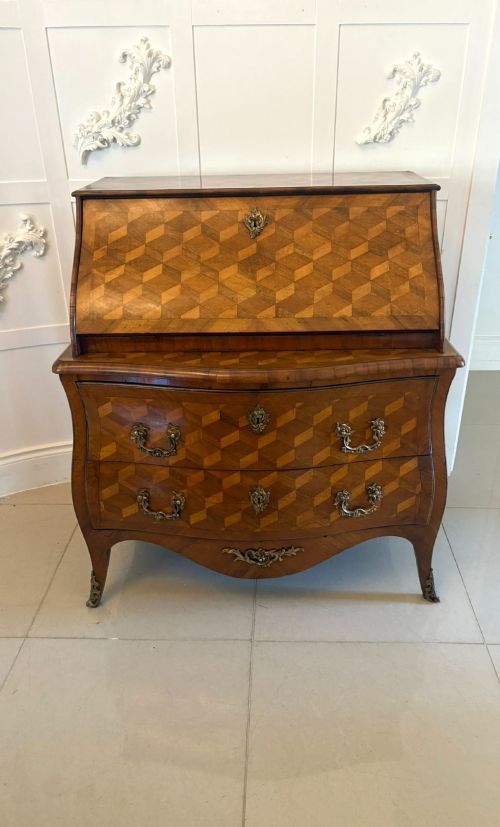
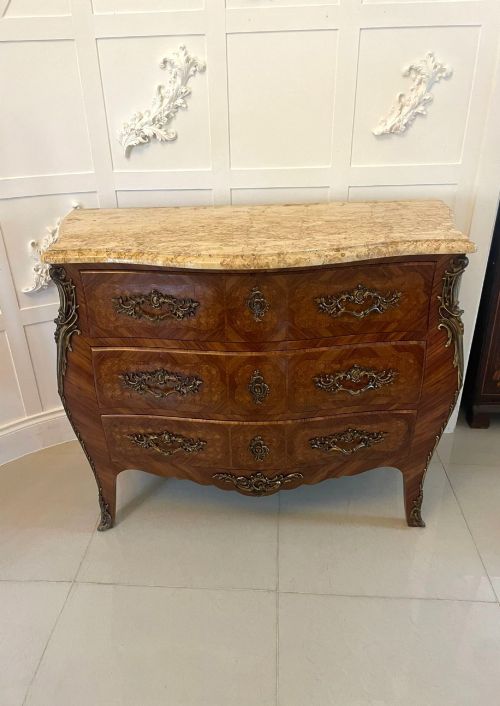
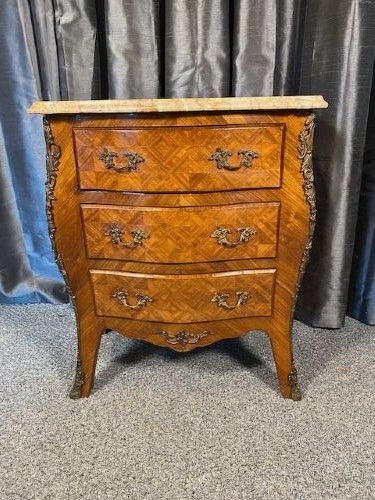
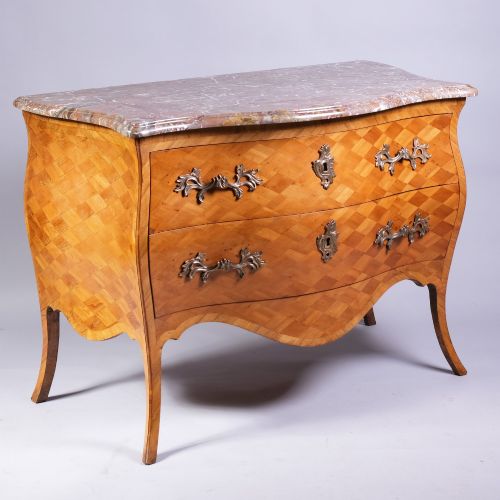
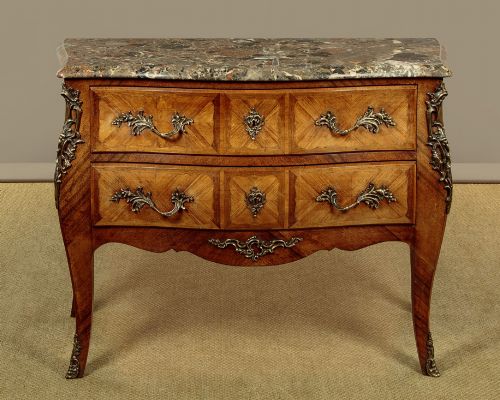
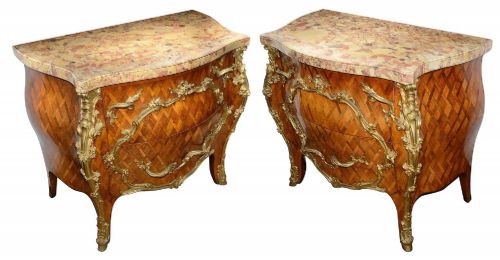
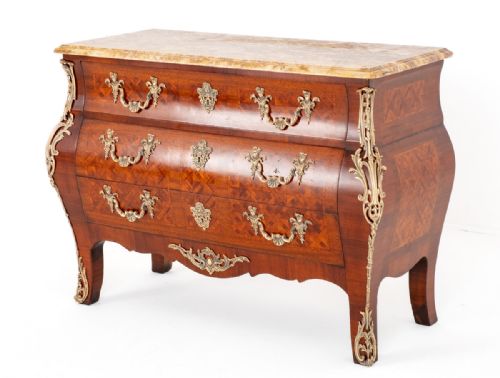
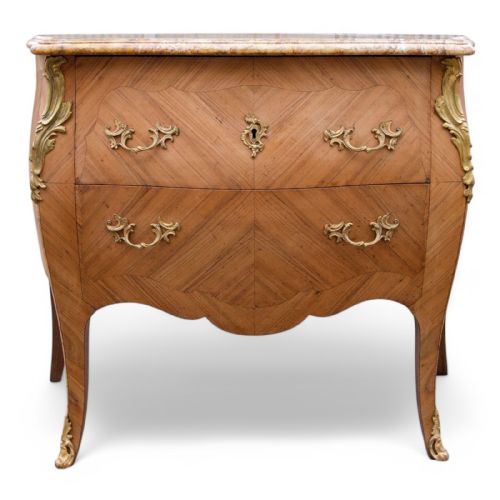
A french parquetry bombe commode is a low storage chest defined by its outward-swelling sides and curved fronts. These pieces span the eighteenth, nineteenth and twentieth centuries, taking forms from bedside cabinets up to large reception room chests.
The most common examples on this page follow Louis XV and Louis XVI styles, incorporating elaborate veneering patterns across the drawers and flanks. Buyers encounter full-sized chests of drawers alongside smaller bedside tables and miniature furniture variants.
How they were made
Cabinetmakers constructed these chests using timber veneers such as kingwood, walnut, fruitwood, mahogany, sabicu, plum and tulipwood laid over structural carcases in geometric parquetry designs. Slabs of marble fitted to the top surface provided a heavy, durable finish.
Casting and chasing ormolu, gilt bronze and brass mounts formed decorative borders, handles and corner sabots that complemented the curved lines of the woodwork.
Among the full-sized room chests sit tiny miniature furniture commodes, perfectly scaled down for collectors with limited floor space.
What varies in quality
Quality rests in the precision of the parquetry layout and the crispness of the bronze or ormolu mounts fitted to the carcase. Superior pieces show seamless alignment of complex wood grains across swelling drawer fronts and curved corners.
The choice of heavier marble tops and the weight of the cast metal hardware distinguish finer productions from simpler nineteenth and twentieth century revival pieces.
The French Parquetry Bombe Commode Glossary
- Parquetry
- Geometric wood inlay forming patterned surfaces across the drawers and sides of the commode. Cabinetmakers arranged contrasting timber veneers to create optical depth.
- Bombe
- A swelling, bulging contour shaping the front and sides of the furniture piece. This sweeping profile defines the characteristic silhouette.
- Ormolu
- Gilt bronze applied as mounts, handles and feet along the edges of the cabinet. The metalwork highlights the structural curves.
- Sabicu
- A dense tropical timber utilised in select nineteenth-century chests. Its dark grain provides a robust foundation for polished finishes.
- Rococo
- An ornate stylistic period marked by asymmetrical scrolls and natural motifs. Many commodes adopt these flowing decorative conventions.
French Parquetry Bombe Commode: Frequently Asked Questions
Where should a bombe commode go?
These commodes suit large hallways, reception rooms or spacious bedrooms where their swelling profiles and marble tops can command the space. They function primarily as decorative drawer storage.
Position them away from direct heat sources to protect the veneered surfaces and timber carcases from drying out.
How do I clean the marble top?
Wipe the marble surface with a soft damp cloth using mild soapy water when necessary. Avoid acidic cleaners that can etch the polished stone.
Dry the slab thoroughly with a clean cloth to maintain the natural finish.
Are eighteenth and nineteenth century commodes different?
Eighteenth-century examples display period construction methods and original kingwood or walnut veneers. Later nineteenth and twentieth century pieces often replicate Louis styles with varying degrees of decorative intensity.
Examining the timber build and mount fixings helps distinguish the period of manufacture.
How do I care for the parquetry?
Dust the veneered surfaces regularly with a dry lint-free cloth. Apply a quality wax sparingly to nourish the timber when it appears dry.
Keep the piece out of direct sunlight to prevent the inlaid woods from fading over time.